Vending machines are becoming a popular choice for many schools to improve campus services. Perhaps in the past, vending machines were often associated with high-sugar and high-carbohydrate snacks, but nowadays they can offer healthier and more beneficial foods. This article will analyze from aspects such as convenience, food management, intelligent operation, and campus value why schools should allow the placement of vending machines and how to select solutions suitable for the campus environment.
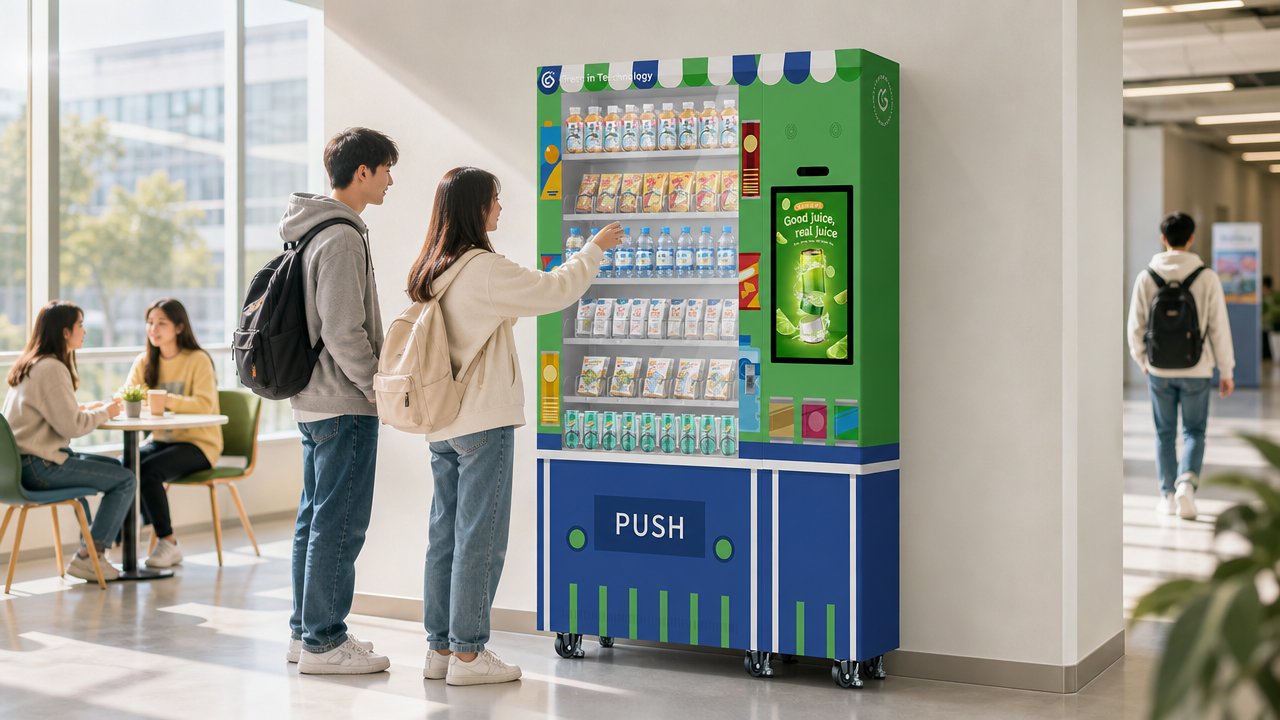
What benefits do vending machines bring to schools?
Easier campus life every day
There has always been a demand for goods in schools, be it buying drinks during breaks, refuelling during lunch or buying simple food after school. Many students have an immediate need for the goods they need fast.
The constraints of regular campus stores in terms of operating hours, staffing and space often limit their ability to cater to all time periods and all areas. With course schedules, some students and teachers may not be able to go to the store at set times, or may have to wait for long periods during peak hours. However, vending machines can be placed in places such as teaching buildings, libraries, gymnasiums and dormitory areas, which makes it more convenient for them to buy goods when needed.
Vending machines are not a substitute for traditional catering services in schools, but an addition. They can help schools meet more scattered consumption needs, and make campus services more comprehensive. You can adjust the products according to students’ age, consumption habits and campus characteristics, such as bottled water, juice, healthy snacks, breakfast food, etc., so that students have more choices.
Assist schools in providing healthier food
When many schools are considering whether to introduce vending machines, they often pay attention to one question: Will vending machines increase the chances for students to purchase unhealthy food? In fact, vending machines themselves do not determine what goods are sold; the key lies in how you manage the goods.
By reasonably planning the types of products, you can choose products that better meet the needs of the campus. For example, you can reduce the proportion of high-sugar and high-salt foods and increase water, milk, nuts, grain foods, and other nutritious products. At the same time, you can also adjust the goods according to the season and student feedback to improve the rationality of campus food supply.
Intelligent vending machines can provide a more transparent way of managing goods compared to some small retail channels that cannot control the source. You can access the back-end system to check inventory status, sales data, product changes and replenish and adjust according to actual needs. For you, vending machines not only provide a sales channel, but also a more standardized tool for campus food management.
School vending machines can create more campus value
Apart from meeting students’ daily purchasing needs, vending machines can also bring more management and operational value to the school.
The construction of campus service facilities usually needs to consider the investment cost and long-term maintenance issues. Compared with building new physical stores, vending machines occupy less space, are more flexible to install, and can be deployed at suitable locations based on the campus layout. You don’t need to plan for a large commercial area and can also provide students with a convenient consumption entry point.
At the same time, vending machines can also help the school explore new campus service models. You can use some of the equipment to provide students with basic supplies, beverages or healthy food, making the campus resource allocation more diverse. For universities, boarding schools and large educational institutions, this flexible supplementary method has particularly practical value.
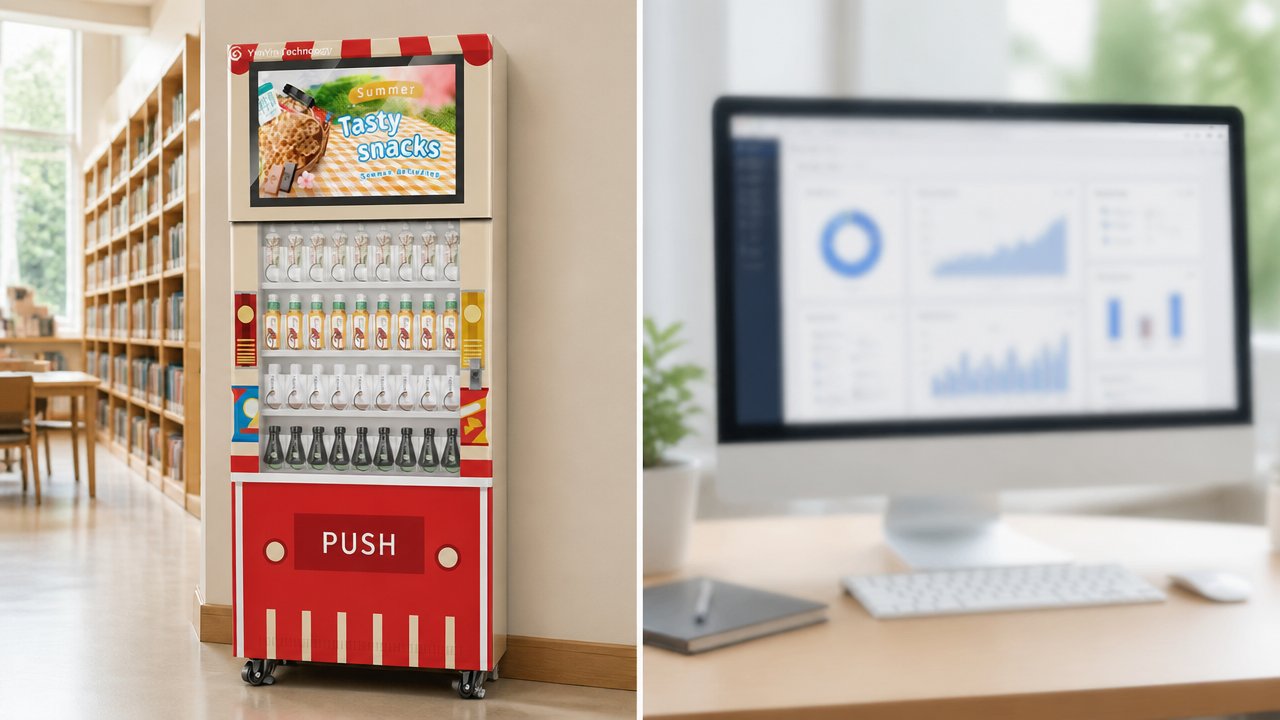
In addition, school vending machines can also collect consumption data, providing reference for the school to optimize services. By analyzing sales situations during different time periods, in different areas and for different products, you can better understand student needs and adjust product configuration and equipment layout.
Of course, the purpose of introducing vending machines in schools is not simply to increase sales, but to use intelligent equipment to improve campus service quality, allowing students to have a more convenient experience during their study and life.
Intelligent technology makes campus vending machines easier to manage
Many people believe that vending machines may require frequent manual inspections, resulting in high management costs. However, with the development of intelligent technology, current vending machines now have more comprehensive management functions.
Modern intelligent vending machines can usually be connected to the back-end management system, allowing you to remotely view the operating status of the equipment, the inventory of goods, and sales situations. This can reduce the number of manual inspections, improve the efficiency of restocking, and also facilitate schools or management authorities to promptly detect equipment abnormalities.
This digital management method can transform vending machines from simple selling devices into campus intelligent service facilities.
Which types of vending machines are suitable for schools?
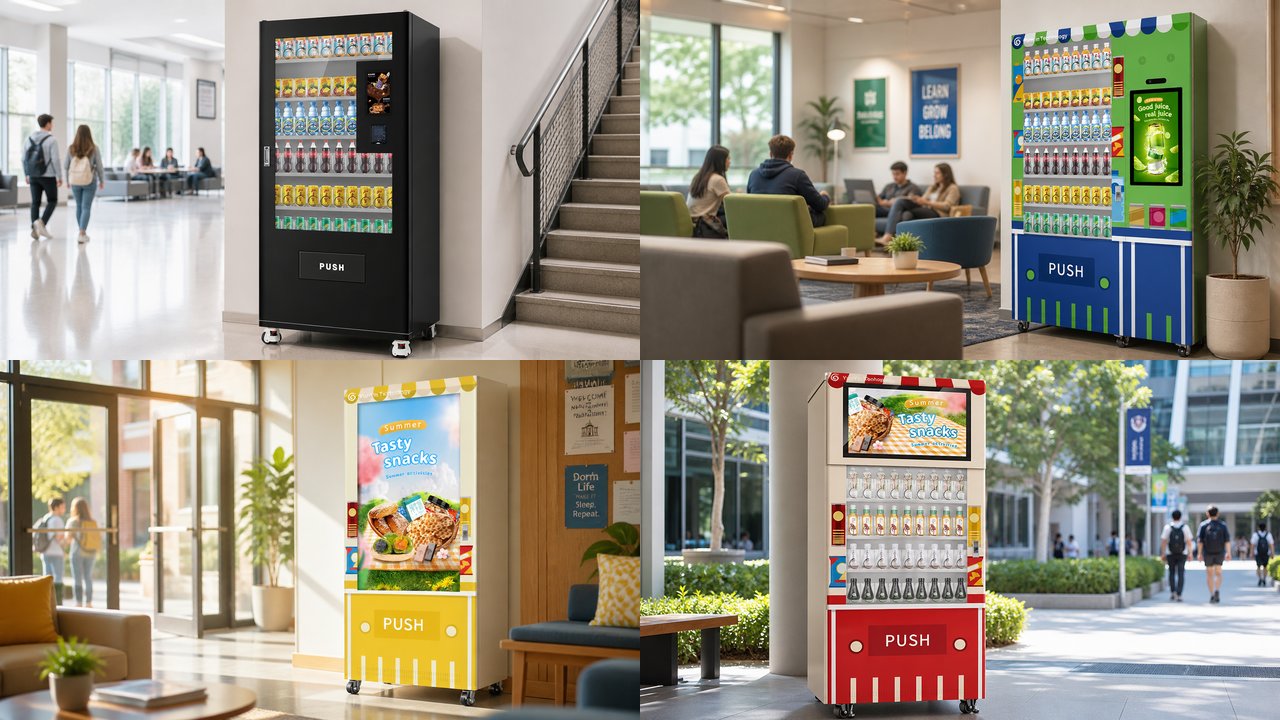
The size, student population and usage requirements of different schools vary, so the types of vending machines suitable for configuration also differ.
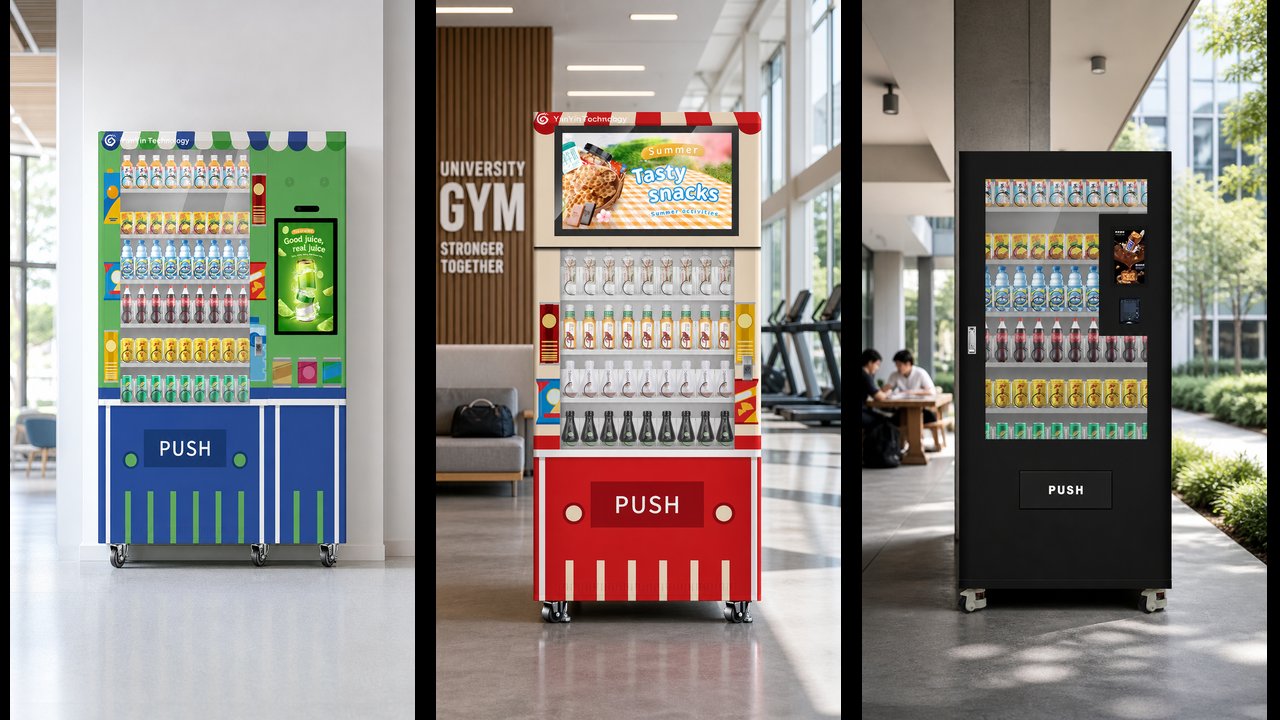
Beverage vending machines
Beverage vending machines are a common type of equipment in schools and are suitable for placement in teaching buildings, gymnasiums, rest areas, etc. The equipment can sell bottled water, juice, milk beverages, etc., meeting students’ daily hydration needs. Beverage products have a stable demand and the replenishment management is relatively simple, making them a relatively easy-to-deploy vending machine option.
Snack vending machines
Snack vending machines are suitable for covering the consumption demands during students’ breaks and rest times. Schools can choose appropriate products based on their management requirements, such as nuts, cereal bars, cookies, etc., to make the product structure more in line with the campus environment.
Breakfast vending machines
Breakfast Vending Machines also offer an additional solution for boarding schools, university campuses and schools with early morning classes. Students can quickly buy simple foods such as bread, sandwiches and milk in a limited time, improving the efficiency of breakfast supply.
Refrigerated vending machines
Refrigerated vending machines are perfect for selling food and drinks that have to be kept at a certain temperature, such as fresh food, dairy products, cold drinks, etc. Through stable temperature control, you can expand the selection of more products.
Of course, you should note that when actually deploying vending machines, you need to consider factors such as the number of students, installation location, power conditions, and product demands comprehensively, rather than simply choosing the type of equipment.
Final thoughts
Campus vending machines are becoming an important service facility in modern educational environments. For schools that aim to enhance campus convenience and optimize management methods, choosing the right intelligent vending machine solution can help you establish a more efficient and flexible campus retail system.
As a manufacturer of intelligent vending machines for design, research and development, Yunyin provides one-stop services including equipment customization, function development, and overall solutions. It supports different schools and educational institutions in selecting appropriate vending machine configurations based on their actual needs.
FAQ
Is it necessary to obtain permission to place vending machines in a school?
In general, approval of the school administration or the appropriate authorities is necessary for vending machines to be placed in a school. Regulations regarding campus commercial equipment, food sales, and equipment installation may vary by region and school. Therefore, before deployment, it is necessary to confirm local policies and internal management requirements of the school. At the same time, the school also needs to clarify the operation mode of the equipment, the responsibility for managing the goods, and the maintenance process. Yunyin can offer customers equipment configuration suggestions according to their geographical location and usage requirements, so that you can easily promote your vending machine project.
When a school purchases vending machines, what aspects should it pay attention to?
Apart from the equipment price, the school also needs to consider the equipment stability, functional configuration, after-sales support, and the production capacity of the supplier. Choosing a manufacturer with R&D and production capabilities can better ensure the quality of the equipment and subsequent services.
Do campus vending machines require manual management?
Intelligent vending machines can check inventory, sales data and equipment status through the background system, reducing manual checks. But the equipment should be refilled, cleaned and maintained regularly for long-term stable operation.
Where should vending machines be located in the school?
Common places are the main hall of the teaching building, the library, the gymnasium, the dormitory area and the student rest area. Specific locations should be planned according to student traffic, power conditions and requirements of campus management.
What payment methods are available at the vending machines at the school?
Vending machines can be equipped with various payment methods according to different market demands, such as cash payment, mobile payment and other local payment systems. You can customize campus card payment etc. If you have any needs. Yunyin can customize payment systems and integrate software and hardware to meet the usage needs of different countries and regions.