
When many people first come into contact with the vending machine industry, they tend to think it is a business with low investment and simple operation. But after actually starting the business, they will realize that the equipment is just one part of it. The locations, products, replenishment, and daily management will all directly affect the final profit. If you plan to enter this industry, understanding these common mistakes in advance can help you avoid many detours.
Choosing a Business Location Based on Intuition
Even the best vending machines, if improperly located, cannot achieve their best performance. However, a large number of novice operators rely on intuition or simply assume that there is no vending machine at a certain location when making location decisions. Instead, they do not conduct a comprehensive assessment of the flow structure, consumption capacity, surrounding competition, and site conditions.
A location with basic profit conditions usually needs to meet the following points:
- The average daily effective flow of people is stable and has a certain scale.
- The target customer group has clear immediate consumption needs.
- The intensity of competition from alternative dining or retail in the surrounding area is within an acceptable range.
- It has a stable power supply and site conditions that meet installation standards.
In addition, the performance of the same location may fluctuate significantly at different times and on different working days. It is difficult to make an accurate judgment based on a single visit. Once an agreement is signed with the venue party, no matter how the subsequent performance is, the initial investment of funds and time costs will be difficult to recover quickly.

Overestimating the Initial Revenue from the Vending Machine Business
One of the most common mistakes in any industry is having overly optimistic expectations for future profits. During the actual operation process, the performance at each point varies. Equipment procurement, transportation, installation, inventory, and maintenance all incur ongoing costs. The materials and cases provided by vending machine suppliers mostly present optimistic predictions, which may have a significant gap from the actual situation of most ordinary points.
If an overly optimistic expectation is used as the basis for cash flow planning, once the early income fails to meet expectations, the operator is often forced to make compromises in maintenance, replenishment, or equipment management, forming a vicious cycle. The venue’s share, the labor and transportation costs for replenishment, the handling fees for cashless payment channels, equipment maintenance and spare parts costs, as well as the spoilage losses of food products in the early stage, are prone to being underestimated. It is recommended to refer to the relevant data of similar points before formal operation and not blindly believe the best-case data materials in marketing materials.
Choose only inexpensive, outdated equipment.
Problems are likely to occur with low-priced equipment, such as unstable shipping institutions, insufficient compatibility of the collection system, the absence of network management functions, high and lengthy repair costs in the future, and so on. The price difference you saved during the procurement stage may eventually be returned at a higher price, and it will also cause greater losses due to continuous repairs, downtime, and missed sales opportunities. Moreover, cashless payment has become the mainstream consumption habit in most markets. If the equipment lacks the corresponding payment capability, it inherently constitutes a competitive disadvantage. During the selection stage, it is worth giving special attention to these options.
Neglecting Equipment Maintenance and Management
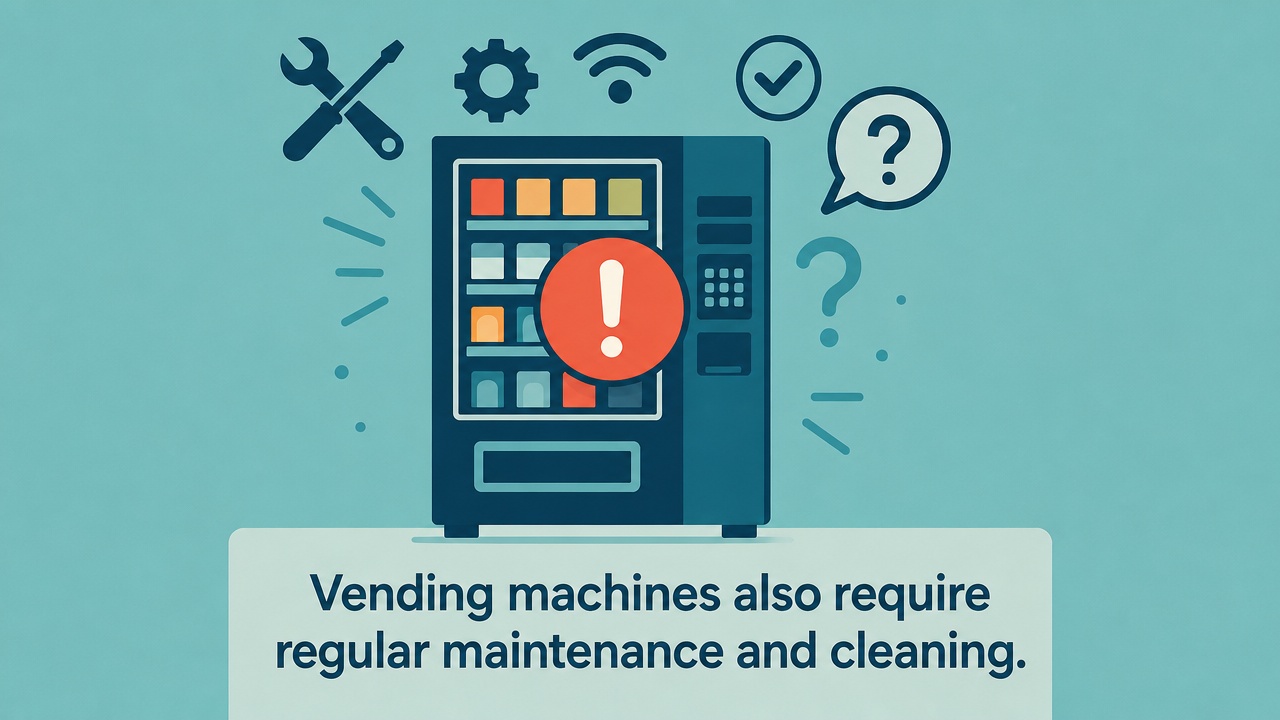
Automated vending machines can indeed reduce labor costs, but this does not mean that there is no need for management at all. They are machines, just like any other mechanical equipment, and they require regular maintenance and cleaning. If the machines run out of stock, have payment failures, experience abnormal cooling, or have malfunctioning screens, consumers are likely to leave immediately and will not attempt to make a purchase again.
Therefore, establishing a fixed inspection schedule is extremely important. Timely restocking, checking inventory, cleaning the equipment, and confirming that the payment system is operating normally can all help you maintain a good user experience. As the number of devices increases, a remote management system can also help you view the status of the devices in real time and improve overall operational efficiency.
Expanding too quickly or too early
The concept of passive income from vending machines can easily prompt novice operators to rush to increase the number of machines before they have achieved stability. Blindly expanding without verification will only bring more of the same problems, and the costs you incur will also be higher. Delayed replenishment response, prolonged maintenance cycle, and decreased service quality for the venue will eventually affect your contract renewal and reputation building.
Before making a decision, you can first conduct a practice: place two machines at different types of locations for a quarter of trial operation, fully record the actual net profit, replenishment frequency, maintenance costs, and various emergencies. Based on the data, make the expansion decision. Two machines that operate stably and have clear data have a much higher commercial value than a large number of poorly managed machines.
Final Thoughts
Entering the vending machine industry, reliable equipment forms the foundation of all operational logic. Yunyin has been deeply involved in the manufacturing of intelligent vending machines for 13 years, with a 20,000-square-meter own factory and over 300 patents. Its products have passed CE/UL/KC international certifications and have served 80+ countries and regions worldwide. It provides full-chain support from equipment to solutions for your unmanned retail business. Welcome to contact us.
FAQ
How should you choose the location for your first vending machine?
It is recommended to give priority to choosing locations with stable daily effective foot traffic and relatively weak competition from surrounding alternatives, such as factory areas, schools, and hospitals. Before making the location selection, multiple on-site observations should be conducted at different times, and the key assessment should not only focus on the total foot traffic but also on the consumption structure and demand matching of the crowd. Both of these factors jointly determine the actual commercial viability of the location.
How should the funding amount for the startup phase be planned?
Based on starting with one or two devices as a reference, it is necessary to cover the equipment purchase cost, the initial stock of goods, the deposit for the venue or the prepaid share, as well as the reserve funds for dealing with early maintenance and wear and tear. It is recommended to set aside no less than 1.5 times the total purchase price of the equipment as working capital to deal with unexpected situations and avoid being forced to reduce normal operations due to a tight capital chain.
How should the product mix be determined?
The selection of products should be based on the profile of the target audience. Different locations have different consumption habits and product logic. You can communicate with the venue provider before starting the operation to understand the daily consumption habits of users. During the operation, make upgrades and iterations based on data. It is recommended to run for at least four to six weeks before making significant structural adjustments. In the initial stage, it is advisable to choose well-known brands with high market recognition, which can help lower the decision-making threshold for consumers.
How often should vending machines be maintained?
Fixed periodic maintenance plans may not apply to all locations. A more effective approach is to formulate plans based on the actual sales speed of each location. Take proactive measures before the goods are nearly out of stock or the equipment shows abnormalities, rather than waiting for problems to accumulate before taking action passively. A clean appearance of the equipment and stable delivery are themselves important means for maintaining the relationship between the maintenance party and consumers’ trust.
What specifications should you focus on when purchasing a vending machine?
Apart from capacity and delivery methods, it is recommended to focus on three aspects: Firstly, the compatibility of the payment system, whether it supports mainstream cashless methods such as scanning or swiping. Secondly, the remote monitoring and data management capabilities, including inventory warning and sales analysis functions. Thirdly, whether there is a complete after-sales guarantee system. The equipment of Cloud Printing has all passed professional certifications such as CE/UL/KC, and supports multiple payments, intelligent management systems, and professional pre-sales and after-sales personnel. Please contact us to learn about the specific selection plan.