
If you are currently in or considering entering the vending machine industry, chances are that you have encountered these troublesome issues: choosing the wrong locations leads to long-term losses, replenishment relies entirely on past experience, and the homogenized competition squeezes the profit margins thinner and thinner. This article will analyze the future development direction of vending machines from aspects such as industry trends, technological development, and challenges faced, to help you understand the potential opportunities in this industry and provide references for subsequent investment and business planning.
From Metal Boxes to Smart Devices
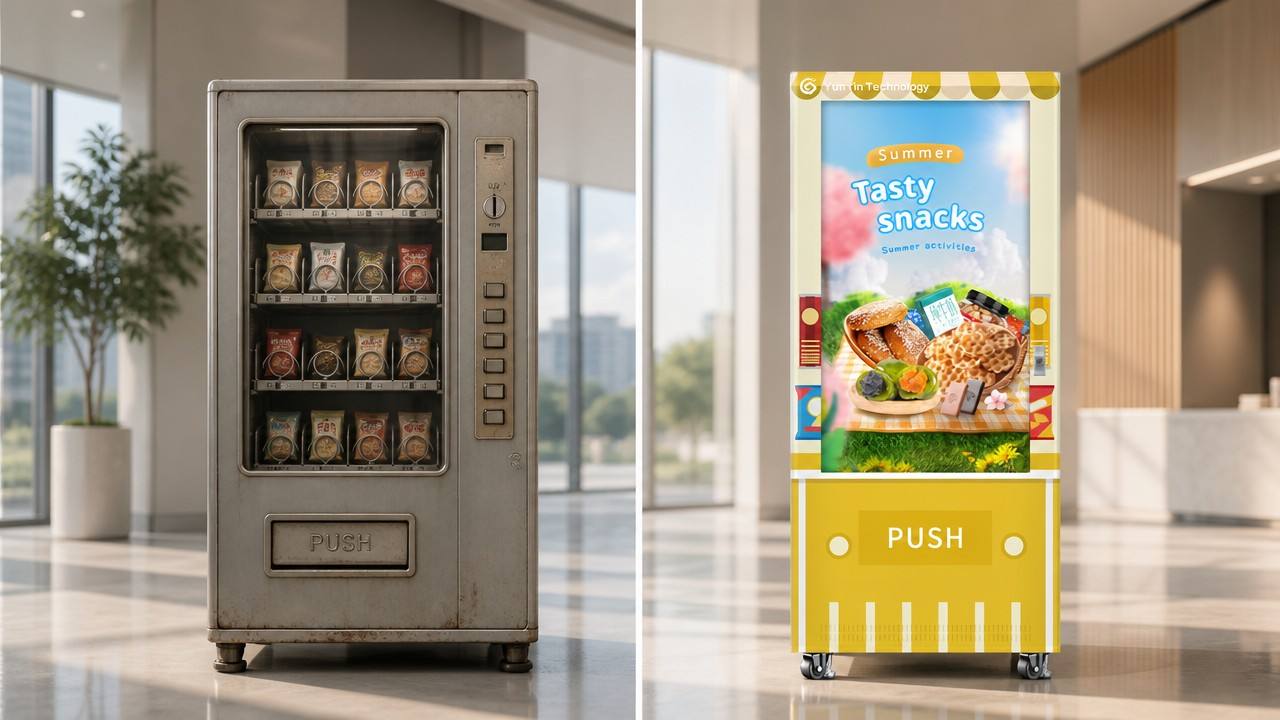
Over the past few decades, your impression of vending machines might have remained stuck in the simple actions of inserting coins, pressing buttons, and dispensing items.
If you are still thinking that vending machines are merely for selling beverages and snacks, then what you see is only their past form. By paying attention to the industry trends in the past two years, you will find that the role of vending machines is being redefined. It not only sells products but also undertakes multiple functions such as data collection, inventory management, user behavior analysis, and advertising marketing. The machines no longer simply wait passively for you to insert coins; instead, they start to actively record each transaction, each replenishment, and even the reasons behind each shortage.
This means that you no longer need to guess based on experience which machine should be replenished, which products should be replaced, or where it should be relocated. Instead, you can directly see real data from the back end.
AI and the Internet of Things Are Transforming Your Vending Machine Business
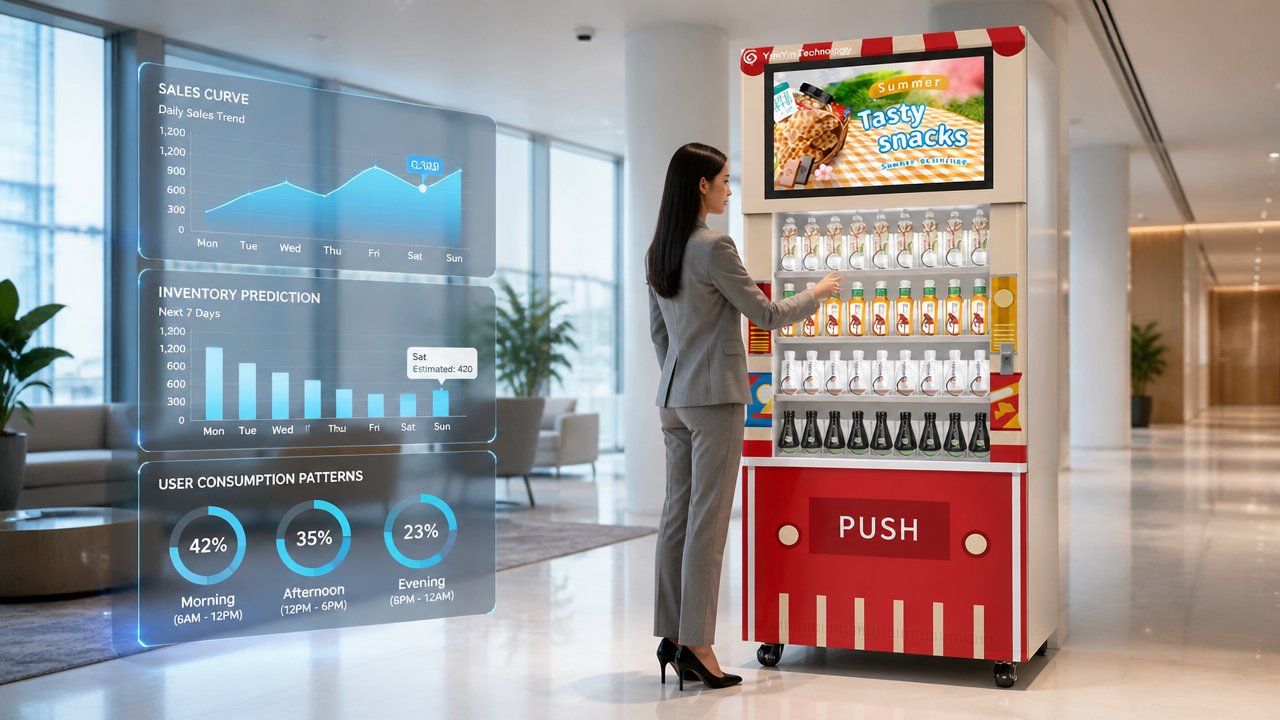
Artificial intelligence is becoming one of the most important driving forces in the future of vending machines. In the past, vending machines could only perform the “selection – payment – delivery” three-step process. But future devices are beginning to be able to understand users.
The intelligent vending machines you can currently access can already identify the items you pick up through computer vision, predict which goods to stock for the next week based on historical sales data, and even proactively alert the operation team about a sales peak at a certain point by analyzing the flow patterns. When these capabilities are combined, the machines gradually move from simply being automatic sellers to making automatic decisions. Of course, this does not mean that machines can completely replace your judgment. These technologies are more like transforming those areas that previously relied on experience and luck into processes that can be optimized based on data. What truly determines the success of the business is still your understanding of the business location and users.
IoT and Remote Operations and Maintenance Drive Continuous Reductions in Operating Costs
If AI addresses the question of what to sell better, then IoT addresses the issue of how to operate more efficiently.
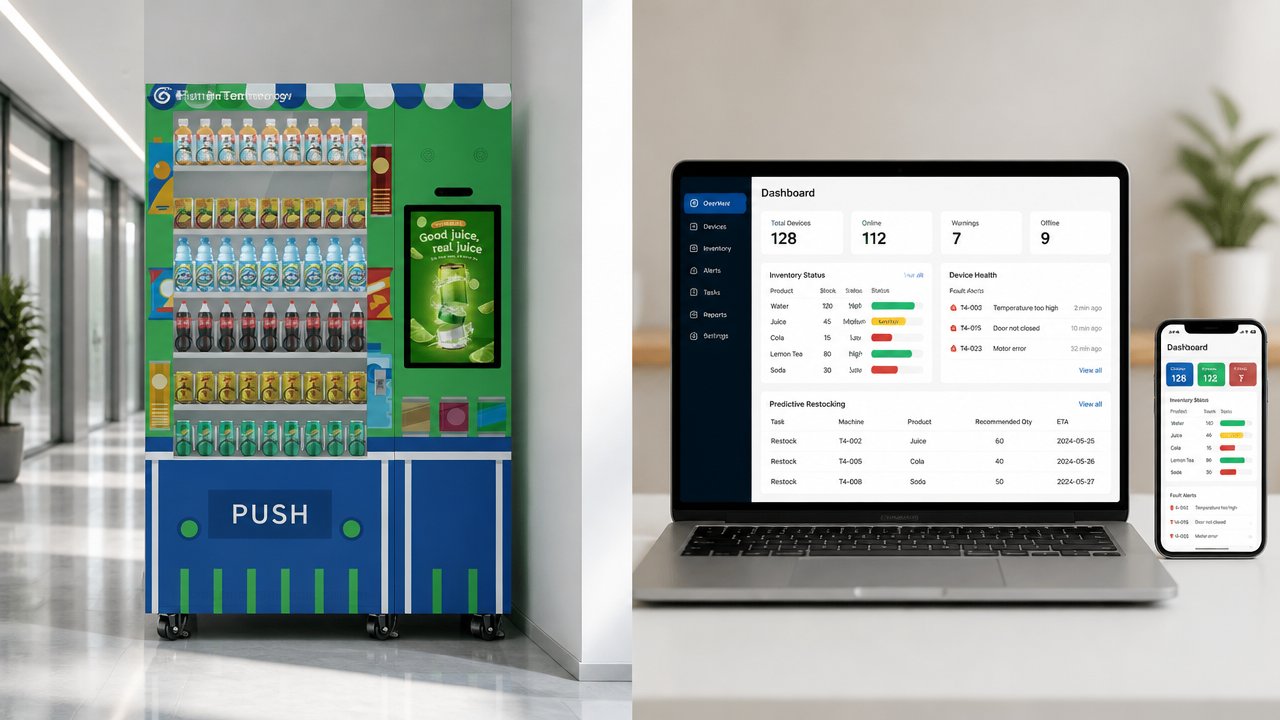
In the future of vending machines, each device will become a connected node. With IoT technology you can remotely monitor key indicators such as inventory status, device temperature, payment success rate and fault conditions.
This ability to obtain data in real-time shifts the traditional replenishment model. Rather than having to manually check when items need to be restocked, predictive replenishment does it for you. The system can forecast the time of stock shortages and create replenishment tasks in advance, according to sales trends.
At the same time, remote operation and maintenance also significantly reduces maintenance costs. Equipment abnormalities can be detected in the background and even automatically diagnose the problem type, greatly reducing downtime.
Cashless payments will become the norm
The future of vending machines, a very obvious trend is the complete cashless payment method.
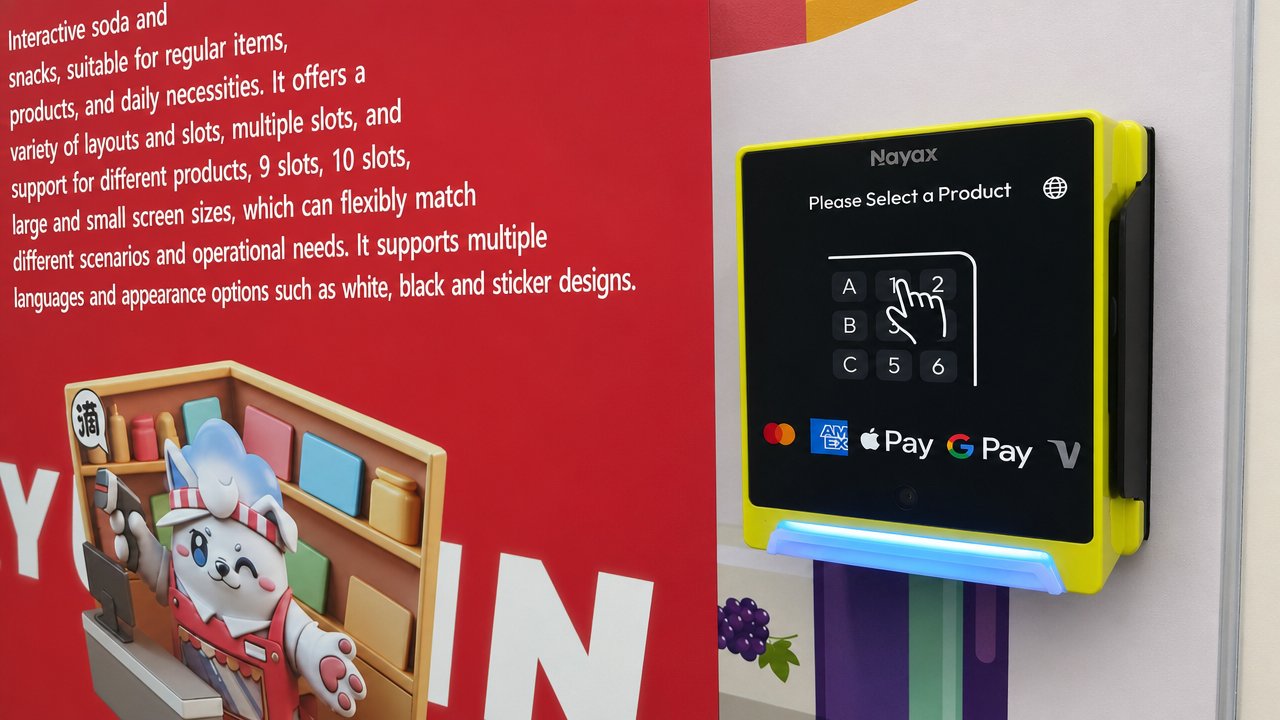
Across the globe, cash payment is rapidly withdrawing from the mainstream scenarios. Mobile payment, card-swipe payment, NFC, QR codes, and even biometric payment are all becoming standard configurations. The future vending machine business will further move towards “non-contact payment”. Users may not even need to actively operate the payment process; the system can complete identity recognition and deduction.
More importantly, payment is no longer merely a transactional process; it has become a data entry point. Through payment activities, the system can identify user profiles, analyze consumption patterns, and establish a more refined user tagging system.
What does this change mean for you?
If you are planning to enter this industry or are already operating vending machines, this change is actually a real opportunity for you. As the range of products that vending machines can carry becomes increasingly diverse, your average transaction value and repeat purchase rate have the potential to increase as well. This explains why the unmanned retail sector remains consistently favored: the equipment can be standardized for production, the locations can be replicated on a large scale, and the data can inform product selection and replenishment decisions. This heavy-asset but replicable model is precisely what many businesses cannot achieve.
Challenges Remain
Of course, behind every opportunity lies a threshold as well. For instance, equipment stability, supply chain efficiency, and compliance requirements for different locations and product categories all need to be carefully evaluated before entering the market.
Increased equipment costs
The addition of AI cameras, IoT modules, and smart screens has raised the investment threshold.
Increased system complexity
Higher demands are placed on the digitalization capabilities of the operators.
Moreover, differences in payment habits, regulatory policies, and infrastructure in different regions will also affect the efficiency of large-scale deployment. Therefore, the future competition is not just about equipment competition, but rather about the competition in overall solution capabilities.
The Core of Future Retail
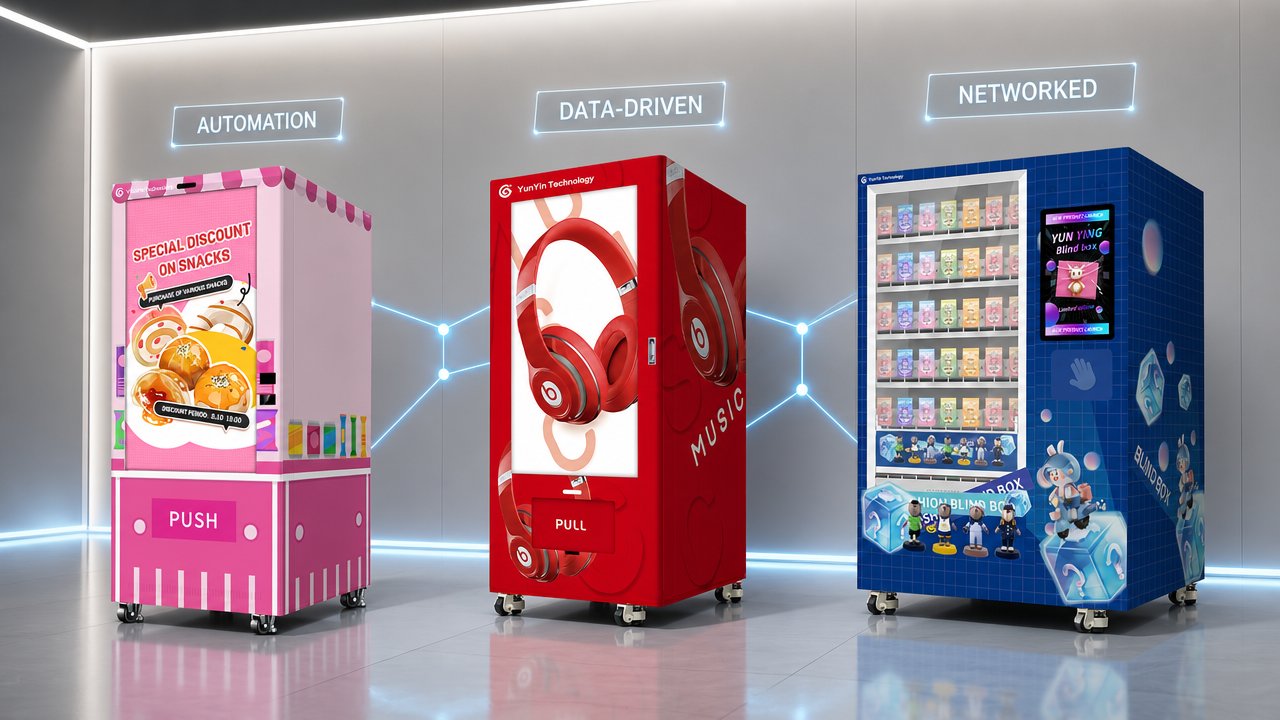
If all the trends are summarized together, it can be observed that the future of vending machines actually revolves around three key words:
- Automation: Reducing human involvement and increasing the degree of automation
- Data-driven: Using data to drive operations and decision-making
- Networking: Establishing a collaborative system among devices and the platform
When these three elements are combined, vending machines no longer remain isolated devices but become a distributed retail network. This is the most essential direction for the future evolution of vending machines.
Final Thoughts
The future of vending machines is accelerating its arrival. The real opportunities lie with those who can make strategic preparations for intelligent and systematic operations. If you are planning to launch an unmanned retail business, Yunyin can provide a one-stop solution from equipment to system, helping you enter the next generation of the retail market more quickly and achieve large-scale implementation. Whether you want to know the intelligent vending machine solution suitable for your specific scenario, or hope to batch customize or cooperate with original factory branding, please send an email to caiya@lomoment.com. Our team will provide you with one-on-one answers.
FAQ
Will vending machines completely replace manual retail in the future?
No, they will not completely replace it, but they will continue to replace repetitive and inefficient processes. Humans will more likely shift to strategic product selection, point-of-sale expansion, and customer service, which machines cannot replace for the time being.
Is the investment threshold for intelligent vending machines much higher than that of traditional machines?
The purchase cost of intelligent models is indeed higher than that of traditional models, but higher average transaction prices, lower operating costs, and longer service lives often offset the price difference within one to two years. If you want to assess the return on investment of specific models, you can contact Yunyin for selection suggestions.
Is the vending machine industry growing?
The overall growth is relatively moderate, but intelligent vending machines and micro-market segments are growing rapidly, and they are driving up the average revenue per device, which is reshaping the profit model of operators.
Will the profit model of vending machines change in the future?
Yes. In addition to the profit from selling goods, there will also be increased advertising revenue, data service value, and platform-based operational income.
How to choose a future-oriented vending machine supplier?
You need to focus not only on the equipment itself, but also on system capabilities, data capabilities, and long-term upgrade capabilities. Suppliers with R&D and overall solution capabilities will have an advantage in the future. Yunyin has a 20,000-square-meter source factory that supports OEM branding and batch customization. From appearance, screen interaction, to payment systems, it can be adjusted according to your needs. Welcome to contact caiya@lomoment.com for further communication.