
Automatic vending machines are not stable devices for long-term operation after installation. Whether you use one machine or dozens of machines, creating a reasonable maintenance plan can help you reduce malfunctions, lower maintenance costs and provide a better shopping experience for consumers. It is generally more economical and better in the long run to do regular and continuous maintenance rather than to repair after the machine is broken.
Today we will discuss orderly maintenance of automatic vending machines, and the structure of maintenance costs.
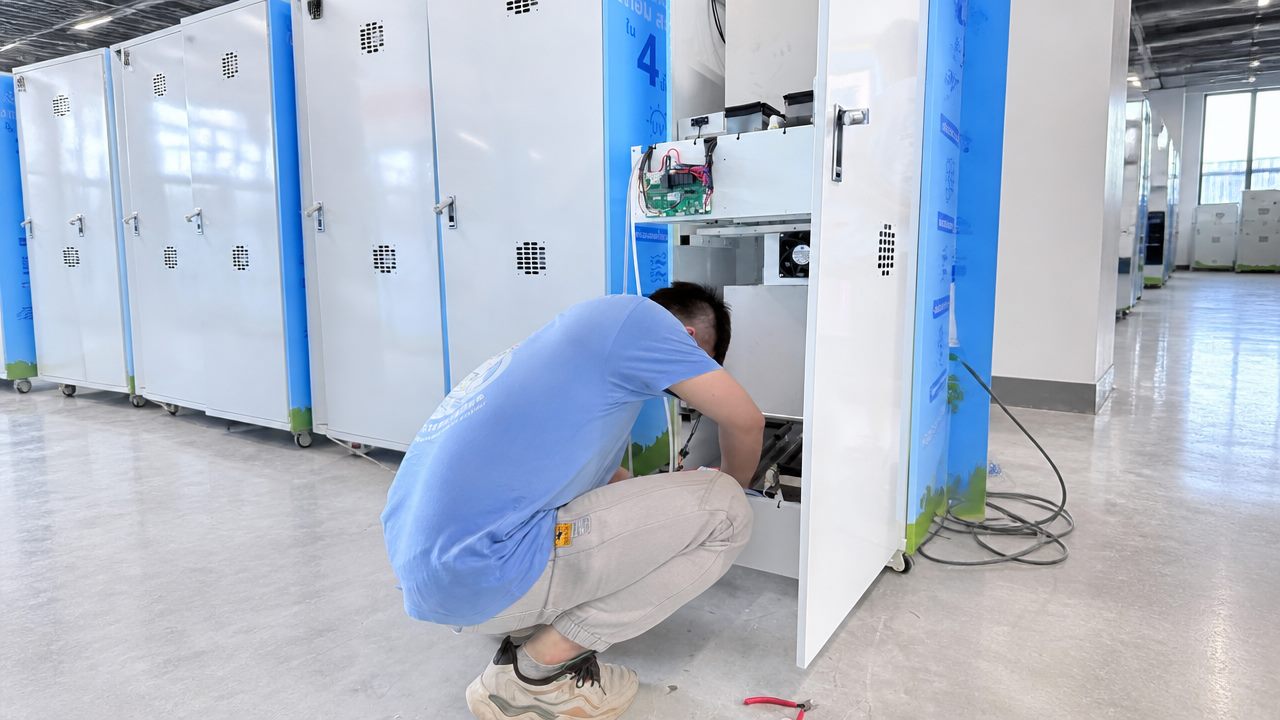
How to Create a Maintenance Plan for Your Vending Machine?
The maintenance of vending machines is not carried out uniformly when the equipment breaks down. Instead, a scientific maintenance plan is formulated based on the usage frequency and operating status of different components. The maintenance work is divided into three cycles: daily, weekly, and monthly. This makes the inspection more effective and allows to detect early potential problems thereby minimizing equipment down time and subsequent maintenance costs.
Routine Maintenance
The daily maintenance mainly focuses on the operating status of the machine and the consumer experience. Every time you replenish the stock, you can also check if the equipment can be delivered normally, if the payment system responds normally, if there are any abnormal prompts on the display screen, and if the product inventory and expiration dates meet the requirements. If you find the product not in place, packaging damaged or the inventory is not enough, you should adjust in time, so as not to affect the consumer’s purchasing experience.
At the same time, keeping the machine’s appearance clean is also very important. The screen, payment area, pickup opening, etc. are prone to leaving dust and fingerprints. Regular cleaning not only enhances the equipment’s image but also reduces the impact of stains on payment recognition or the removal of products. If there is an abnormal alert on the device’s backend, you should also promptly check the cause to avoid small problems gradually evolving into operational failures.
Weekly Inspection (When the Equipment Is Used Frequently)
Weekly maintenance can be more in-depth than daily maintenance, focusing on whether all the core components inside the equipment are operating stably. Besides cleaning the areas inside the machine where dust is prone to accumulate, you can also check if the cargo channels, motors and shipping mechanisms are running smoothly, and confirm that the goods can be transported normally to avoid cargo jams caused by component wear or improper placement of goods. These details are easily overlooked but can significantly affect the stability of the equipment and the user experience of consumers.
Monthly and Quarterly Deep Cleaning
Entering the monthly maintenance phase, the tasks you need to perform will become more detailed. It is recommended that you power off the machine and conduct a thorough cleaning of its interior. This includes the product aisles and the inner walls of the shipping ports. These areas are prone to residual sugar and oil stains, and if not cleaned regularly, they can breed bacteria, affecting food safety. At the same time, you should also check if the fans and ventilation ports are covered with dust, as poor heat dissipation can directly affect the cooling effect and accelerate the aging of the compressor. The paper currency and coin recognition devices also need to be deeply cleaned during this period to avoid payment failures due to dirty sensors.
During the quarterly maintenance, the focus is on the refrigeration system. For example, cleaning the dust on the surface of the condenser, checking if the door seals are aging and cracking, although these details are easily overlooked, they are precisely the main reasons for increased energy consumption and shortened equipment lifespan.
Maintenance Logs
If you manage a large number of devices, it is recommended that you create a simple maintenance record sheet to record the inspection time, inspection contents, replacement of parts, and failure situations each time. By accumulating these data over time, it not only helps to optimize the maintenance plan but also enables you to predict the maintenance budget and further reduce long-term operating costs. Do not underestimate the value of maintenance records. After you have been recording the types of failures, replacement of parts, and maintenance times for a long time, you can gradually establish a maintenance rhythm that suits you, rather than relying on experience for judgment. For enterprises operating multiple devices, this data-based management often significantly reduces the overall maintenance costs.

Vending Machine Maintenance Costs
Making a budget for equipment maintenance is one of the key elements to ensure the long-term development of the vending machine business. Many people preparing to enter the unmanned retail industry will pay attention to the maintenance costs of vending machines. In fact, there is no fixed figure because the maintenance cost is affected by various factors such as the type of equipment, usage frequency, installation environment, and operational scale.
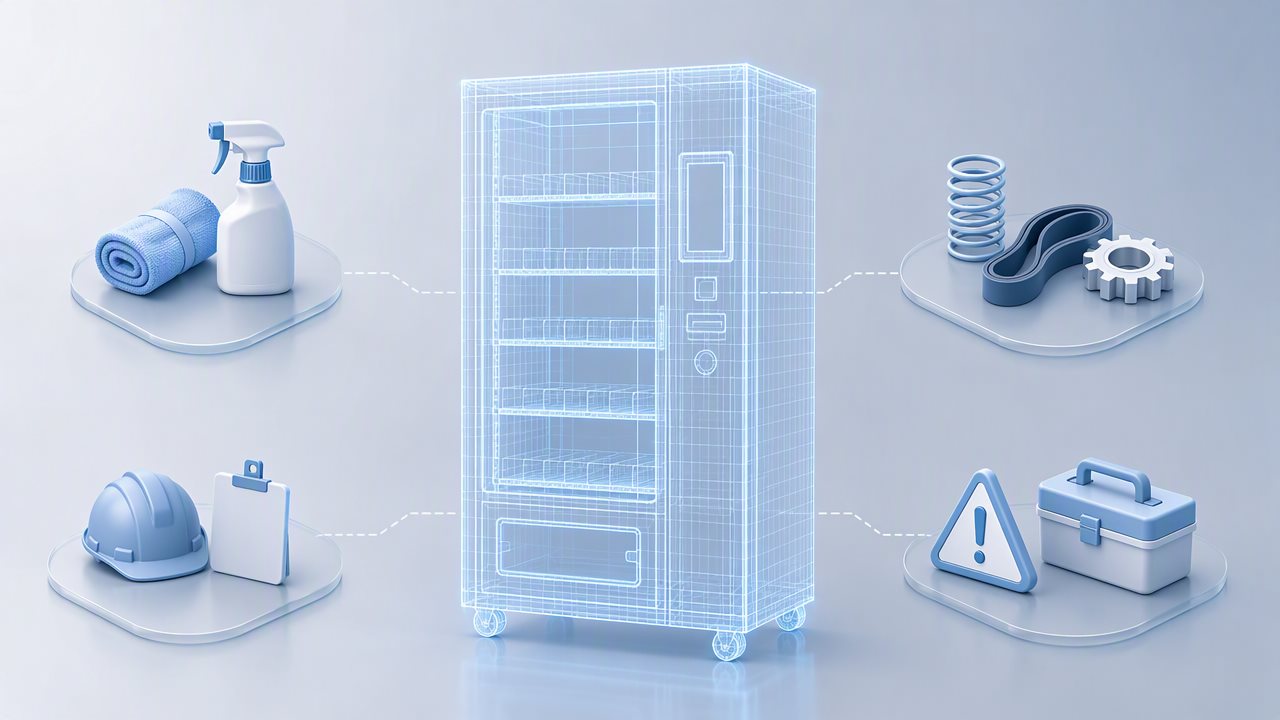
Generally speaking, the maintenance expenses mainly focus on these aspects:
Everyday Supplies and Cleaning Products
For example, small but frequent expenses such as cleaning supplies, alcohol, and cleaning cloths.
Replacement of Wear Parts
Components such as the discharge motor, product auger, and door gaskets are subject to natural wear and tear from long-term, frequent use and need to be replaced regularly.
Labor Costs
Whether you conduct on-site inspections yourself or hire technicians to handle complex malfunctions, both time and manpower are tangible investments.
Electricity Bill
This is especially true for refrigeration units: if the cooling system is not properly maintained, energy consumption will increase significantly.
Equipment Service Life
As the operational time increases, some components will gradually age and the replacement frequency may increase. However, if you can consistently implement the preventive maintenance plan, most components can be replaced before serious failures occur, thereby avoiding the generation of high maintenance costs all at once.
This part of the expenditure is relatively stable and is also a part of the operating budget that is relatively easy to control. If the equipment is in good operating condition, many maintenance tasks can be completed simultaneously during the replenishment process, without the need for additional significant time investment.
What Operators Should Really Focus On
In contrast, what is truly likely to increase maintenance costs is sudden failures. For example, payment module damage, refrigeration system failure, cargo hold overloading, motor failure, or abnormal main control board problems. Not only do these require payment for repairs, but they may also result in loss of sales revenue due to equipment downtime. If the machine is installed in a commercial area with high foot traffic, the loss caused by a one-day downtime is often much higher than the cost of routine maintenance.
Therefore, for operators, what is more worthy of attention is not how much money was spent on a single maintenance, but how to reduce large-scale maintenance expenses through scientific maintenance and keep the equipment running stably.
Final Thoughts
Stable equipment operation cannot be achieved without scientific maintenance and reliable product quality. If you are looking for an automatic vending machine that is easy to maintain, supports intelligent background management and has excellent after-sales service, Yunyin can provide you with a one-stop unmanned retail solution. From equipment manufacturing to technical support, we are committed to helping you reduce operating costs and make the vending business more stable and efficient.
FAQ
How often should an automatic vending machine be maintained?
It is recommended to establish a fixed maintenance plan. During daily restocking, you can simultaneously check the operating status of the equipment. Once a week, conduct a more comprehensive cleaning and functional test. Once a month, complete a deep inspection and maintenance. For points with higher operation frequency and larger passenger flow, the maintenance cycle should be appropriately shortened.
Which signals indicate that an automatic vending machine needs immediate repair?
If you find that the paper currency recognizer repeatedly rejects normal banknotes, obvious condensation appears inside the refrigeration model, the compressor continues to run but the cooling effect is poor, or the same product slot repeatedly jams goods, these are signals that require your immediate handling. Delaying will only increase the maintenance cost.
How to choose between self-maintenance and hiring professional technicians for maintenance?
Basic tasks such as daily cleaning and appearance inspection can be completed by yourself. However, for repairs involving circuits, refrigeration systems, or complex mechanical failures, it is recommended to hand them over to professional technicians. This can avoid greater losses due to improper operation and also ensure safety.
How to reduce the failure rate of automatic vending machines?
Keeping the machine clean, regularly checking the payment system and shipping mechanism, timely updating software, and establishing maintenance records are all effective methods to reduce failures. If the equipment supports remote monitoring, you can also use the background data to detect abnormalities in advance and reduce the risk of downtime.
If I want to reduce the burden of later maintenance, what should I pay attention to when choosing equipment?
It is recommended that you give priority to the manufacturer’s qualifications, the brand of core components, and the warranty policy of the equipment. Also, pay attention to whether the manufacturer provides comprehensive after-sales technical support. Yunyin, a manufacturer with 300 patents and certifications such as CE/UL/KC, usually has better guarantees in terms of equipment stability and maintainability. We can help you reduce the maintenance pressure at the source.