
Automatic vending machines have undergone tremendous changes over the course of several centuries. In the past, vending machines were more limited in function and were operated and restocked by hand. But smart vending machines today have built-in technology for things like payment, data management and remote operation.Getting to know the history of vending machine development can better help you understand the changes of the market and select more appropriate unmanned retail solutions to meet the needs of the future.
The Origins of Vending Machines
Many people believe that vending machines are a product of modern technological development. However, in fact, humans have been exploring automatic transaction devices for nearly 2,000 years.
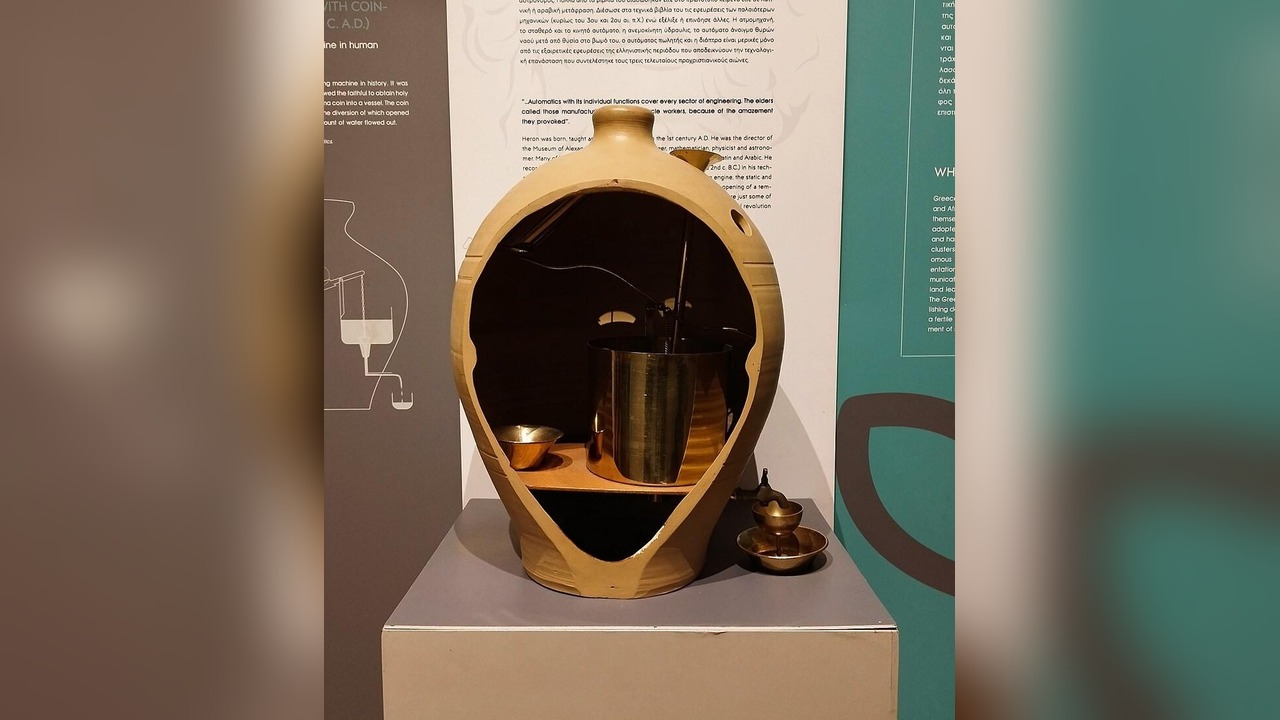
The earliest can be traced back to ancient Egypt in the 1st century AD. At this time the automatic water dispenser was invented by the Greek engineer Alexander Heron, mainly for the distribution of holy water in temples. Believers would put in coins and the coins would activate the mechanical structure and the device would release a certain amount of water.
This device is very different from today’s vending machines, but it already contains the essential logic of today’s vending machines: users pay, the machine identifies, and the machine gives out the goods automatically.
This simple transaction process became the foundation for the development of later vending equipment. With the development of mechanical technology, some similar vending boxes appeared in Europe in the 17th century. At that time, some British pubs would use simple automatic cigarette vending devices. After users inserted coins, they could obtain tobacco products. Although these devices had a limited application scope, they proved that the business model of selling without human supervision was feasible.
19th Century: The Modern Vending Machine Began to Take Shape
The Industrial Revolution in the 19th century promoted the development of mechanical manufacturing and also enabled the true commercialization of vending machines.
In places like public transportation, stations, and office areas, there was a large number of urgent consumption demands with the ever-growing urban population. Companies started to look for ways to allow consumers to buy small items more quickly and cheaper than manual sales.
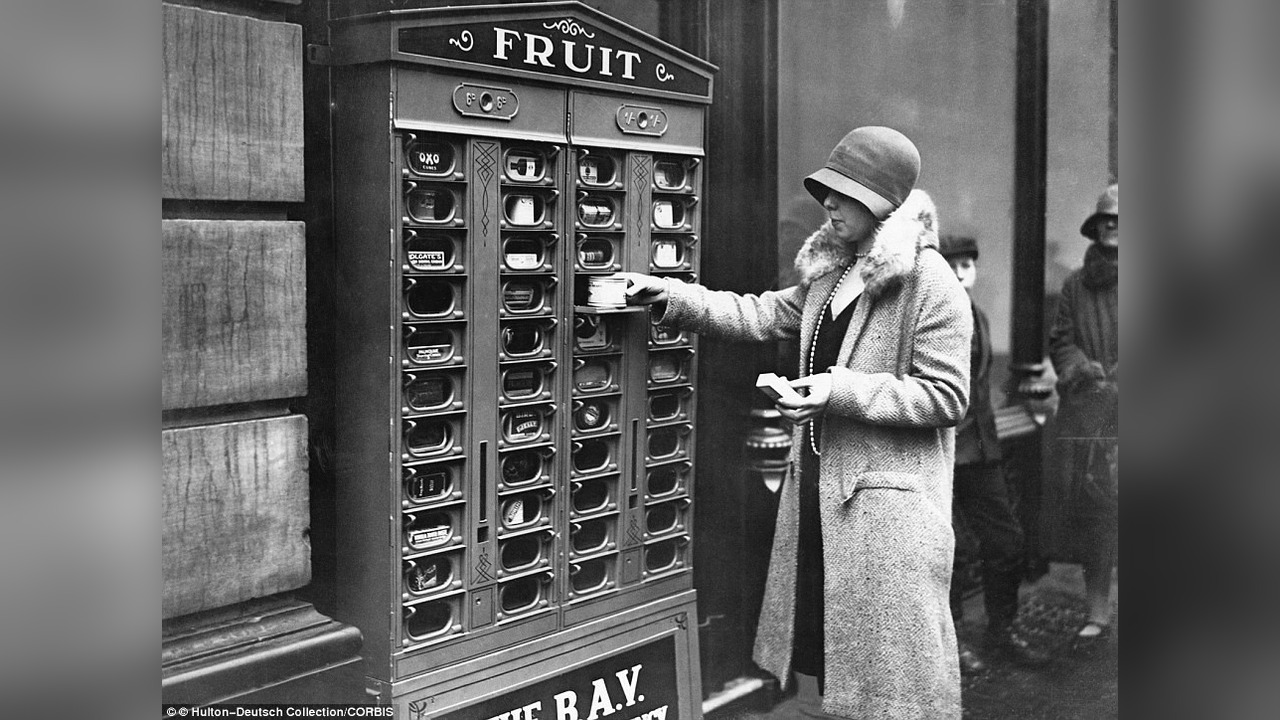
In the early 1880s Percival Everitt started to sell coin-operated postcards and letter paper vending machines in London, putting them in train stations and post offices so passengers could buy them at any time. They were usually set up in high foot traffic areas and customers would insert coins to purchase goods .
Subsequently, vending machines entered the American market and gradually expanded into the fields of chewing gum, candies, beverages, etc. In 1888, the Thomas Adams Chewing Gum Company in the United States installed vending machines in New York subway stations, specifically selling fruit-flavored chewing gum, which was widely regarded as the first commercial vending machine in the United States. After that, the range of vending machines expanded rapidly: in 1895, the first “automated restaurant” appeared in Berlin, where customers could take food after inserting coins, without the need for waiters. This model was quickly adopted by the United States and became popular in industrial cities such as New York.
During that period, vending machines were primarily powered by mechanical systems, coins were identified using mechanical devices, and goods were dispensed through springs or basic transmission mechanisms. The functions may have been limited, but it solved an important problem: enterprises could sell products in more places and consumers could buy the goods they needed at any time.
Today, the development logic of automatic vending machines in the 19th century still holds significant reference value. The early devices gained market acceptance not because of their advanced technology, but because they addressed a clear commercial need, which was to provide a more cost-effective and convenient sales method in crowded areas.
Therefore, when you consider investing in vending machines, the first thing you need to focus on is not the number of devices, but what consumer demands they can address. For example, office areas are more suitable for beverages and snacks, hotels and apartments focus more on convenience items, while schools, gyms, and other places need a combination of products that meet the specific needs of certain groups of people. Identifying the appropriate application scenarios is more important than simply increasing the number of device placements.
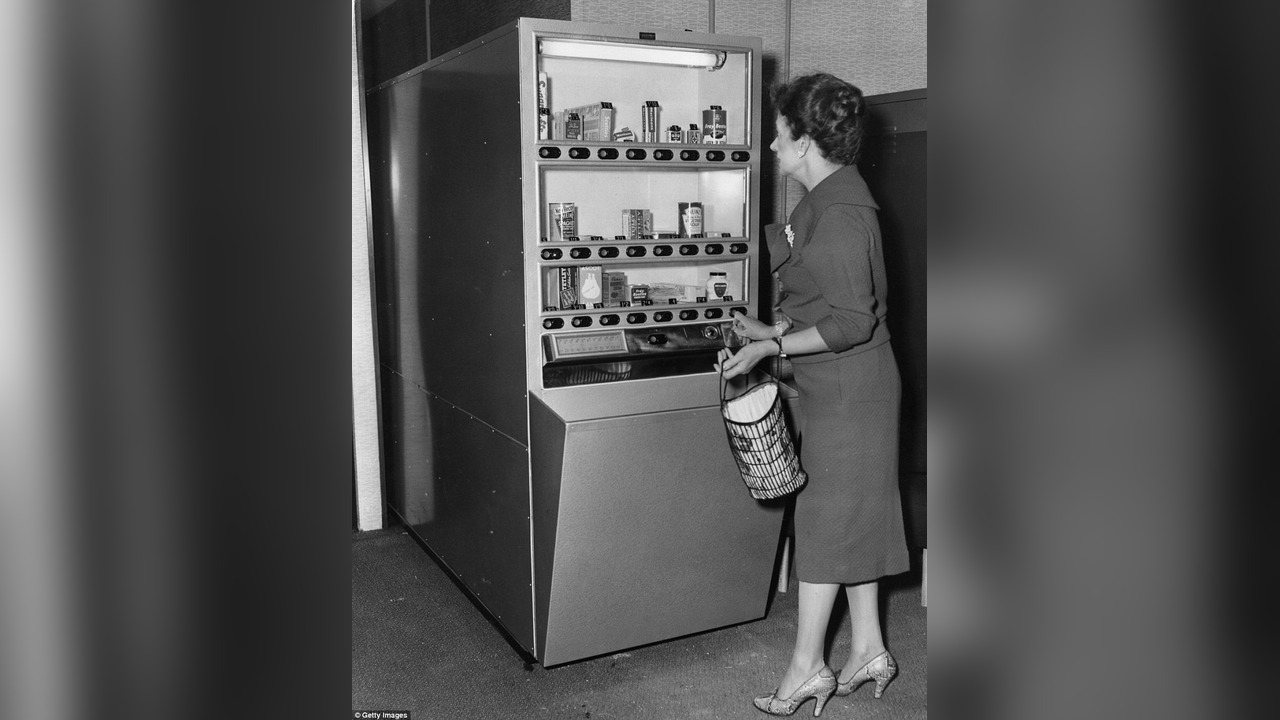
The 20th Century: Vending Machines Entered a Phase of Large-Scale Development
After the 20th century, vending machines began to truly enter the mass market.
With the development of power technology, refrigeration technology, and manufacturing techniques, vending machines are no longer limited to selling small items but have begun to cover a wider range of categories.
Beverage vending machines became an important representative during this period. Companies sold drinks such as soda and coffee from vending machines, so it was a way for people to quickly buy items at offices, schools, stations, etc. The formal start of automated beverage sales came with the introduction of Coca-Cola’s bottled beverage vending machines in 1937.
At the same time, food vending machines also gradually developed. From simple snack vending machines to food equipment with refrigeration functions, the types of goods that machines could sell became increasingly diverse.
During this period, the development focus of vending machines mainly concentrated on three aspects:
- Increase the capacity of goods to enable the equipment to operate for a longer time
- Optimize the mechanical structure to improve the stability of delivery
- Expand the application locations to allow vending machines to enter more commercial spaces
Vending machines began to become a new retail channel. It does not require a large number of staff and rental costs in traditional stores, and can create sales opportunities by utilizing fragmented spaces.
However, traditional vending machines also have obvious limitations. For example, operators cannot understand the inventory situation in real time, it is difficult to handle machine failures promptly, and sales data cannot be effectively utilized. These problems have driven the next stage of technological upgrades.
The 20th Century: Vending Machines Entered a Phase of Large-Scale Development
After the 20th century, vending machines began to truly enter the mass market.
With the development of power technology, refrigeration technology, and manufacturing techniques, vending machines are no longer limited to selling small items but have begun to cover a wider range of categories.
Beverage vending machines became an important representative during this period. Companies sold drinks such as soda and coffee from vending machines, so it was a way for people to quickly buy items at offices, schools, stations, etc. The formal start of automated beverage sales came with the introduction of Coca-Cola’s bottled beverage vending machines in 1937.
At the same time, food vending machines also gradually developed. From simple snack vending machines to food equipment with refrigeration functions, the types of goods that machines could sell became increasingly diverse.
During this period, the development focus of vending machines mainly concentrated on three aspects:
- Increase the capacity of goods to enable the equipment to operate for a longer time
- Optimize the mechanical structure to improve the stability of delivery
- Expand the application locations to allow vending machines to enter more commercial spaces
Vending machines began to become a new retail channel. It does not require a large number of staff and rental costs in traditional stores, and can create sales opportunities by utilizing fragmented spaces.
However, traditional vending machines also have obvious limitations. For example, operators cannot understand the inventory situation in real time, it is difficult to handle machine failures promptly, and sales data cannot be effectively utilized. These problems have driven the next stage of technological upgrades.
The 21st Century: Smart Vending Machines Drive the Evolution of Unmanned Retail
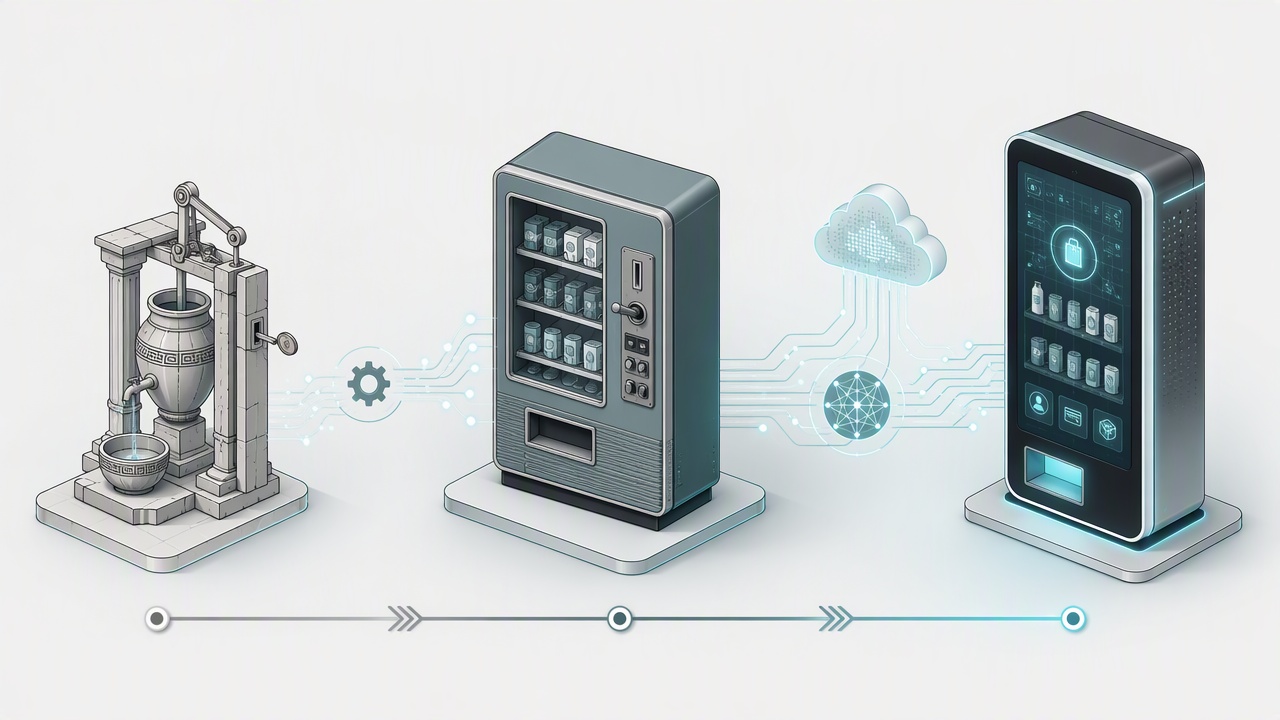
Entering the 21st century, the Internet, mobile payment, and Internet of Things technologies have changed the development direction of vending machines.
Modern vending machines are no longer just machines that automatically sell goods; instead, they have become intelligent retail terminals that connect consumers, goods, and operational data.
Payment Methods
In the past, consumers had to prepare cash to purchase goods. But now, more and more vending machines support bank cards, mobile payments, and other digital payment methods. The payment process has become more convenient, and it has also lowered the purchase threshold for consumers.
Backend Management System
Traditional vending machines require staff to regularly check the inventory. However, intelligent automatic vending machines can provide data, inventory status, and equipment operation conditions through a network system. Operators can remotely monitor the machine conditions and, based on sales data, arrange for replenishment to improve operational efficiency.
For example, when you operate multiple automatic vending machines, you don’t need to check each machine individually every day. Instead, you can view from the back end which products are selling faster and which locations need replenishment, thereby optimizing the operation plan.
Smart Technology
Nowadays, vending machines have been applied in various places such as office buildings, hotels, apartments, hospitals, schools, transportation hubs, and enterprise parks. Different scenarios can be configured with different products according to consumers’ needs, such as beverages, food, fresh products, daily necessities, and even personalized items. At the same time, functions like contactless payment, touchscreen interaction, and personalized recommendations have also made the purchasing experience of end consumers smoother, which will also increase the repurchase rate of your machines.
Future Trends in Vending Machines
With the continuous development of technologies such as artificial intelligence, the Internet of Things, and big data, vending machines are entering a new stage. Future vending machines will not merely be a sales terminal; instead, they will serve as a data entry point connecting consumer demands, product supply, and business operations.
For you, understanding future trends can help you determine the direction of equipment purchases and also enable you to lay out more competitive unmanned retail models in advance. In the past, companies focused on equipment prices and sales volume, but in the future, it will be more important to select the right scenarios, optimize product mix, and use technology to reduce operating costs.
AI Technology Makes Vending Machines Smarter
Artificial intelligence is changing the way that vending machines interact with consumers. In the past, vending machines could only sell fixed products based on user choices. However, future intelligent devices may use camera, sensor, and data analysis technologies to better understand consumer needs. Machines can adjust the display of products based on sales data from different time periods, and can also optimize inventory allocation according to consumers’ purchasing habits. In office areas, the equipment may increase the availability of coffee, beverages, etc.; in fitness venues, products such as protein drinks and healthy foods may be added.
This means that vending machines are no longer just waiting passively for consumers to make purchases; they can help improve sales efficiency through data.
Cashless payments and digital management
The upgrade of payment methods has been driving the development of vending machines. Early devices relied on coin transactions, then evolved to paper currency recognition, and now to bank cards, mobile payments, and digital wallets. Payments have become more and more simple, so it is easier for consumers to make purchases.
Meanwhile, the digital back-end management has become an important part of the modern vending machine. Management system lets operators see different data.These functions have reduced the cost of manual inspections and made operation management more refined.
With the integration of more retail data, vending machines can become an important tool for enterprises to carry out market analysis and consumer research in the future.
Personalized Products and Customized Equipment
In the past, vending machines mainly sold standardized products like beverages and snacks. Nowadays, market demands are becoming more diverse. Different business scenarios require different types of equipment, so vending machines are expanding into more specialized fields.
Therefore, when choosing equipment now, one no longer only focuses on the appearance and price of the machine, but needs to consider the type of goods, the usage environment, the operation mode, and the subsequent expansion capabilities. This is why more and more customers are beginning to pay attention to vending machine manufacturers that can provide customized services.
Vending machines will become a key part of the infrastructure for unmanned retail
From the initial mechanical vending machines to the current intelligent terminals that connect data and business operations, the development of vending machines has always centered around a core goal: to make the sales of goods more convenient and efficient. In emerging markets, some regions even skip the traditional coin-operated models and directly deploy intelligent devices.
It is foreseeable that with the continuous maturity of unmanned retail model, vending machines will be combined with smart shopping districts, intelligent logistics and digital supply chains to form a more complete retail system. If you are planning an automatic vending machine project, when choosing equipment in the future, you need to consider not only the current sales demand but also whether the equipment has the ability for long-term expansion. For instance, does it support different types of products, is it convenient for back-end management, and can it be upgraded according to market changes?
A suitable automatic vending machine solution for long-term operation should be able to be adjusted continuously as your business grows, rather than merely meeting short-term sales demands.
Final Thoughts
From Hero’s holy water dispenser to today’s AI intelligent cabinets, vending machines have traversed two thousand years. Yunyin is standing on the latest page of this history. Yunyin is a reliable vending machine manufacturer that can provide one-stop support for your unmanned retail project, from equipment design, R&D, production, customized services, to help you build an intelligent retail solution that better meets market demand.
FAQ
What were the main stages of development that the vending machine went through?
Automatic vending machines have roughly gone through four stages:
- The early mechanical exploration stage, mainly addressing the issue of automatic transactions
- The commercialization stage in the 19th century, when they began to sell items such as stamps and candies
- The large-scale stage in the 20th century, entering the mass consumption market for beverages and food
- The intelligentization stage in the 21st century, leveraging the internet, payment systems, and data management to enhance operational efficiency.
Each technological upgrade has driven vending machines to evolve from simple devices to commercial solutions.
Why smart vending machines are becoming more and more popular?
Smart vending machines can help operators reduce management costs and improve operating efficiency. Compared with traditional equipment, intelligent vending machines can support remote management, inventory monitoring, sales data analysis and other functions. You can obtain more timely information about the equipment and adjust the product strategy based on actual data. For investors who wish to expand the unmanned retail business, the intelligent capability has become an important factor when choosing equipment.
What factors should be considered when investing in vending machines?
Investing in vending machines requires not only attention to the equipment price, but also consideration of multiple factors, such as:
- Whether the placement has a stable consumer demand
- Whether the products sold are in line with the habits of the target users
- Whether the equipment is stable and reliable
- Whether the back-end management is convenient
Whether the after-sales and technical support are complete. A suitable device needs to match your business model, rather than simply choosing the product with the lowest price.
How to choose a reliable vending machine manufacturer?
In selecting the manufacturer of automatic vending machines, the evaluation of the enterprise’s R&D capabilities, production capacity, quality control system and customization service capabilities should be paid attention to. Yunyin is engaged in the design, research, development, production and sales of intelligent vending machines, offering one-stop unmanned retail solutions for global customers. Select equipment solution according to different sales scenarios. OEM/ODM customization support, to meet different market needs.