
Buying a vending machine doesn’t mean you can immediately place it in a mall, office, or community and start selling. When you’re truly preparing to start a vending machine business, the first question you often encounter is: do you actually need a vending machine business license?
This article starting with the US market will help you understand the basic logic of vending machine permits as you are preparing to step into this industry.
What Is a Vending Machine Business License?
Many people searching for vending machine permits believe it is a vending machine license that is nationwide. But in the United States, there is no single permit that covers all the cities, all the products and all the machines.
Vending machines are a commercial sale, so the requirements you need to meet are generally based on where you are, what you are selling and the business itself. The U.S. Small Business Administration clearly states that licensing and permitting requirements vary by business activity, location and government regulations. Vending machines themselves are considered a business activity which may be subject to local regulation.
This is why you can’t just search for “vending machine license” and follow some online checklist. Even if two vending machine operators are both in the US, one selling packaged snacks and the other selling fresh food; one operating in only one city and the other placing machines across multiple states, the compliance requirements they face can be completely different. So you need to understand that “vending machine license” is a collective term for a series of licenses, registrations, and permit requirements related to vending machine operation, rather than a single document with the same name used everywhere.
How Do You Usually Apply for a Vending Machine Business License in the US?
If you’re starting a vending machine business for the first time, you can work through the following steps.
Step 1: Determine Your Business Entity
First clarify whether you plan to operate as an individual or a business entity. If forming an LLC or other corporate entity, you generally need to complete registration according to your state’s requirements first.
This step may seem unrelated to vending machines, but subsequent steps such as tax registration, license applications, location partnerships, and bank accounts may all require your business information. Even if you’re just planning to test one or two machines, don’t overlook the business and tax requirements. Although vending machines are unmanned retail, they are essentially still a commercial business activity.
Step 2: Handle Your Tax Identity
If you meet the requirements—the business is formed in the US or its territories, the principal place of business is in the US or its territories, and the responsible party has a valid SSN or ITIN—you can apply to the IRS for an EIN. An EIN itself is not a vending machine license and cannot replace a local business permit, but it is important identification information for the business to conduct tax and other commercial affairs.
The IRS currently states that for US businesses eligible for online application, an EIN can be applied for directly through the IRS website free of charge. If the application is approved, the IRS will immediately issue the EIN online.
Step 3: Confirm Sales Tax Requirements
The next step is to confirm your state’s tax requirements for vending machine sales.
You need to consider not only whether you need to collect tax, but also what category the products fall into, where sales are located, and whether expanding machines to multiple states creates new tax obligations.
If you plan to gradually expand from 1 machine to 10, 20, or even more, it’s best to establish sales records from day one. This way, when expanding later, you won’t have increased management difficulty from having sales data from different machines mixed together.
Step 4: Check State, County, and City Licenses
This is where vending machine permits vary the most. Some areas may require a general business license, some may set additional permit or registration requirements for vending machines, and some may require machine information, placement addresses, or other materials.
The U.S. Small Business Administration also notes that vending machines are among the common locally regulated business activities of some local governments. Licenses, fees and renewal periods differ according to local government regulations and should be verified.
Food and Beverage Vending Machines Require Extra Attention
If you sell packaged snacks, beverages, fresh food, or other food products, you can’t just consider a general business license. In the US food regulatory system, much of food retail regulation is actually handled by state and local agencies. This means if your vending machine sells food, you need to further confirm the specific requirements of local health departments regarding machines, product storage, cleaning, labeling, and related food safety management.
Especially for fresh food and products requiring special storage conditions, compliance requirements are typically more complex than for ambient temperature packaged goods.
Therefore, if you plan to enter the food vending machine market, it’s best to consider machine features and local food requirements together before purchasing equipment, rather than waiting until the machine arrives to start researching.
Food Vending Machines Also Need to Note Nutrition Labeling Requirements
Another issue often overlooked by newcomers is food labeling. The U.S. Food and Drug Administration currently requires operators who own or operate 20 or more vending machines, where the rules apply, to provide calorie information for relevant foods to consumers; operators with fewer than 20 machines may also choose to voluntarily register and be included in the relevant rules.
Do Different Products Have the Same License Requirements?
Not necessarily. The vending machine is just a sales channel; what truly determines many regulatory requirements is also the products you sell.
If you sell packaged snacks and beverages, the focus may be on food safety, labeling, and local health requirements.
- If you sell cosmetics, personal care products, baby products, or other general retail goods, you need to determine based on the products’ own regulations and local sales rules.
- If you plan to sell strictly regulated products such as alcohol, tobacco, or nicotine products, you cannot simply apply the standard vending machine license process. The federally regulated business activities listed by the U.S. Small Business Administration include alcohol manufacturing, wholesaling, importing, and retailing.
- Pharmaceuticals, medical-related products, and certain specialty goods may also involve additional regulation.
Before starting your business, it’s best to first determine your product category, then confirm local regulations, and then select a machine based on these requirements—this is more prudent than buying equipment first and then adjusting your product mix.
Where You Place the Machine Can Also Affect Your Business Permit
Many people understand permits as: I have a license, so I can place a machine anywhere. But actual operation is not that simple.
Your machine may be placed in a shopping mall, hotel, school, office building, factory, gym, hospital, or residential community. Property management rules, fire safety requirements, location agreements, and local regulations may differ across scenarios.
Some locations may also require you to provide a business license, insurance certificate, location lease, or authorization documents.
The U.S. Small Business Administration points out that a business’s location affects taxation, zoning regulations, and applicable regulatory requirements; local governments also independently determine some registration, permit, and license requirements. For example, New York City currently has different license and permit systems for different vending machine businesses, with government pages proposing different requirements based on specific sales activities, locations, and operating formats.
So, when you want to buy vending machines, you’d better identify your target market first and then check local requirements, rather than buying machines first and then finding out they can’t be put into use directly. This is especially true if you are planning to expand from one city to multiple cities. You may have to cater for local requirements for different locations separately and also have to keep a continuous track of license validity periods and renewal dates.
How to Manage Licenses When Operating Multiple Machines Across Multiple Cities
When you only have one machine, license management may not be complicated. But if you plan to operate 20, 50, or even 100 machines, the situation changes.
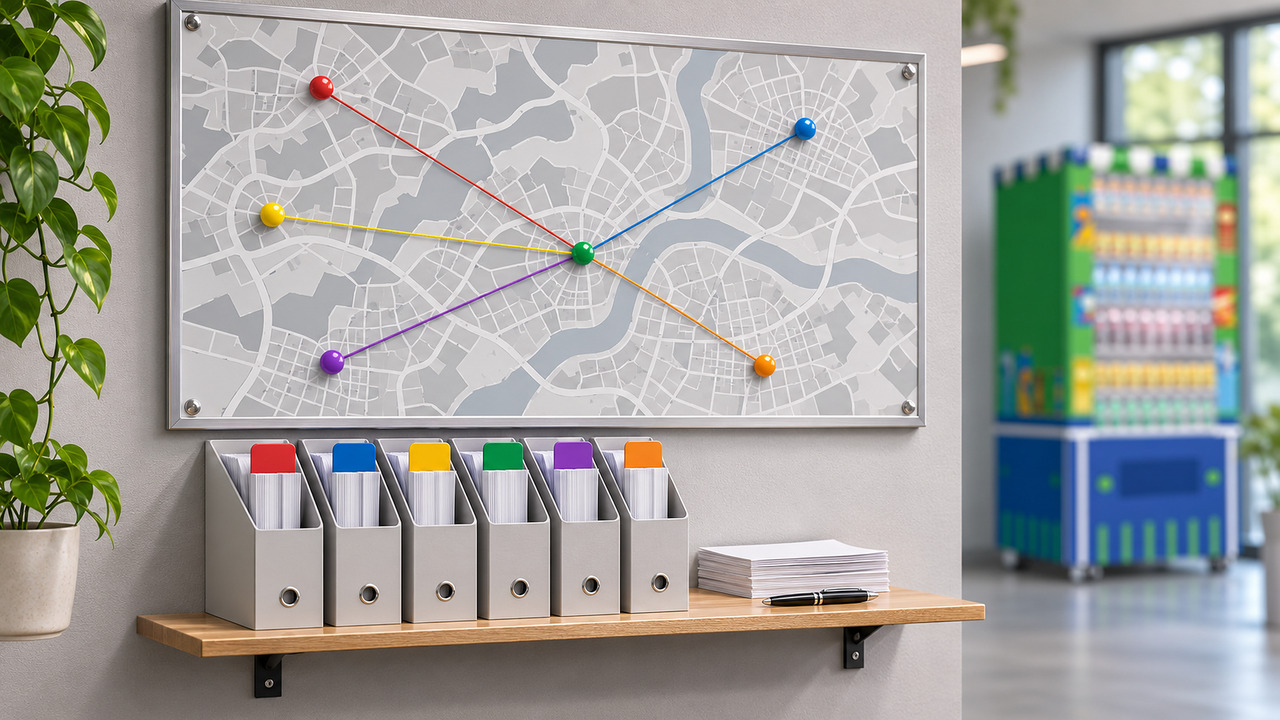
You need to know where each machine is, what products it sells, which business entity it belongs to, which licenses correspond to it, when licenses expire, and whether information needs to be updated after a machine is relocated.
Therefore, once a vending machine business reaches a certain scale, license management actually becomes part of operational management.
You can create an independent file for each machine, uniformly recording machine number, installation address, product type, license information, and renewal date. This way, when adding machines or entering new cities, you can first check local requirements before arranging equipment installation, rather than waiting until the machine has already been shipped to the location before checking licenses.
Equipment shipping, installation, and location leasing all incur real costs. Once you find that local requirements don’t match your original plan, the cost of rework is usually much higher than confirming upfront.
Do Markets Outside the US Use the Same Kind of License?
Rules for unmanned retail, food sales, tax registration, electronic payments, product safety, and business premises vary from country to country. Some markets may have similar systems to business licenses, while others may have requirements segmented by different stages: business registration, tax registration, food permits, local operating permits, etc.
If your target market is the UK, Canada, Australia, Southeast Asia, the Middle East, or South America, the right approach is to first determine the specific country and city, then check local government requirements for vending machines and corresponding product categories.
This is also why, when doing global vending machine projects, equipment localization cannot be understood simply as shipping the machines over.
You also have to consider local languages, payment methods, network environment, types of products and relevant regulations. Also need to check details like voltage and plugs before procurement depending on the target market and the specific model.
What Documents Do You Need to Prepare Before Applying for a Vending Machine Business License?
Although materials vary by region, you can prepare common information in advance.
Basic business information is part of this, including business name, business entity, and tax information.
Machine information may include equipment model, machine dimensions, product type, machine number, and placement address.
If food is involved, you also need to further prepare product-related information and materials required by local health departments.
Then there’s the location—you should also keep property authorization, lease agreements, or other documents proving you have the right to operate at that location.
If you purchase equipment from a manufacturer, you can also ask the supplier to prepare complete product specifications and technical documentation in advance. This way, when you actually enter the application stage, you don’t need to spend a lot of time scrambling to find documents.
When Should You Start Preparing for Licenses?
It’s best before buying machines. A more reasonable order is to first determine the target market, then determine the operating location and product type, then check license and tax requirements, then determine what conditions the equipment needs to meet, and finally complete equipment procurement and deployment.
Doing this avoids a common problem: the machine has already been bought, but local operating requirements don’t match your original business model. Especially for food, beverages, alcohol, tobacco, pharmaceuticals, and other special products, it’s best to confirm relevant regulatory requirements during the business planning stage.
The advantage of vending machines is that they reduce the manual sales process, but unmanned doesn’t mean no management. Truly mature unmanned retail projects need to consider not only sales efficiency, but also put licenses, tax, products, locations, payments, and equipment management into the same operational framework.
Final Thoughts
The vending machine business license is a critical factor in determining whether a project can be successfully implemented. First confirm the market, products, and local requirements, then select suitable equipment—your procurement and operational plans will be clearer. Yunyin has long focused on the design, R&D, production, and sales of smart vending machines, providing multiple equipment types, OEM/ODM, and project support for different application scenarios, helping you move from equipment procurement to complete unmanned retail project implementation.
FAQ
Can a vending machine manufacturer help me apply for a business license?
Manufacturers can not issue licenses for local governments. Local governments usually authorize licenses by operator, location of operation, and type of product. But you can ask the manufacturer ahead of time if they can send you the product specifications, technical documentation, certification materials and other files. Yunyin can help prepare relevant equipment documentation based on project requirements and if the target market has UL or other certification requirements we can also support the certification work based on specific projects.
If a vending machine is placed in a mall or supermarket, do I still need to apply for my own license?
Not necessarily. The operating premises may have its own business qualifications, but this does not mean that the vending machine operator can directly exempt itself from the registration or permit requirements it needs to bear. It is contingent upon what products you sell, your business entity, and the local laws. If you are going to place machines at third-party locations such as malls, hotels or schools, apart from checking the requirements of the location, you also need to check separately the procedures that you will have to handle yourself.
If I change the vending machine’s operating location, do I need to reapply?
It’s possible. Some licenses are linked to a specific operating address, so you may have to update registration information or even reapply for relevant permits after moving. Especially if a machine is being moved from city to city, county to county, or state to state, don’t assume the original license can be used immediately, but instead find out what is required at the new location.
Does every vending machine need its own license?
Not necessarily. Licenses are usually not counted as one per machine, but are tied to the business entity, where it operates, what it sells, and local regulatory requirements. If you intend to deploy several machines simultaneously, it is prudent to verify whether local requirements mandate separate registration or permits for various locations prior to initiating applications.
How much does a vending machine license cost?
There is no single fee standard for vending machine licenses. The exact fees usually depend on the state, county or city you operate in, the types of products you sell and the licenses you need to get. For example, in some US jurisdictions, you pay based on the number of machines, while in others you pay application fees, annual permit fees, or fees for health inspections, all at once.

