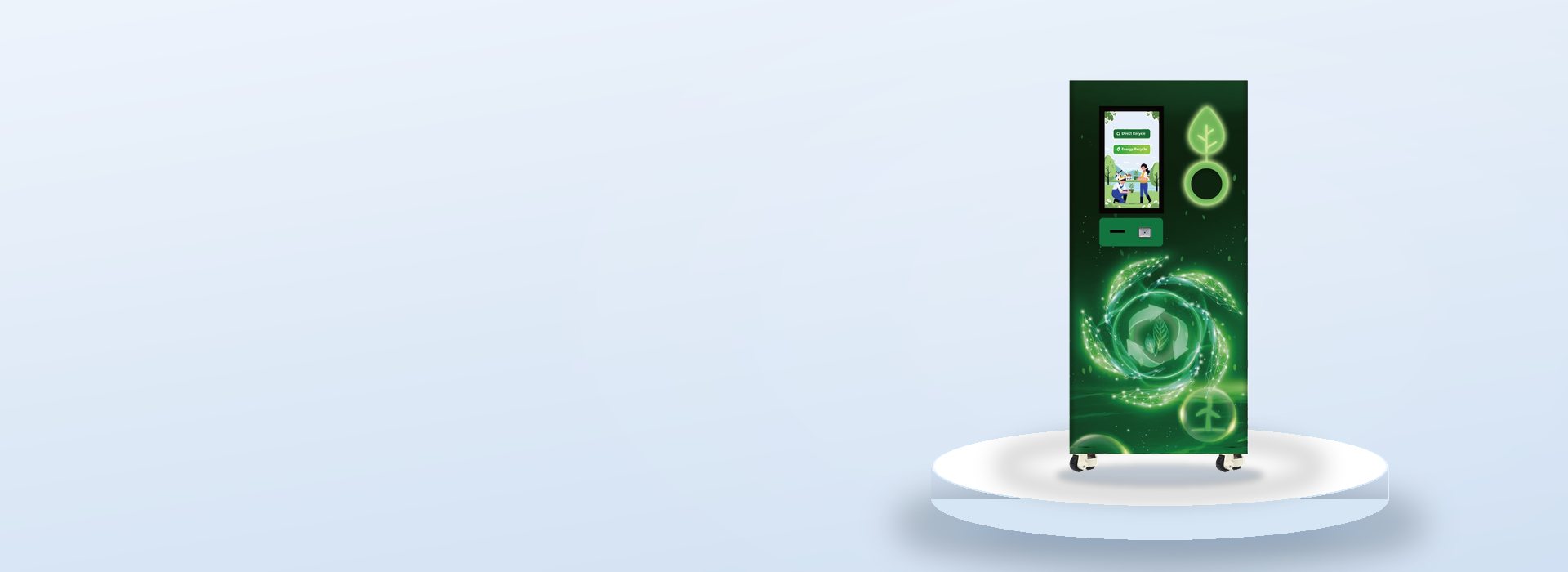
RVM 04 Single-Bin Reverse Vending Machine with Compression Only
Size: 1945(H) × 860(W) × 900(D) mm
Weight: About 200 kg
Display: 21.5-inch screen, 1920 × 1080 pixels, brightness 250 cd/m²
Touch Screen: 21.5-inch capacitive multi-touch, response time < 15 ms
Main Board: Android mainboard, Rockchip RK3568, 16 GB ROM, 2 GB RAM
Speaker: Built-in audio speaker to guide users and prompt correct recycling
Network: WiFi / 4G IoT card / network cable connection
Power: 100 W
Recycling Efficiency: 12 seconds per item; supports continuous input
Accepted Item Size: Bottle diameter 5 – 10 cm; bottle length 5 – 32 cm
Storage Capacity: 1 bin
Weighing Module: 1 weighing module
Identification Module: None — direct disposal, no recognition or sorting on this model
Compression Module: Ultra-quiet electric compression system for effective compaction and higher storage utilization
RVM 04 at a Glance
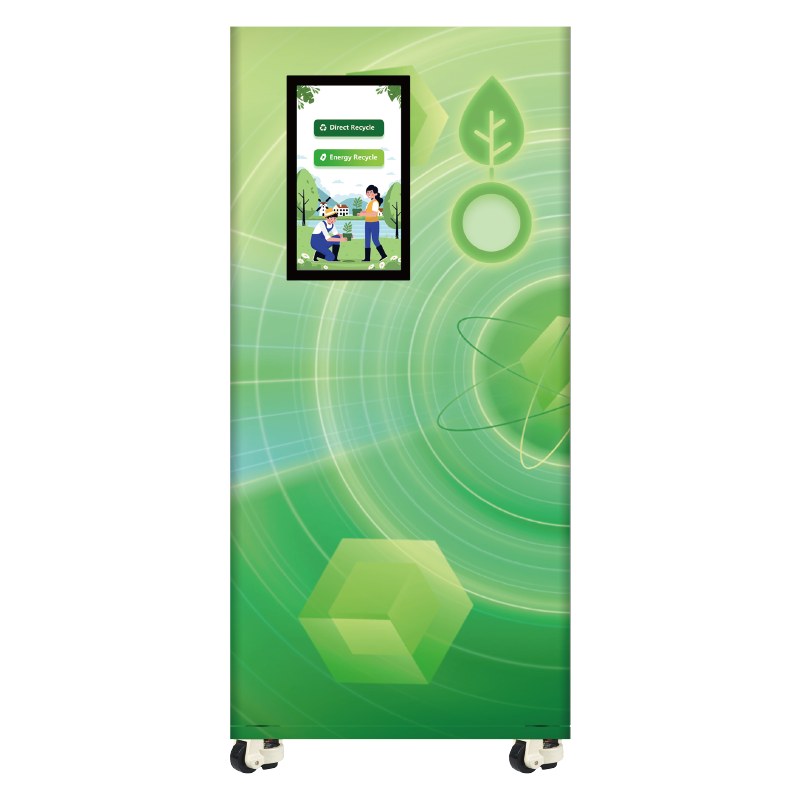
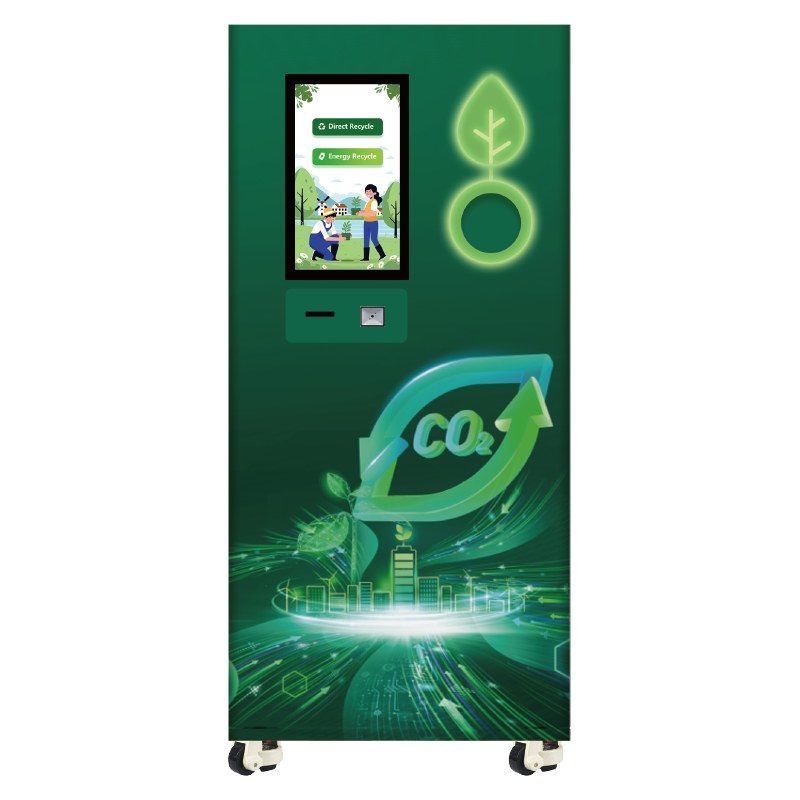
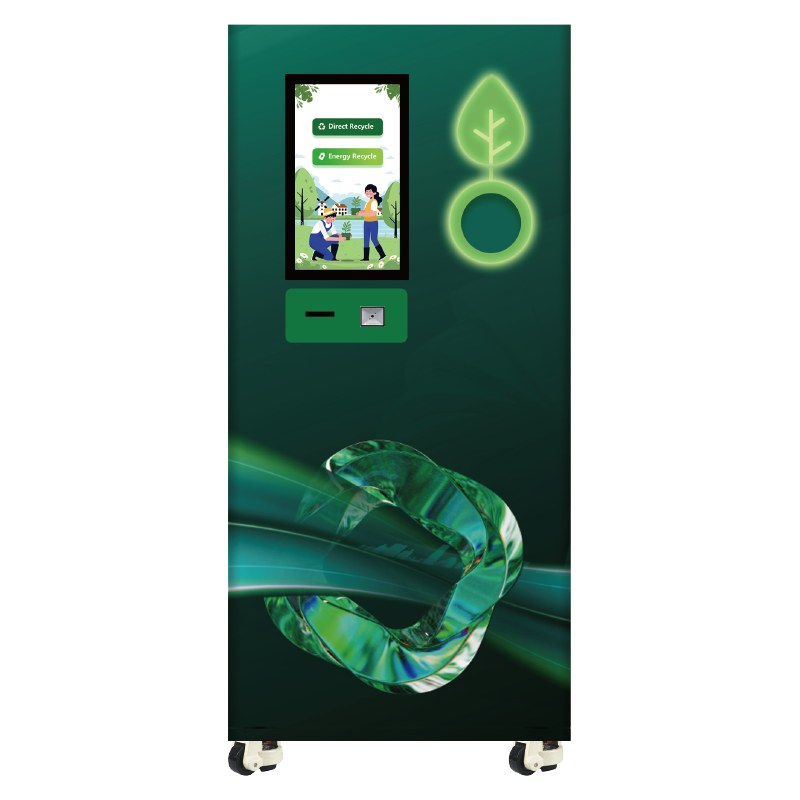
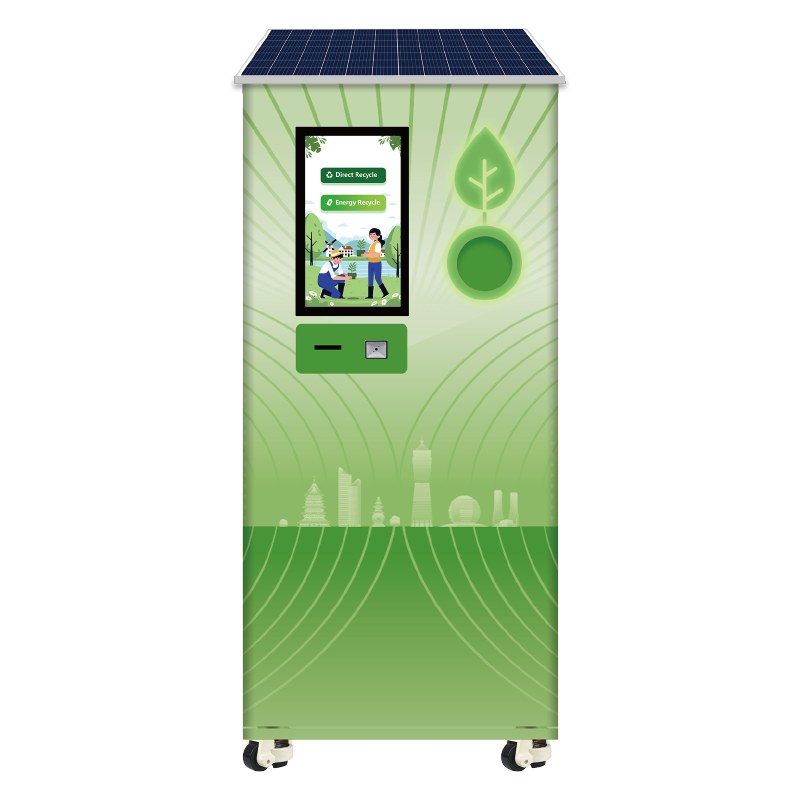
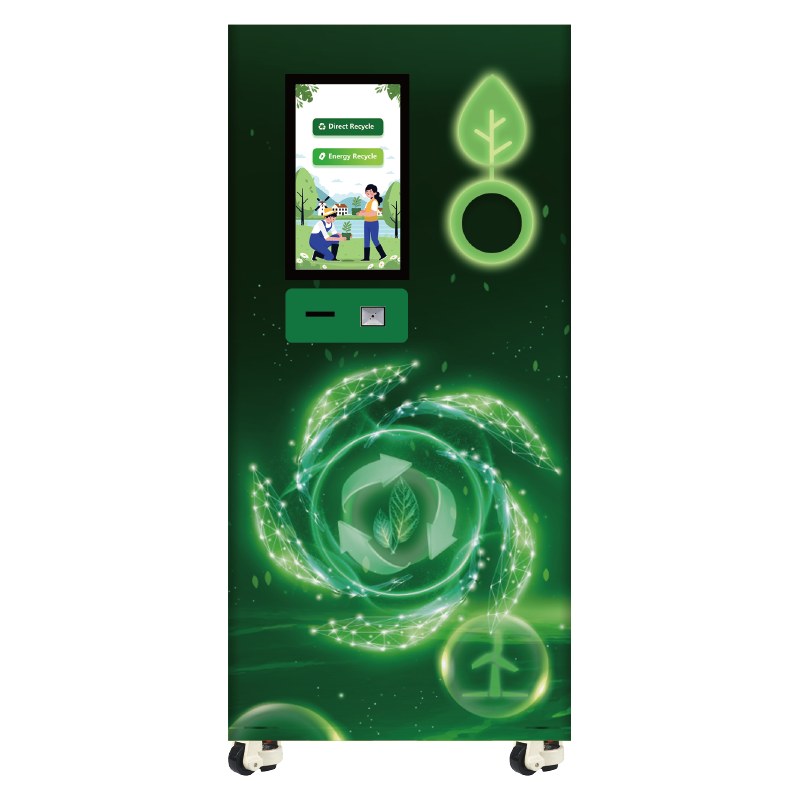
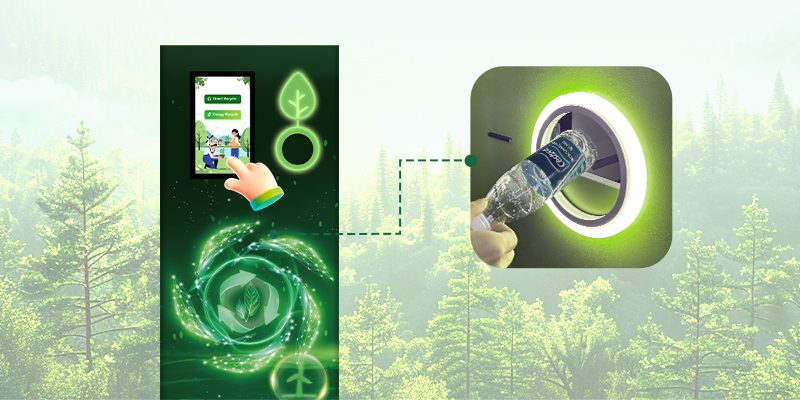
The RVM 04 is the compression-first model: one bin, one weighing module, no recognition module, and an electric press that runs on a schedule. This front view shows the cabinet; a product video will be added here shortly.
If you would like to see the compression cycle on a uniform PET stream, contact us and we will send the latest demo video for your configuration.
One Job, Done Properly: Compress and Store
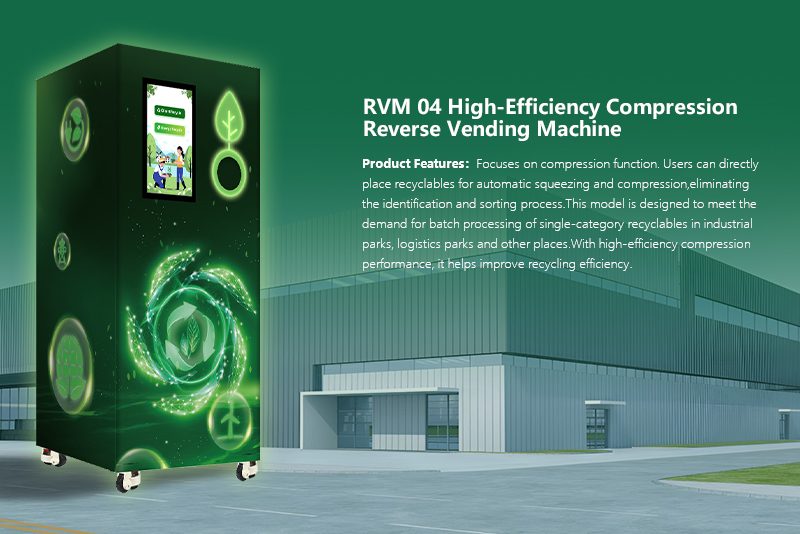
Most reverse vending machines are asked to do two things — decide whether an item belongs, then make it small. The RVM 04 does only the second. There is no camera, no barcode reader, no sorting decision: the inlet accepts the item and the press reduces it.
That is the right trade for a site where the stream is already uniform. At a logistics centre or inside an industrial park, the bottles arriving at the machine are the same bottles the site generates all day — paying for a recognition module would add cost and a maintenance item without changing the outcome.
Four Steps from Drop to Reward
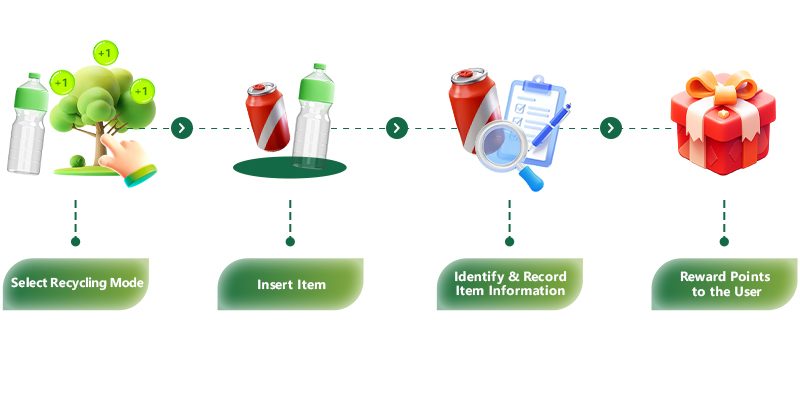
Select the recycling mode, insert the item, let the machine log the drop, and receive the points. Note that the third step here is a record, not a judgment — this model does not test what goes in, so the operator keeps the stream clean at source rather than relying on the cabinet to reject the wrong item.
Throughput runs at about 12 seconds per item because a compression cycle sits between inputs, with continuous input supported so a queue still moves.
One-Touch Inlet, Guided by a Lit Ring
The inlet opens on a tap rather than staying open, so the chamber is only exposed while someone is using it. A lit ring shows exactly where the bottle goes, useful on a depot forecourt where the machine may be used after dark.
The opening takes standard beverage containers: 5–10 cm in diameter and 5–32 cm in length. The inlet is the only part the user touches, so wear stays where servicing is quick.
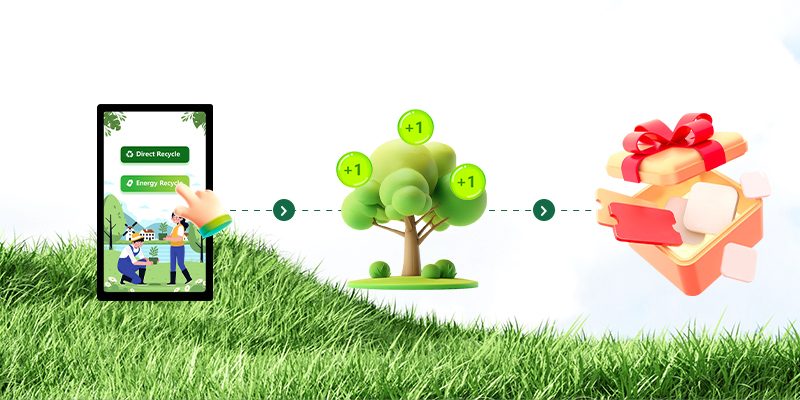
Direct Recycle or Earn Green Points
In Direct Recycle mode the cabinet is a plain disposal point — the mode most industrial sites want, because staff are dropping bottles on the way past rather than participating in a programme.
In Energy Recycle mode, users register by QR code and collect green points per accepted item, redeemable against goods or applied as a discount on a vending machine nearby. That option exists where the site wants participation data or an incentive scheme, and it is a setting rather than a different machine.
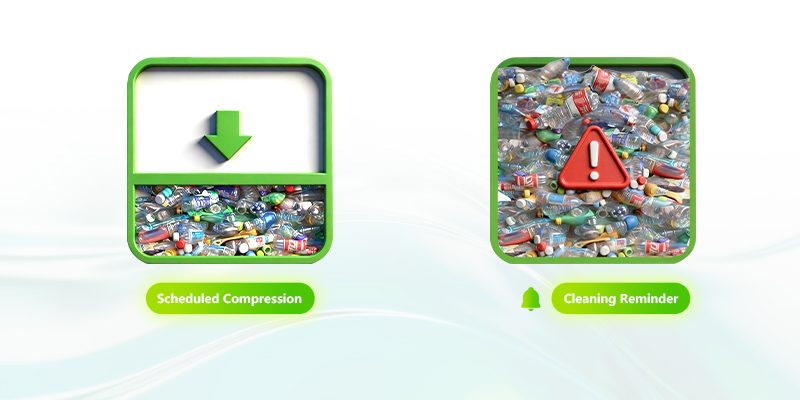
Scheduled Compression, Not Compression on Every Drop
The press runs on a schedule, after a preset quantity has accumulated, rather than firing every time an item goes in. Users do not hear a motor start with each bottle, and the machine does not spend its duty cycle on single items — the same force is applied in batches.
A cleaning reminder is raised when the bin needs emptying, so collection follows actual fill level. On a site generating a steady stream, that is the difference between a weekly visit and three a week.
Ultra-Quiet Electric Compression
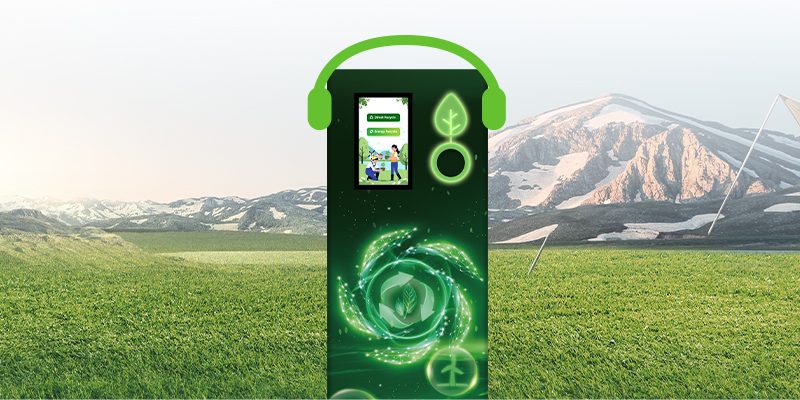
Compaction is normally the loudest operation a reverse vending machine performs. Here it is an ultra-quiet electric system with the cycle scheduled away from active use, so the cabinet can stand near a walkway or a staff entrance without becoming a noise complaint.
The audio prompts run at an indoor-appropriate level: the speaker guides the user through the steps instead of announcing itself across the yard.
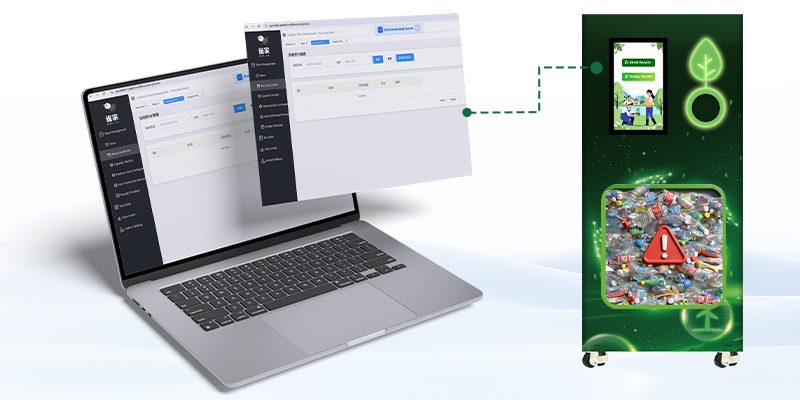
Cloud Dashboard with Fill-Level Alerts
The bin’s weighing module reports fill level continuously, and the cabinet raises an alert before it overflows. Volume collected, online status and faults all report to the same console.
For a facility manager running several machines across a park, that replaces the walk-round: a collection is dispatched because the data says the bin is full, not because someone happened to check.
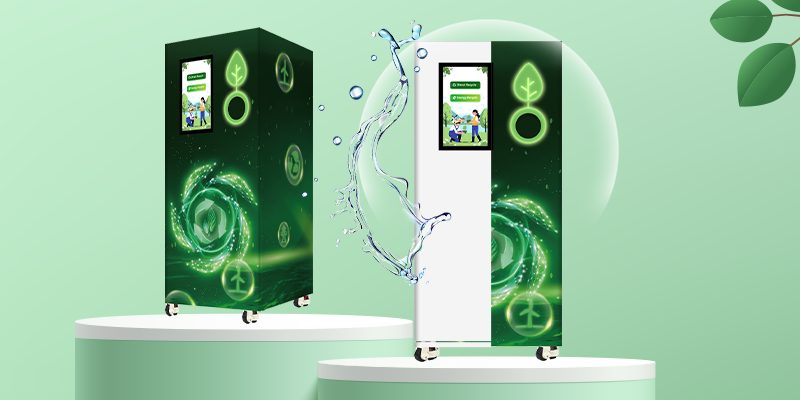
Two Finishes for Indoor and Outdoor Positions
The cabinet comes in a deep green graphics finish for outdoor and semi-open positions, or in white for indoor walls. Both use high-strength sheet metal with anti-rust and dust-resistant coating, so the surface holds up on a forecourt as well as in a corridor.
Casters make repositioning a one-person job, and the footprint matches the rest of the range — no special base required.