
S9 32-Inch Compact Lifting Vending Machine
Size: 1956(H) × 660(W) × 978(D) mm
Weight: About 280 kg
Display: 32-inch, 1920 × 1080 pixels, brightness 350 cd/m²
Touch Screen: 32-inch capacitive multi-touch, response time < 15 ms
Main Board: Android main board, Rockchip RK3568, 16 GB ROM, 2 GB RAM
Single-Chip Microcomputer: Microcomputer control terminal, supports up to 80 cargo lanes, sound and light control, multi-channel sensor feedback, automatic addressing and positioning for the lifting system
Menu Operation: Purchase via capacitive touch screen (Android system)
Payment System: Cash / credit card / e-wallet payments supported
Network: WiFi / 4G IoT card / network cable connection
Cargo Channel Quantity: Push plate lanes, 6 layers × 5 columns, 30 lanes (adjustable and customizable)
Product Capacity: 30 items (one per lane)
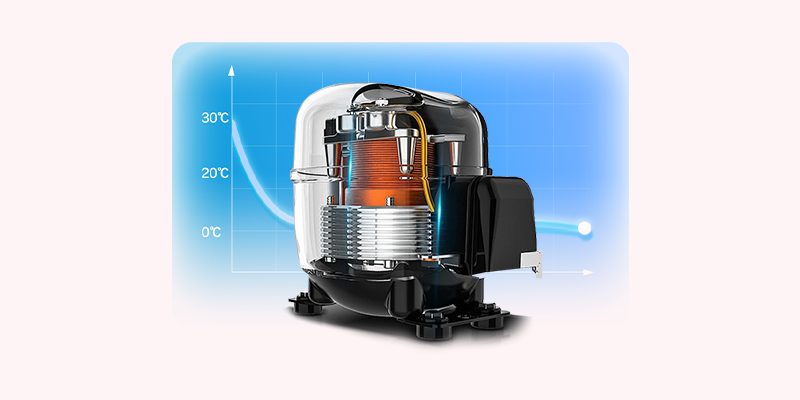
Refrigeration System: High-efficiency compressor, timed on/off, working temperature freely set within the specified range
Power: About 700 W during cooling, about 200 W when not cooling
Voltage: AC220V / 50Hz, electric shock protection
S9 at a Glance
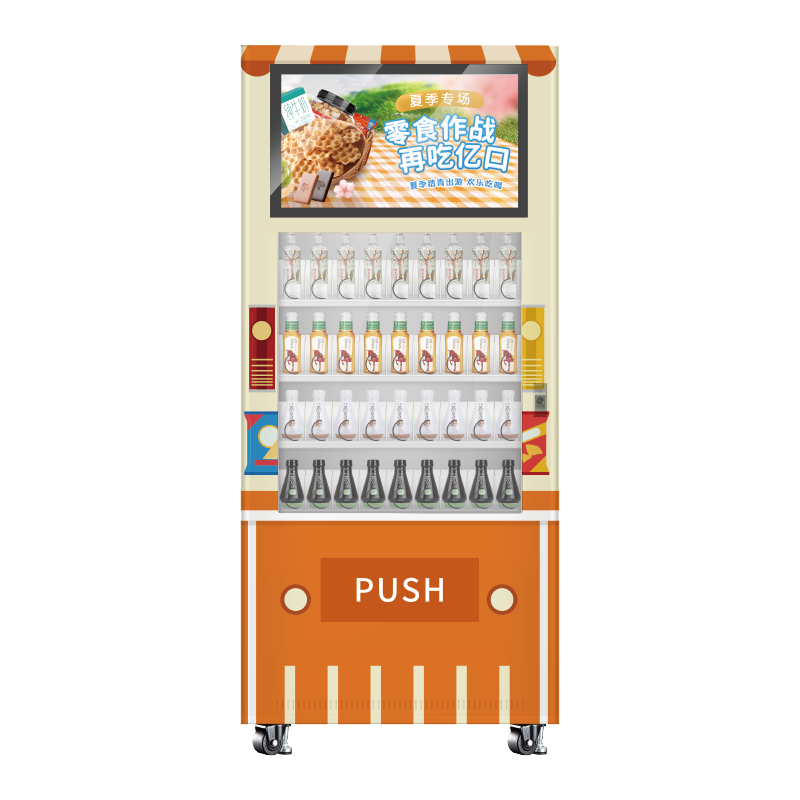
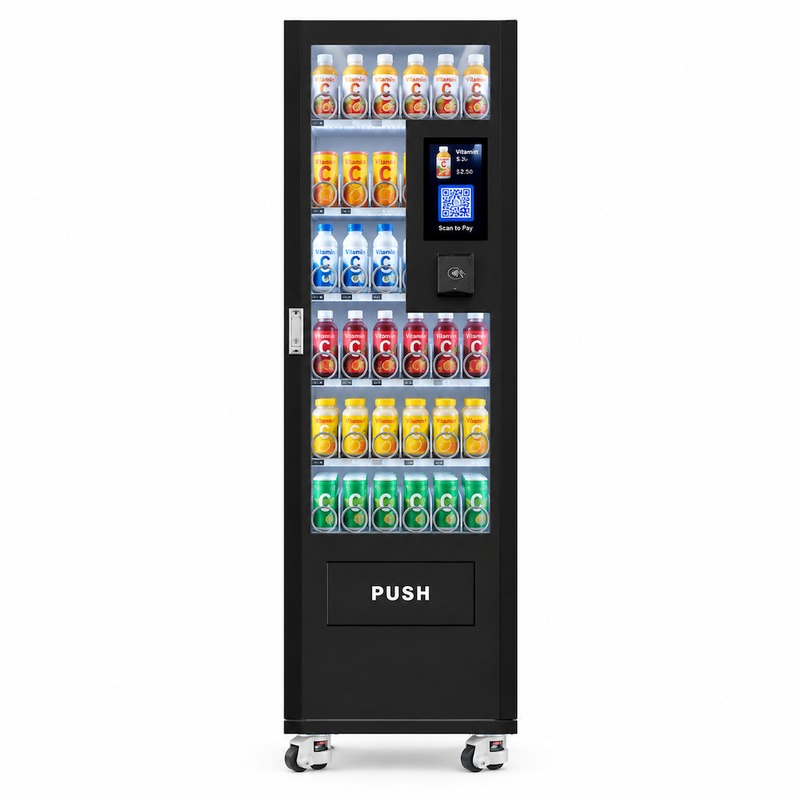
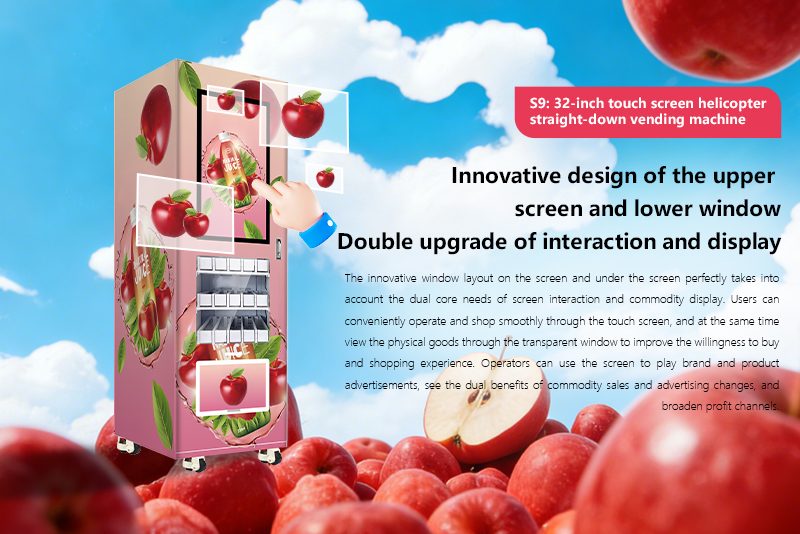
The S9 puts a 32-inch screen over a transparent product window in a 660 mm wide body, with 30 push-plate lanes and an induction anti-pinch pickup port. This front view shows the screen and the window; a product video will be added here shortly.
If you would like to see the machine running, contact us and we will send the latest demo video for your configuration.
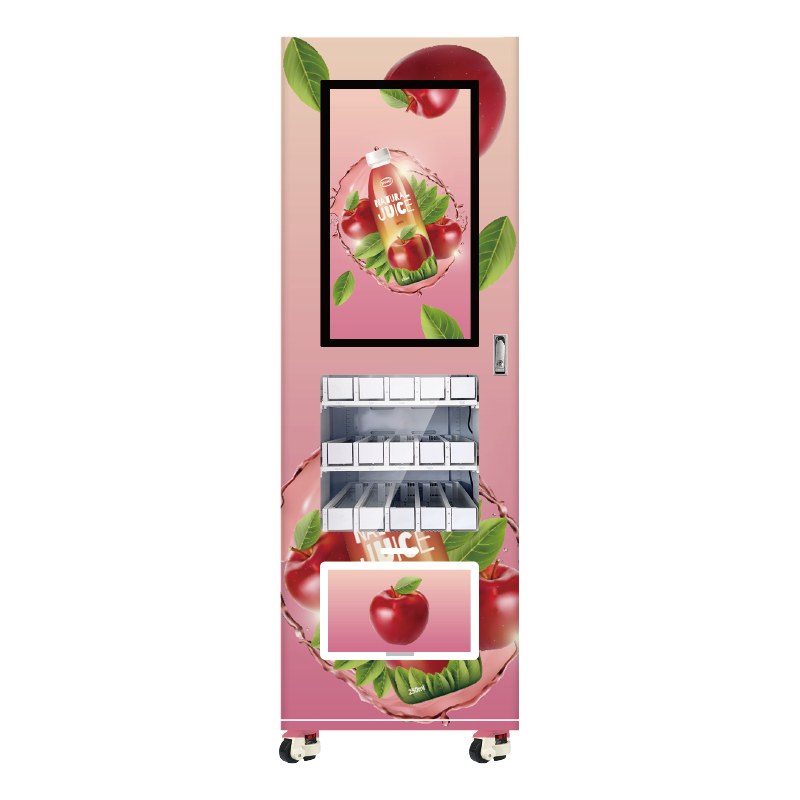
Upper Screen and Lower Window in One Body
The 32-inch screen occupies the top half and the transparent product window the bottom, so interaction and display each get their own space. A customer taps a product on screen and immediately sees the real item behind glass.
Between purchases the screen runs brand and product advertising, which gives the operator a second revenue stream on top of sales without adding hardware.
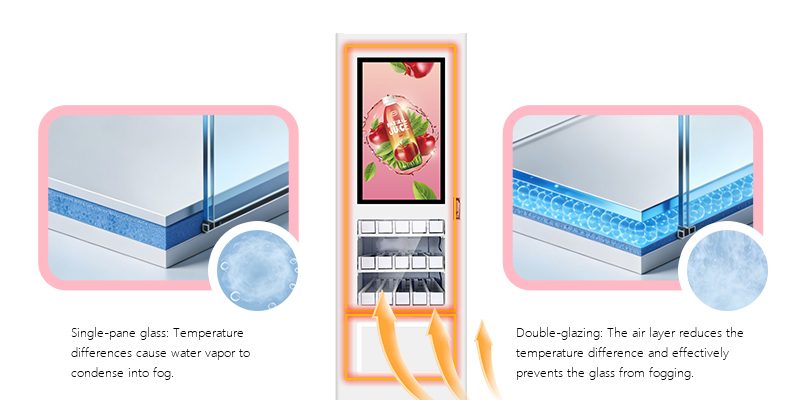
Double Glazing That Prevents Fogging
With a single pane, the temperature difference between the chilled cabinet and the room turns water vapour into fog on the inner surface. The S9 uses double glazing, where the sealed air layer reduces that difference and keeps the glass clear.
A clear window is the whole point of a display machine: customers buy what they can see, and staff are not wiping condensation on every visit.
A 660 mm Body That Fits Narrow Spaces
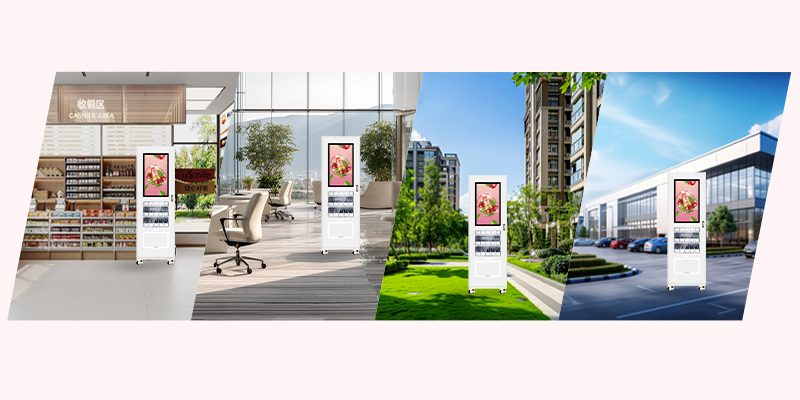
At 660 mm wide the S9 slides into places a full-size cabinet cannot go: beside a shop counter, along an office corridor, at the edge of a residential lobby or a campus car park. The narrow footprint still holds 30 lanes.
For an operator building a route across many small sites, that width is what makes the unit viable where rent per square metre or available wall space rules out a larger machine.
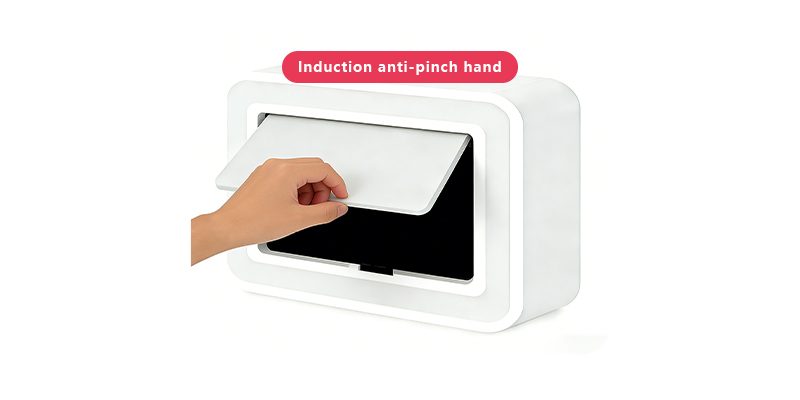
Induction Anti-Pinch Pickup Port
The pickup port sits at a comfortable height and uses an induction sensor: when a hand enters the opening, the shutter holds back instead of closing on it.
On an unattended machine, a safe port protects customers and keeps the unit usable by children and older shoppers without staff nearby.
Automatic Level Detection After Restocking
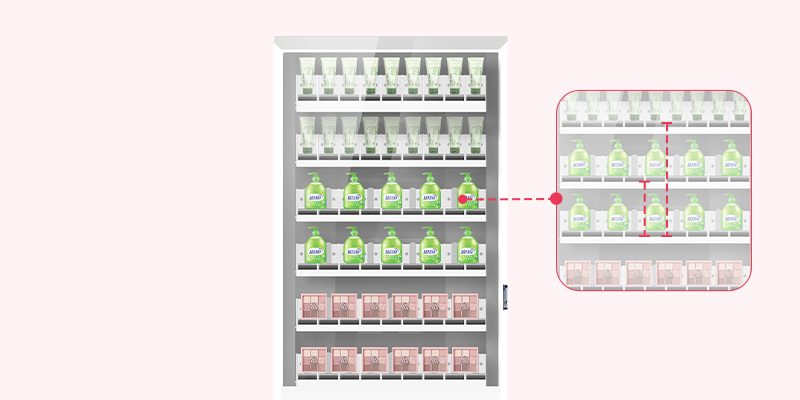
Move a shelf and the machine reads the new level and repositions the lifting platform by itself, with no calibration step. Restocking does not require a technician to reset the shelf map.
That keeps the machine selling through planogram changes, which is the usual reason a lifting machine sits idle after a product refresh.
5 cm Foamed Body and Magnetic Seals
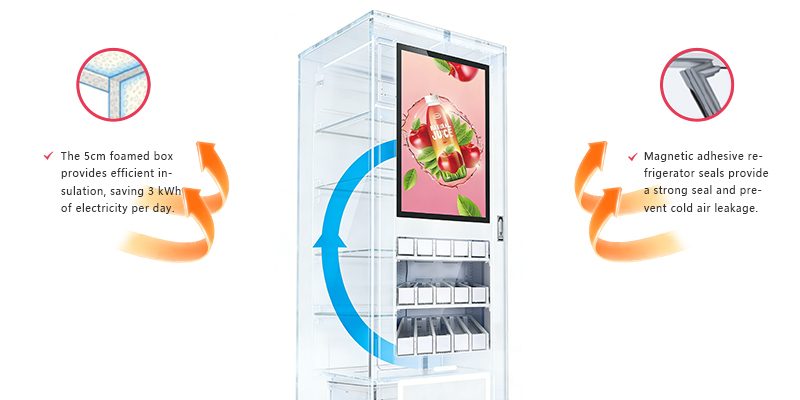
The cabinet is foamed in one piece with a 5 cm insulation layer and closed with refrigerator-grade magnetic strips, stopping cold air leaking around the door frame.
Tests show about 3 kWh saved per day against a standard single-layer cabinet, a direct cut in the running cost of a chilled unit.
Brand Compressor with Stable Cooling
A top-brand compressor pulls the cabinet down quickly and holds the set point with little fluctuation. Working temperature is set within the specified range and can be adjusted remotely.
Timed on/off avoids running the compressor flat out overnight, and a branded unit lowers the lifetime service cost of the part most likely to fail.