RVM 02 Silent Sorting Reverse Vending Machine, 2 Bins
Size: 1945(H) × 860(W) × 900(D) mm
Weight: About 200 kg
Display: 21.5-inch screen, 1920 × 1080 pixels, brightness 250 cd/m²
Touch Screen: 21.5-inch capacitive multi-touch, response time < 15 ms
Main Board: Android mainboard, Rockchip RK3568, 16 GB ROM, 2 GB RAM
Speaker: Built-in audio speaker to guide users and prompt correct recycling
Network: WiFi / 4G IoT card / network cable connection
Power: 100 W
Recycling Efficiency: 5 seconds per item; supports continuous input
Accepted Item Size: Bottle diameter 5 – 10 cm; bottle length 5 – 32 cm
Storage Capacity: 2 bins
Weighing Module: 2 weighing modules
Identification Module: Standard camera-based image recognition plus barcode reverse scanning
Compression Module: None — no compaction, by design, so operation stays silent
RVM 02 at a Glance
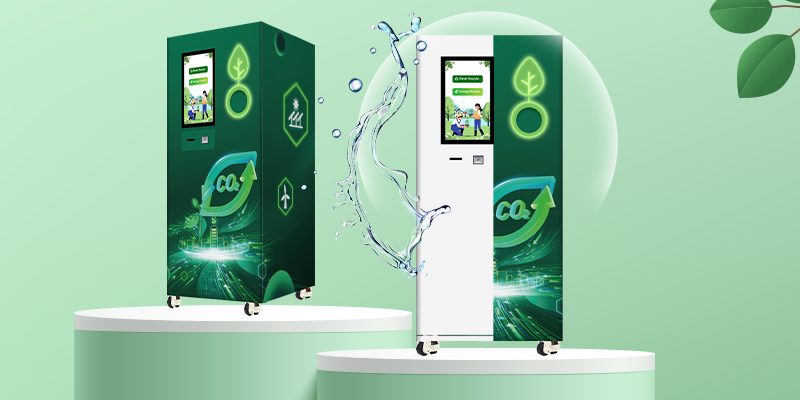
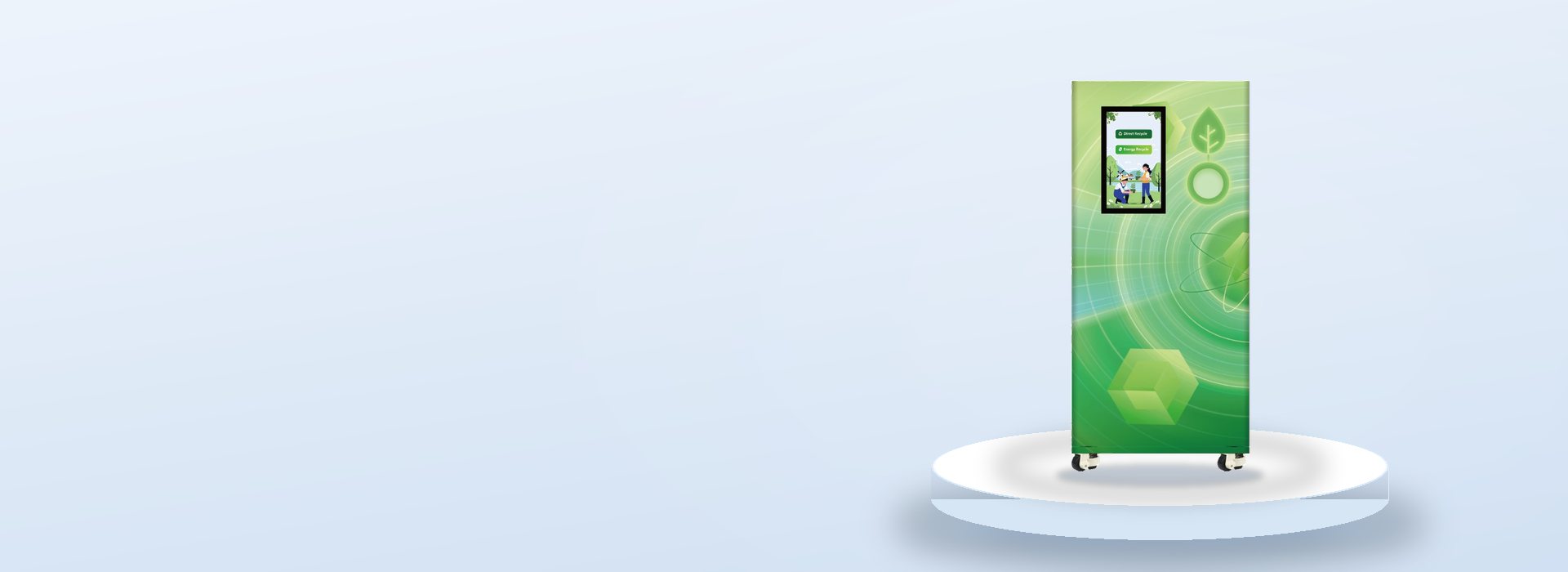
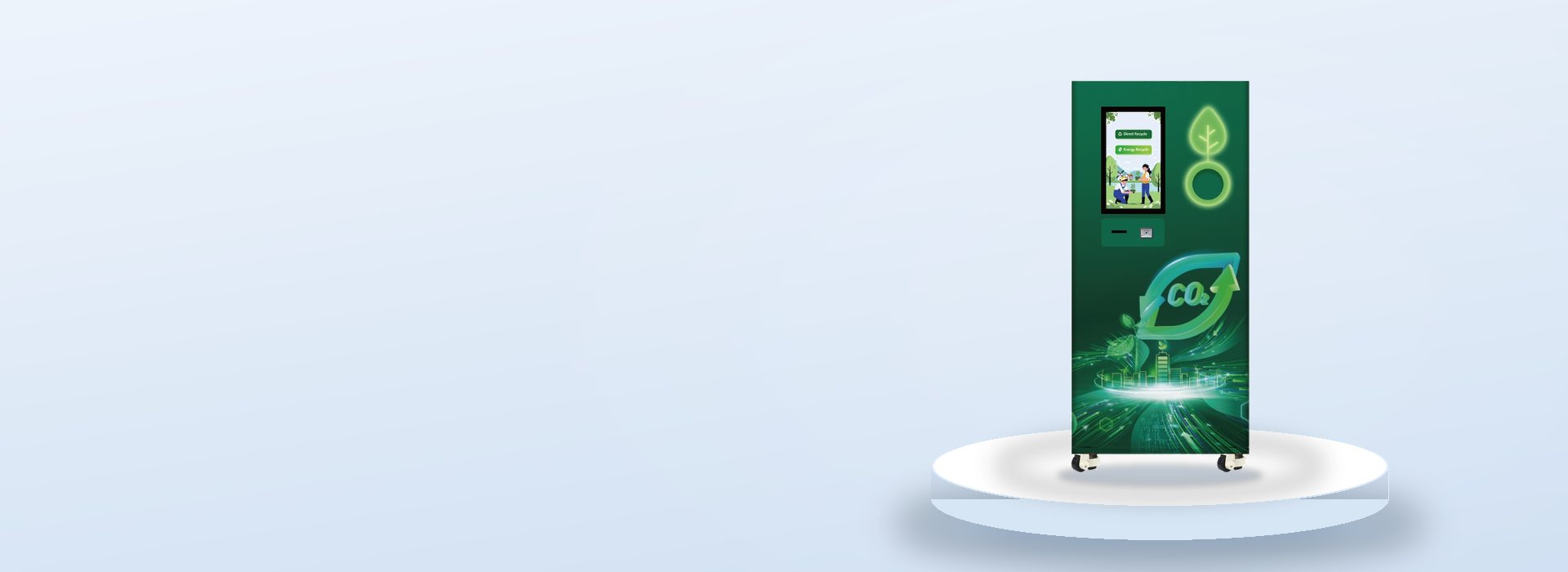
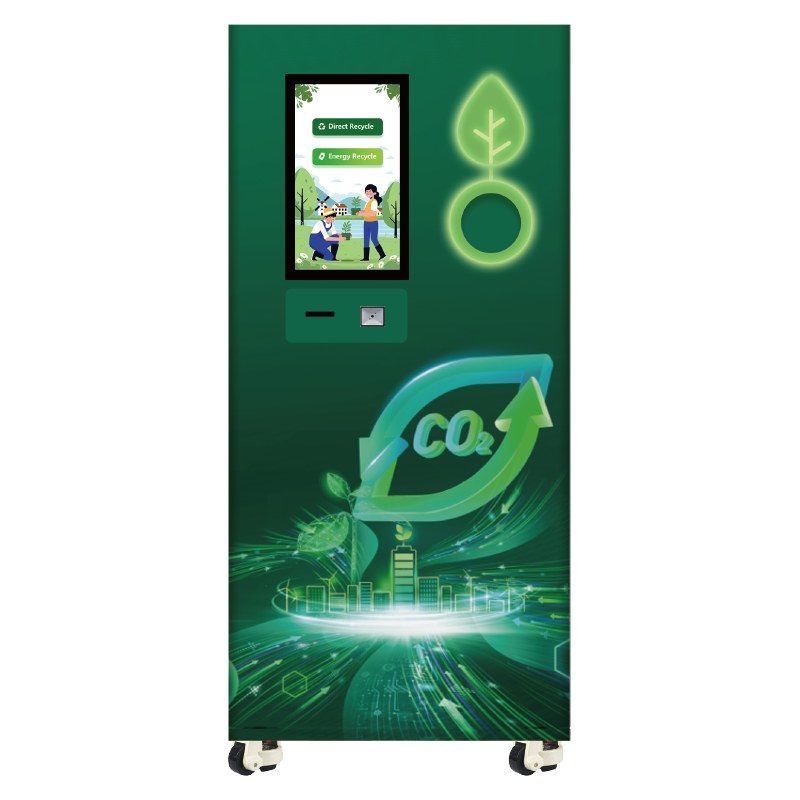
The RVM 02 is a two-bin reverse vending machine that sorts by itself: barcode reverse scanning plus camera recognition decide whether an item is accepted, and the absence of a compressor keeps the whole cycle quiet. This front view shows the cabinet; a product video will be added here shortly.
If you would like to hear the operating noise level and see the sorting flow on a live unit, contact us and we will send the latest demo video.
Built for Lobbies, Not Back Corridors
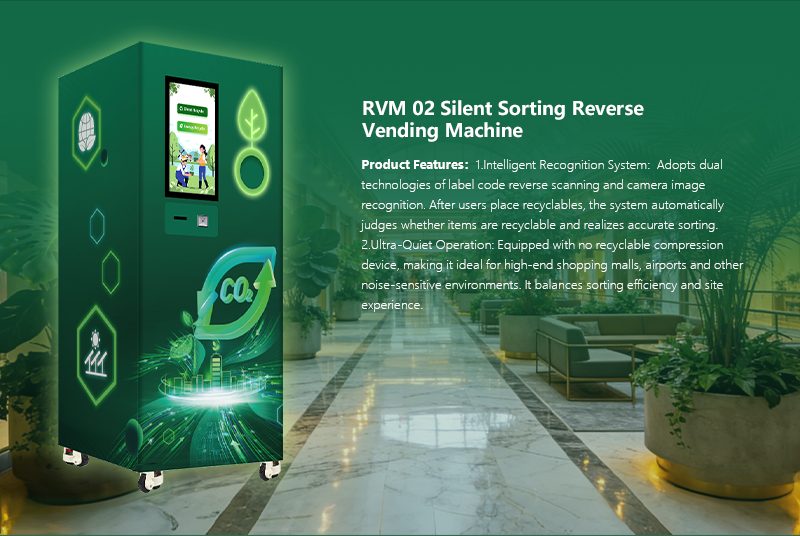
A recycling point in a shopping mall or an airport terminal cannot sound like a workshop. The RVM 02 is deliberately built without a compaction system, so the only noise in the cycle is the inlet door and the item dropping — which is what allows it to sit in a finished lobby next to seating rather than behind a service door.
The cabinet carries a green graphics finish over high-strength sheet metal, and the 21.5-inch screen keeps the interaction on the front face where a passer-by expects it.
Four Steps from Drop to Reward
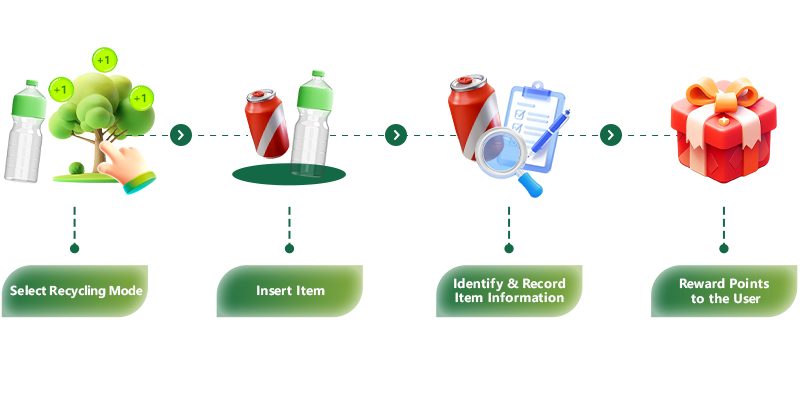
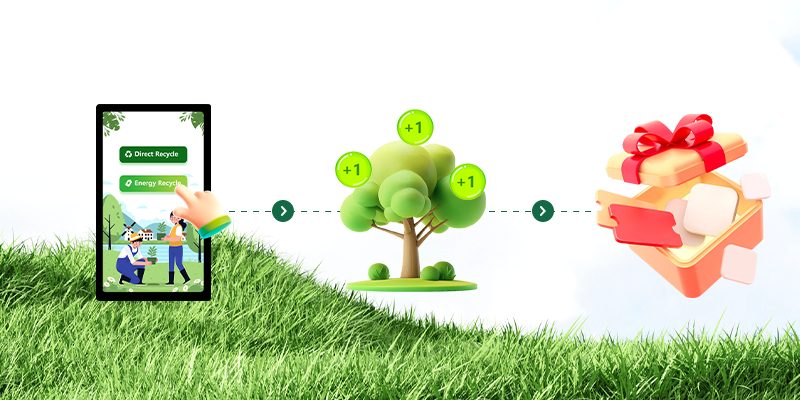
Select the recycling mode, insert the item, let the machine identify and record it, and receive the points. Each step is confirmed on screen and by the built-in speaker, so a first-time user needs no staff guidance.
Intake runs at about 5 seconds per item with continuous input, which keeps a queue moving at a busy concourse without the machine becoming the bottleneck.
One-Touch Inlet, Guided by a Lit Ring
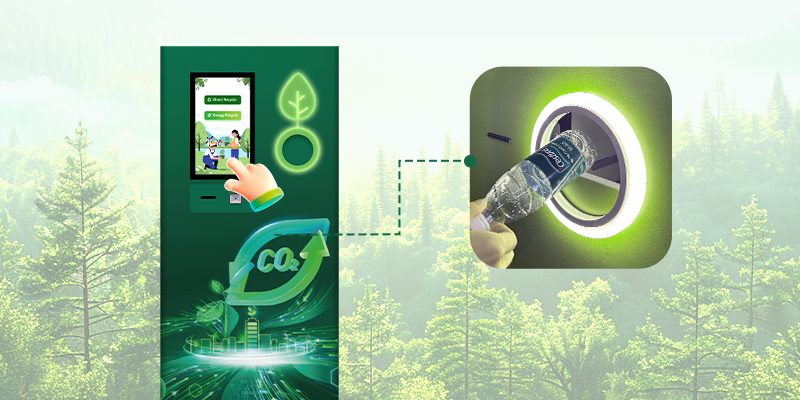
The inlet opens on a tap rather than staying open, so the chamber is only exposed while someone is actually using it. A lit ring around the opening shows exactly where the bottle goes, in a dim terminal or a bright atrium alike.
The geometry fits standard beverage containers: 5–10 cm in diameter and 5–32 cm in length, covering water bottles, soda bottles and cans without adjustment.
Direct Recycle or Earn Green Points
The operator decides how the machine behaves. In Direct Recycle mode it is a straightforward disposal point. In Energy Recycle mode, users register by QR code and collect green points per accepted item, redeemable against goods or applied as a discount on a nearby vending machine.
For a mall or an airport, the second mode turns a waste stream into a reason to interact: the points give a return incentive, and the redemption tie-in sends that traffic to a retail point the operator already runs.
Accepts What It Should, Rejects What It Shouldn't
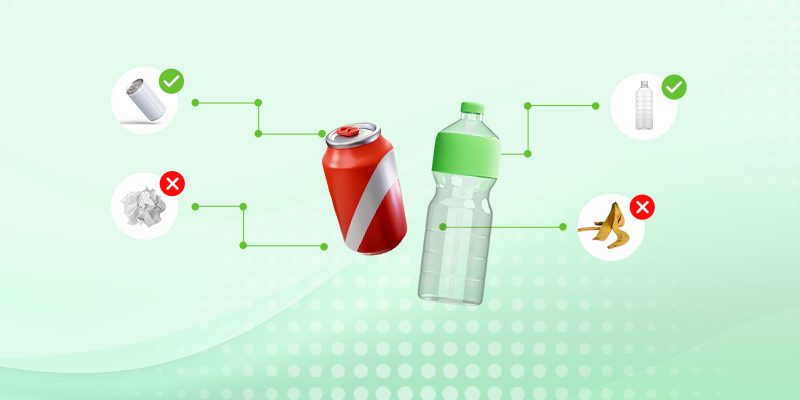
Two independent checks run on every item: barcode reverse scanning against the packaging code, and camera image recognition against the shape and label. Infrared sensors count items as they pass, so a single bottle cannot be counted twice and a crushed can cannot slip through as two.
The practical effect is that cans and PET bottles are accepted while paper cups, napkins and food waste are returned rather than swallowed. That keeps the two bins clean, which is what makes the collected material actually resellable instead of contaminated.
Two Bins, Two Weighing Modules, One Dashboard
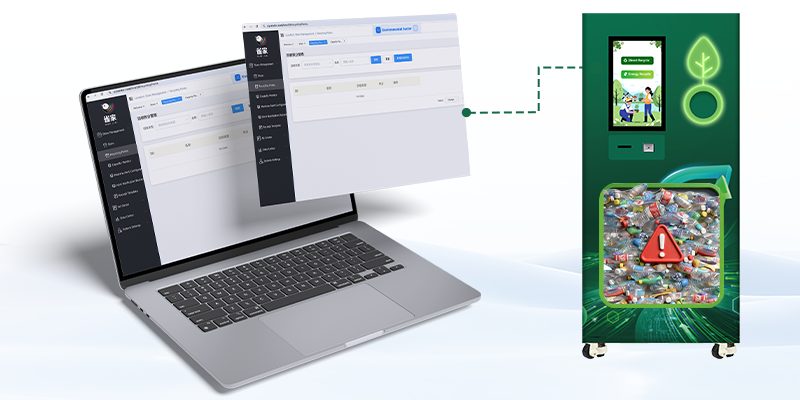
Each of the two bins has its own weighing module, so fill level is reported per stream instead of as a single figure. When a bin approaches capacity, the cloud dashboard raises an alert — the operator collects by actual fill level rather than on a fixed route.
Recycling volume, bin status, offline units and faults all report to the same console. On a distributed network that is the difference between dispatching a van because a bin is full and dispatching it because the calendar said so.
Two Finishes for Two Kinds of Space
The cabinet is offered in a deep green graphics finish for outdoor and semi-open sites, and in white for interiors where a bright object would stand out too much. Both use the same anti-rust, dust-resistant coated sheet metal, so the choice is aesthetic rather than structural.
Casters let one person reposition the unit when a site layout changes, without a crane or a service call.