RVM 01 One-Touch Reverse Vending Machine, No Sorting Required
Size: 1945(H) × 860(W) × 900(D) mm
Weight: About 200 kg
Display: 21.5-inch screen, 1920 × 1080 pixels, brightness 250 cd/m²
Touch Screen: 21.5-inch capacitive multi-touch, response time < 15 ms
Main Board: Android mainboard, Rockchip RK3568, 16 GB ROM, 2 GB RAM
Speaker: Built-in audio speaker to guide users and prompt correct recycling
Network: WiFi / 4G IoT card / network cable connection
Power: 100 W
Recycling Efficiency: 5 seconds per item; supports continuous input
Accepted Item Size: Bottle diameter 5 – 10 cm; bottle length 5 – 32 cm
Storage Capacity: 1 bin
Weighing Module: 1 weighing module
Identification Module: None — no barcode or camera recognition on this model
Compression Module: None — no built-in compaction on this model
RVM 01 at a Glance
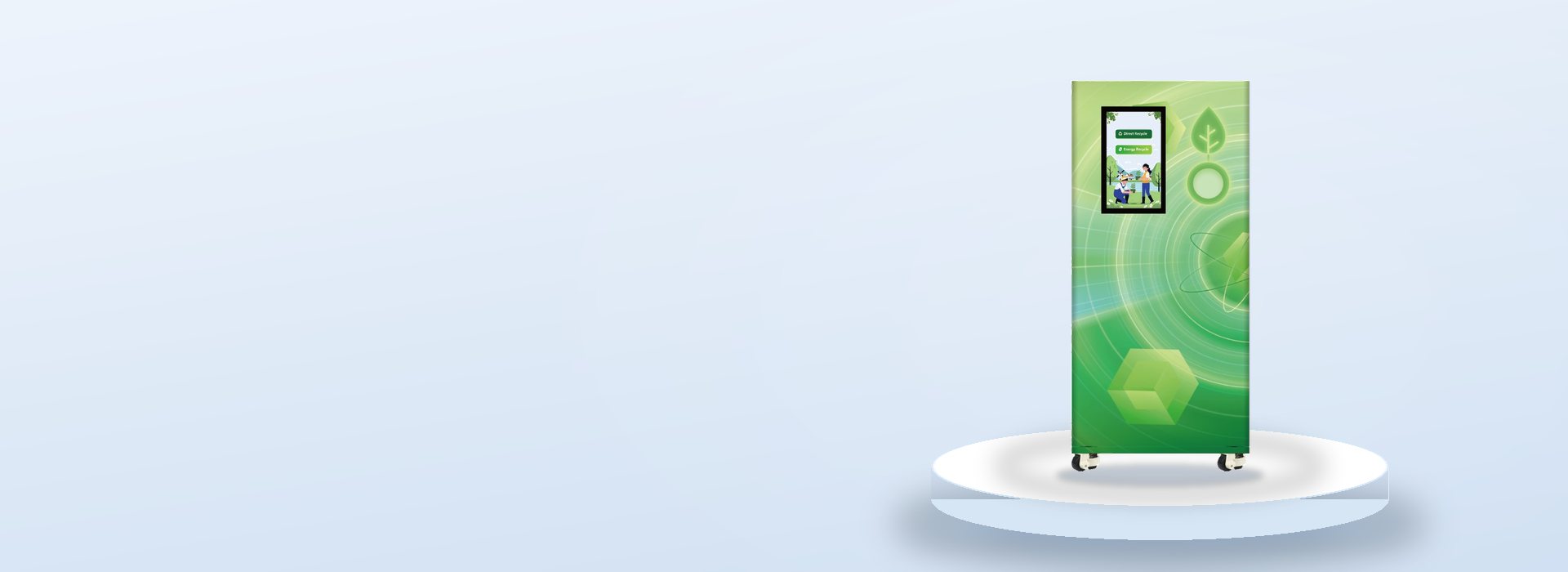
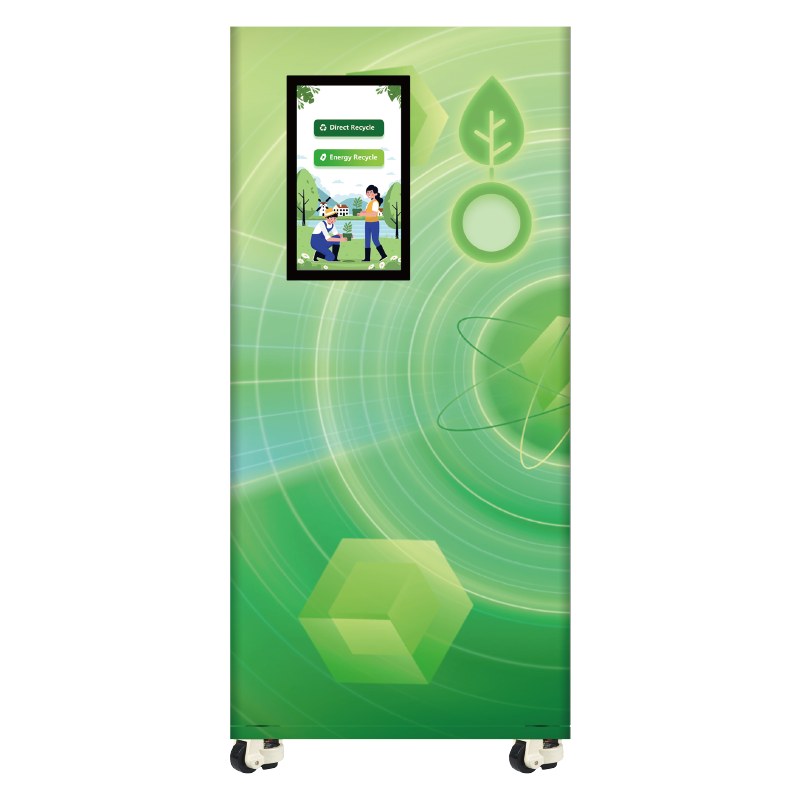
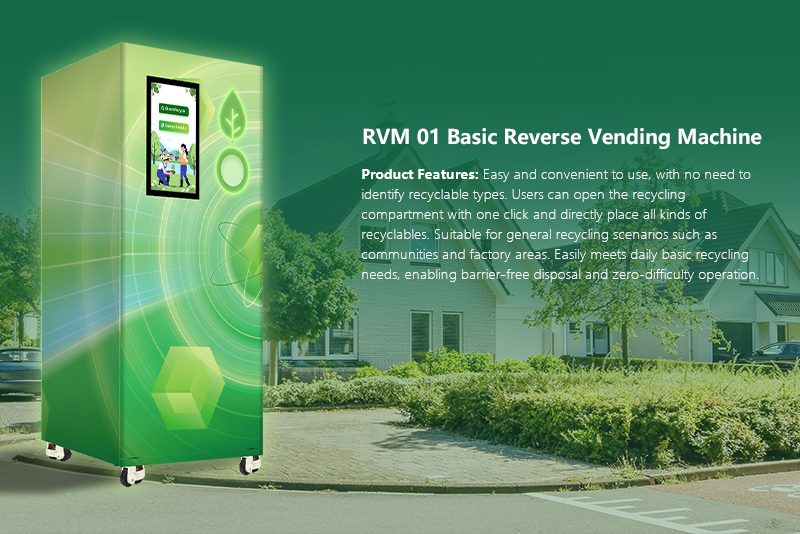
The RVM 01 is a one-touch reverse vending machine: a single 200 kg cabinet with a 21.5-inch screen, a 1-bin collection chamber and a 5-second-per-item intake. This front view shows the cabinet and the inlet door; a product video will be added here shortly.
If you would like to see the drop-and-reward flow running on a live unit, contact us and we will send the latest demo video for your configuration.
One Cabinet, No Sorting, No Learning Curve
The RVM 01 takes the simplest possible position: one door, one chamber, no sorting. A user walks up, taps the screen, the recycling door opens, and the bottle goes in. There is no menu to learn and no category to choose, which is what makes it work at a community entrance or a factory gate where the audience is not motivated to think about recycling rules.
The cabinet is 1945 mm tall and 860 mm wide with casters, so it can be rolled into position and levelled without a crane. Everything a passer-by needs to know is on the 21.5-inch screen.
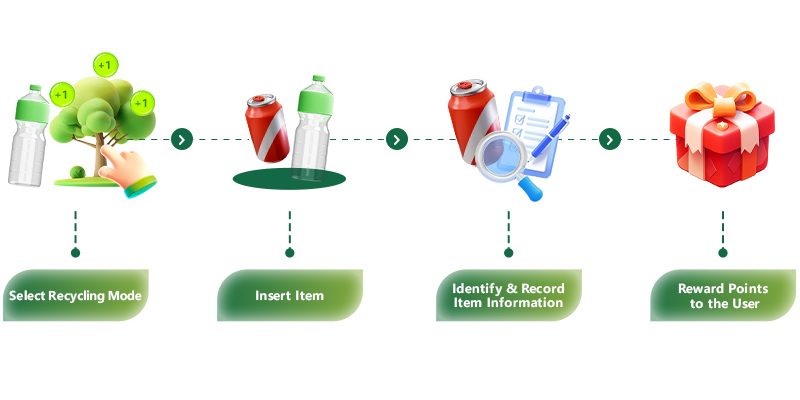
Four Steps from Drop to Reward
The flow is short enough to complete in under half a minute: select the recycling mode, insert the item, let the machine record the drop, and receive the points. Each step is confirmed on screen and by the built-in speaker, so a first-time user does not need instructions from staff.
Because the sequence is identical every time, throughput stays steady at a busy site — the machine handles one user every few seconds rather than one every few minutes.
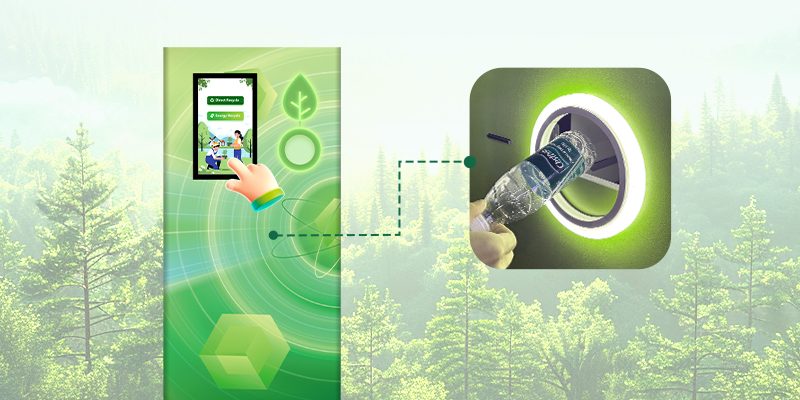
One-Touch Inlet with Guided Insertion
The inlet opens on a tap rather than staying open, so the chamber is only exposed while someone is actually using it. A lit ring around the opening shows exactly where the bottle goes, day or night, and the geometry is sized for standard beverage containers: 5–10 cm in diameter and 5–32 cm in length.
Intake runs at about 5 seconds per item and accepts continuous input, so a user with a bag of bottles is not standing there waiting between each one.
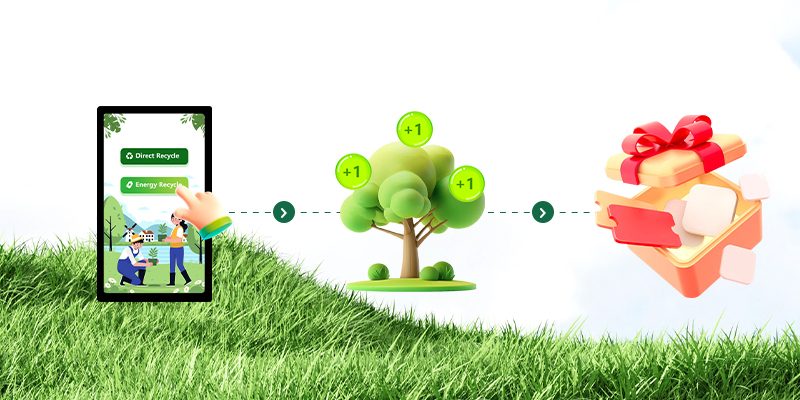
Two Modes: Direct Recycle or Earn Green Points
The operator chooses how the machine behaves. In Direct Recycle mode it is purely a disposal point — the fastest option for a site that just wants bottles out of the bin stream. In Energy Recycle mode, users register by QR code and collect green points for each accepted item, which can be redeemed or applied as a discount on vending purchases.
That second mode is what turns a cost centre into an engagement tool: the points give a reason to come back, and the redemption link lets a recycling programme feed traffic into a nearby vending machine.
Cloud Dashboard with Full-Bin Alerts
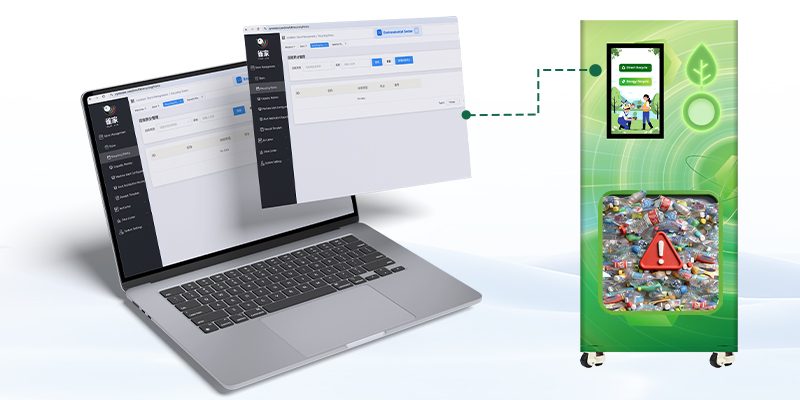
Every unit reports back to a management dashboard: how much has been collected, when, and whether the bin is full, offline or malfunctioning. Instead of a fixed collection route, the operator schedules pickup by actual fill level — fewer empty trips, and no overflow at the site.
That matters most on a distributed network, where sending someone to check each cabinet is the largest recurring cost. Collection becomes a task generated by the data rather than a round of the city.
Two Finishes, Built to Sit in Public Space
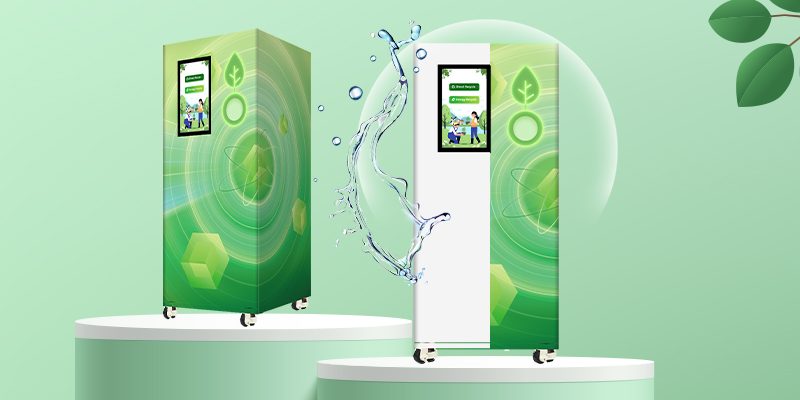
The cabinet comes in a green graphic finish or a clean white finish, so it can either read as an obvious recycling point or blend into a modern lobby. High-strength sheet metal with anti-rust and dust-resistant coating keeps the surface presentable outdoors and in semi-open areas.
Casters make repositioning a one-person job when a site changes layout, and the footprint stays small enough for a pavement corner, a lobby wall or a factory gate.