TK-03 Desktop Helmet Care Machine
Size: 580(H) × 600(W) × 525(D) mm
Weight: About 50 kg
Display: 10.1-inch, 1920 × 1080 pixels, brightness 200 cd/m²
Touch Screen: 10.1-inch capacitive multi-touch, response time < 15 ms
Main Board: Android, Rockchip RK3568, 16 GB ROM, 2 GB RAM
Chamber Capacity: 1 helmet care chamber
Care Process: Ultrasonic atomization, deodorising ion disinfection, high-efficiency drying, negative ion purification
Consumable Cost: 5 L atomization liquid, enough for 400–500 helmets
Lighting: Integrated colour LED lighting for night use
Speaker: Built-in voice prompts during the care cycle
Payment System: Cash / credit card / e-wallet payments supported
Network: WiFi / 4G IoT card / network cable connection
Power: Standby 100 W, operating approx. 1200 W (drying stage 2 minutes)
Voltage: 220 V by default with anti-shock protection; transformer required in 110 V regions
Material: Wear-resistant stainless steel chamber, cold-rolled steel cabinet with eco paint coating
A Whole Care Machine at Counter Height
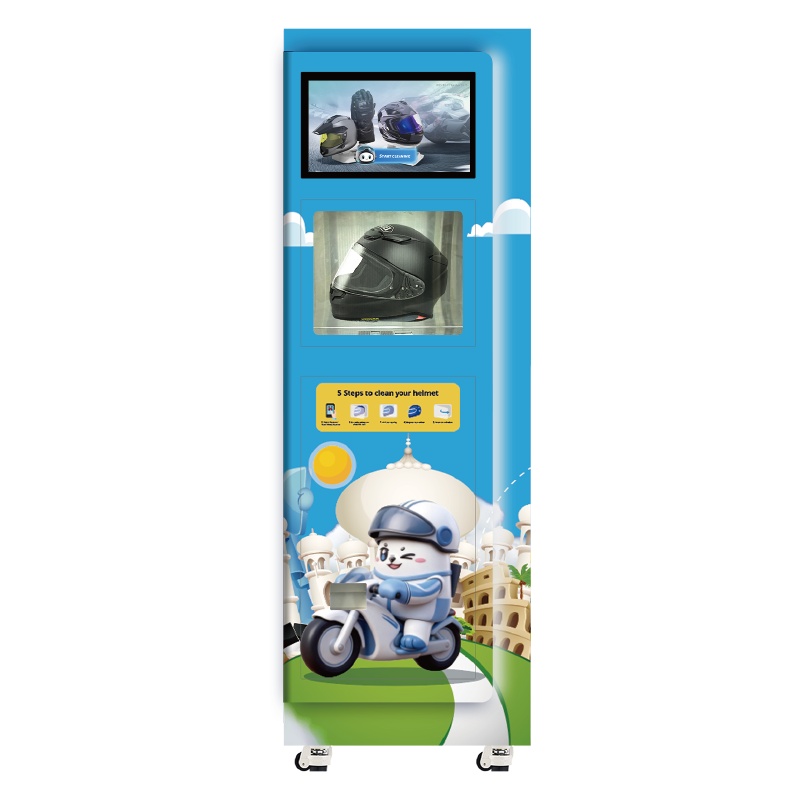
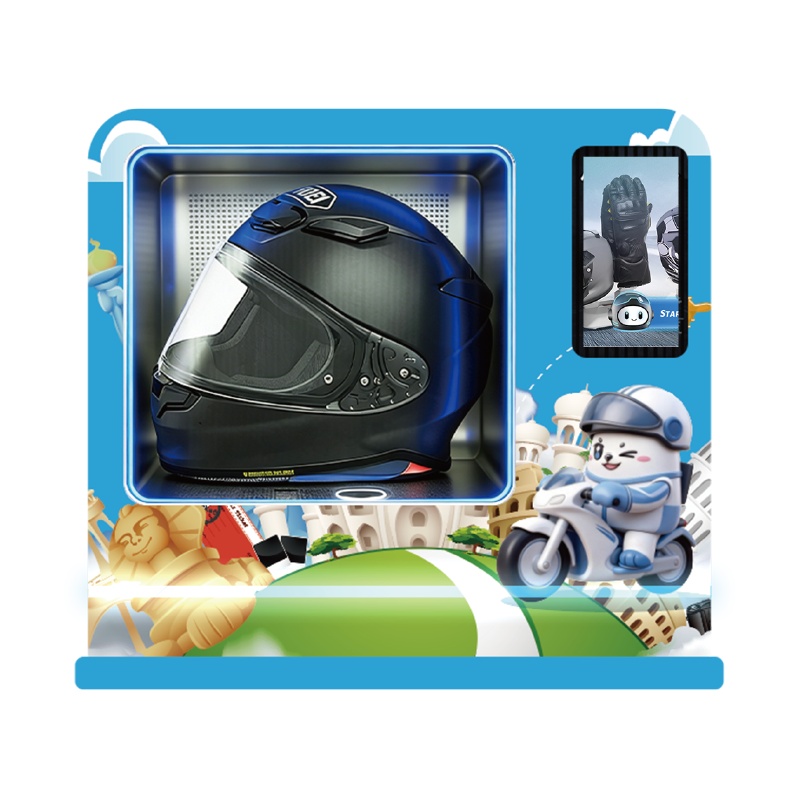
580 mm high, 600 mm wide, 525 mm deep, about 50 kg — it goes on an existing counter instead of taking a floor slot. The 10.1-inch screen sits at the top of the front panel, the chamber door below it, and the unit runs off a normal wall socket.
No running video for this configuration yet. Tell us which counter you have in mind and we will film a full cycle on a real unit — helmet in, four stages, helmet out.
A Care Machine That Sits on a Counter
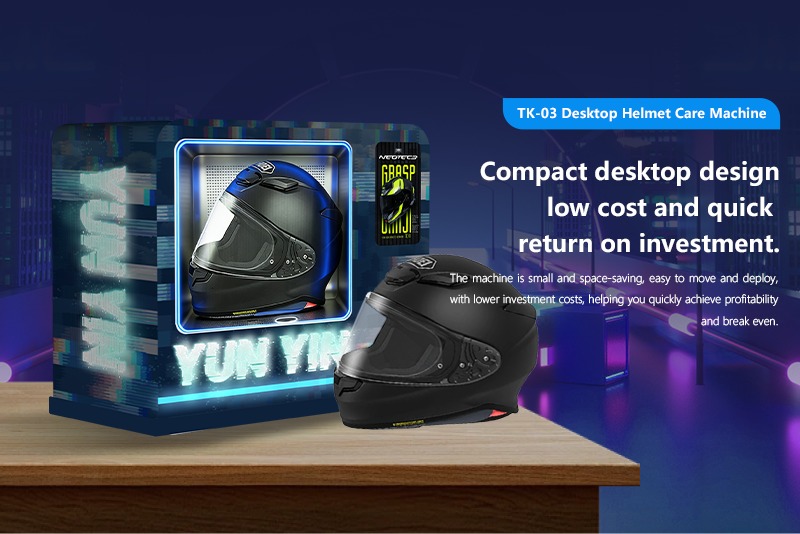
This is the model for people who do not want to give up a square metre of floor. It stands 58 cm tall, 60 cm wide and about 50 kg, and it sits on a service counter, a shelf or a desk — a spot the shop already has.
For a barber shop, a gym front desk or a ski rental counter that changes the maths. No rent negotiation, no floor plan change, no building work. You buy it, put it down, and start charging for a service that was not on your menu last month.
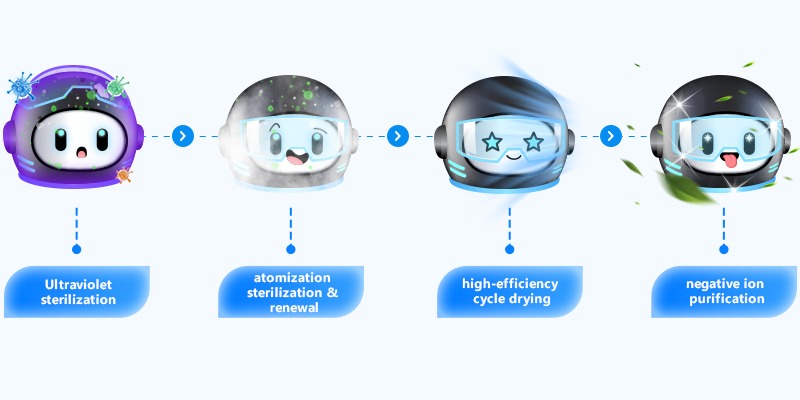
The Same Four Stages as the Big Machines
Nothing is cut down except the cabinet. Ultrasonic atomization, deodorising ion disinfection, high-efficiency drying and negative ion purification all run in the same order as on the floor-standing units.
That matters if you sell a range: the counter unit and the cabinet unit behave the same way, so your customer gets the same result and you only have to explain the process once.
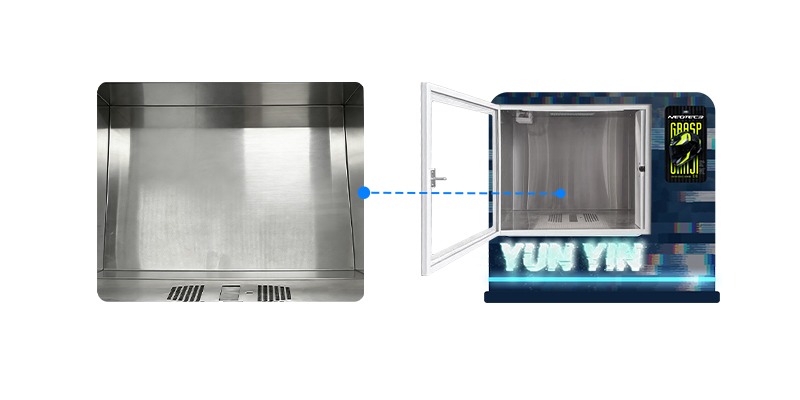
Stainless Steel in a 60 cm Box
The chamber is wear-resistant stainless steel, same as the larger models. Sweat, salt and hair product sit against the liner every day, and that is what eats through a painted or plastic interior within a season.
Stainless wipes down with a cloth and does not hold smell. On a unit standing next to the customer, that is also the difference between something that still looks new after a year and something you want to hide behind the counter.
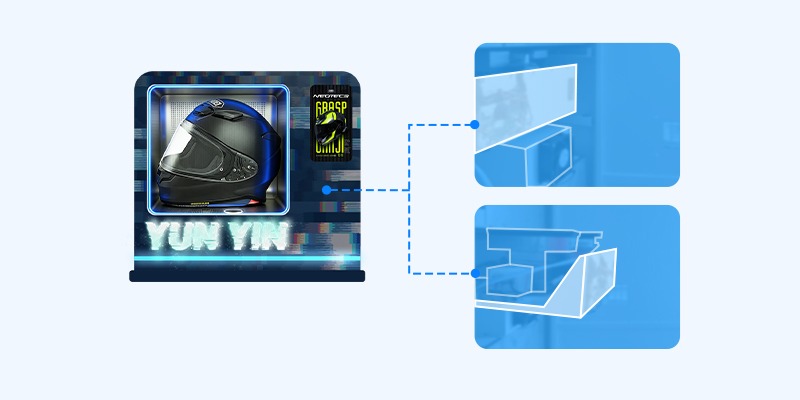
Where the Air Goes Inside a Small Cabinet
Small cabinet, same logic: air and mist are released at two levels, one near the crown and one at the base, so the chin bar and the lower padding dry as well as the top of the shell.
A single top nozzle is cheaper to build, and it is the reason cheap desktop units leave a helmet damp around the ears. Customers notice that straight away, and they do not pay twice for it.
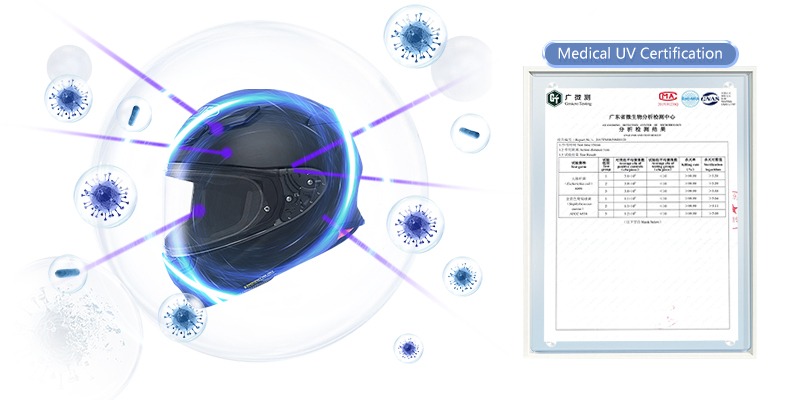
UV Sterilization, Certificate Included
The UV stage runs inside the chamber, and the medical-grade UV certification comes with the machine. That is the document a clinic, a school or a gym chain asks for before a helmet service is allowed on their premises.
On a counter unit it also does something simpler: it lets you tell the customer the helmet was disinfected, not just wiped — and charge accordingly.
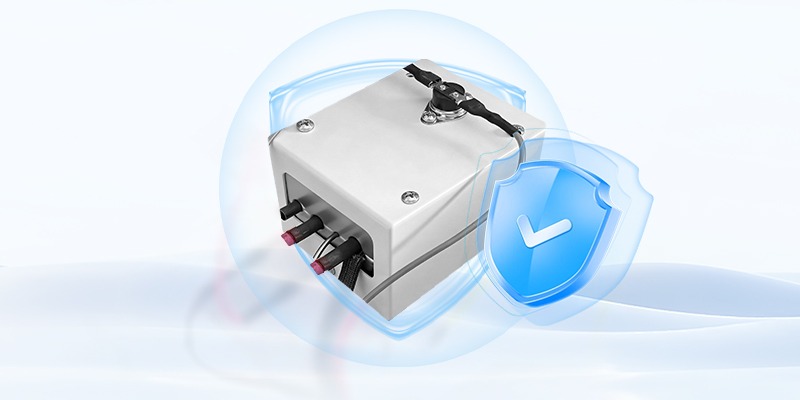
The Same Atomizer We Use in the Big Units
Pump, liquid feed and ultrasonic element in one block — the same module as the floor-standing models, not a downgraded version. Uneven droplets are what make cheap machines drink liquid and still clean badly.
Because the mist actually reaches the liner, 5 litres covers 400 to 500 helmets here too. In a barber shop doing ten helmets a week, that is most of a year on one refill.
Split Flow, Not a Single Branch
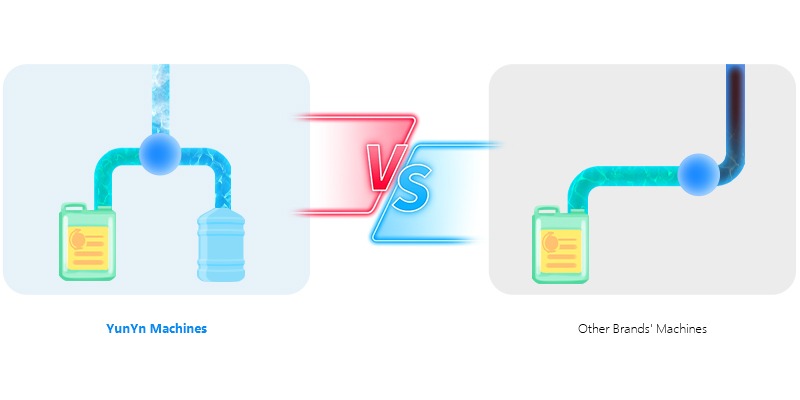
Left is ours, right is the usual budget layout. We split the flow into two independent lines; they run one pipe and branch it at the far end, so the second outlet always runs weaker.
On their machine that shows up as uneven drying and liquid pooling in the low line. On ours both outlets behave the same way from the first helmet to the thousandth.
Count the Joints Before You Buy
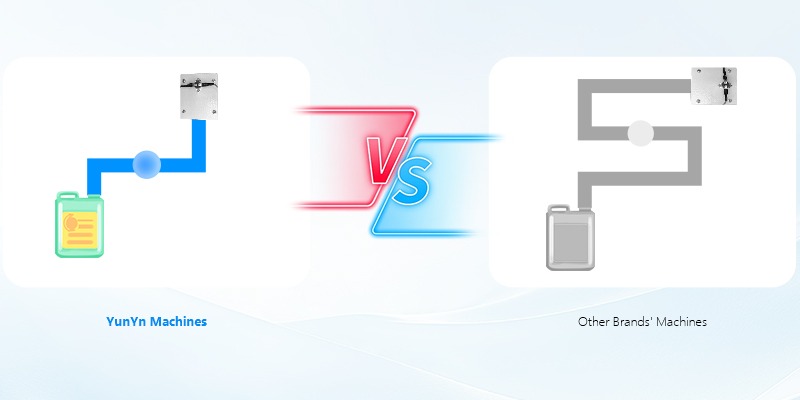
Same comparison from another angle. Ours goes from tank to chamber with two bends and one connector; the budget build snakes through four elbows and three push-fit joints to reach the same place.
Every joint is where scale collects and where a line starts to weep. Fewer joints means fewer service calls — and on a counter unit, a service call usually means the machine is down in front of customers.
Liquid Level on Your Phone
The control board reports liquid level, cycle count and fault codes to the cloud. Open the app and you know whether the unit needs a refill before the next customer walks in with a wet helmet.
If you run counters across a city, this is what stops you driving around checking tanks by hand — you go to the one that actually needs it.

70°C Drying in a Small Chamber
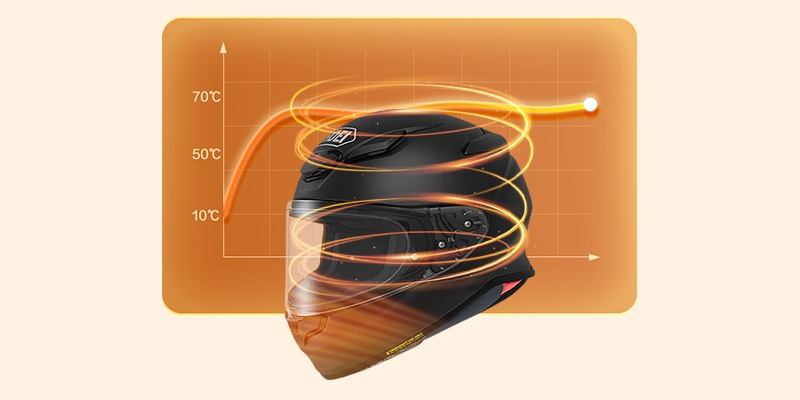
The drying stage tops out at 70°C, with 50°C and 30°C steps below it — hot enough to pull moisture out of the padding, controlled enough that the EPS liner and its glue do not soften.
Temperature and cycle length are set from the screen or the backend, so a shop that wants a gentler programme for expensive helmets can have one without changing any parts.
Helmet in the Chamber, Gloves on the Side
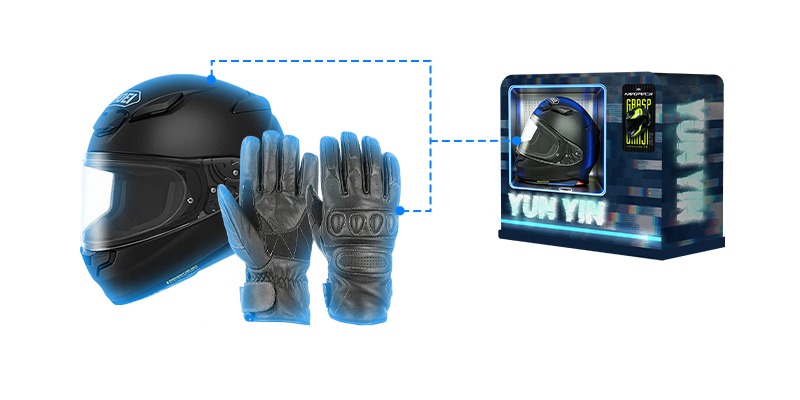
The chamber is built around a helmet, and the same cycle works on riding gloves. In winter the person handing over a helmet usually has a wet pair of gloves in the other hand.
Charging for both is an easy upsell and it costs you nothing extra — same liquid, same cycle, same machine time.
What the Customer Actually Notices
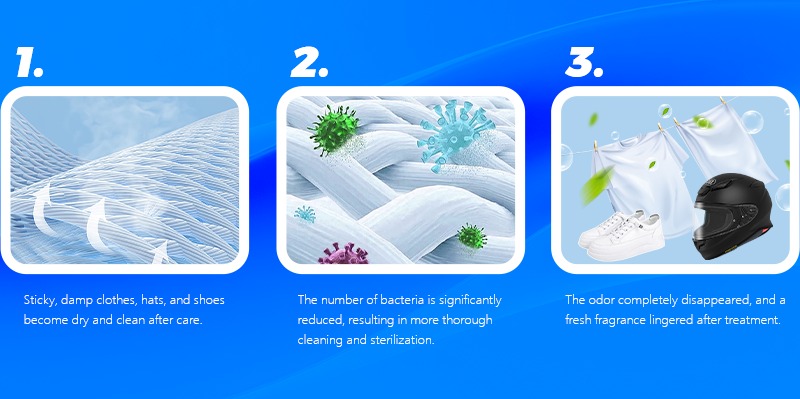
Three panels, one story. A liner worn every day grows bacteria and starts to smell. After the cycle the count drops sharply. What the customer sees is that the stain fades and a clean smell comes back.
Nobody can see a bacteria count, but everybody can smell the difference when they put the helmet back on. That is the moment they decide to use the machine again next week — and the reason a counter unit pays for itself faster than most people expect.