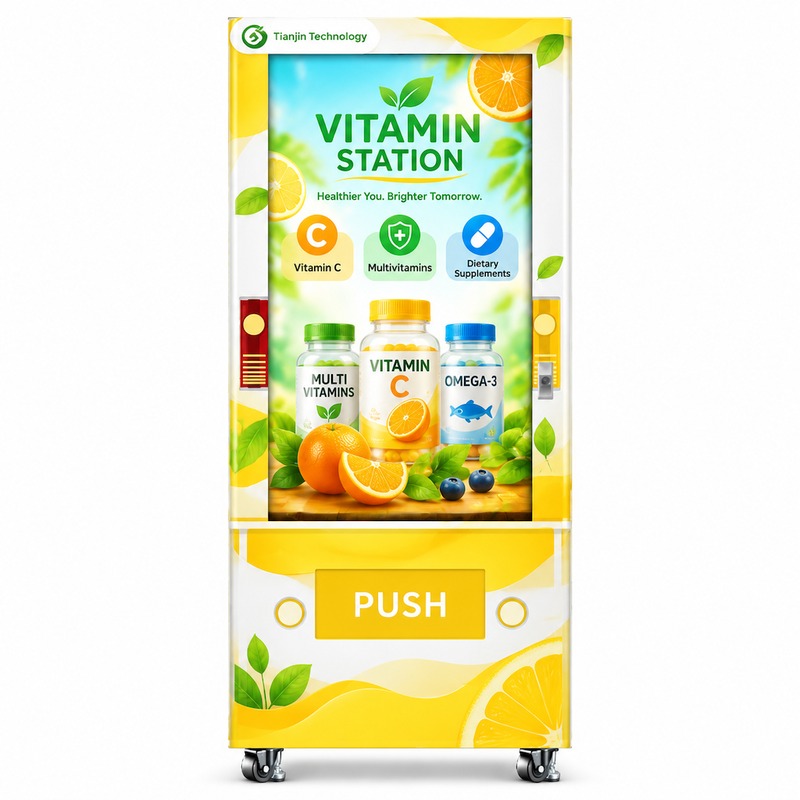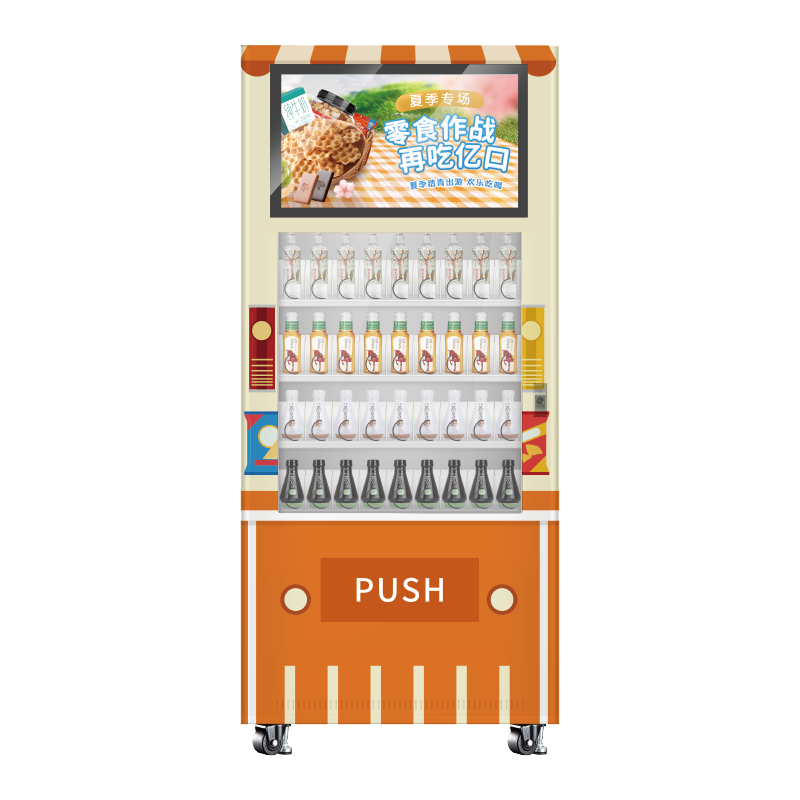
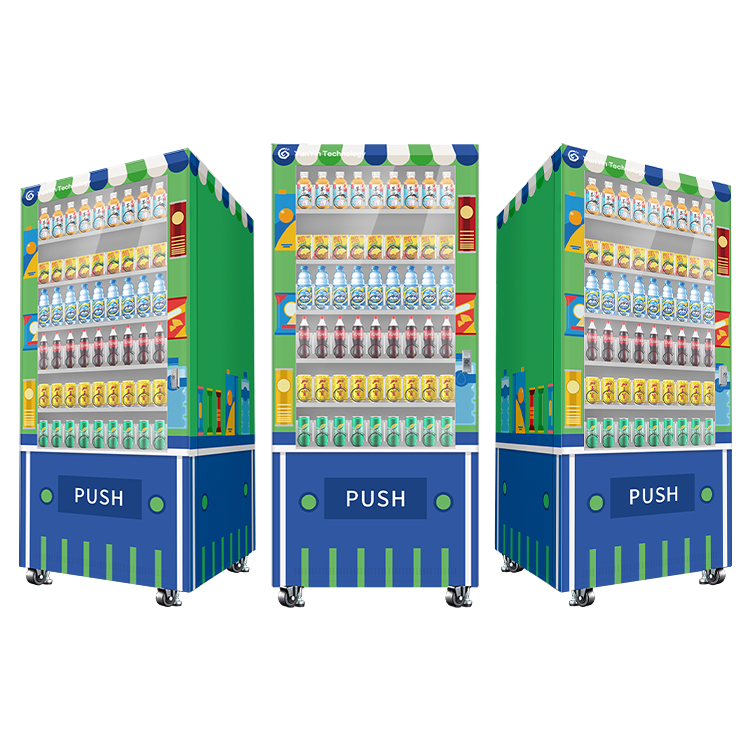
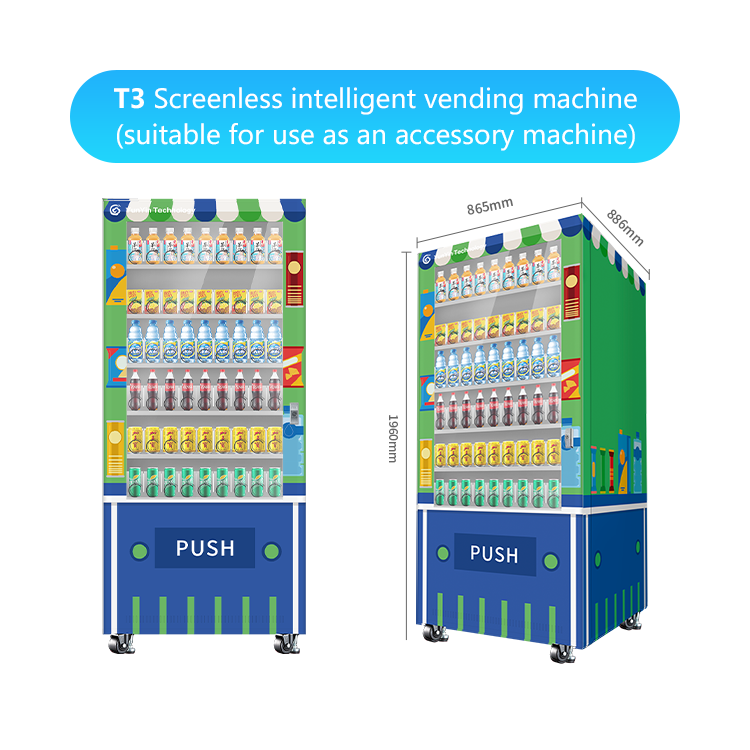
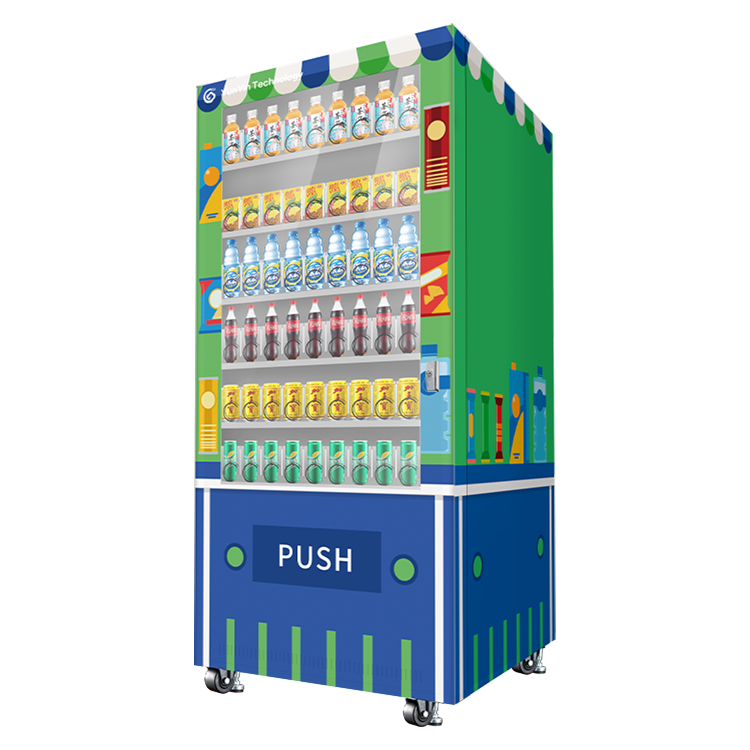
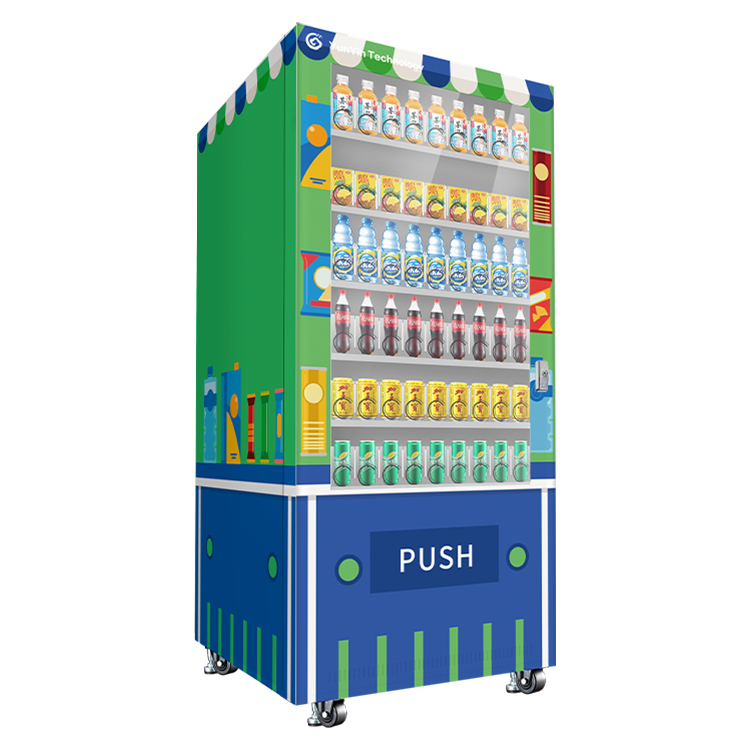
T3 Scan-to-Pay Vending Machine with Screenless Cabinet and Extension Option
Size: 1960(H) × 865(W) × 886(D) mm
Weight: About 220 kg
Display: No display screen
Touch Screen: No touch screen
Main Board: No IPC
Single-Chip Microcomputer: Supports 8×10 slots. Built-in external 4G module.
Menu Operation: Scan code & purchase via H5 page
Payment System: Cash / Credit Card / E-wallet payments supported
Network Requirements: 4G IoT card
Cargo Channel Quantity: Standard 6 rows & 9 columns, 54 slots (adjustable & customizable)
Product Capacity: 270–648 units (depending on product size)
Refrigeration System: High-efficiency energy-saving compressor, supports timer on/off, and the working temperature can be freely set within the specified range.
Power: About 550 W during cooling, about 100 W when not cooling.
Voltage: AC220V/50Hz, Electric Shock Protection
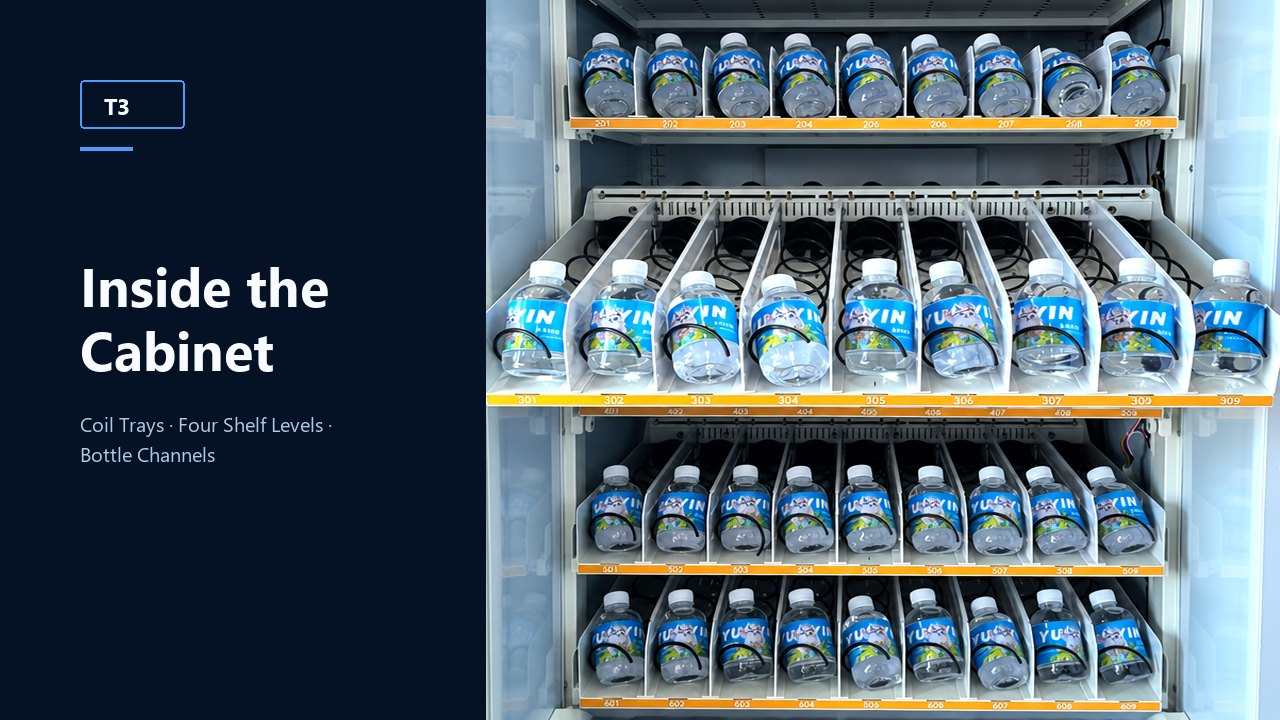
Inside the T3 Scan-to-Pay Vending Machine
T3 is a screenless secondary cabinet. The clip shows the foamed door, magnetic freezer seals, the 5 cm insulation layer, and 6×9 adjustable channels. A branded compressor and a visible temperature display handle the cooling.(
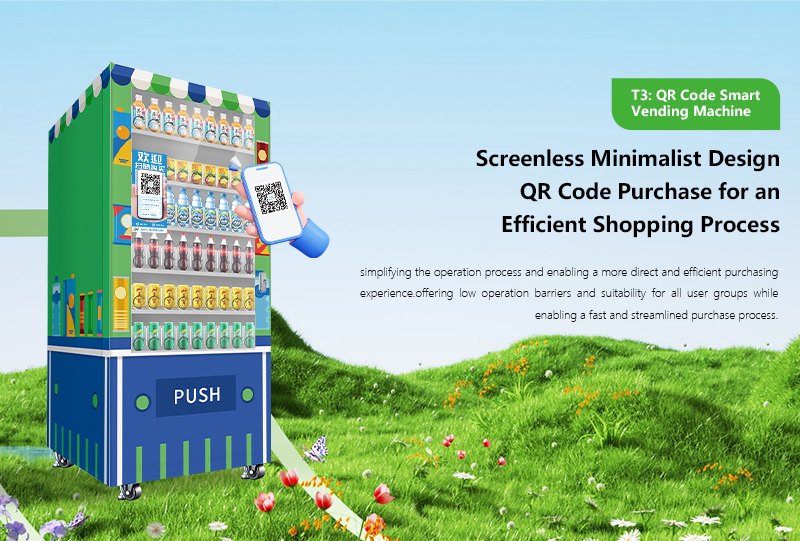
No Screen, No Queue: Scan the Code and Pay From Your Phone
The T3 drops the touchscreen on purpose. Every lane carries its own QR code, so shoppers scan with the phone already in their hand, choose the item on an H5 page and pay — there is no menu to learn and no front panel to break.
Anyone who can scan a code can use the machine, and the most expensive, most fragile part of a conventional vending machine comes off the bill of materials.
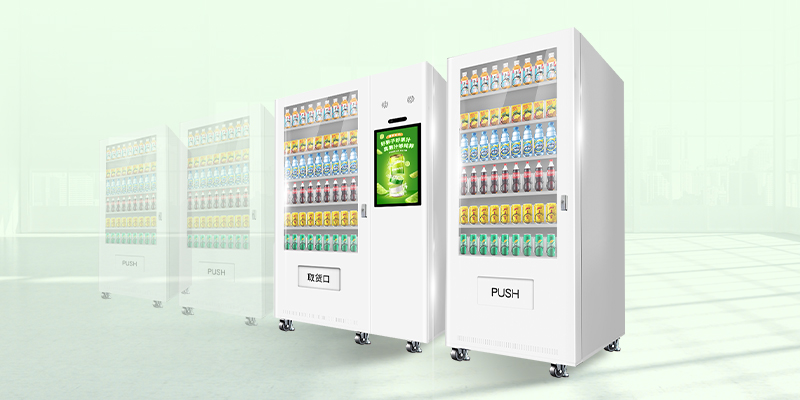
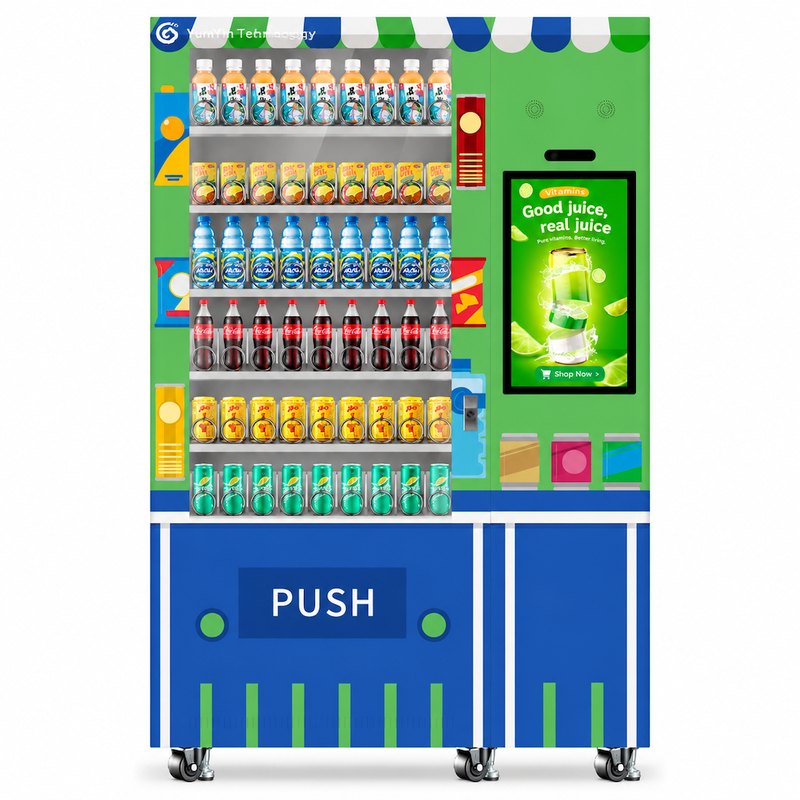
One Main Cabinet, Plus Screenless Slave Cabinets When You Need More
The T3 runs as a single cabinet, or as a main unit with screenless slave cabinets bolted alongside. All of them share one control board and one payment flow, so extra capacity does not mean a second stock list or a second purchasing process.
Operators can start with one cabinet at a small site and add a slave cabinet when the location grows — the footprint changes, the operation does not.
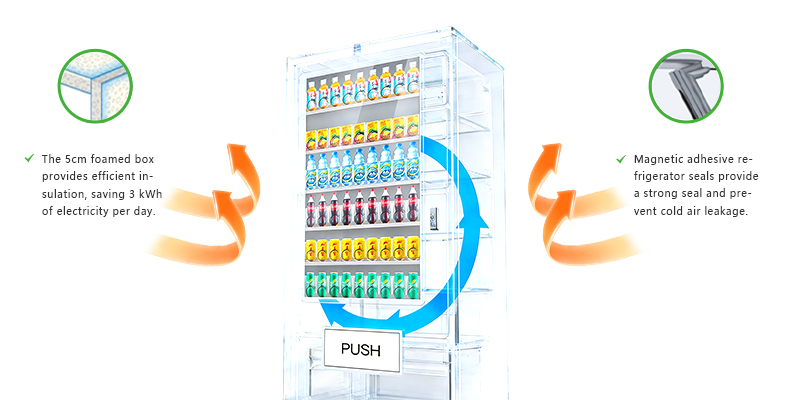
5 cm Foamed Cabinet Body with Magnetic Refrigerator Seals
The cabinet is foamed as one body around a 5 cm insulation layer, and the door closes on magnetic adhesive seals of commercial-refrigerator grade. Cold air stays inside, and the frame does not sweat.
In running tests the foamed body saved about 3 kWh of electricity per day against a standard single-layer cabinet — on a machine drawing roughly 550 W while cooling, that is a visible line on the monthly power bill.
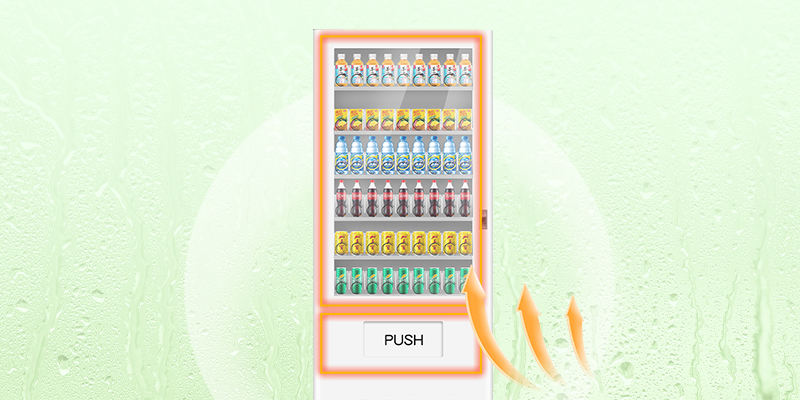
Heating Wire in the Door Frame Keeps the Glass Clear
A heating wire runs around the door frame behind the glass, so condensation never settles on the pane. The cabinet can run cold in a warm, humid shop and the shelves stay readable from the street.
On a screenless machine this matters more than on a touchscreen model: the window is the entire interface, and a fogged door switches the machine off for the customer.
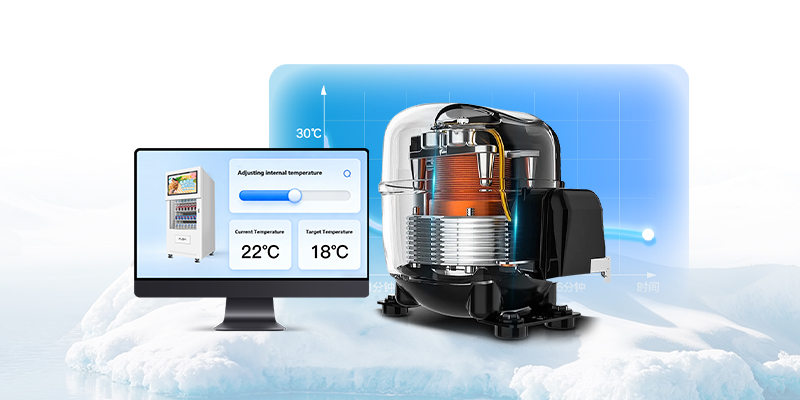
Brand Compressor with App-Based Temperature Control
A brand compressor drives the cooling circuit, and the controller is reached from an app rather than a panel on the door. The screen in the photo reads 22 °C in the room against an 18 °C cabinet set point, moved with a single slider.
Operators can pre-cool before a heatwave or raise the set point overnight without a site visit, and the timer keeps the compressor out of peak-rate hours.
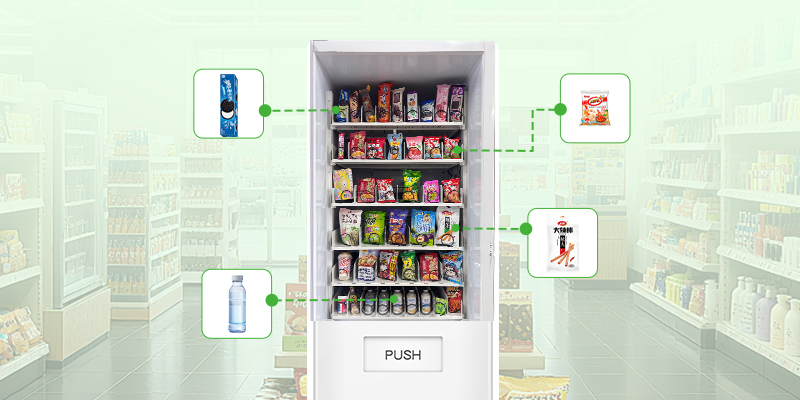
Water, Cans, Bagged Snacks and Boxed Goods in One Cabinet
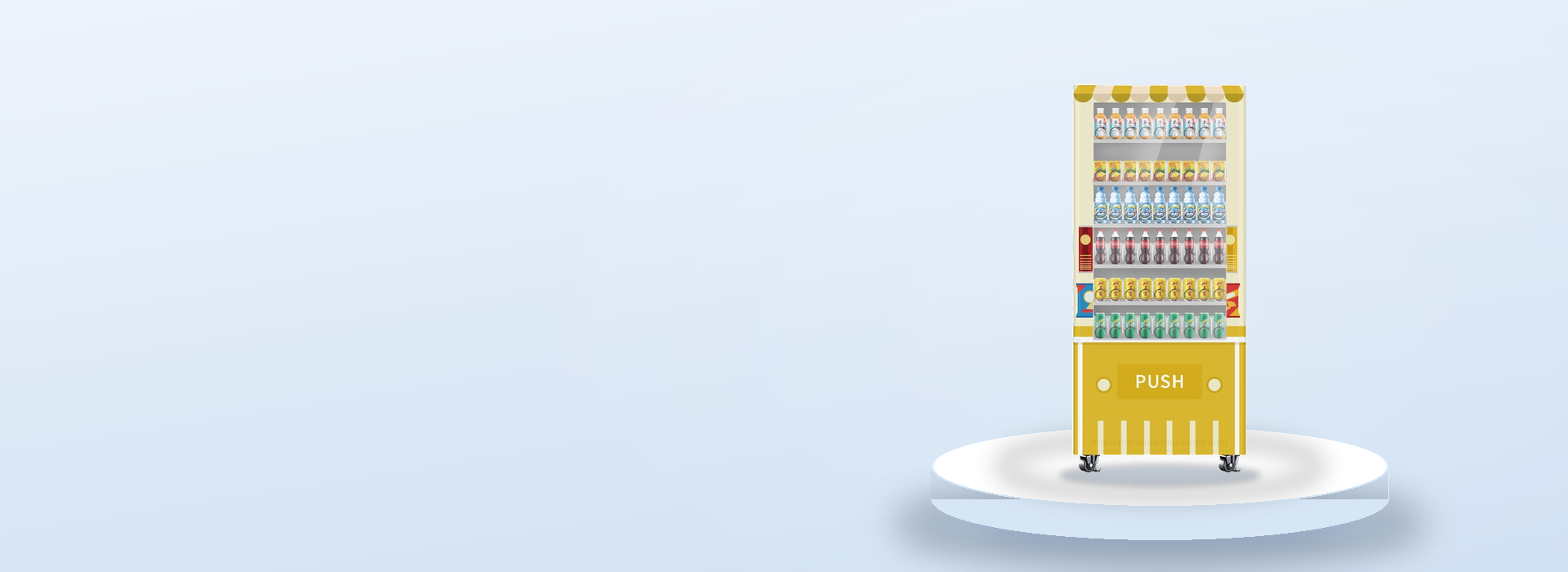
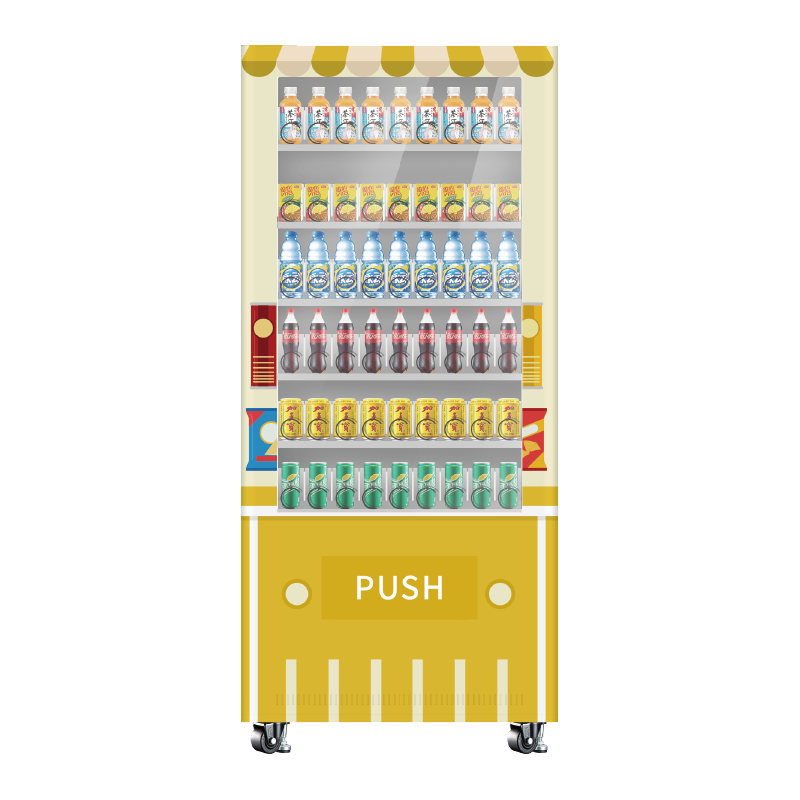
Standard 6 rows × 9 columns give 54 spring slots, and both lane width and shelf height adjust without tools. Bottled water, canned drinks, bagged snacks and boxed items stand side by side — the photo shows four product types sharing one machine.
Mixed loading is what makes a single unit pay: fast sellers at eye level, higher-margin snacks above them, and restocking is a matter of sliding a tray out and dropping packs in.
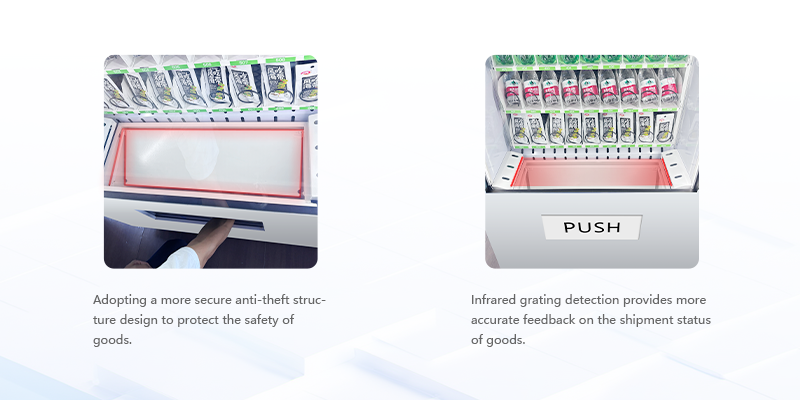
Anti-Theft Pickup Box with Infrared Grating Detection
The pickup port is a closed box linked into the door structure, so a hand cannot reach up into the shelf above. An infrared grating across the port confirms that a product actually dropped before the order closes.
If a lane jams, the sensor reports a failed delivery instead of a silent loss — fewer refund disputes, and the operator knows exactly which slot needs attention.