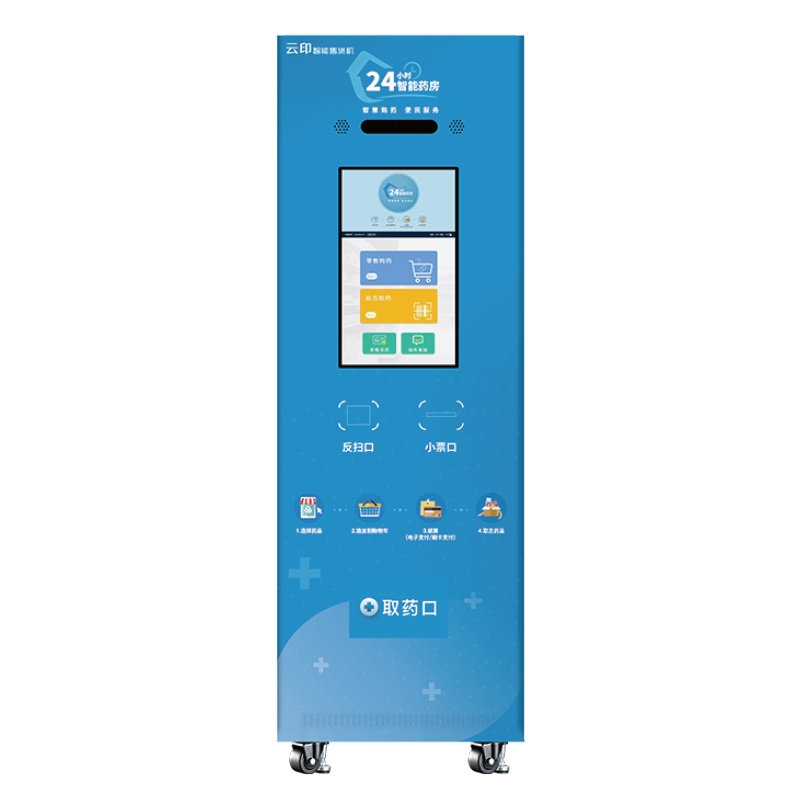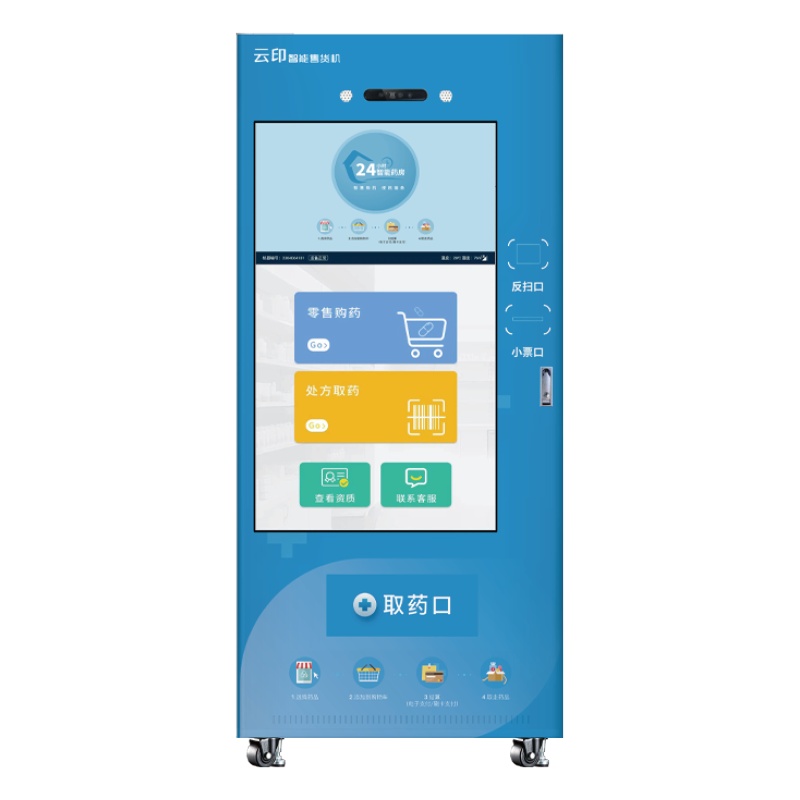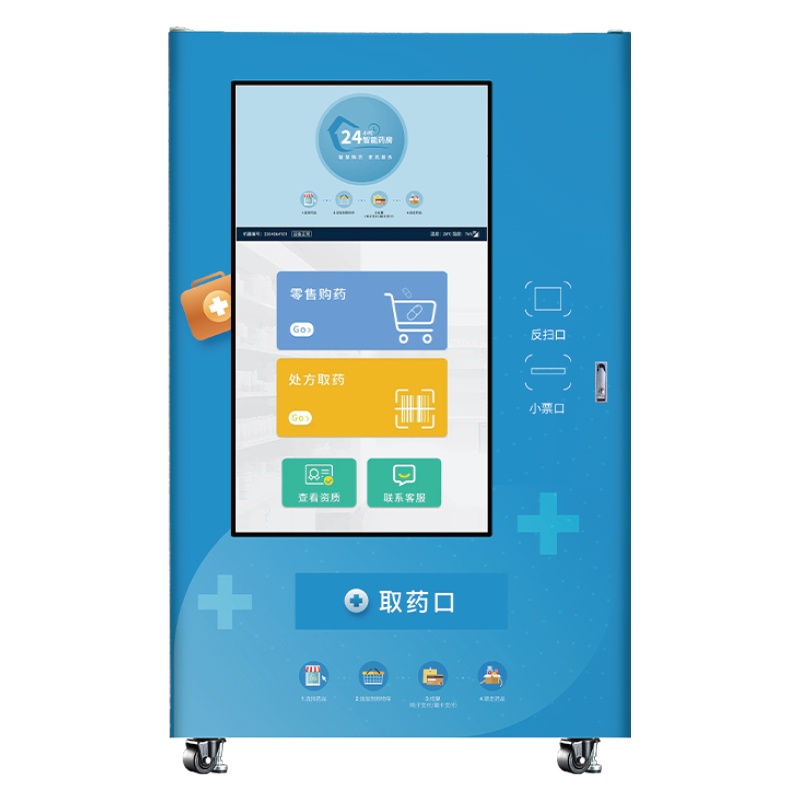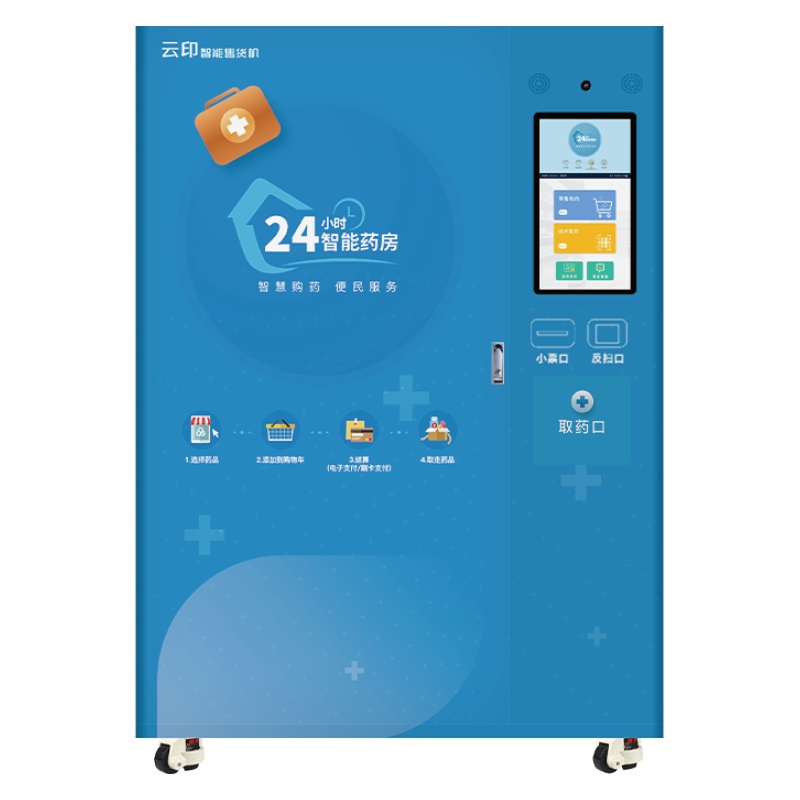
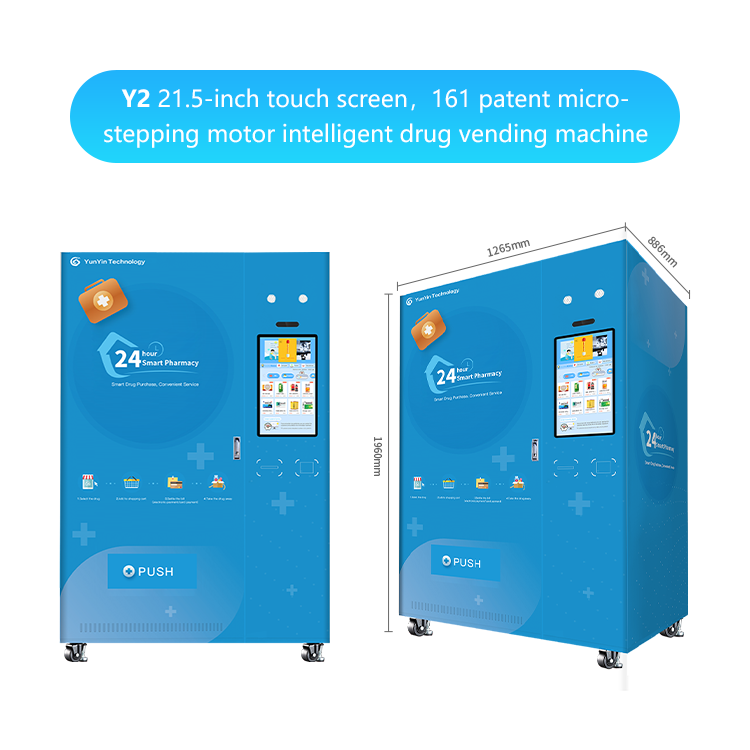
Y2 Yun Medium Cabinet 21.5-Inch Medicine Vending Machine
Size: 1960(H) × 1262(W) × 886(D) mm
Weight: About 340 kg
Display: 21.5-inch, 1920 × 1080 pixels, brightness 250 cd/m²
Touch Screen: 21.5-inch capacitive multi-touch, touch response time < 15 ms
Main Board: Android main board, Rockchip RK3568, 16 GB ROM, 2 GB RAM
Single-Chip Microcomputer: Dedicated channel board with column merging and infrared replenishment inspection
Menu Operation: Capacitive touch screen purchase, QR / barcode reverse scanning, hospital card and ID card
Payment System: Cash / credit card / e-wallet payments supported
Network: WiFi / 4G IoT card / Ethernet connection
Cargo Channel Quantity: 7 layers × 23 columns, 161 SKUs in total (adjustable and customizable)
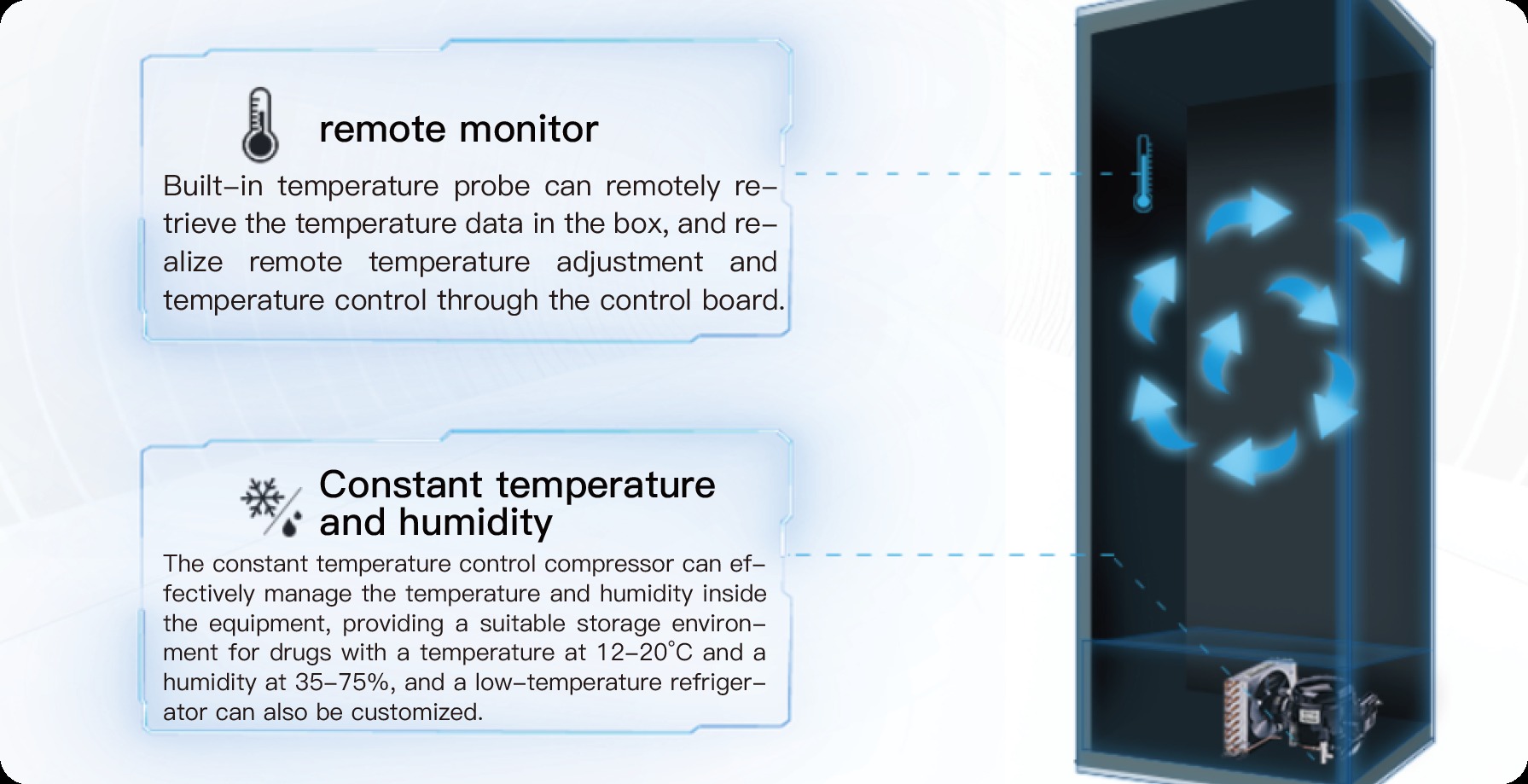
Temperature System: Constant-temperature compressor module at 12–20°C, humidity 35–75%
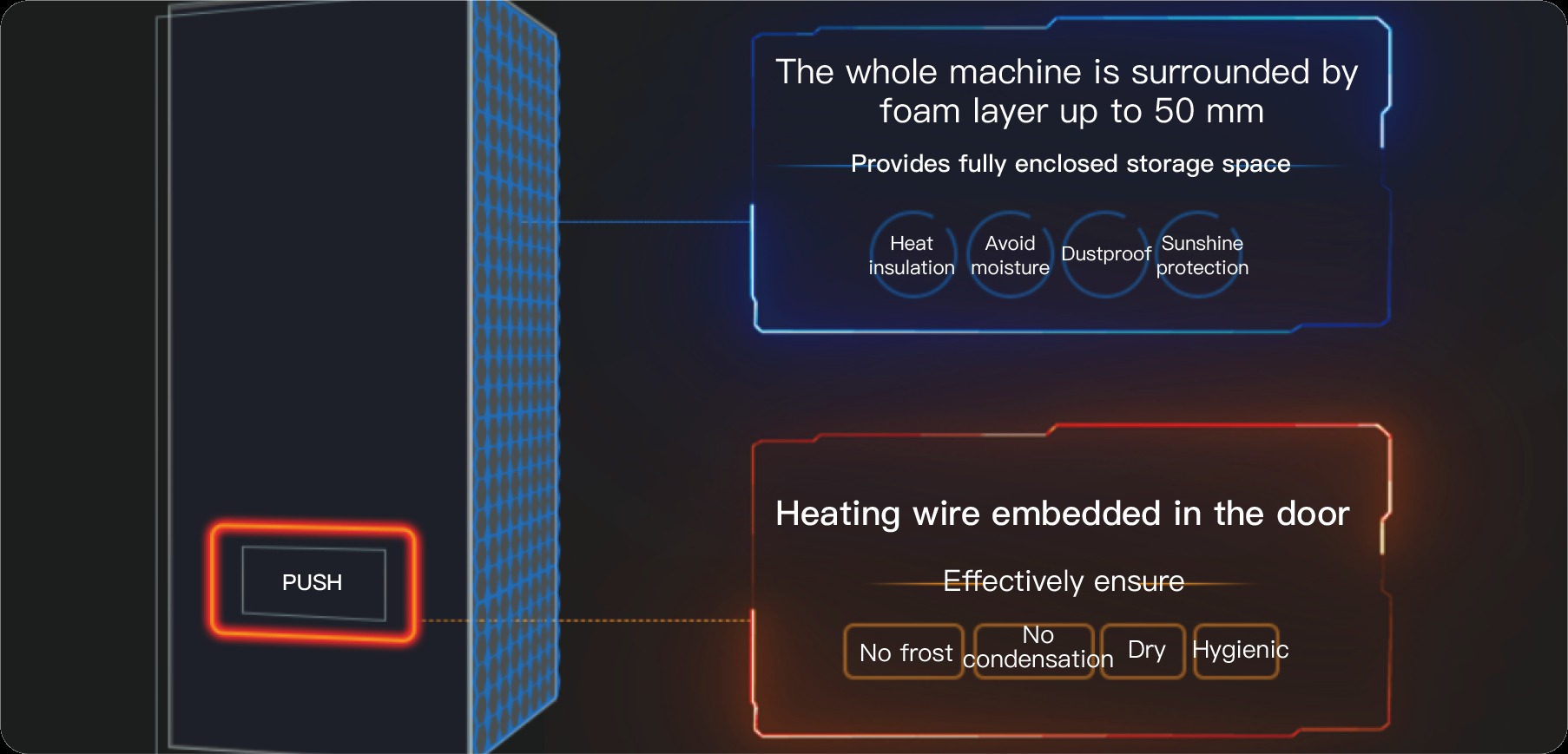
Insulation: 50 mm integral foam cabinet with heating wire in the door, anti-condensation
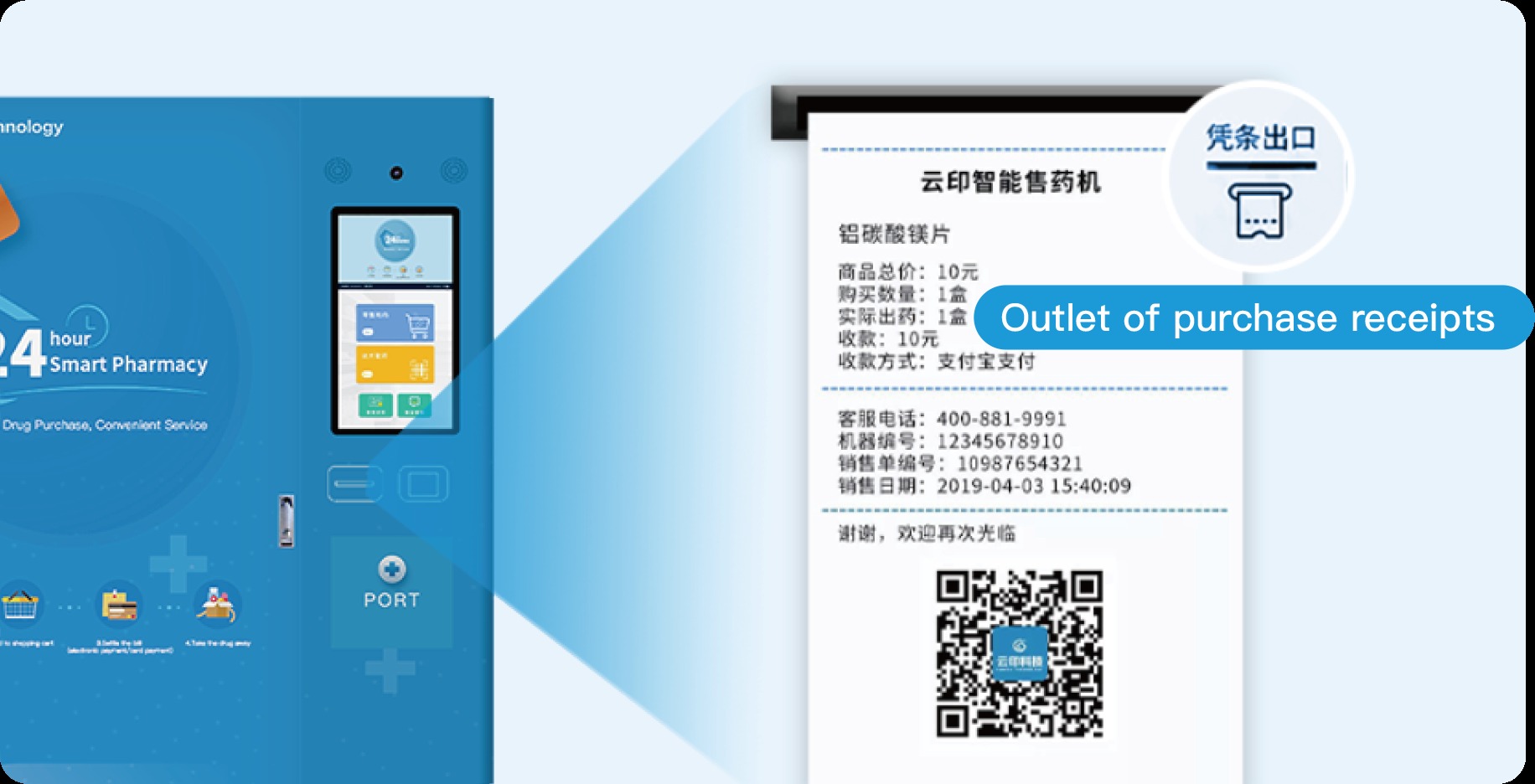
Receipt Printer: Thermal printing module for GSP traceability receipts
Reverse Scanning: Embedded QR code scanning module, optional 4-in-1 card reader
Power: About 650 W
Voltage: AC220V / 50Hz, electric shock protection
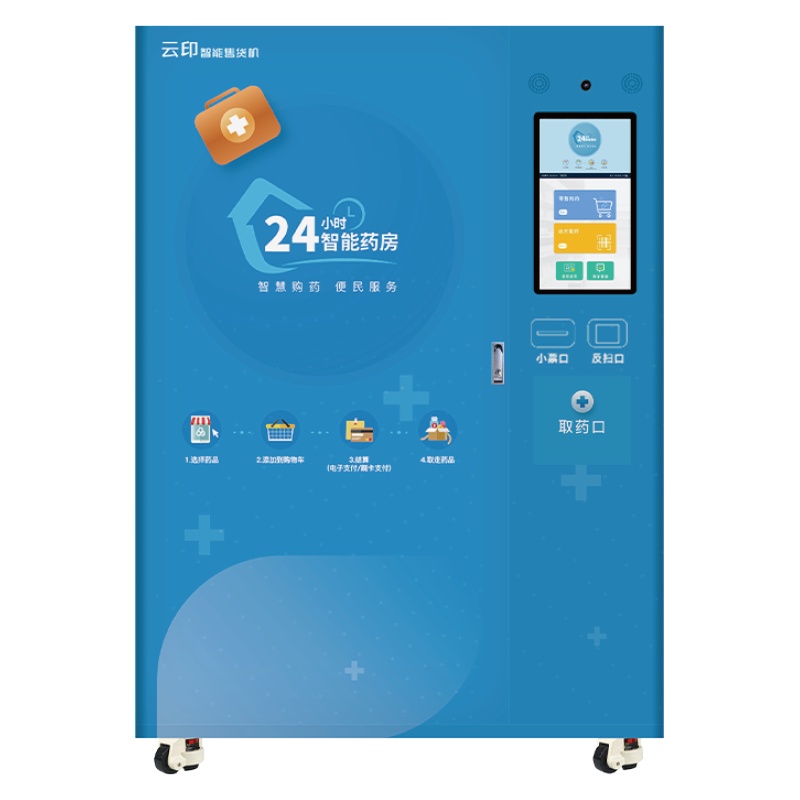
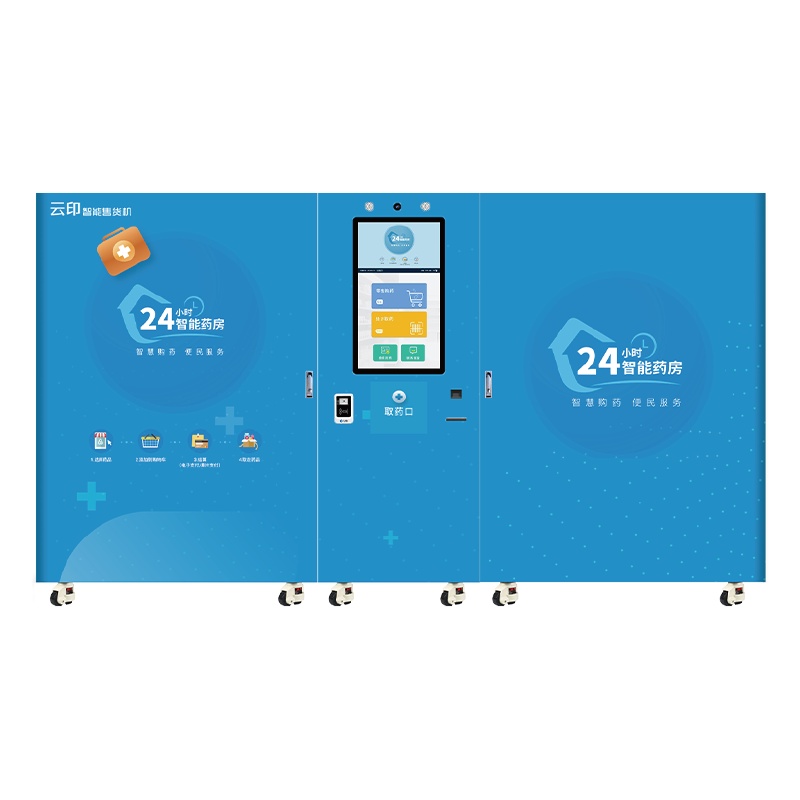
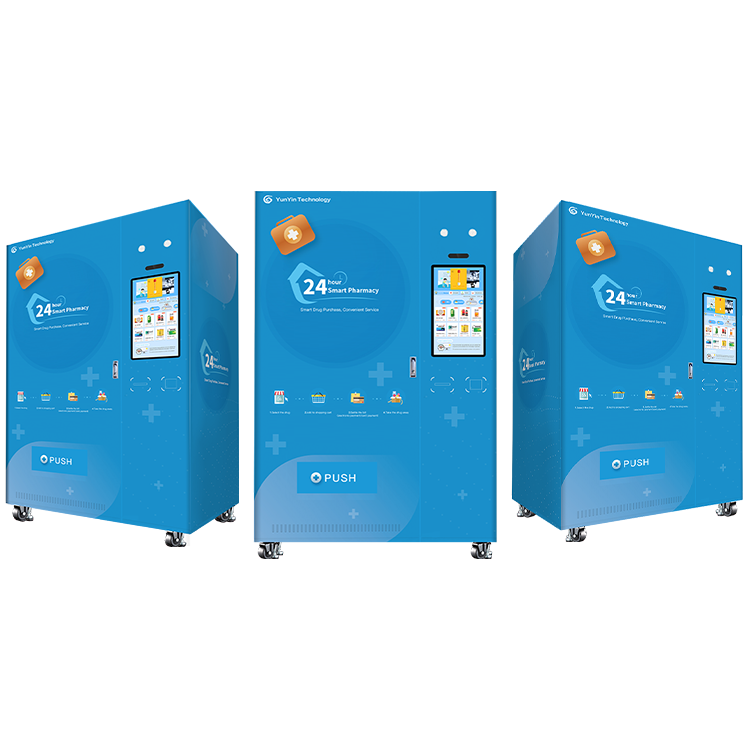
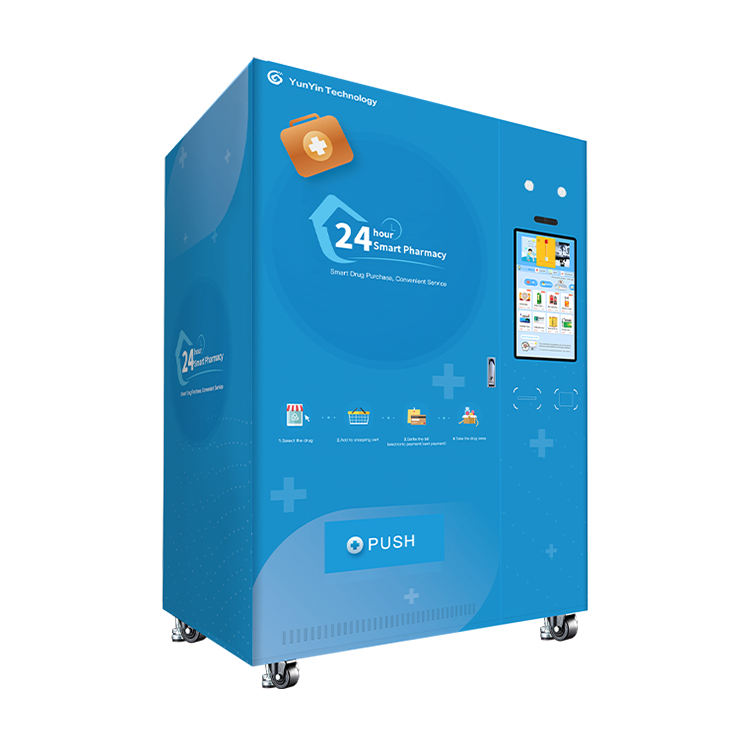
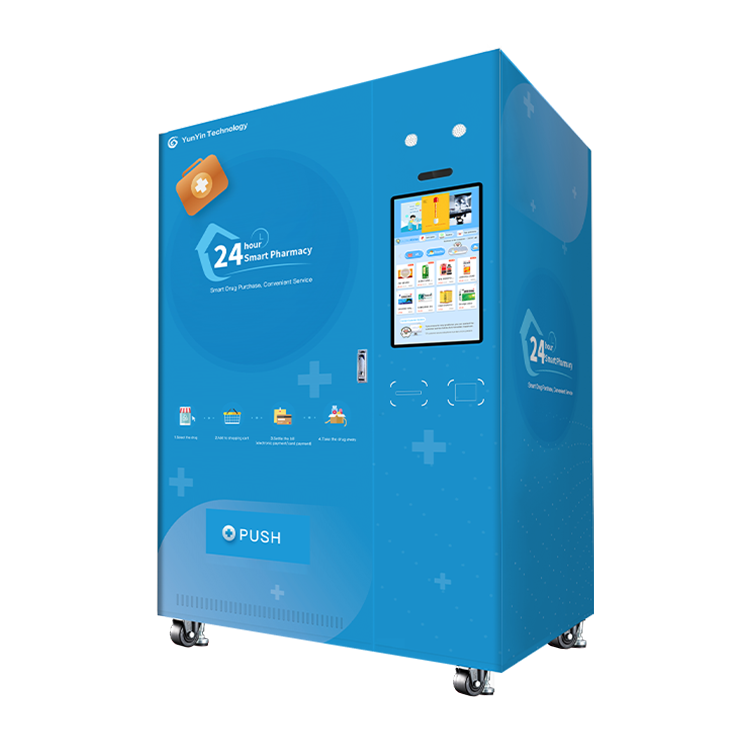
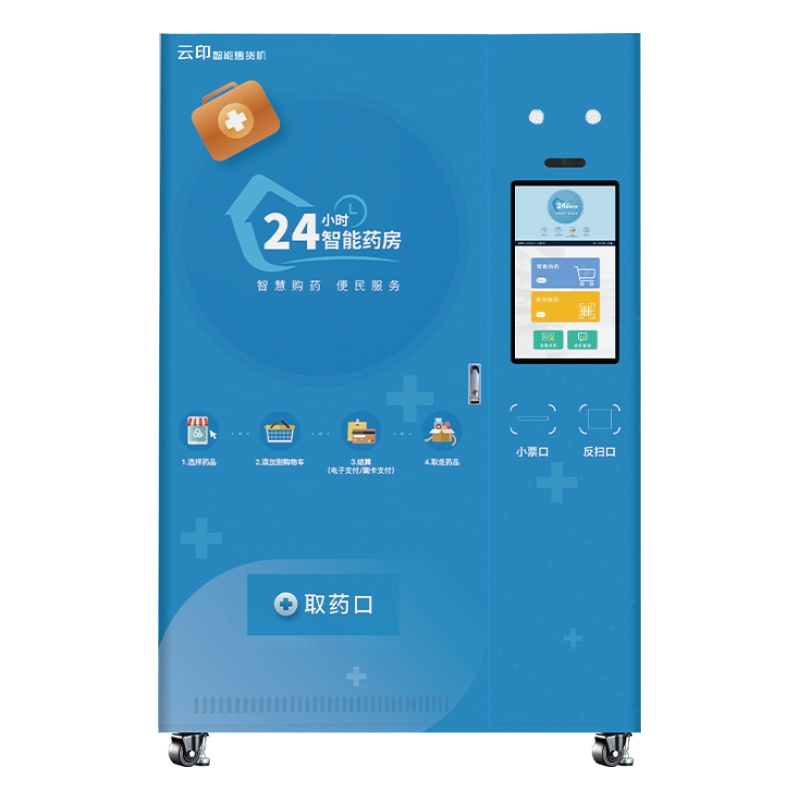
Machine Front, Actual Unit
Front view of the Y2 Yun Medium Cabinet 21.5-Inch Medicine Vending Machine: screen, cabinet body and pickup port at working height. Tell us the site and we will send a walk-around video of the unit being assembled in our own plant, not a stock clip.
Photos are of the actual cabinet. If you want to see it running before placing an order, we can arrange a live walk-through from the plant.
The Shelf Tells the Nurse Which Column to Fill
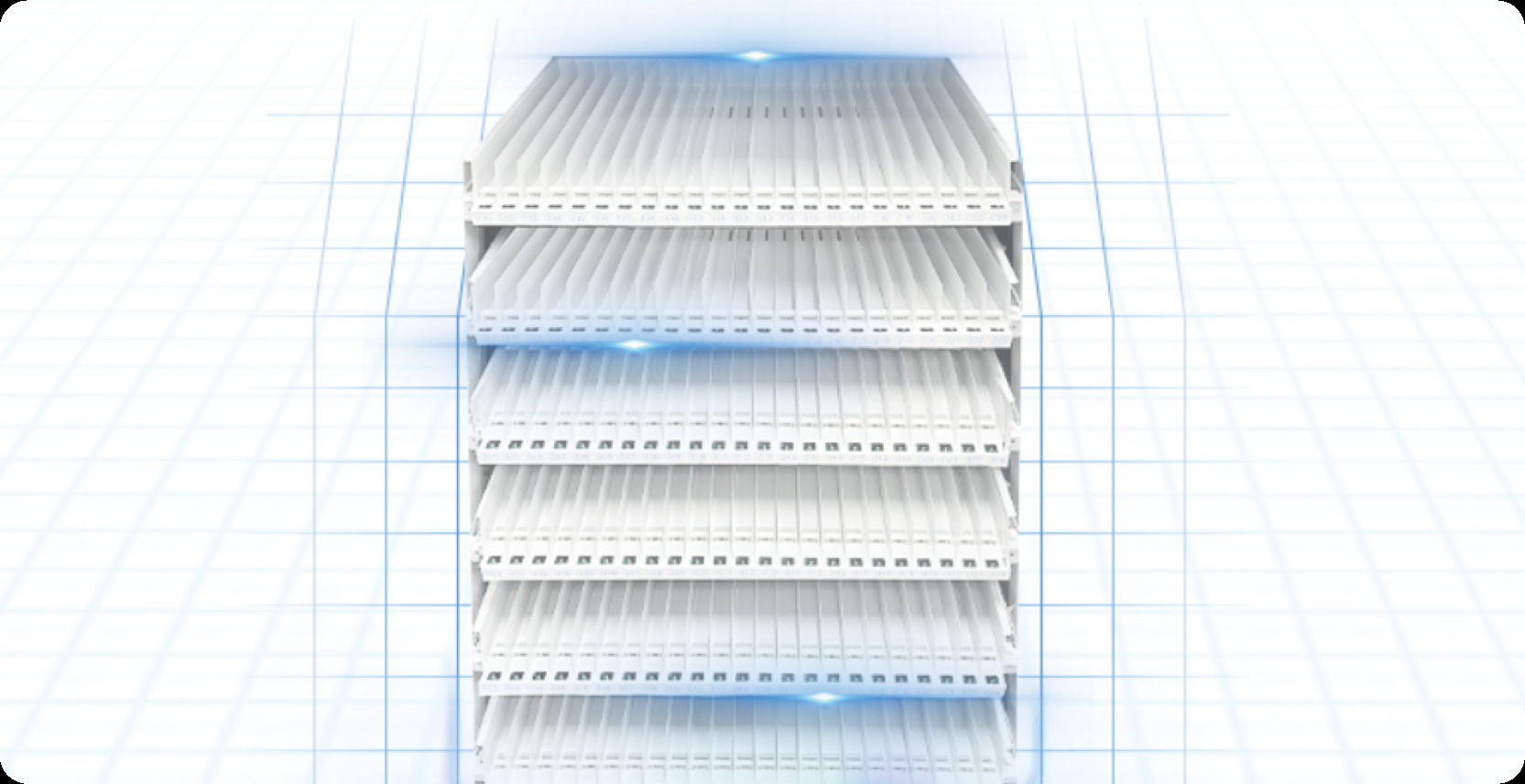
Scan the box and the column that needs it lights up. No printed pick list, no walking the shelf twice, no paracetamol ending up where the ibuprofen should be.
161 SKUs and a structure made for semi-outdoor sites: a covered walkway, a hospital entrance, a community gate where the cabinet sits outside all year.
A Shortage Light Nobody Can Walk Past
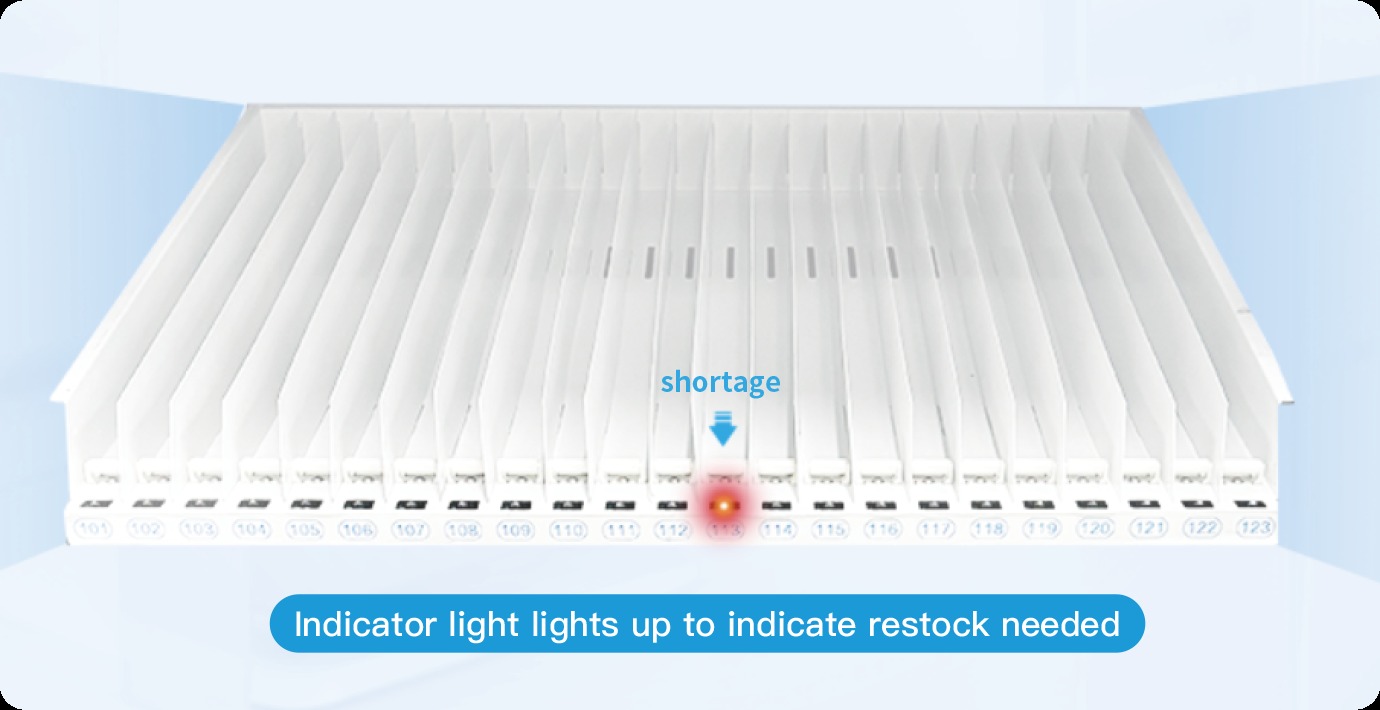
When a channel runs out, the indicator on the door turns on before anyone opens the cabinet to look. Restocking starts from the light instead of from a stocktake.
A light sounds like a small feature until you run twenty cabinets. Then it is the difference between a four-hour refill route and a six-hour one.
Every Channel Counts Its Own Stock
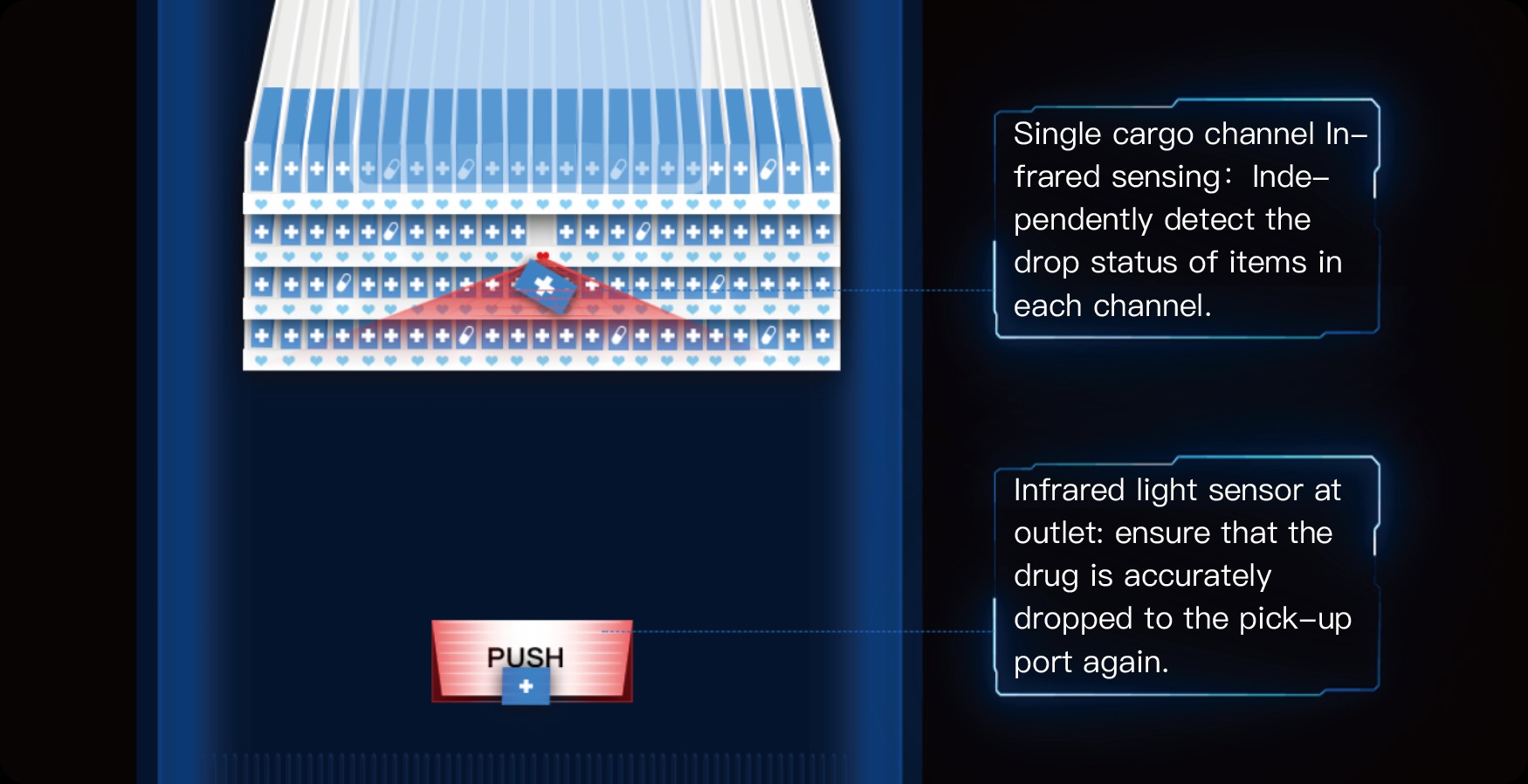
Each column carries its own infrared sensor and reports on its own, so the system knows that column 7 is empty while column 8 still holds twelve boxes. The picking arm then delivers the right box to the pickup port instead of guessing.
That is what prevents the two classic failures: sending the arm to an empty channel, and handing out a box the patient did not order.
Merge the Columns When the Range Changes
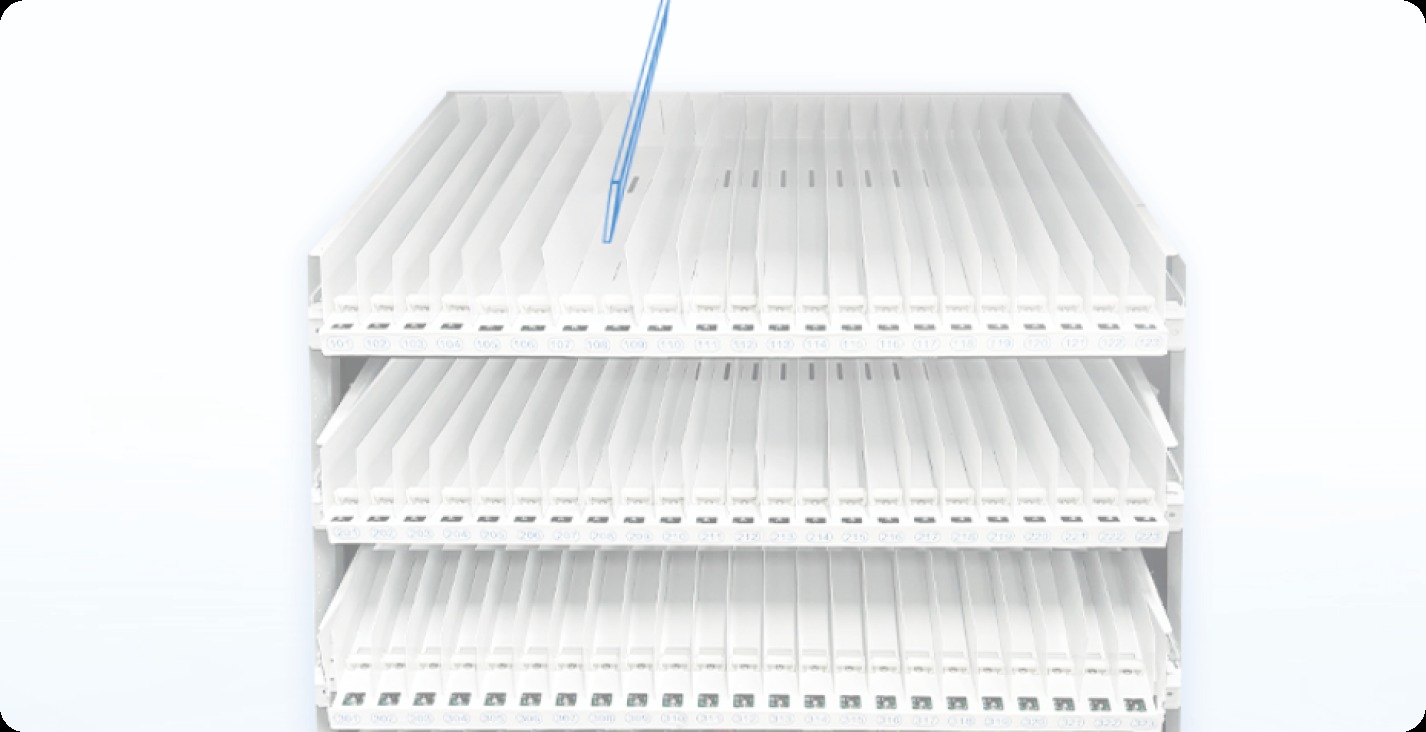
The channel board supports column merging, so two narrow columns become one wide one when a product changes packaging. Nothing is welded in place and nothing needs a new cabinet.
Pharmacy ranges change every season. A cabinet that cannot follow the packaging ends up half full of gaps by the second year.
Five Track Types, One Cabinet
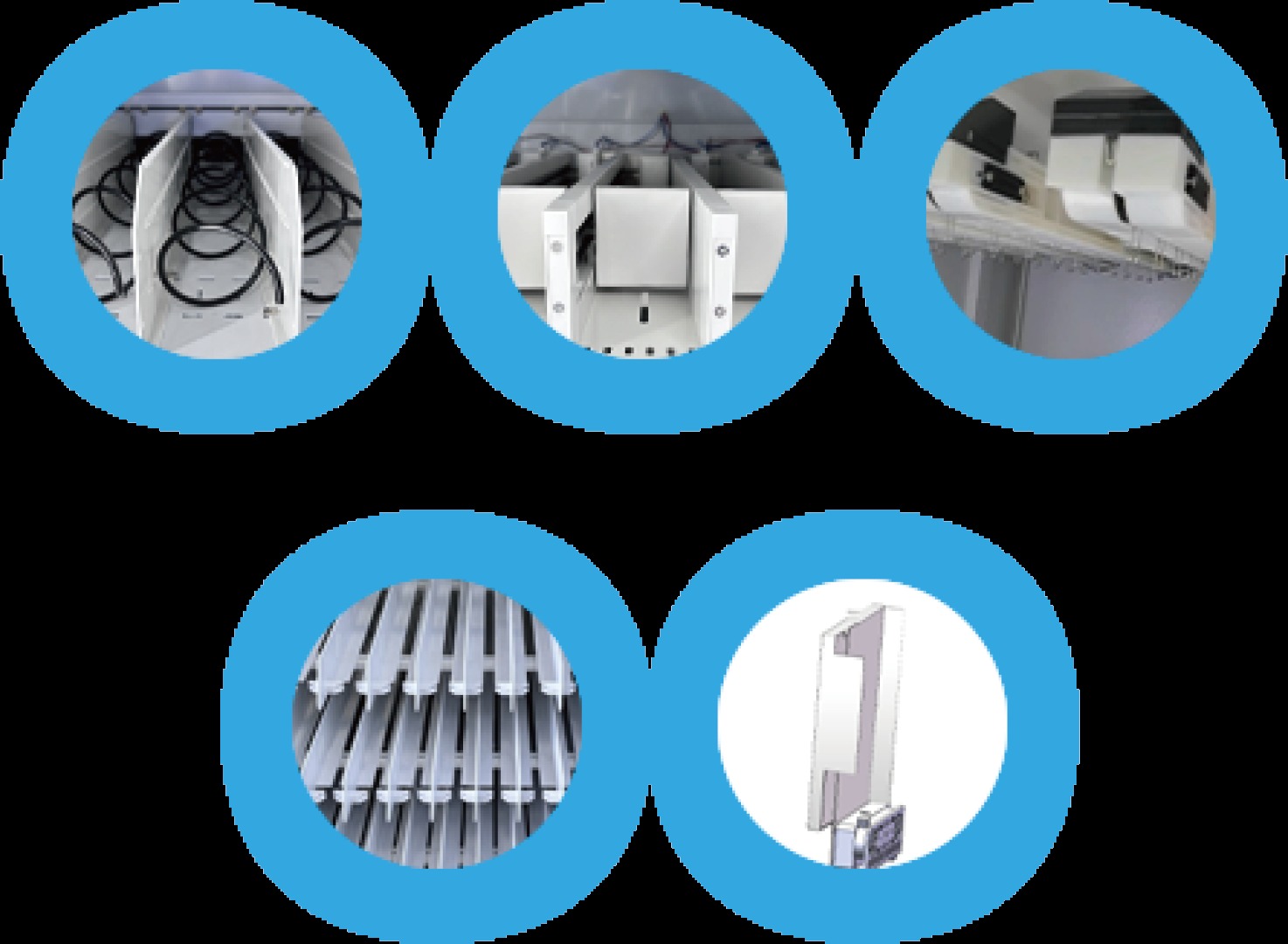
Spring, crawler belt, push plate, hanging hook and dedicated pharmaceutical track — five ways to hold a product, chosen per SKU rather than per machine.
161 SKUs covers a community pharmacy range, and the track mix is what lets one cabinet hold boxes, bottles and strips together.
The Lift Carries the Box, Never Drops It
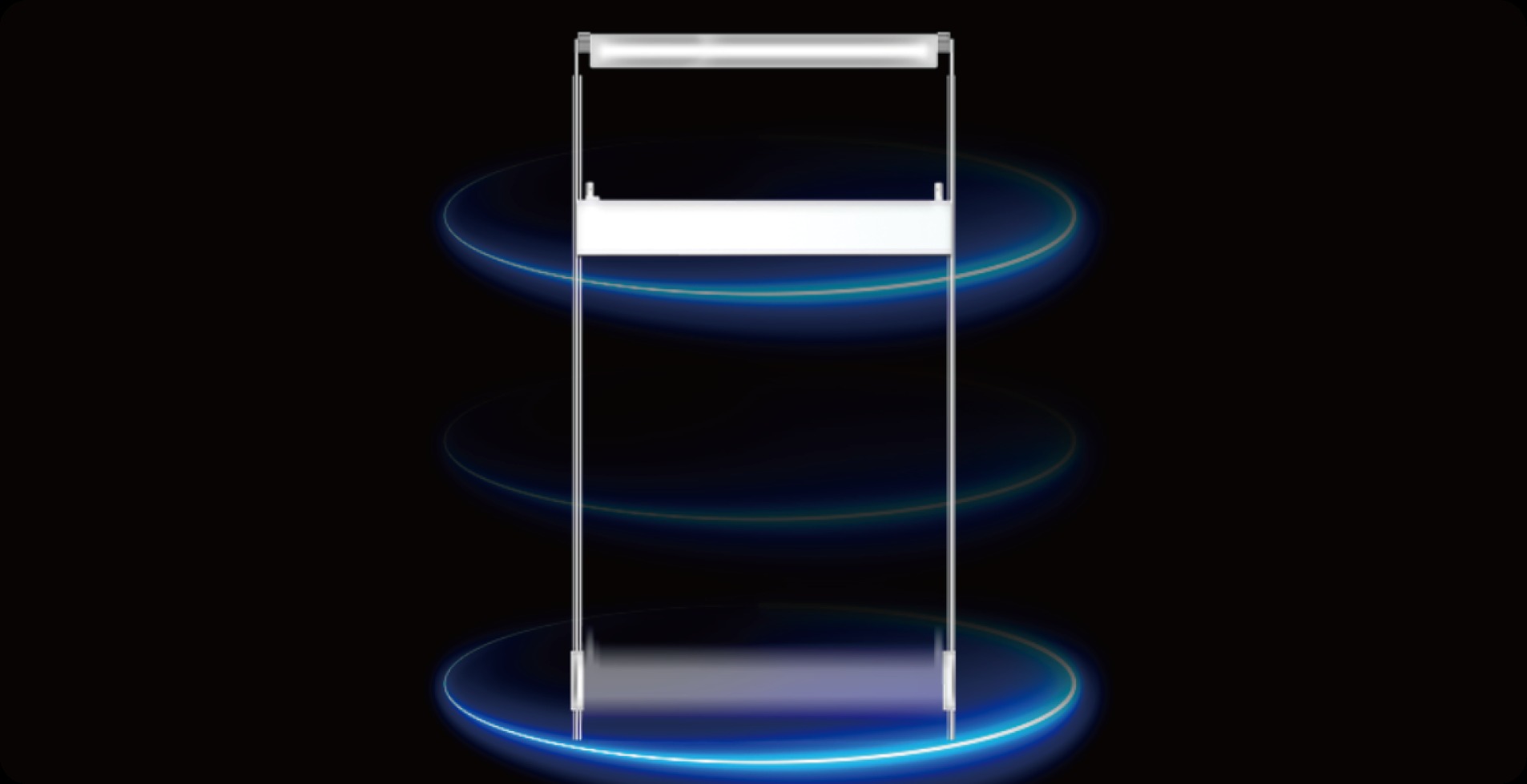
The platform rises to the channel, receives the box and carries it down. Nothing falls seven layers, which for glass vials, blister packs and boxed liquids is the difference between a sale and a refund.
It is also quieter. A machine that clatters on every dispense gets complained about in a hospital corridor at night.
Pickup at Hip Height, Not at the Floor
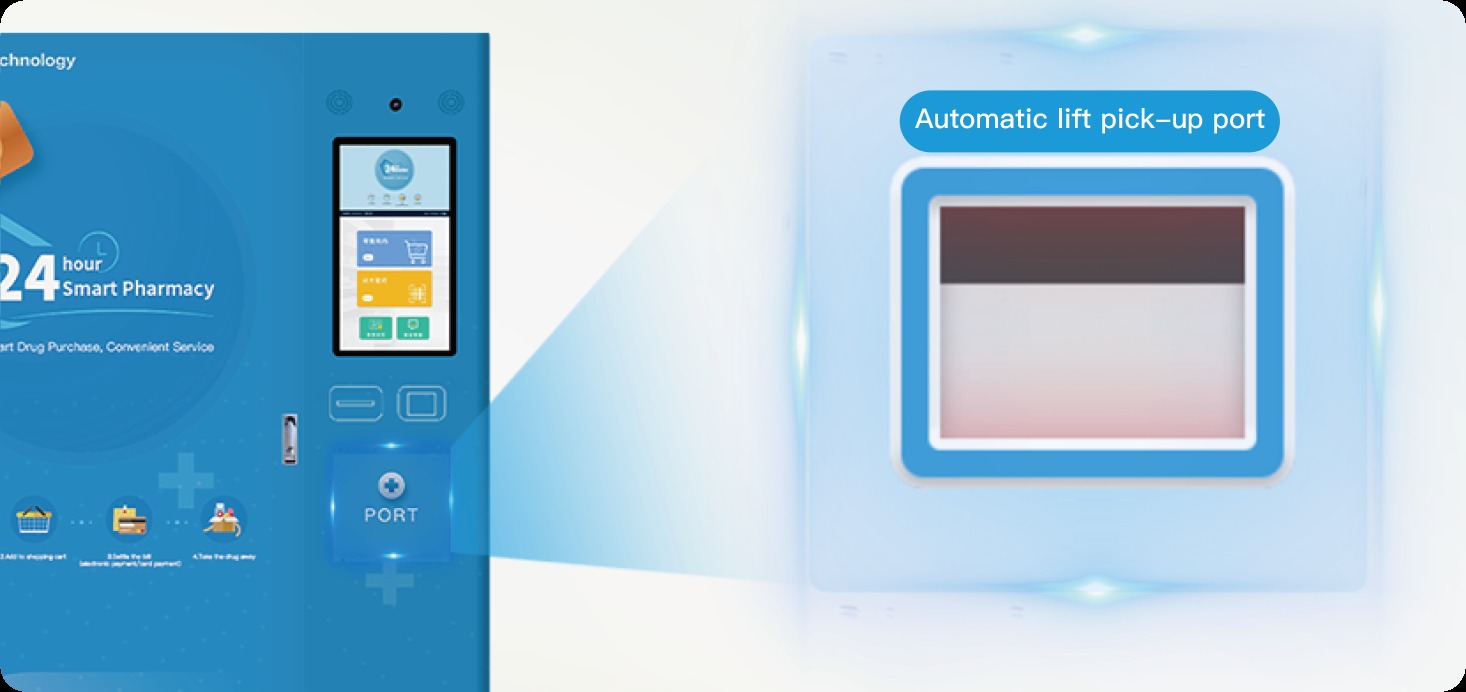
The pickup port sits at mid height behind an automatic door, so nobody crouches to collect medicine. An anti-pinch sensor stops the door on a hand, and the light flashes to show which port is open.
For elderly patients, and for staff collecting on their behalf, that single detail decides whether the machine gets used or bypassed.
The Wrong Box Goes Back In
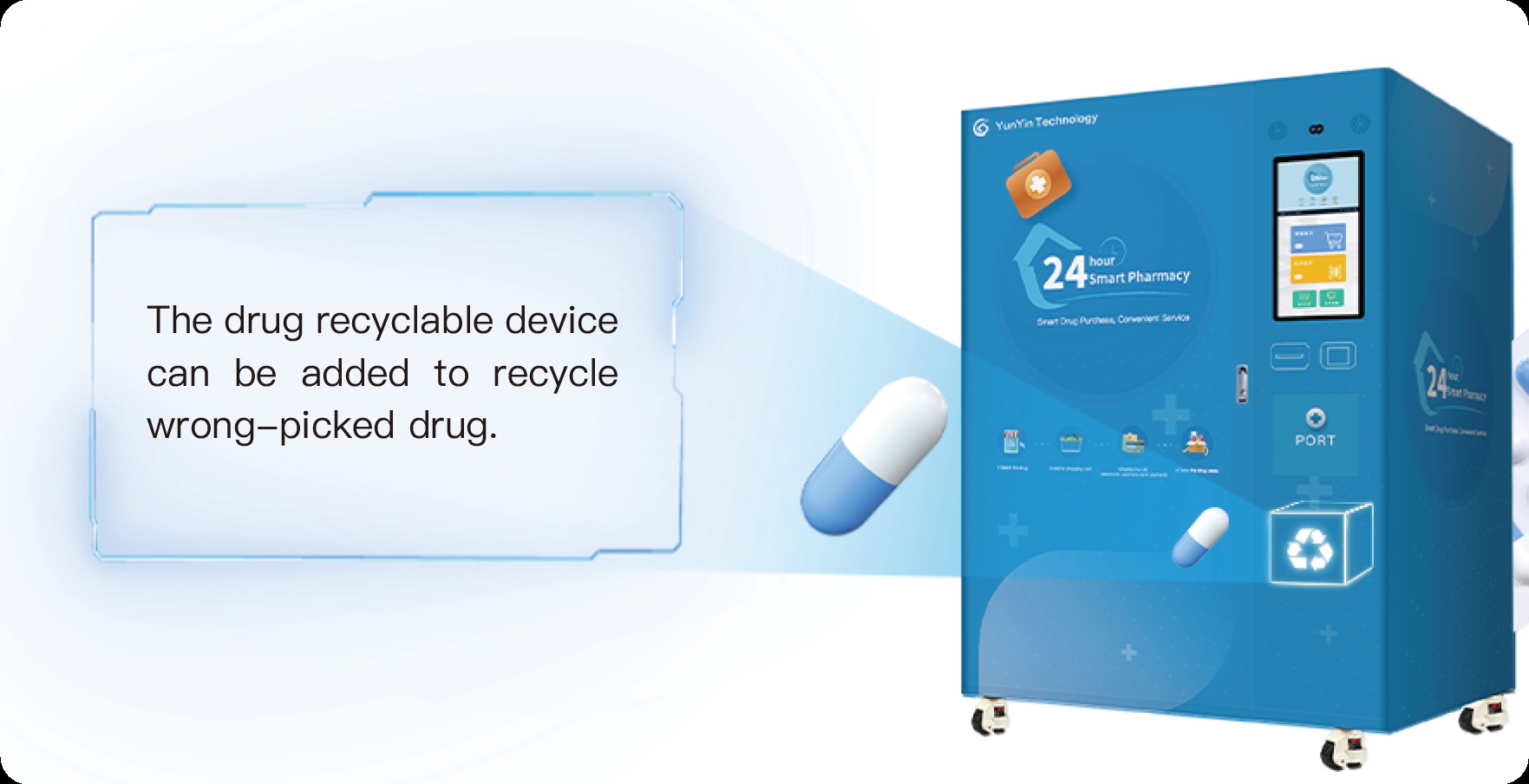
A recycle bin inside the cabinet takes back a box that was picked in error. The return is recorded against the same order, so the stock count stays right and the box is not sold twice.
Every dispensing error that has to be corrected by hand at a counter becomes a queue. Here it becomes a chute.
50 mm of Foam and a Heated Door
The whole cabinet is wrapped in a 50 mm foam layer and the door carries a heating wire, so the glass stays clear and the inside stays dry. Temperature stability is what keeps a medicine inside its labelled storage condition.
Condensation is not cosmetic here. A fogged door hides the stock, and a damp cabinet is what an inspection writes up.
12–20°C, 35–75%, Watched From a Phone
An independent temperature and humidity module holds the cabinet at 12–20°C and 35–75% RH, with the compressor driven by a dedicated board. The probe reports remotely, so the reading arrives before anyone opens the door.
Semi-outdoor sites are where temperature problems appear first, which is exactly where a remote reading earns its keep.
A Receipt That Satisfies GSP Traceability
The thermal printer issues a purchase receipt with the drug name, batch, quantity, price and a QR code. That printout is the traceability record GSP asks for, produced at the moment of sale instead of written up afterwards.
For a pharmacy that is the difference between a machine that can be audited and one that has to be switched off during the inspection.

Pay the Way the Patient Already Pays
Card, e-wallet, Alipay, WeChat Pay, medical insurance card and the local O2O platforms — the payment layer is configured for the market rather than fixed at the factory.
With the 4-in-1 card reader and the O2O interfaces, the cabinet can take an online order and hand the medicine out at the door. That is how a pharmacy competes with delivery apps instead of losing to them.