
Machines are deployed but sales won’t go up; good locations are hard to negotiate, and once secured you worry about losing them—these are the headaches of many people in the vending machine business. This article will organize a set of more practical sales methods from the aspects of locations, products, display, pricing, payment, data, and customer relationships, helping you rely less on guesswork and make more adjustments based on business conditions.
Find Locations with Genuine Consumption Demand
Many people new to the vending machine business easily fall into a misconception: the higher the foot traffic, the higher the sales must be. In reality, foot traffic is only a basic condition; what truly determines sales opportunities is the relationship between “how many people pass by” and “how many people have purchase demand.”
For example, a large transportation hub may have massive daily foot traffic, but consumers stay for very short periods and there are many competing convenience stores. Conversely, a not-particularly-large office park, although fewer people pass by each day, has employees who generate consumption demand for beverages, snacks, coffee, etc. at fixed time periods every day. If the machine can consistently meet these needs, sales performance may actually be more stable.
So when looking for locations, what you need to look at isn’t simply foot traffic volume, but whether several factors hold simultaneously:
- Whether target consumers are clear
- Whether consumers have dwell time
- Whether there are convenience stores or other purchase channels nearby
- At what time periods consumers are most likely to generate demand
- And whether existing purchase channels have obvious inconveniences.
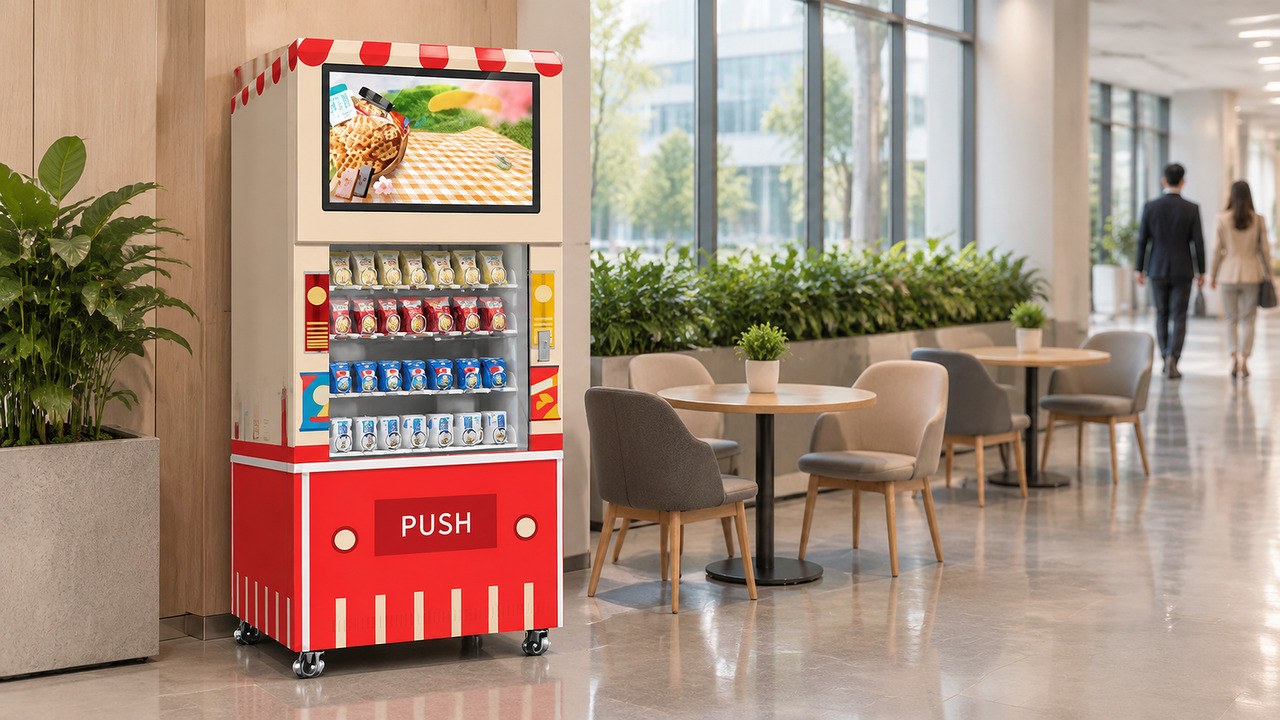
The easy way is to watch for a few days before formal deployment. You can record foot traffic separately for weekdays and weekends and see how it changes during the morning, noon, afternoon and evening time periods. Offices: Notice what’s in demand around lunch and before/after work. Fitness: Notice what’s in demand pre/post workout. Schools, hospitals, shopping malls and other venues: Understand not just what consumers are buying but why.
The more information you have, the easier it will be to assess the future product selection and machine configuration.
Think First: What Do People Here Need?
The second sales technique after getting a location is not to buy a pile of hot products right away, but to first create a basic product logic.
“Vending machine space is limited and you can’t put every product in like a convenience store. So really, what you need to do is make sure every product has a reason to exist within the limited channels and capacity.
For example, in the office setting, consumers may be more concerned with convenience, speed and high-frequency purchases. Demand for beverages, snacks, coffee and some instant consumer products tends to be more stable. Gyms may have more to say about drinking water, sports drinks, protein foods, etc. The consumption logic of hospitals, schools, factories and transportation venues is not exactly the same.
So-called “hot products” aren’t necessarily appropriate for your machine.
What sells in a shopping mall does not necessarily translate in an office building. A truly effective sales strategy is to first identify the scenario, second identify the consumers and third decide the product mix based on the needs of the consumers.
You can divide products into three tiers.
- The first category is stable-selling base products that carry daily sales volume
- The second category is products with certain profit margins, used to improve overall returns
- The third category is test products, using small inventory to verify whether consumers are willing to buy.
The advantage of this is that you won’t let one product selection mistake hugely affect the sales performance of the whole machine.
If a product does not have obvious long-term sales, you should consider reducing its proportion. If a category often sells out quickly, you can consider increasing inventory or expanding similar product choices. The right product mix is not determined once, but is changed constantly during the ongoing operation.
Let the Machine Itself “Tell” Consumers What to Buy
Vending machines have a very obvious difference from traditional stores: consumers usually don’t have sales staff actively introducing products. This means the machine itself takes on a large part of the salesperson’s role.
Consumers may stand in front of the machine for a very short time. If products are placed chaotically, prices are unclear, and hot products are placed in hard-to-see positions, even consumers who originally had purchase demand may quickly leave.
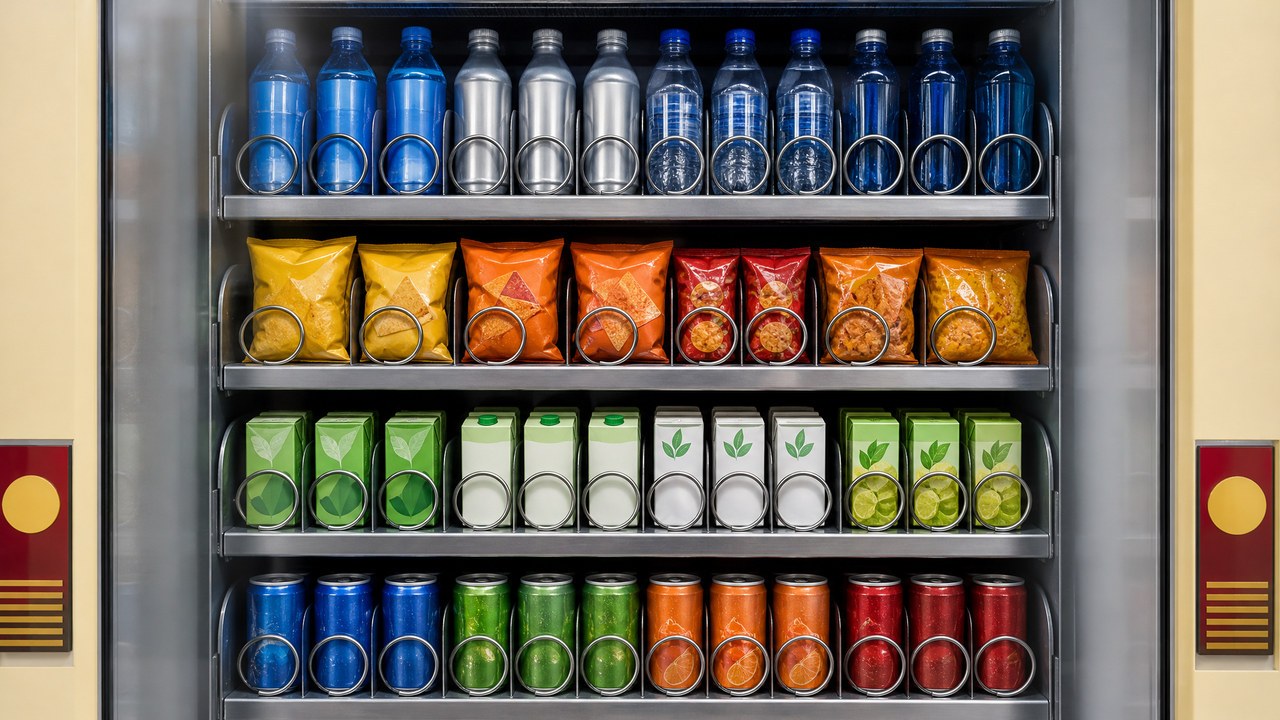
On a combo vending machine that carries drinks and snacks together, this matters even more. You can put the consumer-familiar products that are selling well in the most visible positions and put the products that need a concentrated promotional effort or have higher profit margins in more visually prominent positions, such as at consumers’ eye level. At the same time, try to make clear categorization between different products so consumers can easily find what they are looking for.
If the machine has a touch screen, the screen can also be used to display product information, promotional content or purchase prompts in a clearer way.
One caveat here: more information does not equal better sales results.
However, if the screen displays a lot of text, images, and promotional information at the same time, consumers require more time to understand. Vending machine sales are about efficiency, so you want to ensure consumers can complete the process in a short amount of time: see the product, understand the price, and confirm the purchase.
Price Isn’t Always Better When Lower
Pricing strategy is a very easily missed out part of vending machine sales.
First, some operators are cutting prices as sales begin to slow. But if your price is already in the reasonable range, further price reductions will only reduce your profits without really solving your sales problems.
First Determine Where the Problem Lies
If consumers are willing to buy but feel the price is high, then price adjustment may be effective; if consumers don’t need the product at all, price cuts may still be meaningless; if consumers feel there are too few choices, adding related products may be more effective than cutting prices.
Try Combo Sales
For example, drinks and snacks are sold separately, but you can use combo pricing to make it seem like the consumer is getting a better deal by buying both. This can increase single purchase quantity without sole reliance on reducing single product prices to stimulate sales.
Make Payment as Simple as Possible
Consumers who have already decided to buy but give up due to inconvenient payment—this is a very regrettable sales loss.
Consumers’ payment habits are now increasingly diverse. If a vending machine only offers one payment method, it may directly block some consumers from the purchase process.
This is why most route operators now start from cashless vending machines instead of adding a card reader to an older unit later.
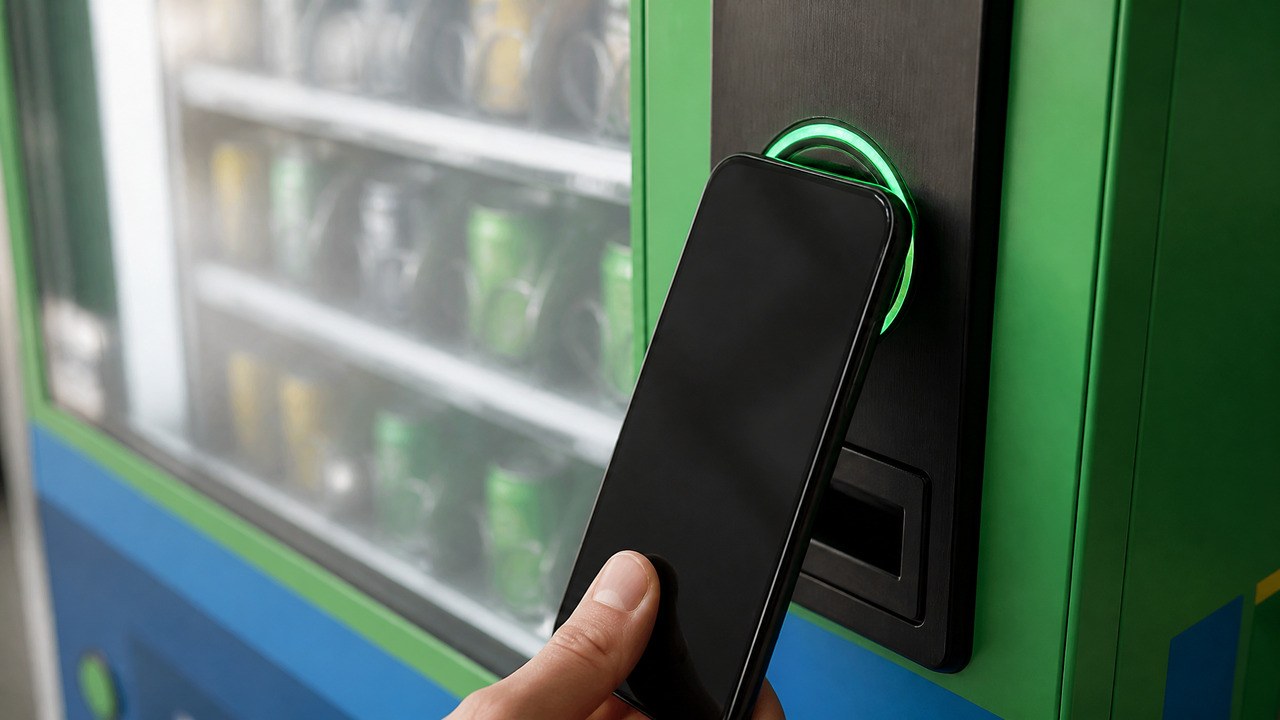
Therefore, when choosing equipment, you should consider the payment habits of the target market in advance, and try to let the machine support payment methods more aligned with local consumption habits.
But this doesn’t mean the more payment methods the better; rather, let consumers quickly complete payment using methods they’re familiar with. Especially in fast-paced consumption environments, consumers usually won’t spend a long time studying the payment process just to buy a bottle of beverage.
From a sales perspective, payment is actually part of the purchase experience. Correct product selection only generates purchase willingness; smooth enough payment is what truly converts purchase willingness into orders.
Business Data Can Help You Improve Efficiency
Managing by memory gets very hard very fast when your machine count goes from 1 to 5, 10 or more. You may know that one machine is selling well, but not discover in time that another machine has abnormalities; you may know that the overall sales of a location are good, but not notice that the operating status of the machine has changed.
This is where backend management capabilities come into play.
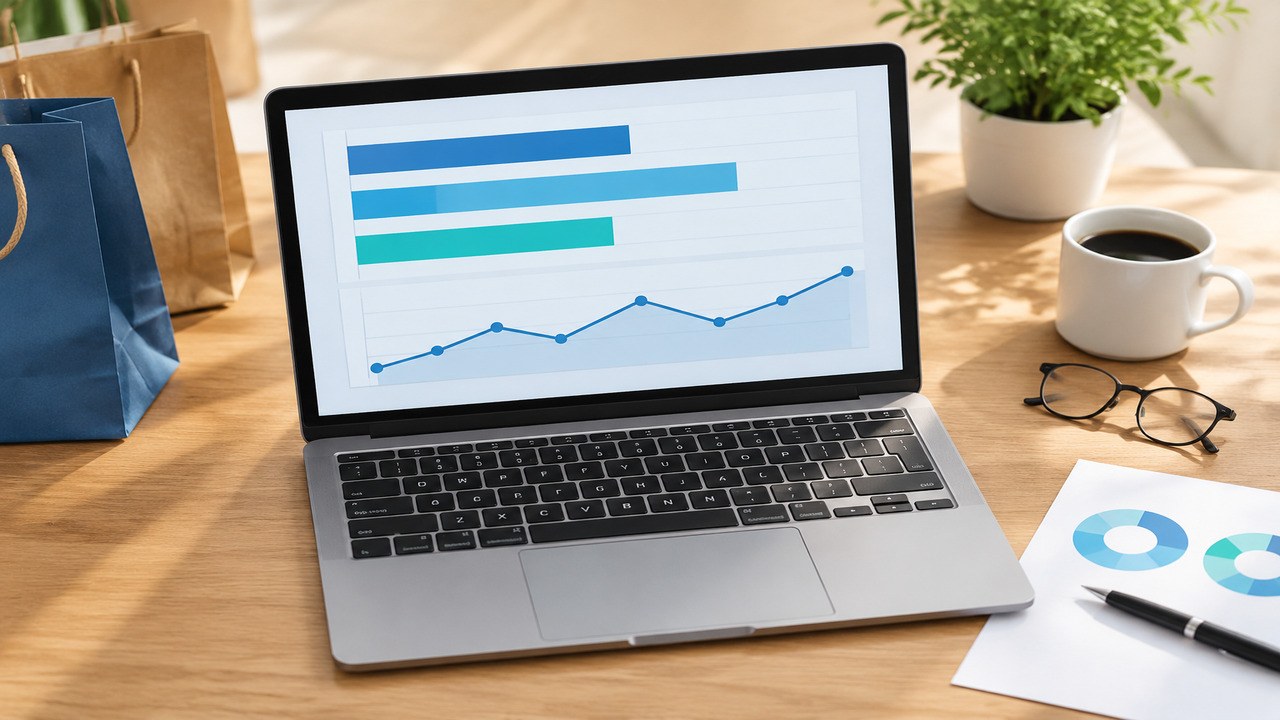
In case you have several devices, you can watch the status of different machines in a uniform way through the backend, consolidating dispersed information. This means you don’t need to go back and manually check each machine constantly and it’s easier to find out which devices need more attention.
But the backend doesn’t make business decisions for you, real sales optimization requires you to judge based on real business conditions. Long-term low sales of a place, for example, you can further observe the foot traffic, product mix and consumption time of the place, not simply conclude that the machine can not sell. If the sales performance of another machine is relatively stable, then you can evaluate the scenario and product mix of this machine, and then judge whether there is experience that can be copied.
Operating vending machines is essentially a process of continuous testing, observation, and adjustment.
Restocking Isn’t That Simple
Many people new to the industry understand restocking as purely logistics work: when the machine is empty, fill it with products. In reality, restocking itself also affects sales.
If a hot product is long-term out of stock, consumers may directly choose other purchase channels. On a snack vending machine, one empty coil means that item is simply not for sale until the next visit. Conversely, if certain low-sales products keep occupying a lot of inventory, it reduces the efficiency of machine space usage.
So when restocking you really need to think about three questions at once: what sells quickly, what sells slowly and what products tend to run out of stock regularly. For products with stable sales, you can ensure a more reasonable inventory For long-term slow-selling products, you can reduce inventory gradually For seasonal products, you can adjust according to consumption cycles
You can even treat different machines as small test markets.
For example, test the same new product at one or two similar locations first. If consumer acceptance is good, then gradually expand the range. This is more prudent than purchasing a lot of new products all at once.
This method is especially suitable for people just starting the vending machine business, because your capital and machine space are both limited, and any large-scale procurement mistake can affect cash flow.
Find Specific Problems Rather Than Directly Replacing Machines
When a vending machine’s sales performance is not ideal, don’t immediately assume it’s the machine itself.
You can troubleshoot by following a simple order.
Location
If the place itself has no stable consumption demand, then even the best products can hardly create enough sales.
Then look at products. If the location has no problem, you need to judge whether products meet the needs of consumers here. Many times, it’s not that consumers are unwilling to buy, but that the products in the machine don’t solve the problems they truly want solved.
Price
Products and demand both match, but prices明显 exceed consumer expectations, which also affects purchases.
Purchase Process
Whether payment is convenient, product information is clear, and operation is simple—these details all affect final transactions.
Finally, consider the equipment’s own operating condition.
If the machine has malfunctions, can’t sell normally, or has abnormal operating status, then the preceding product and pricing strategies can hardly work.
This troubleshooting approach can help you avoid a common mistake: seeing poor sales and directly replacing machines or locations without finding the true problem.
Location Negotiation
Sales techniques in the vending machine business occur not only when consumers buy products but also when you secure locations. When you’re ready to enter a new venue, what the venue owner truly cares about is usually not how beautiful your machine is, but what it can bring them after being placed.
So, before you start negotiating, it’s better to first understand what problems the other party has now.
Does the venue have a convenience store for example? It is easy for employees or customers to buy beverages. Are there times that vending equipment is not being utilized? What kind of cooperation does the owner of the venue want?
The more specific you are, the easier it is to find the true intersection of both parties’ interests.
If the other party already has other vending machines, you do not need to prove that you are better by putting down competitors. You can find a place where you can make a real difference. It could be a different product mix, payment methods more appropriate to local consumers, or equipment and services you can provide that better match scenario needs.
Negotiation is not about one-sided persuasion but about finding a form of cooperation that is acceptable to both parties.
Don’t Rush to Find the Next Location
If you think that signing a new location is the end goal of your sales work, you’re wrong. But in truth it should only be the start of the next phase of operations.
It takes time to find out how much real value a machine can produce. In the course of operation, we need to constantly monitor whether the products are accepted by consumers, which items sell faster, when the demand is at its peak, and whether the venue has new needs. So, when a location is running successfully, you need to be proactive to assess whether there is room for growth.
For example, if a particular area previously had only one machine, but consumer demand is obviously greater than the capacity of one machine, it may be more reasonable to add other machines than to search for a completely new and unfamiliar location. If the venue operator has more than one venue you can also inquire are any opportunities for new placements.
That is why the vending machine business cannot just look at the number of new customers, but also whether existing locations can sustain operations. A stable location, constantly upgraded in terms of products, equipment and service, can bring much more benefit in the long run than a one-off deal.
Truly Effective Sales Means Making Consumers Willing to Buy Again
If a machine only makes money from first-time purchases then you have to keep finding new consumers.
But if the purchase is easy, the product is satisfactory, the price is affordable and the machine operates stably, the consumer is more likely to have repeat purchase.
What you really need to know is not just how much the machine sold today, but why people at this location are willing to continue buying here. So you can see from time to time if the product mix needs changing and you know the problems consumers have from the feedback of venue owners.
If a product is often asked for but not in the machine, consider adding it as a test. If certain products long term don’t get buyers, you can reduce their proportion. If a location’s consumption habits change with seasons, the product mix should also be timely adjusted.
Final Thoughts
The truly effective approach is to start from location demand, do well in product mix, display, pricing, and payment experience, then continuously adjust through backend management and continuous operation. If you’re looking for a vending machine producer, or preparing to batch purchase or customize equipment, Yunyin can provide one-stop support from equipment R&D and production to OEM/ODM and unmanned retail solutions, helping you build a vending machine project more suited to yourself based on different products and scenarios.
FAQ
How Long Until You Can Judge a Vending Machine’s Sales Performance?
It is not recommended to make conclusions based on the first days of data after deployment. When a new machine is first introduced to a location, consumers may not have purchase habits yet, and the product mix also needs time to be verified. A more rational approach is to watch continuously for a while, ~30-60 days. Observe the changes across different time periods, product categories and sales at the same time, and judge whether this location is worth further investment.
How Many Products Should a Vending Machine Carry?
If you run a full vending machine for drinks, snacks and so on, you can start testing with about 15-30 SKUs, not jamming all channels in the beginning. This range offers some product options and it is easy to see which are the real hit products among the consumers.
After Putting a New Product in a Vending Machine, How Do You Judge Whether It’s Worth Continuing to Sell?
You can use new products as test products and monitor how often they are purchased over a period of time, and then compare that to other products in the system. If people are still buying them increase inventory slowly, if there is no long-term demand then cut the quantity or replace with other items.
Why Do the Same Products Have Different Sales in Different Vending Machines?
This is because sales results are not only affected by the products themselves but also by location demographics, consumption times, pricing, competitive environment, and purchase scenarios. Different consumers in office buildings, gyms and transportation venues drink the same beverage, so you can’t replicate a best-selling product from one location to all machines.
After Vending Machine Sales Increase, Should You Prioritize Adding Products or Machines?
If popular items routinely run out of stock on existing machines, that suggests that there may still be room to optimize the current equipment. If product availability and inventory levels are relatively stable, but consumer demand clearly exceeds the capacity of a single machine, then adding more equipment may be a more reasonable approach. This can help save unnecessary costs by finding the bottleneck first and then deciding where to put resources.
Is the Vending Machine Business Suitable for Purchasing Many Machines at Once?
It’s not advised to just go for a large quantity of equipment at the beginning unless you’ve validated both location and product demand. A more prudent approach would be to test out different scenarios with a small number of devices, confirm consumer demand, product mix and operational methods, and then expand the procurement scale according to the actual performance. The advantages of batch buying and custom equipment will be more apparent as the operational model stabilizes.
When Choosing a Vending Machine Supplier, What Should You Look at Besides Price?
Price is just one aspect of the procurement decision. You should also check whether the supplier has independent R & D and production capabilities, whether the equipment can match your products and application scenarios, whether the payment and backend management capabilities meet the project needs, and whether subsequent batch purchasing and customization are convenient. Yunyin specializes in the design, research, development, production and sales of smart vending machines. Yunyin offers matching equipment for a variety of application needs, including beverages, snacks, health care and special products, and provides project cooperation of different scales through OEM/ODM and one-stop unmanned retail solutions.
If I Want to Customize a Vending Machine, Where Should I Start?
First, it is recommended to define three things: the products you will sell, the place where the machine will be installed and the target consumers. Then choose configurations like machine size, channels, capacity, payment methods, screen and back-end management. Yunyin is a manufacturer with R&D and production capabilities for vending machines and can provide OEM, ODM or customized solutions according to your project needs.