
As you grow your vending operation into other locations, you will face new challenges such as procurement costs, restocking efficiency, equipment maintenance and cash flow. This article will help you to make a more prudent growth plan in terms of location selection, operations, equipment procurement and market expansion.
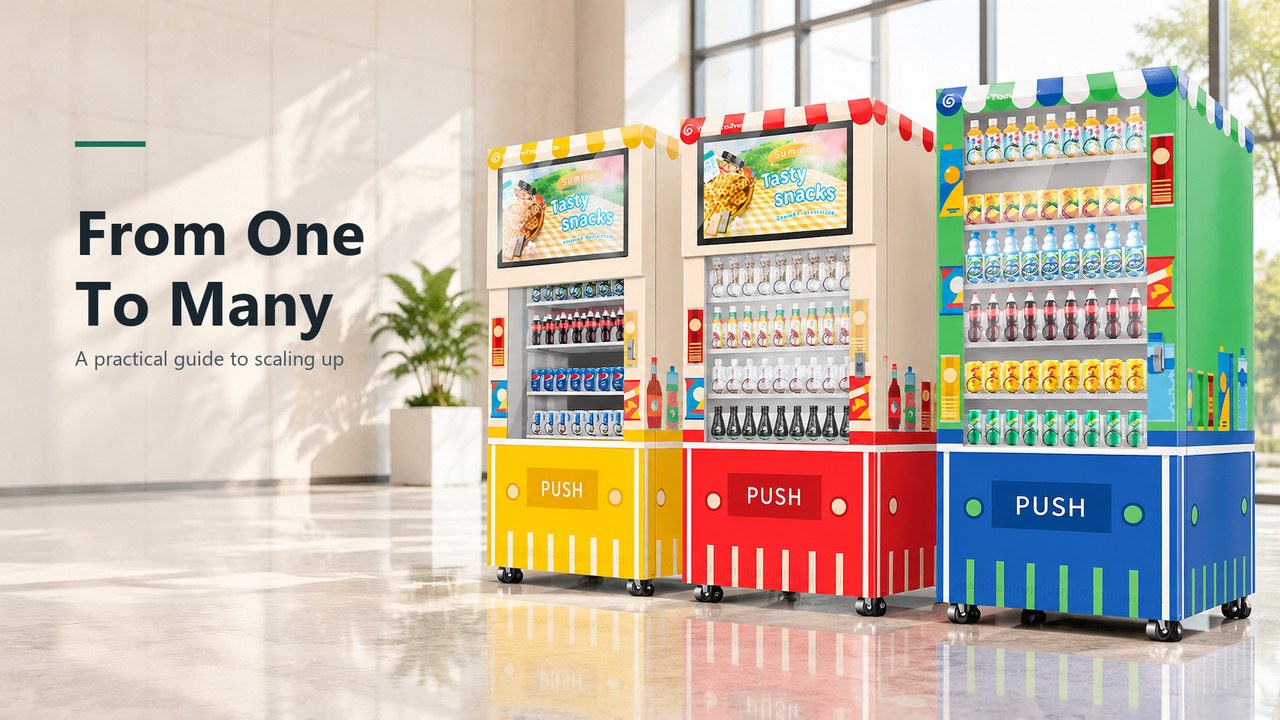
Confirm Whether Your Current Business Is Worth Replicating
Before you scale up, you must understand the actual performance of your existing equipment. Cost of goods sold, venue rental, credit card fees, restocking fees, maintenance costs, etc. Track sales per machine and see which sites consistently yield acceptable operating margins.
In addition to revenue, track how often equipment stockouts occur, maintenance needs and daily management time. If your existing business has chronic problems like irregular sales, haphazard inventory management, or frequent repairs, get to the bottom of the causes before thinking about buying machinery. Otherwise, these problems will only get harder to manage as you scale.
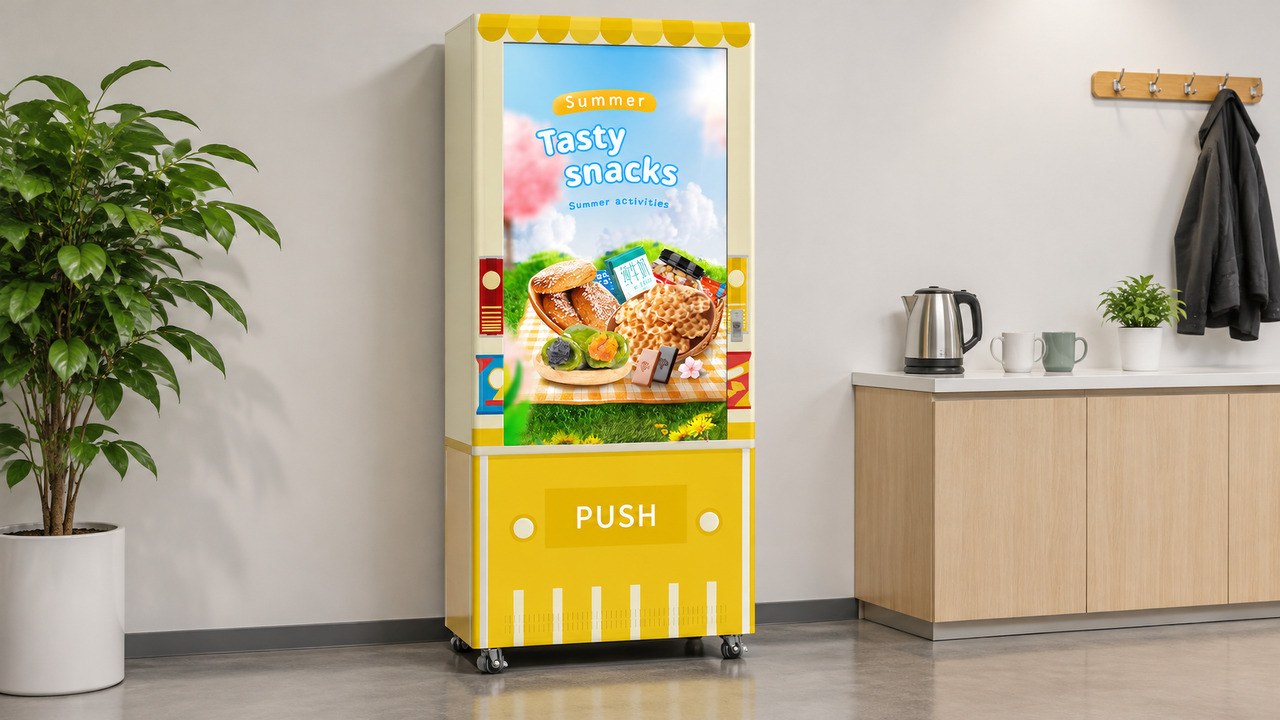
When you find location types and product mixes that consistently work, you can copy them. For example, if beverage and snack machines in office buildings always do well, focus on locations with similar demand, rather than opening in many completely different markets at once.
Choose the Right Locations
Just because it gets a lot of foot traffic doesn’t mean it will do good sales. As you choose sites, you need to take into consideration target demographics, buying habits, competition nearby, equipment visibility and ease of purchase.
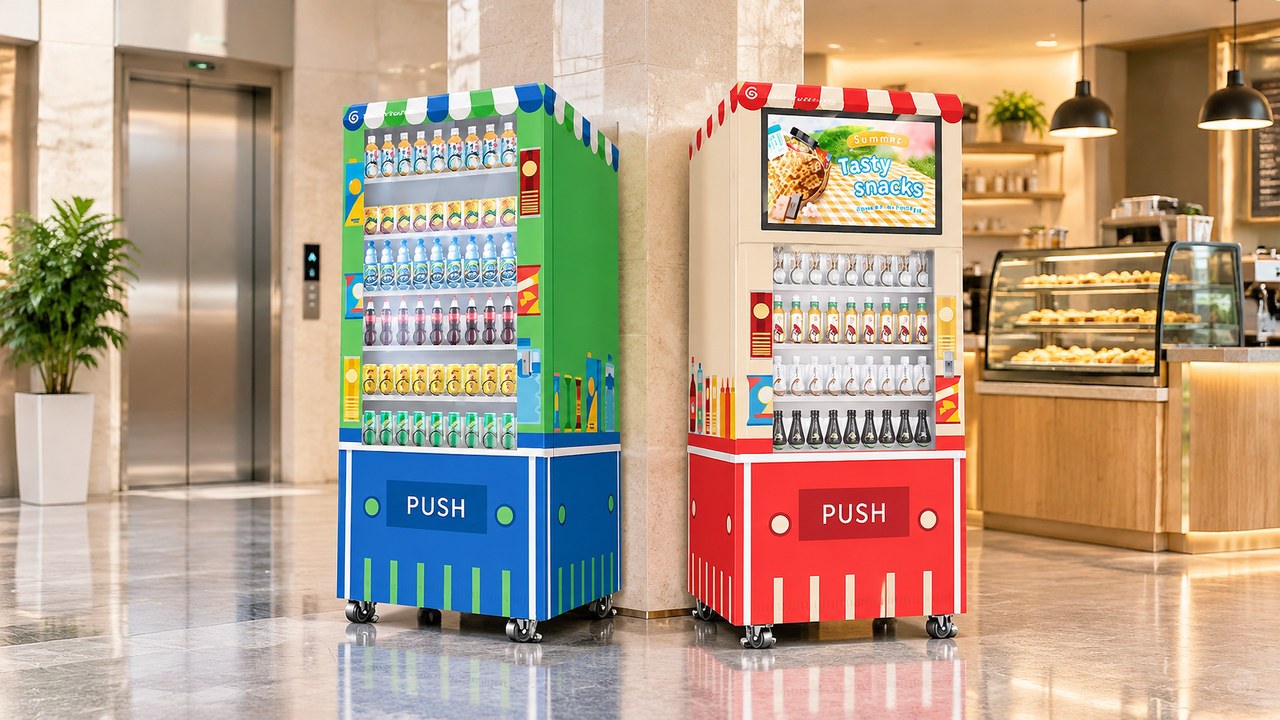
Offices may be good for drinks, snacks and light meals. Gyms may need sports drinks and supplies. Transportation hubs may have a ready market for shopping. Different scenarios have different consumption habits. Equipment configuration and product mix should be adjusted accordingly.
You should visit the site at different times before signing a contract and check with the venue owner about rent, revenue sharing, power supply, network, space for placement and maintenance responsibilities. Clear cooperation terms may reduce later operational disputes. And further to enhance the regional concentration of equipment. Placing machines in nearby commercial areas is generally more convenient for restocking, inspections and repairs and reduces the amount of time staff has to spend travelling between locations. But it’s better for your long-term management to build a concentrated, stable location network rather than just chasing machine count.
Scale Up in Phases
The typical way to grow is to add machines gradually, guided by business data and management capacity. You may move on to the next phase as you complete the goals in each phase.
Phase 1: Validate the Business Model
If you are a beginner, concentrate on learning which places do well, which products sell more and how much time you will need for restocking and maintenance. It’s easier to control costs by first validating one business model, instead of trying multiple equipment types at the same time.
Phase 2: Replicate What Works
When the existing equipment is stable, you can try to find similar locations with uniform product management, inventory records, equipment inspection and failure-handling processes. Note that even with unified management standards, different scenarios still require different product mixes.
Phase 3: Improve Team Management
As your machine fleet grows, you might find that you’re unable to manage restocking, procurement, repair coordination, and new location development on your own. When daily operations start to get in the way of growing the business or equipment problems can’t be quickly addressed, it’s time to consider hiring staff or local service partners.
Note that before each scale-up, you should check cash reserves, supply capacity and staffing arrangements to ensure that new equipment does not exceed current management capacity.
Plan Equipment Procurement and Investment Budget Wisely
This however means that equipment buying is not only about purchasing the machines but also includes shipping, installation, payment systems, initial inventory, venue deposits, maintenance and possibly import and certification costs. If you intend to make bulk purchases, ask suppliers about volume pricing, lead times, warranty terms and spare parts supply. But don’t just compare equipment quotes. Long-term costs are also affected by whether machines are suitable for target products, meet payment needs, and are convenient to maintain. Before purchase, you can target comparisons of the following:
- Equipment Configuration: Whether product dimensions, capacity, channel structure, temperature control, and dispensing methods meet operational needs.
- Payment Methods: Whether common payment channels in the target market are supported.
- Backend Management: Whether sales data, inventory information, and equipment operating status can be viewed.
- After-Sales Support: Whether warranty, spare parts, and technical support are provided.
- Delivery Arrangements: How long production, shipping, installation, and commissioning take.
Standardizing equipment specs makes training, spare parts management and daily maintenance easier. But if you are running different businesses at the same time such as beverages/snacks, fresh/hot food, or care services, you don’t have to force the same equipment to fit. You can choose appropriate machines based on actual scenarios, instead of forcing the business to fit existing configurations.
Manage Your Cash Flow Well
Having profits doesn’t mean you have enough cash. New location revenue takes time to develop, while equipment purchases, shipping, and inventory often require prepayment. If you spend all your money on machines, you may not have enough for future restocking and daily operations.
Your expansion budget should include equipment procurement, startup operating funds, daily working capital and emergency reserves. Also, you need to monitor venue settlement cycles, supplier payment terms and other fixed expenses to avoid cash pressure from mismatched payment timing.
If you can’t afford it, consider buying in phases. Invest in a few machines first, and see how well the new locations sell, how often you have to refill them, and what maintenance they need. Then decide if you want to invest more. That means you are risking less capital at a time and can adjust plans to what actually transpires.
Use Smart Backends to Improve Management Efficiency
When equipment is spread out over several sites, per-machine checks are a huge time suck. Through intelligent management backends, you can centrally view the sales data and operating status of different machines, so as to quickly understand the performance of various places, find out the machines that need to be paid attention to, and see if there is a need to adjust the products.
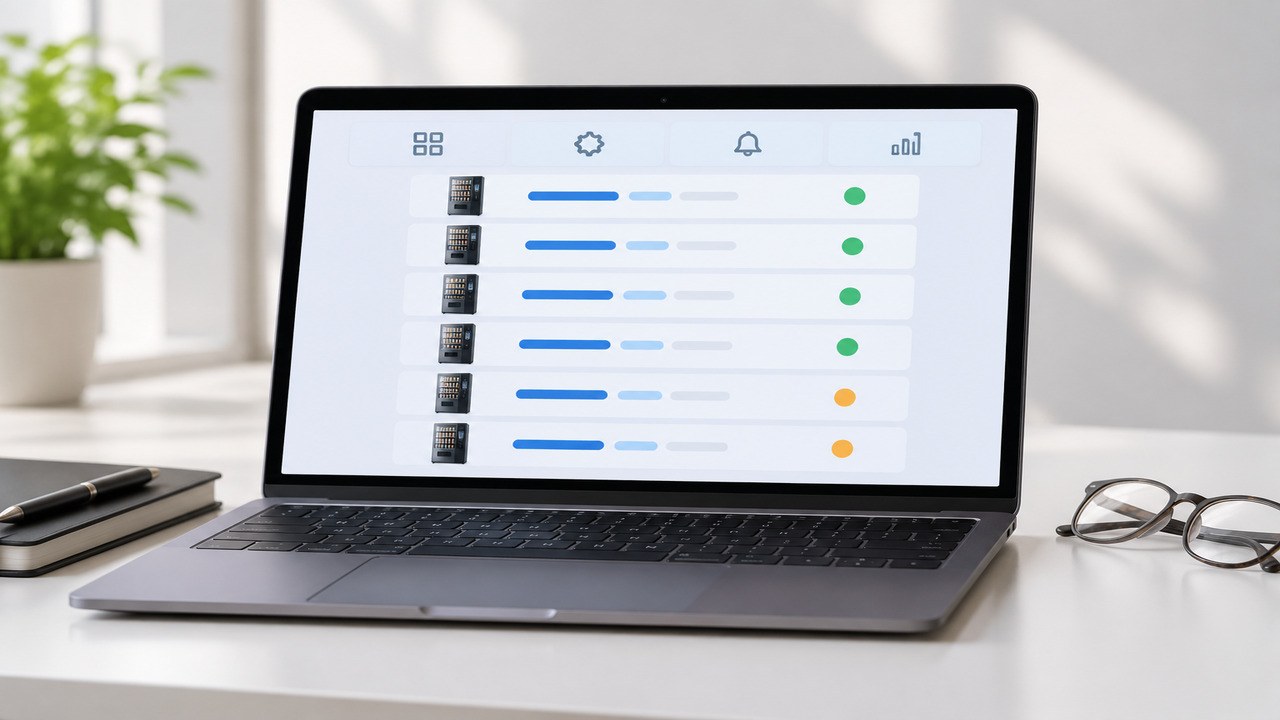
Naturally, inventory planning also should be based on sales records. For consistent sellers, establish sensible inventory goals; For erratic sellers or items with a brief shelf life, make flexible adjustments according to real demand. Inventory and fault alerts help you catch problems early, but staff still need to arrange restocking or repairs based on the conditions on the ground.
If the backend supports changing the price remotely, you can also change prices based on product costs, venue fees and competition in the market, reducing the time visiting every machine.
Note that centralized management does not mean that the backend will automatically complete all operational tasks. You still have to organize restocking, plan routes, and coordinate staff based on equipment status, sales data, and inventory information. The back end’s primary function is to give you timely, centralized information so you can make more reasonable business decisions. Hence, it is advisable to review sales, costs, stockouts and faults for each machine from time to time and change product mix and operational arrangements on the basis of data.
Optimize Inventory and Restocking Processes
The more machines you have, the less memory is involved in inventory management. If you don’t have unified records, you may over-order some products and under-order real best-sellers; or you may create irrational restocking schedules that lead to stockouts during peak periods.
You could begin with a product list with the purchase price, selling price, shelf life, sales velocity and supplier lead time for each item. Set up basic inventory standards for high-sales, stable supply products; control purchase quantities for slow-selling or short shelf life products, to reduce capital occupation and losses.
Restocking procedures should also gradually shift from fixed inspections to demand-based judgment. With the help of sales records, inventory status and location distances, you can make restocking plans and prioritize machines with high stockout risk and good sales performance. If you have more than one machine in the same area, focusing restocking on the same day or same route also helps minimize transportation costs.
As business grows, procurement practices can also be improved incrementally. Sure, you might get better bulk buying terms if your product demand is stable, but only if your products actually sell within reasonable timeframes. Buying deep discounts on slow-turnover goods might tie up cash and increase pressure on storage space.
If your business involves fresh or hot food, you’ll need to think about shelf life, temperature requirements and food safety processes too. The same inventory standard cannot be directly used for different categories of products, and similar management methods should be formulated according to product features and local conditions.
Choose Equipment Types Based on Business Needs
You may also find different vending equipment during expansion. When selecting models, clarify the needs of the target customers first, and then judge which equipment is suitable for the scenario.
Beverage and Snack Vending Machines
Suitable for consumption demand locations such as office buildings, schools, factories, hotels and transportation venues. You need to pay attention to evaluating product capacity, channel configuration, payment methods and convenience of restocking. If target scenarios involve mostly bottled beverages and packaged snacks, standardized equipment usually facilitates easier replicable operational processes. Standard beverage vending machines are usually the easiest to replicate across sites.
Fresh and Hot Food Vending Machines
Good for when you need to eat when it’s not a regular mealtime. In addition to product sales, you need to track temperature control needs, shelf life, how often you restock and loss rates. Such businesses should grow slowly after verification of the supply chain and on-site management capabilities. A fresh food vending machine only pays back when the local supply chain can support frequent restocking.
Helmet and Shoe Care Equipment
Suitable for motorcycle parking lots, shopping malls, fitness venues and other places with related care needs. These machines aren’t selling physical products, but providing services, so you need to figure out how often consumers will use the service, what you will charge for each use, costs of consumables, maintenance requirements and venue cooperation terms.
Reverse Vending Machines
These machines are used primarily to redeem qualifying plastic bottles and metal cans and may include points, coupons or other reward mechanisms. When expanding, pay attention to recycling demand, collection and transportation arrangements, equipment capacity and reward costs. It cannot be evaluated by the sales logic of traditional product vending machines.
If deposit-return rules apply in your market, reverse vending machines can be added as a separate, service-based line rather than another snack route.
You don’t have to run all the equipment types from the start. Better to first decide on the primary business direction and then, having validated demand and operational processes, gradually expand based on customer inquiries, market opportunities and the capabilities of the current team.
Adapt to Different Markets Through Customized Equipment
But when business grows beyond one scenario to multiple industries, standard equipment may not meet all needs. Some venue owners may demand specific dimensions, appearance design, product capacity, channel configuration, or payment methods; different countries and regions might also have different electrical standards, languages, and payment habits.
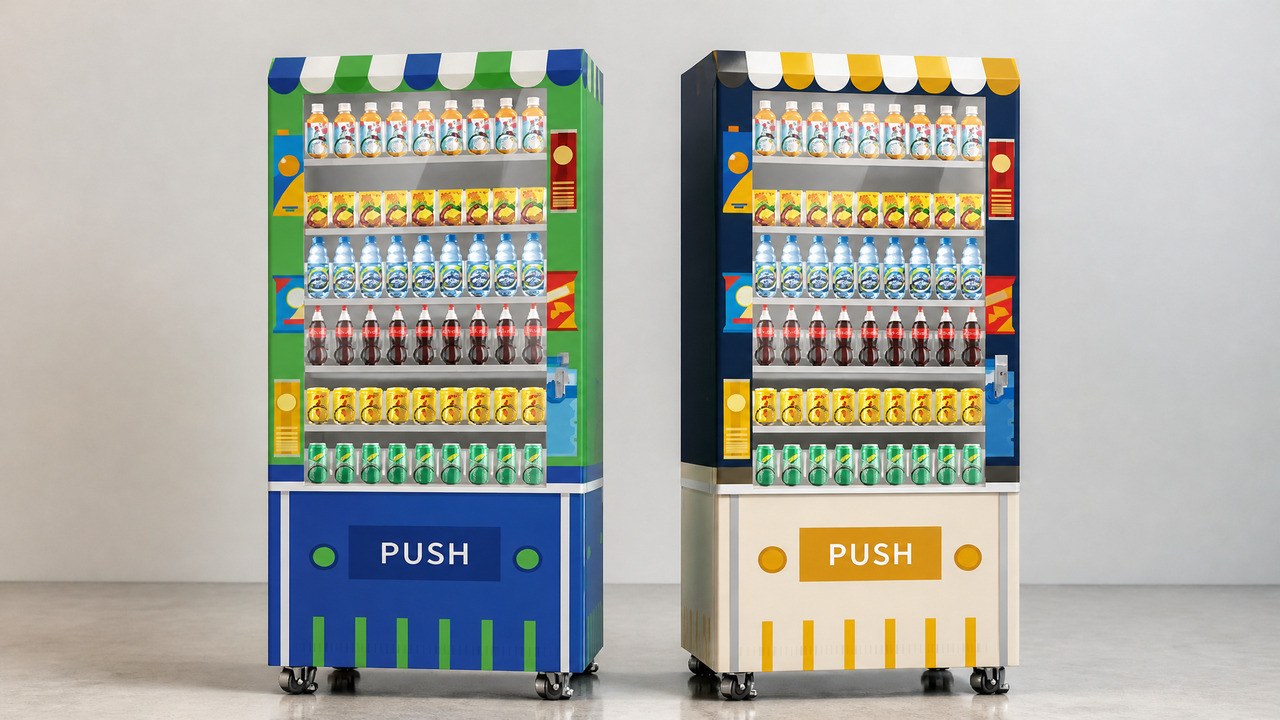
In this case, you can decide whether you need to customize equipment. Customization is not only about designing a whole machine from scratch, but also about adjusting appearance, structure, product configuration, software interfaces or related functions according to actual projects. The trick is sorting which needs affect operational efficiency and which are just ephemeral choices.
It is suggested that the user write a clear requirement specification, including the target market, usage scenarios, product specifications, expected quantity of equipment, payment methods, backend management needs, certification requirements, and delivery time before asking for customization. This allows suppliers to better evaluate solutions and makes it easy for you to compare different quotes.
Long-term maintenance needs should be considered too, after customization. Special parts, unique structures or non-standard software functions can all affect spare parts procurement, repair cycles and later expansion. So when you’re looking at the customization of equipment, it’s not just about the current needs, but future-proofing. Will the same solutions work when machines are added in the future?
Establish Reliable After-Sales and Maintenance Mechanisms
Sales interruptions, customer complaints, and even your relationships with venue owners can result from equipment failures. Therefore, prior to expansion, understand the supplier’s warranty coverage, method of fault response, supply of spare parts and technical support channels.
Also confirm if there are local repair resources for overseas equipment, or if issues can be resolved via remote technical support, shipping spare parts and local partners.
You can also create maintenance records for each machine and register equipment location, warranty period, causes of faults, repair times and replaced parts. This data enables you to identify common issues and make timely adjustments to maintenance plans.
As the business expands, also clarify who follows up on faults, who contacts suppliers and who deals with on-site treatment. Sound maintenance processes reduce equipment downtime and help the business to operate with stability.
Conduct Regular Reviews
Expansion is not a single procurement decision but rather a process of continuous adaptation of business methods. But machine count isn’t the only thing you need to keep track of. You also need to know per-machine sales performance, operating margins, stockout frequency, fault downtime and restocking labour hours. A truly sustainable vending business is not about having more machines, but about generating reasonable returns consistently, having stable management processes and flexibly adjusting business strategy with market changes.
Final Thoughts
Simple. To grow a vending business, you need more than machines. You need sound investment planning, stable locations, efficient operating procedures and reliable after-sales support. If you need equipment and customization solutions for different markets, Yunyin can help you with equipment design, R&D and production, as well as unmanned retail solutions, to help you prepare for the next phase of business growth.
FAQ
How Much Startup Capital Is Needed to Scale a Vending Business?
Initial capital depends on the type of equipment, number of units purchased, costs of installation, inventory and the venue. You’ll want money for shipping, maintenance and daily working capital, in addition to equipment payments. It is suggested to first make a budget, then decide the scale of expansion according to the current cash flow of the business.
When Scaling a Vending Business, Should You Buy New Equipment or Upgrade Existing Equipment?
If the existing equipment can still meet the market demand, it may be more appropriate to upgrade payment methods, adjust product configuration, or improve management processes. If the capacity of the equipment is not enough, the functions can not meet the target scenarios or the maintenance costs are always high, you can consider changing or adding new machines.
How Do You Judge Whether a Vending Location Is Worth Operating Long-Term?
You can have an overall evaluation of the target demographics, purchase demand, product sales performance, venue fees and maintenance costs. During the trial operation, record business data constantly and compare it with a set goal to determine whether the site can produce reasonable operating margins constantly.
How Should Staff Be Arranged After the Vending Business Expands?
You can decompose restocking, equipment inspections, fault handling, inventory procurement, and location development with clear responsible persons. “Don’t let the day-to-day wear you down to the point where you’re not able to grow your business or address equipment issues quickly. Hire more people or use local service partners.
What Types of Products Can Vending Machines Sell?
Typical products include drinks, snacks, packaged food, fresh food, hot food and daily necessities. You can also select dedicated equipment like helmet care, shoe care or reverse recycling depending on your business. Selection should be based on scenario needs, product dimensions, equipment configuration, and local regulations. Yunyin offers a wide range of vending equipment and customized solutions, and we can select the right configuration for your project.
How to Choose a Vending Machine Manufacturer for Long-Term Cooperation?
Besides the price of equipment, consider the manufacturer’s R&D and production capabilities, quality control, certification support, customization ability, delivery arrangements and after-sales service. It is particularly important for companies that plan to continue adding machines to find out whether suppliers can supply compatible equipment, spare parts and technical support in a stable manner. Yunyin is committed to the design, R&D, production and sales of smart vending machines and can offer equipment and solution support for distributors, project investors and unmanned retail operators.

