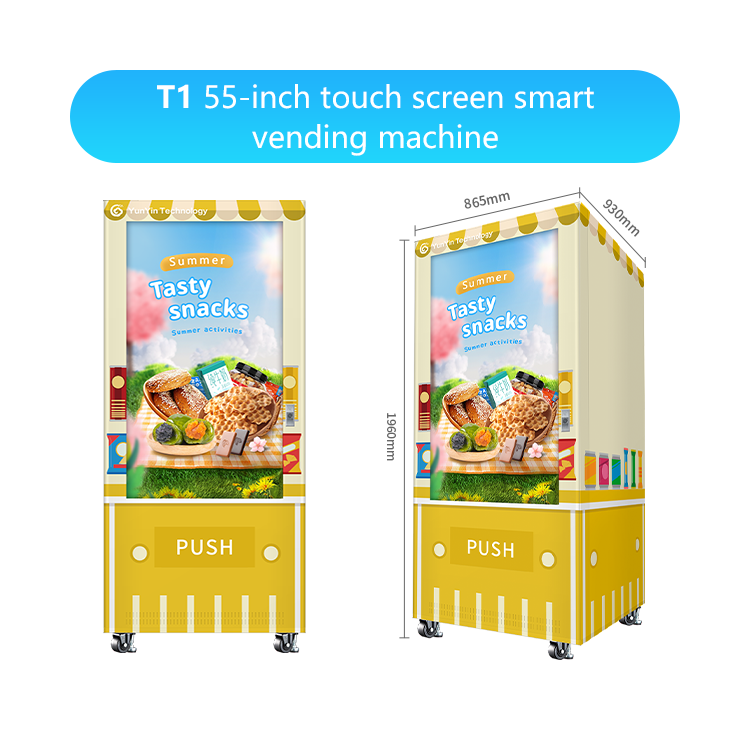
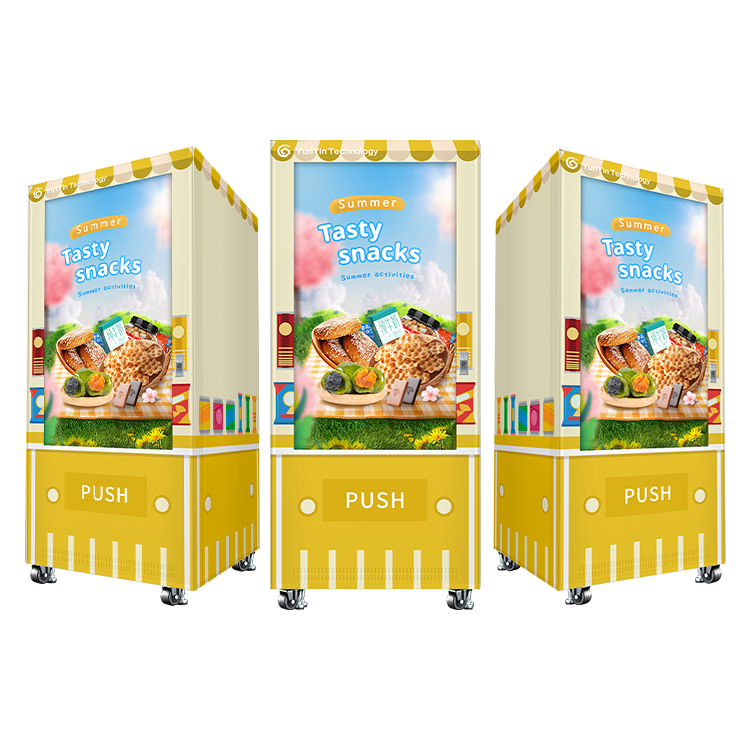
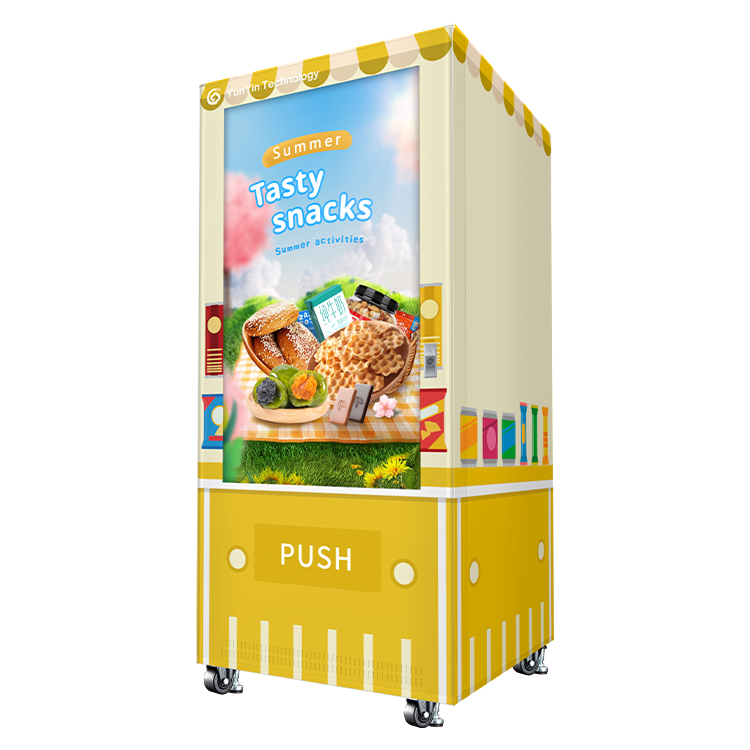
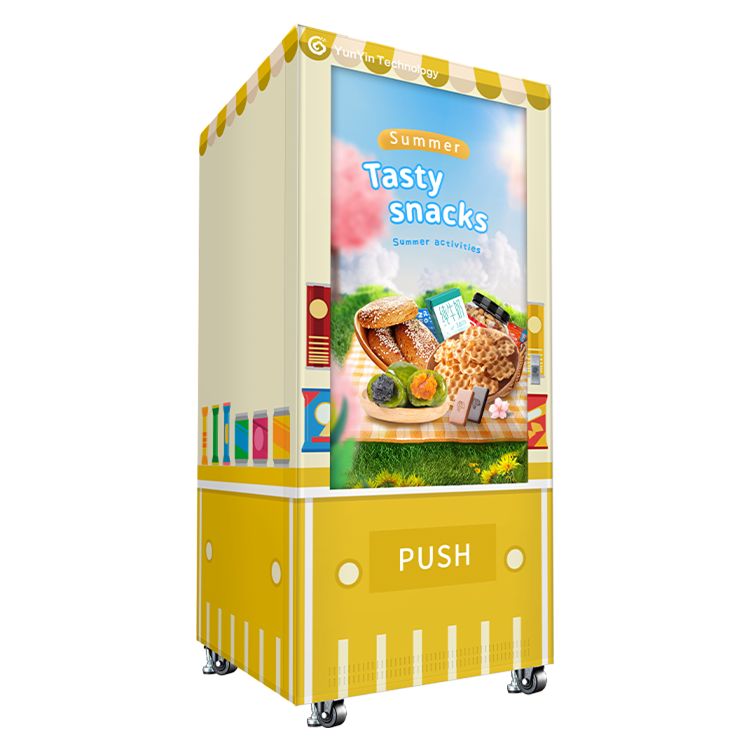
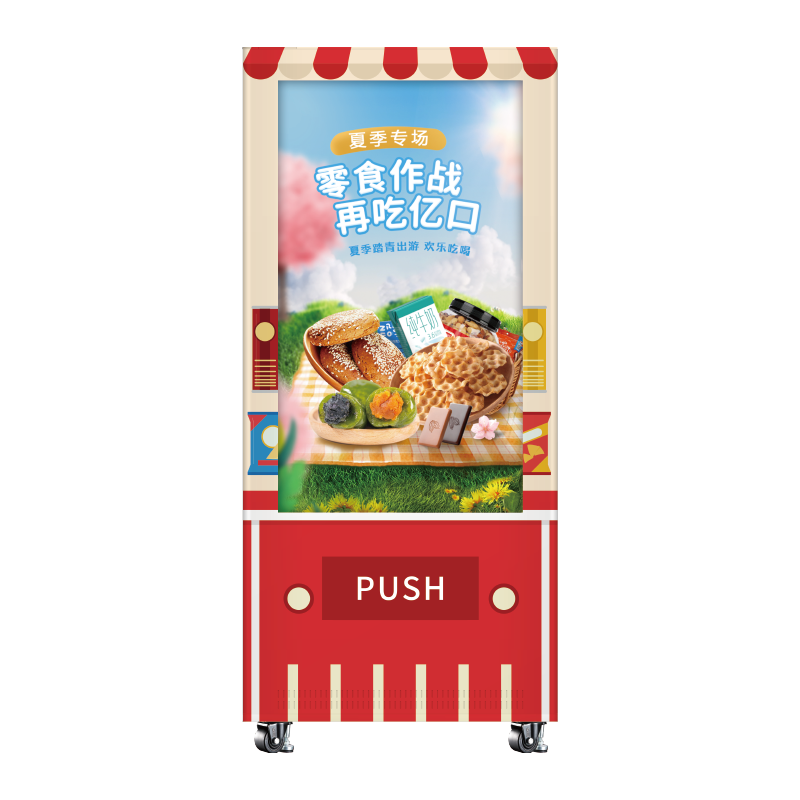
T1 55-Inch Touchscreen Intelligent Vending Machine
Size: 1960(H) × 865(W) × 930(D) mm
Weight: About 270 kg
Display: 55-inch, 1920 × 1080 pixels, brightness 350 cd/m²
Touch Screen: 55-inch IR 10-point touch, response time < 15 ms
Main Board: Android, Rockchip RK3568, 16 GB ROM, 2 GB RAM
Single-Chip Microcomputer: Supports 8 × 10 slots, cabinet light brightness adjustment, auxiliary cabinet expansion
Menu Operation: Infrared touch screen selection and purchase (Android system)
Payment System: Cash / credit card / e-wallet payments supported
Network: WiFi / 4G IoT card / network cable connection
Cargo Channel Quantity: Standard 6 rows & 9 columns, 54 slots (adjustable & customizable)
Product Capacity: 270–648 units (depending on the size of the goods)
Refrigeration System: High-efficiency energy-saving compressor, timer on/off, working temperature freely set within the specified range
Power: About 650 W when cooling, about 150 W when not cooling
Voltage: AC220V / 50Hz, anti-electric-shock protection
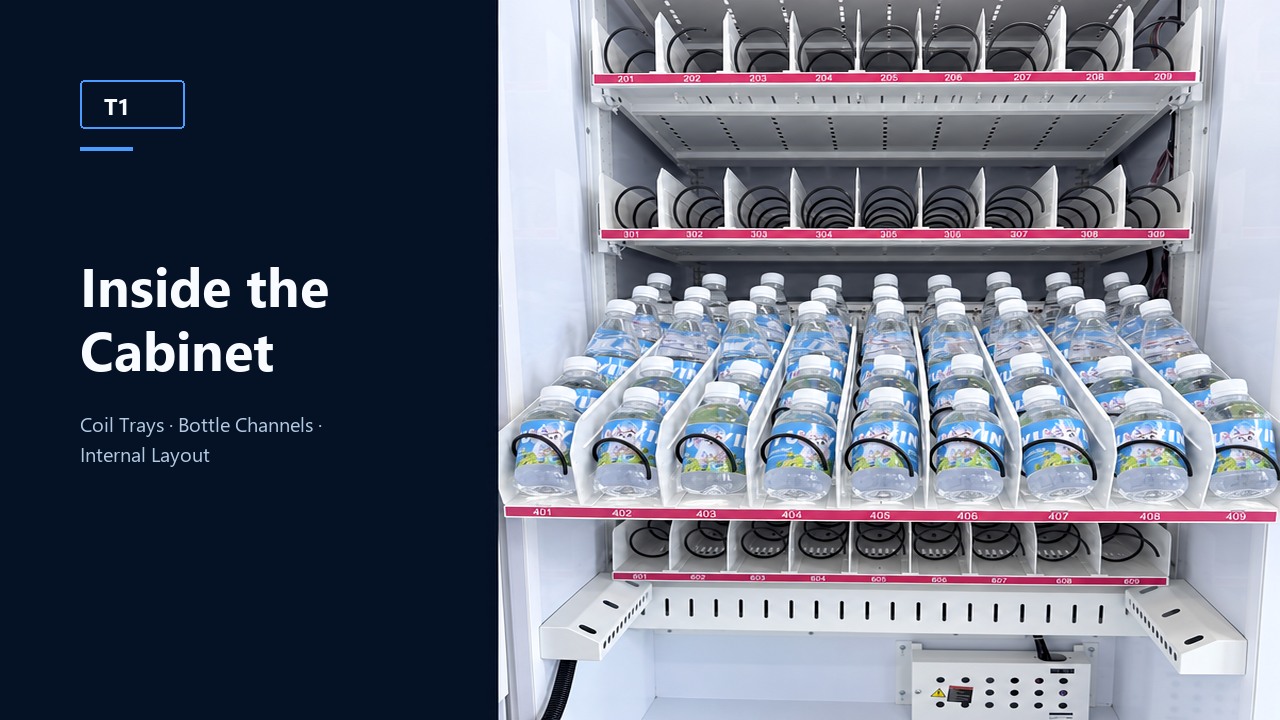
Inside the T1 55-Inch Touchscreen Vending Machine
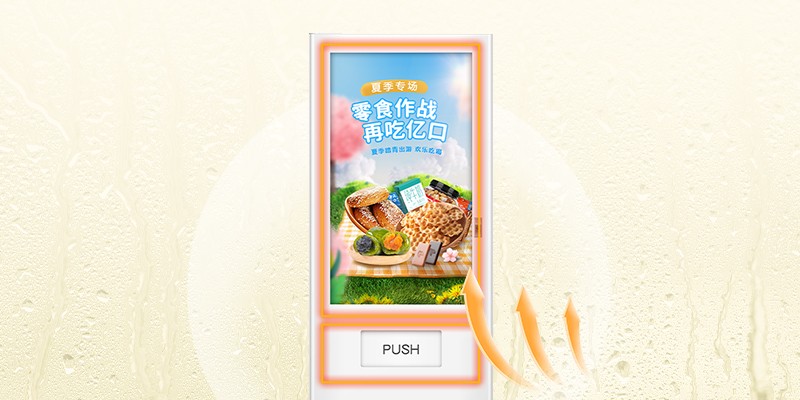
The clip opens on the 55-inch HD touchscreen, then goes into the cabinet: 6×9 adjustable coil lanes, a 5 cm foam door with heating wires to keep the glass clear, and temperature control from a phone. Wiring at the back stays tidy for later service.
55-Inch HD Touchscreen — Interaction and Marketing in One
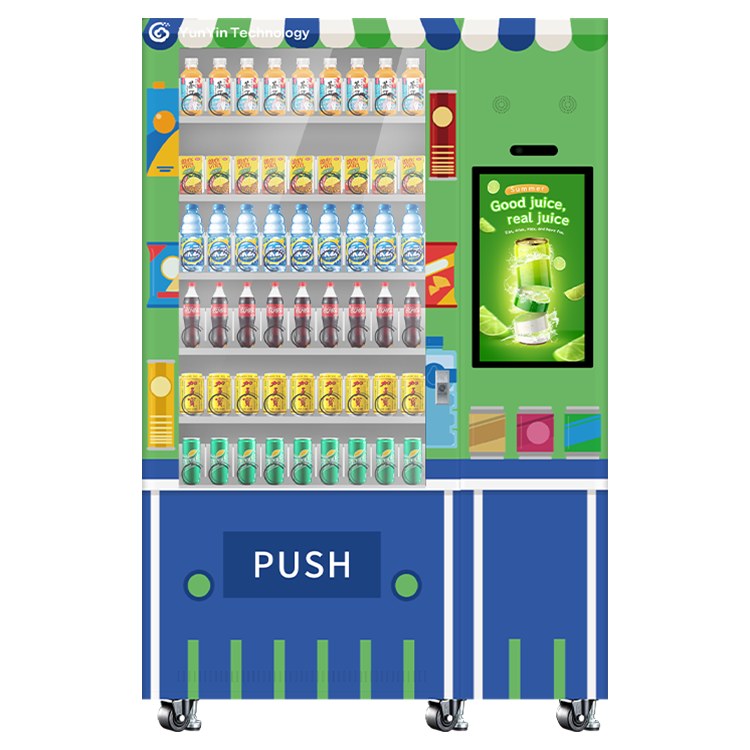
The 55-inch interactive touchscreen runs a smooth, intuitive interface that removes the complicated keypad steps of a traditional machine: customers see the product, tap it and pay, which makes the shopping experience noticeably faster for first-time users.
When the machine is idle, the same high-definition display becomes an advertising surface. Full-screen artwork and video give strong visual impact, help brands reach the exact audience standing in front of the cabinet, and open an extra revenue line on top of product sales.

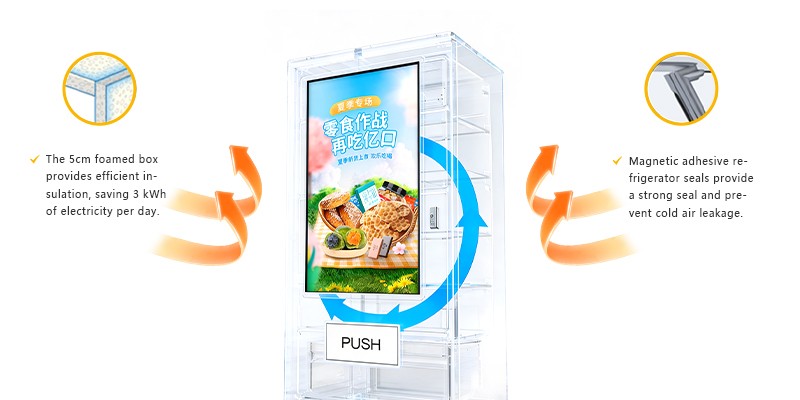
5 cm Foamed Cabinet with Refrigerator-Grade Magnetic Seals
The cabinet is built with integrated foaming and a 5 cm insulation layer, closed by magnetic adhesive seals of the same grade used on commercial refrigerators. Together they break the cold bridge and stop chilled air leaking out around the door frame.
In running tests the foamed body saved roughly 3 kWh of electricity per day compared with a standard single-layer cabinet. A heating wire embedded in the door frame clears condensation automatically, so the glass stays transparent and the machine keeps a clean front.
Screen Space That Sells — Campaign Artwork and the PUSH Port
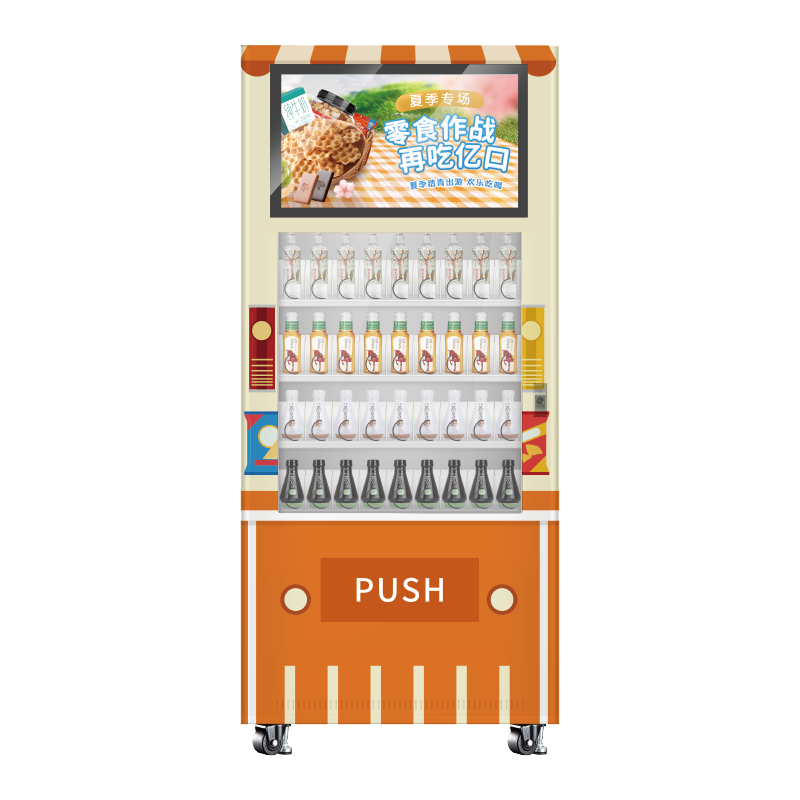
Between purchases the 55-inch screen carries full-screen campaign artwork — seasonal snack promotions, new-product launches, store branding — pushed from the cloud backend without anyone visiting the site.
Directly under the display sits the PUSH delivery port. Goods drop into a deep bin behind the flap, so customers collect with one push, while the flap keeps hands and tools out of the cabinet between vends.
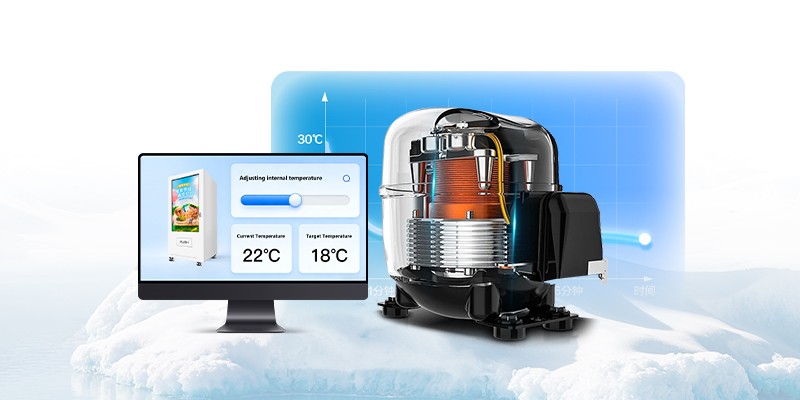
Brand Compressor with Smart Temperature Control
A high-efficiency branded compressor pulls the cabinet down quickly and holds the set point with little fluctuation. The controller shows the working temperature at a glance and lets operators move it between set points (for example 22°C and 18°C) to suit the load.
Cooling draws about 650 W, then falls back to roughly 150 W once the temperature is reached, so running cost stays predictable on sites that trade all day. Set points and cooling timers can also be changed from the smart backend instead of opening the service door.
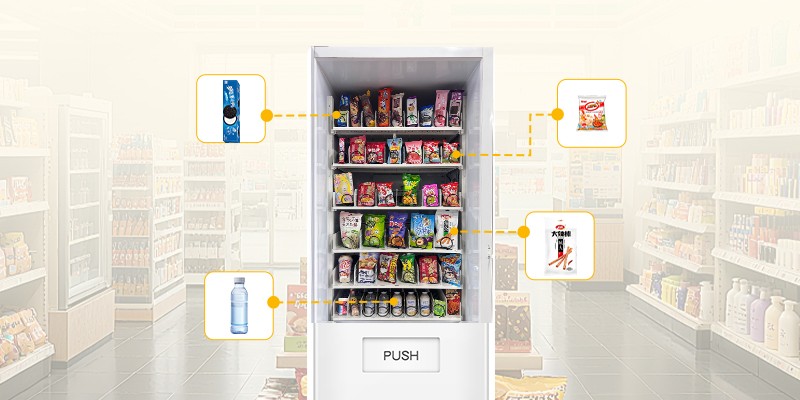
One Cabinet for the Whole Snack and Drink Range
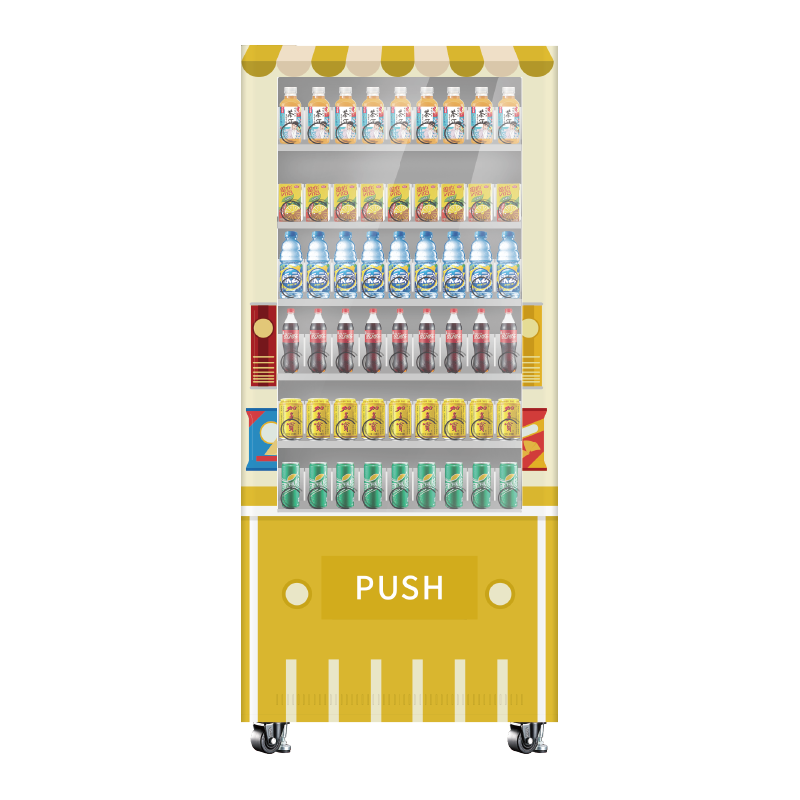
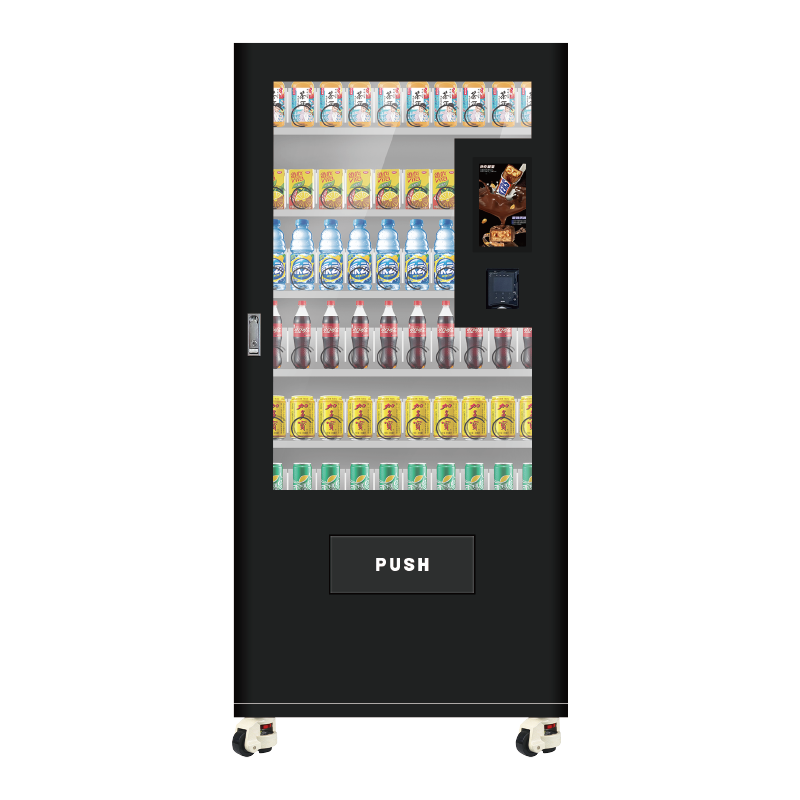
The interior carries 6 rows by 9 columns of spring lanes, 54 slots in total, and each lane takes a different format — slim cans, bagged crisps, boxed snacks, 500 ml bottles — because the spiral pitch and lane width move to fit the product.
Every lane is numbered 001–009 per row and mapped in the backend, which keeps restocking and planogram changes simple. Capacity runs from 270 to 648 units depending on product size, and the drive reports a failed drop instead of jamming the lane.
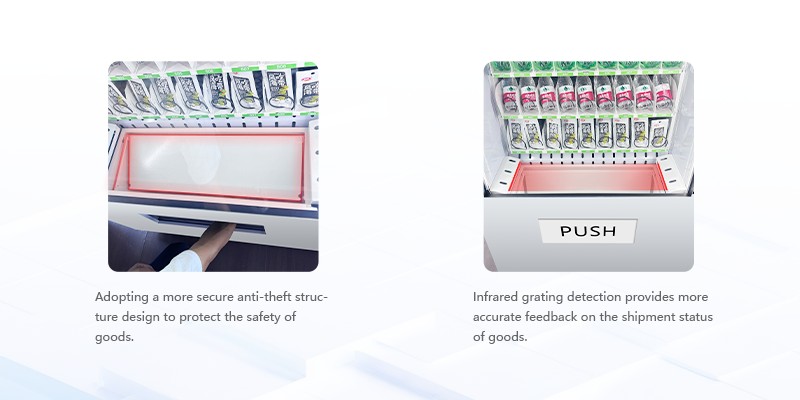
Anti-Theft Port and Infrared Drop Detection
The pickup port uses a reinforced anti-theft structure, so goods cannot be hooked out from outside between vends. That protects stock on unattended sites and cuts shrinkage between service visits.
An infrared grating inside the port detects the actual drop of every order. If a spiral fails to release the item, the machine flags the transaction instead of charging the buyer — fewer refund disputes, and a clear maintenance signal for the operator.