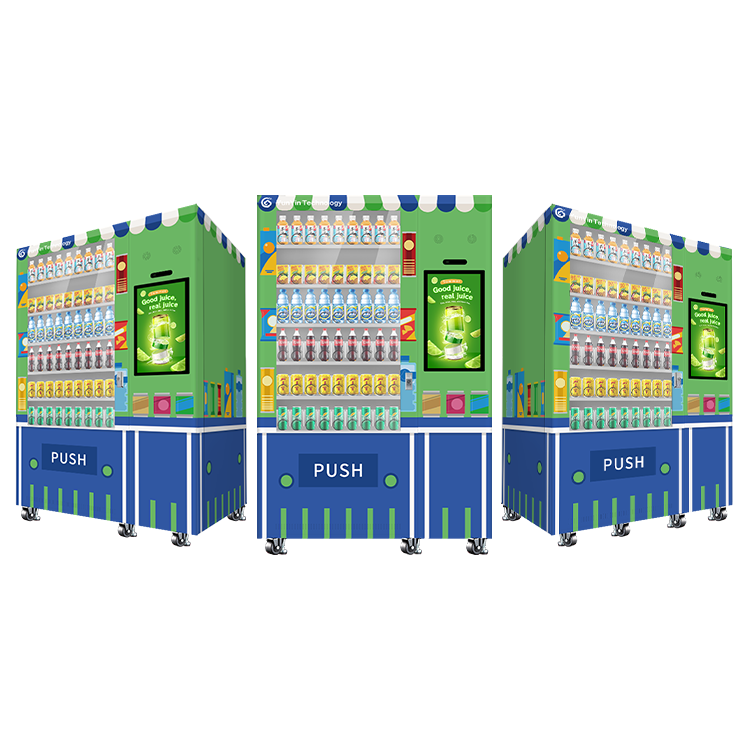
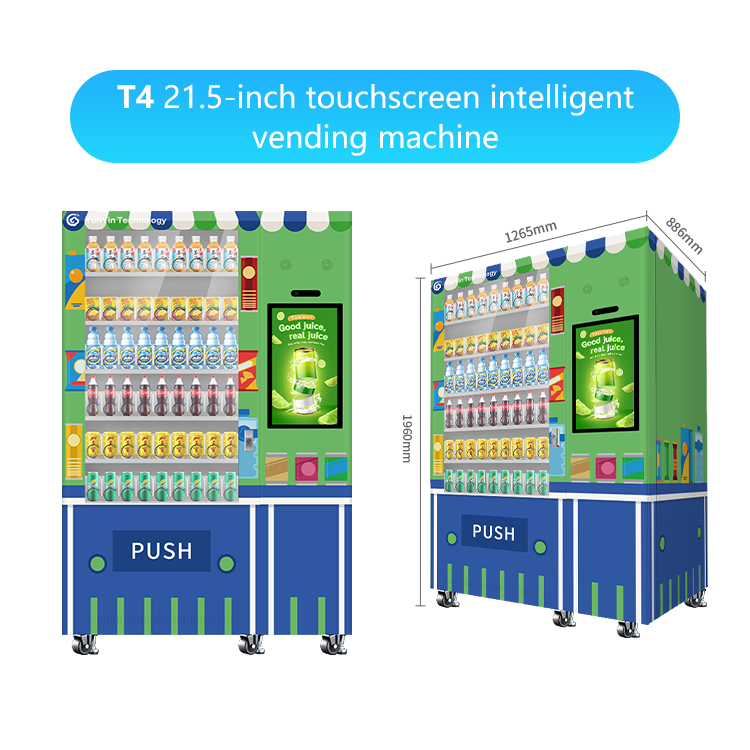
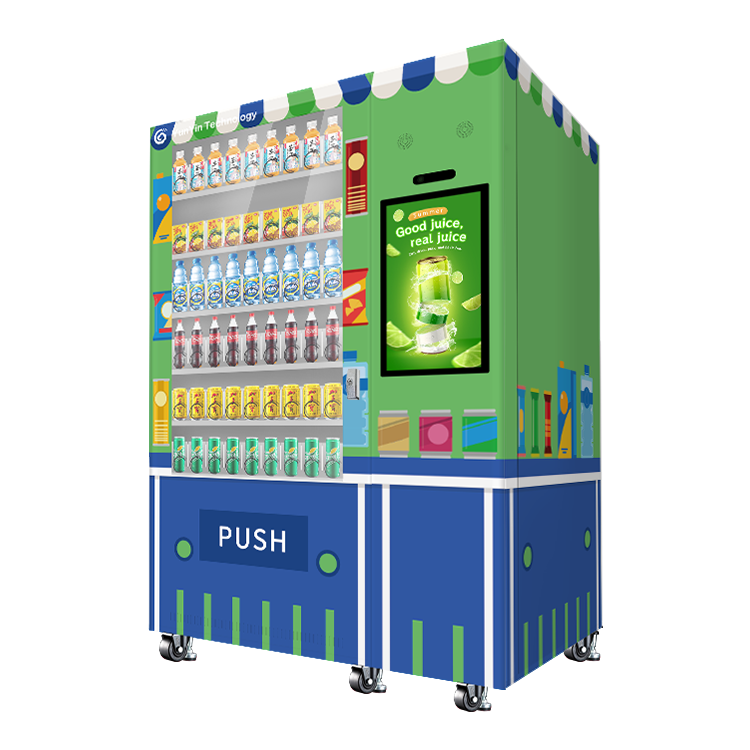
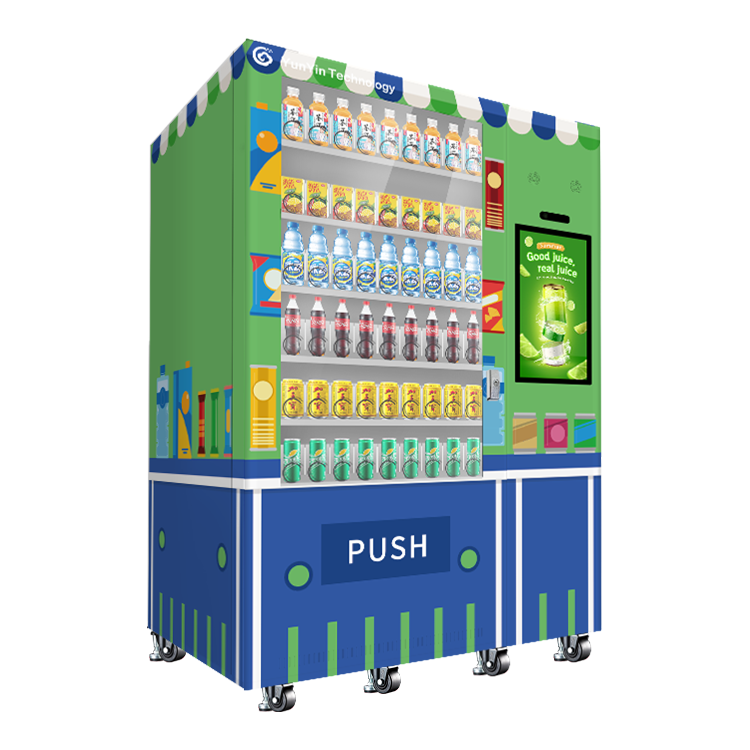
T4 21.5-Inch Touchscreen Vending Machine with Transparent Display Window and Rear Storage
Size: 1960(H) × 1265(W) × 886(D) mm
Weight: About 320 kg
Display: 21.5-inch, Resolution: 1920 × 1080 pixels, Brightness: 250 cd/m²
Touch Screen: 21.5-inch capacitive multi-touch, Touch response speed: <15 ms
Main Board: Android motherboard, Rockchip RK3568 16GB storage, 2GB RAM
Single-Chip Microcomputer: Supports 8×10 slots. Supports cabinet light brightness adjustment. Supports expansion with auxiliary cabinets.
Menu Operation: Purchase via Capacitive Touch Screen (Android System)
Payment System: Cash / Credit Card / E-wallet payments supported
Network Requirements: Supports WIFI, 4G IoT card, and Ethernet connection.
Cargo Channel Quantity: Standard 6 rows & 9 columns, 54 slots (adjustable & customizable)
Product Capacity: 270–648 units (depending on product size)
Refrigeration System: High-efficiency energy-saving compressor, supports timer on/off, and the working temperature can be freely set within the specified range.
Power: About 600 W during cooling, about 150 W when not cooling.
Voltage: AC220V/50Hz, Electric Shock Protection
Inside the T4 21.5-Inch Touchscreen Vending Machine
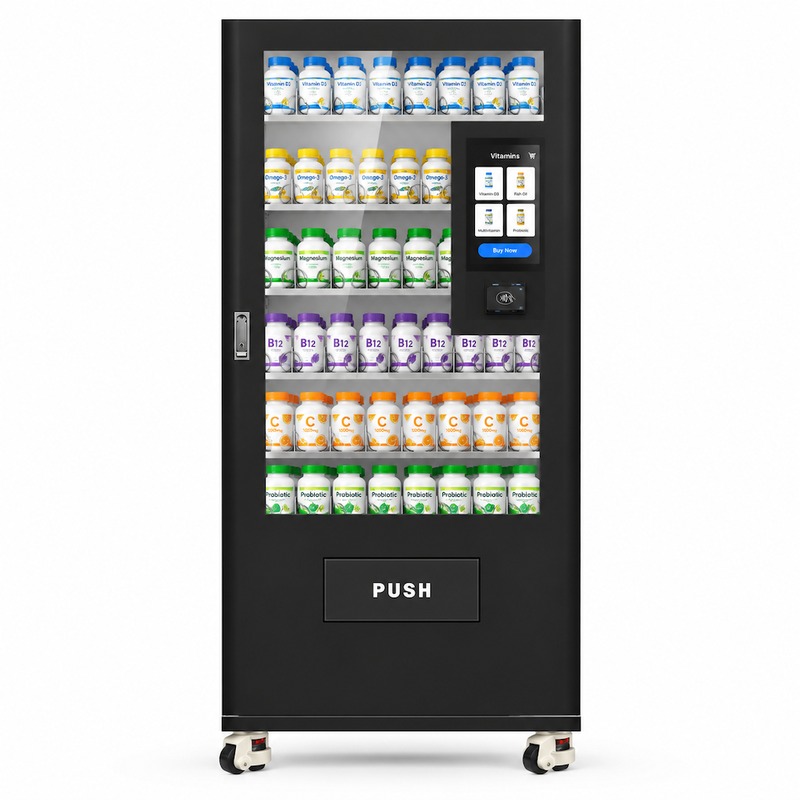
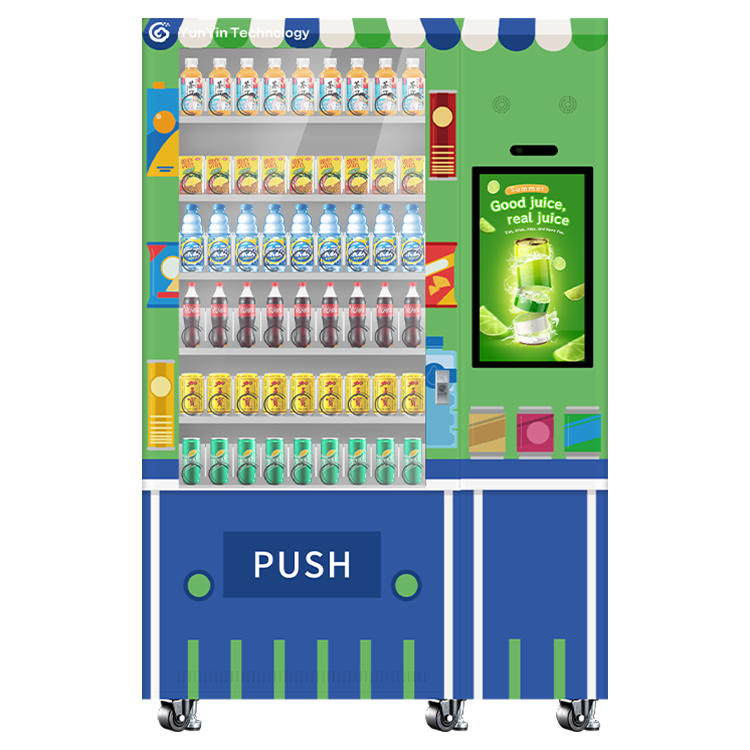
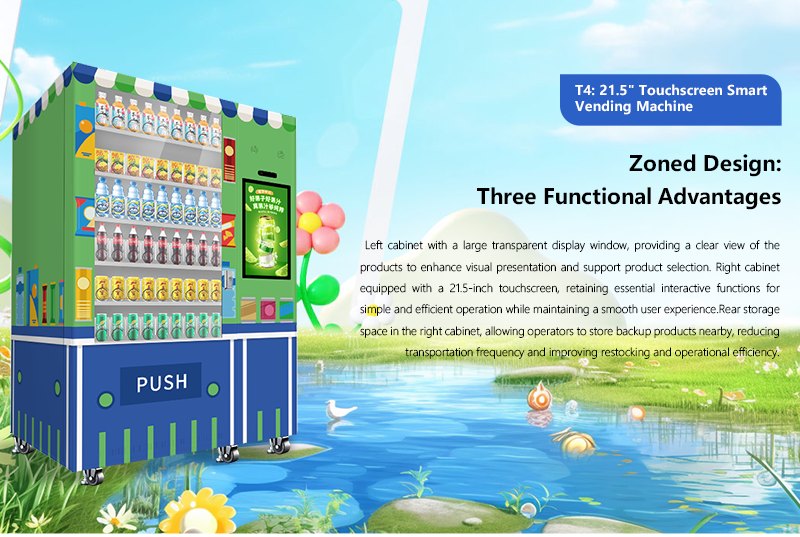
The left side is a full glass display; the 21.5-inch touchscreen sits on the right. Behind that screen is rear storage, so backup stock stays in the cabinet and restocking goes faster. Double-glazed heated glass, a branded compressor, and infrared drop detection are in the same walkthrough.
Zoned Front: Open Display Window on the Left, 21.5-Inch Screen on the Right
The T4 splits its face into two working zones. The left cabinet is a full-height transparent display window, so shoppers read the labels and pack sizes straight through the glass instead of guessing from a thumbnail. The right cabinet carries a 21.5-inch capacitive touch screen that keeps the whole purchase flow — browse, select, pay — in one column.
Behind that screen sits a rear storage bay. Staff keep spare bottles and bags within arm’s reach of the machine, which cuts the walk back to the stockroom and shortens every restock.
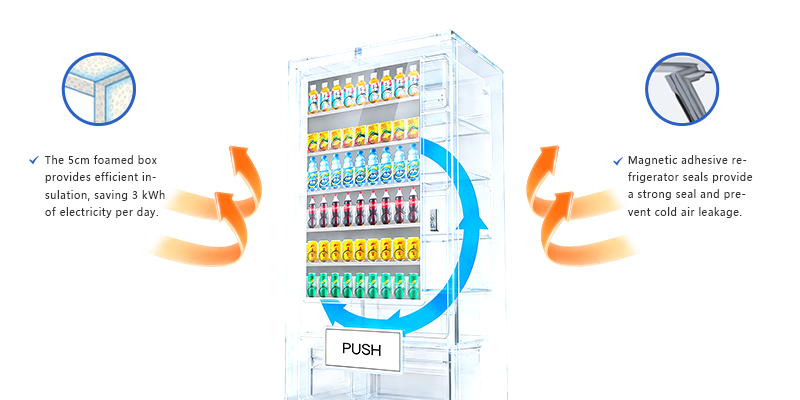
5 cm Foamed Cabinet Body with Magnetic Refrigerator Seals
Cabinet walls are foamed as one body around a 5 cm insulation layer, and the door closes on magnetic adhesive seals of the same grade used on commercial refrigerators. Cold air stays inside, and the frame does not sweat.
In running tests the foamed body saved roughly 3 kWh of electricity per day against a standard single-layer cabinet — on a machine that draws about 600 W while cooling, that is a visible line on the monthly power bill.
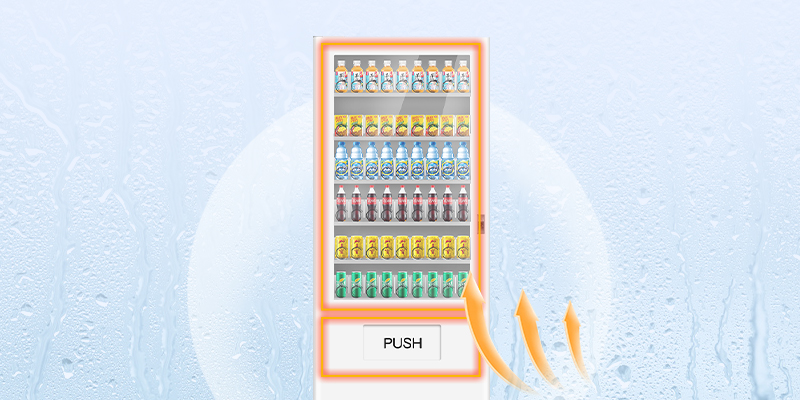
Double-Glazed Heated Glass That Stays Clear in a Humid Room
The door is double-glazed, with a heating wire cast into the frame and run around the pane. The condensation that fogs a single-pane window never forms, even when the cabinet runs cold in a warm, damp lobby.
That keeps the display window transparent after hours — the products keep selling themselves when there is nobody at the machine to talk them up.
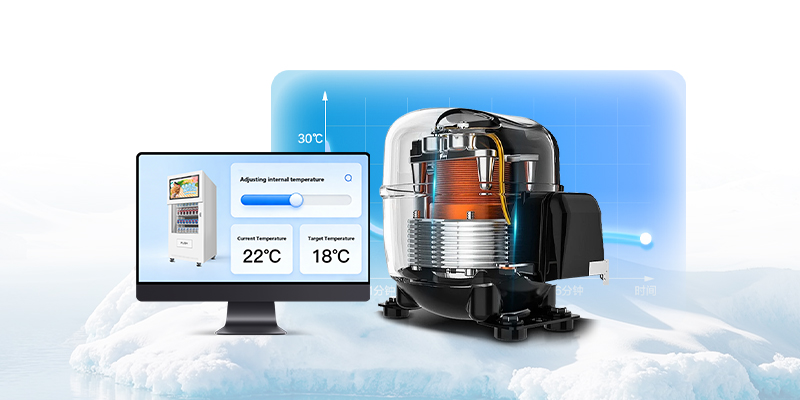
Brand Compressor with Remote Temperature Control
A brand compressor drives the cooling circuit, and the controller is reachable from a phone or the cloud rather than from a panel on the door. The app screen in the photo reads 22 °C in the room against an 18 °C cabinet set point.
Operators can drop the set point before a heatwave, raise it overnight, or step the compressor out of peak-rate hours with the timer — all without a site visit.
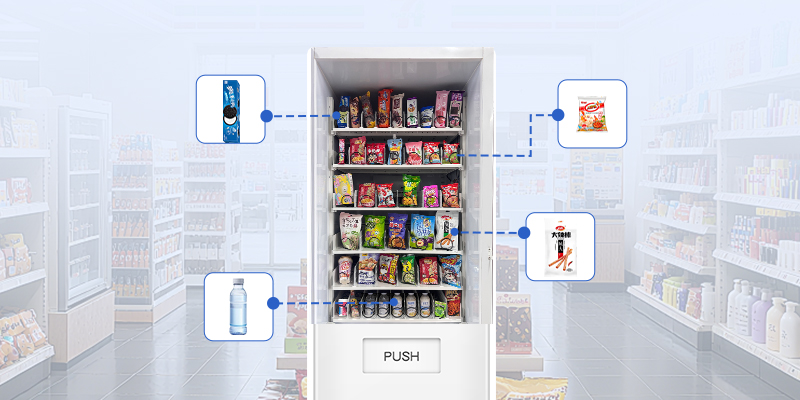
Bottled Water, Cans and Bagged Snacks in the Same Cabinet
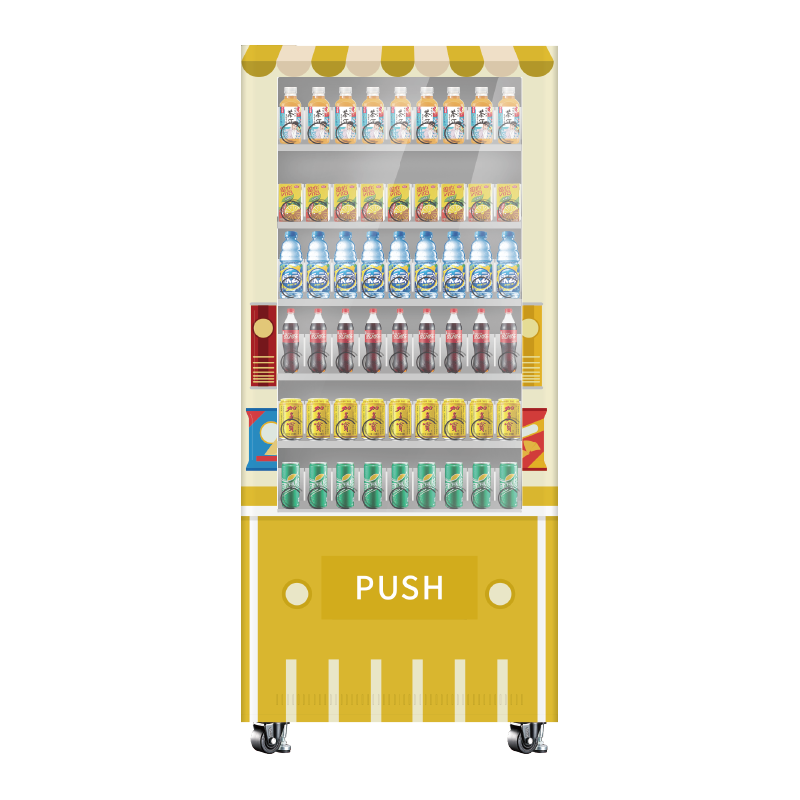
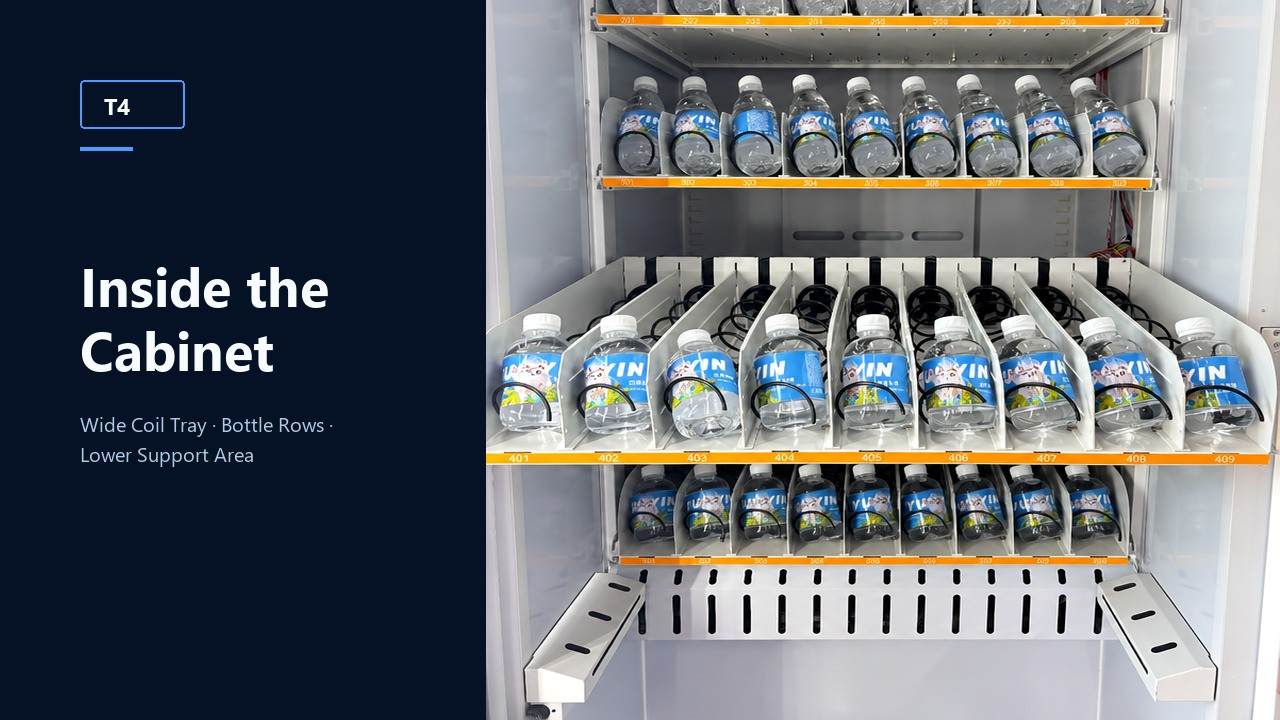
Standard 6 rows × 9 columns give 54 spring slots, and both lane width and shelf height adjust without tools. Bottled water, canned drinks, bagged snacks and boxed items can sit side by side in one machine.
Mixed loading is what makes a single unit pay: fast-moving water at eye level, higher-margin snacks on the top rows, and restocking is a matter of sliding a tray out and dropping packs in.
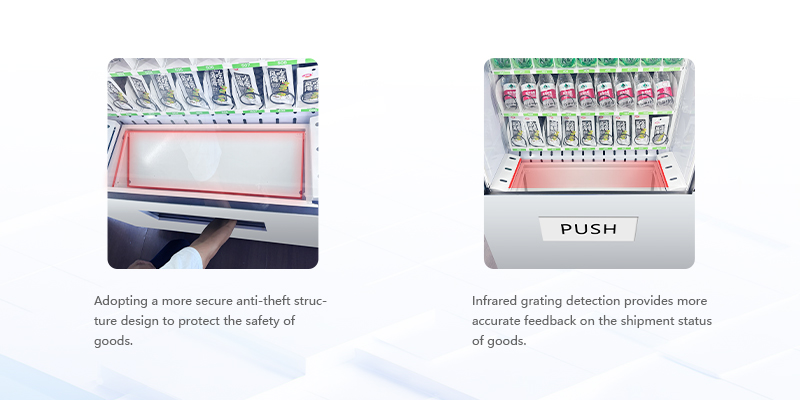
Anti-Theft Delivery Box and Infrared Grating Detection
Goods drop into a closed anti-theft box behind the PUSH flap — the red-framed chamber in the photo — so a hand cannot reach up into the shelf above. An infrared grating across the port confirms that something actually fell before the transaction closes.
If a lane jams, the sensor reports a failed delivery instead of a silent loss, which cuts refund disputes and tells the operator exactly which slot needs attention.