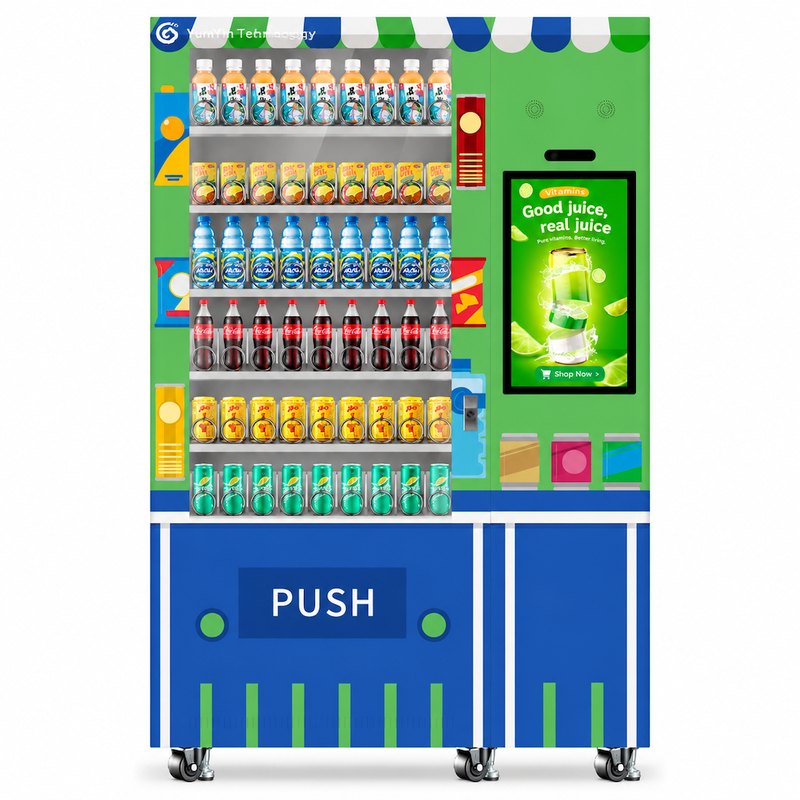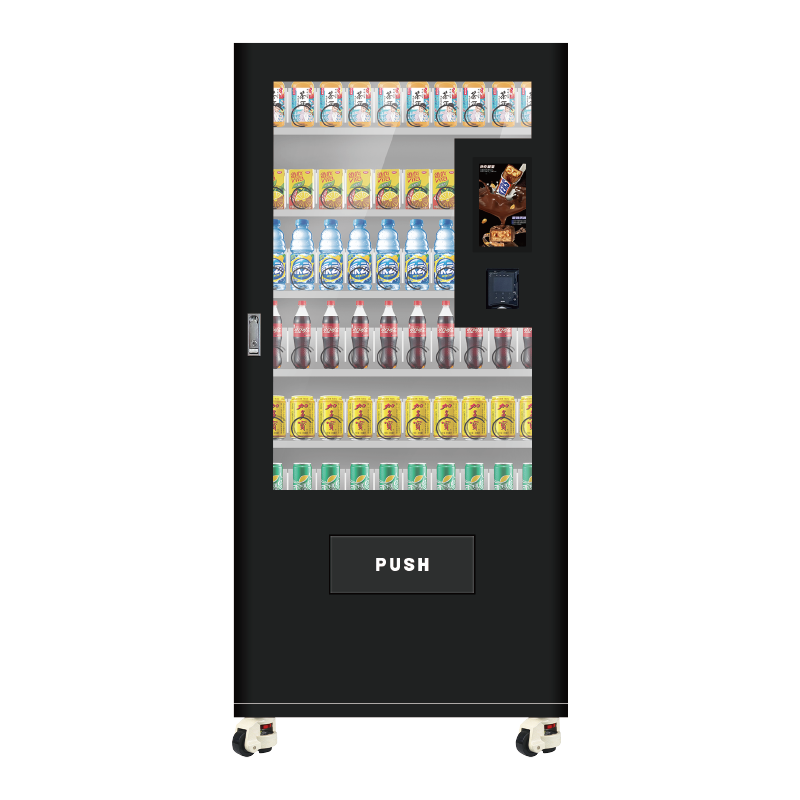
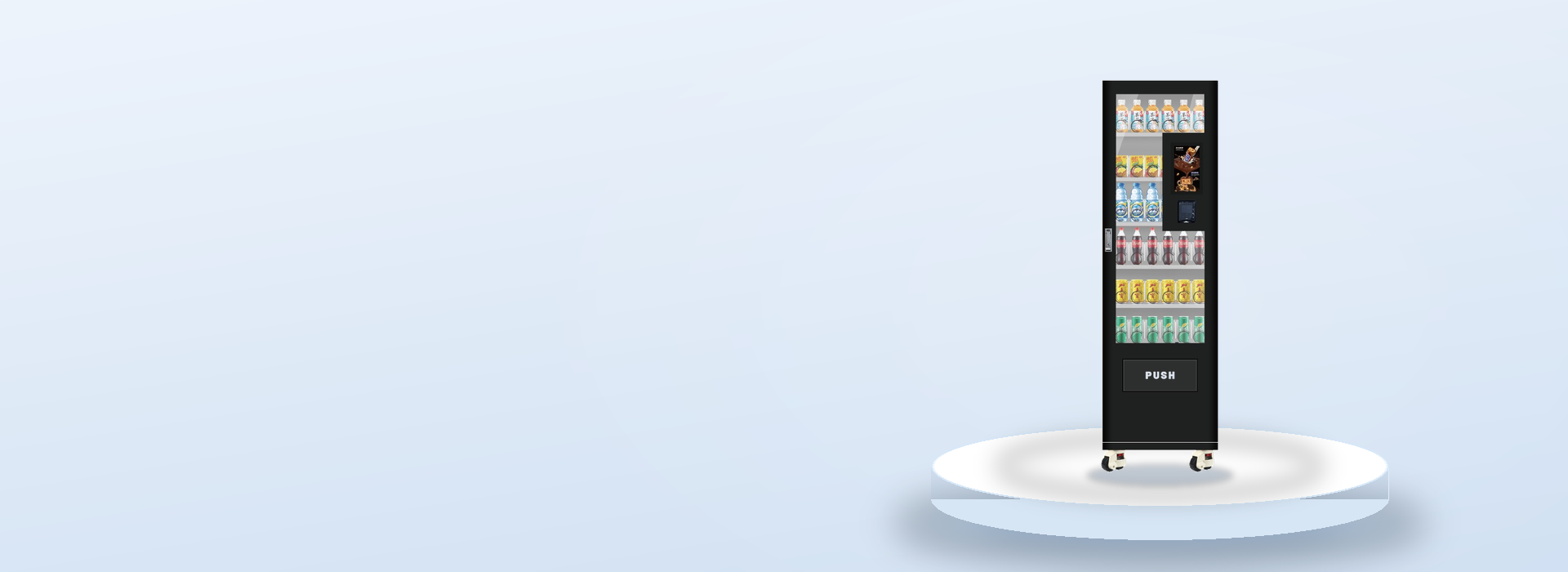
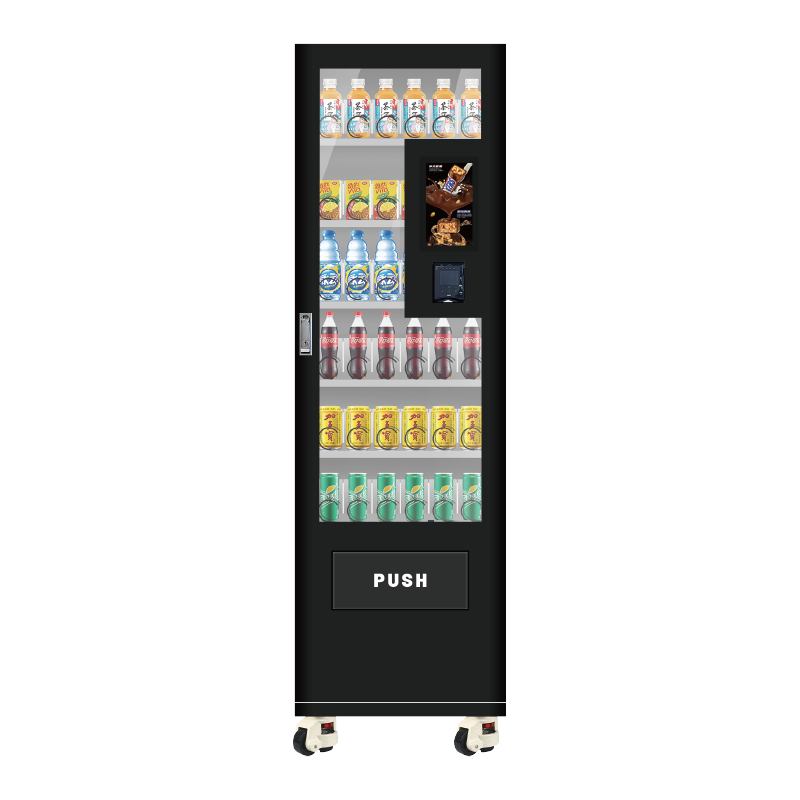
M1 10.1-Inch Compact Touchscreen Vending Machine with 36 Spring Slots
Size: 1950(H) × 572(W) × 790(D) mm
Weight: About 160 kg
Display: 10.1-inch, Resolution: 1024 × 600 pixels, Brightness: 200 cd/m²
Touch Screen: 10.1-inch capacitive multi-touch, Touch response speed: <15 ms
Main Board: Android motherboard, Rockchip RK3568 16GB storage, 2GB RAM
Single-Chip Microcomputer: Supports 8×10 slots. Supports cabinet light brightness adjustment. Supports expansion with auxiliary cabinets.
Menu Operation: Purchase via Capacitive Touch Screen (Android System)
Payment System: Cash / Credit Card / E-wallet payments supported
Network Requirements: Supports WIFI, 4G IoT card, and Ethernet connection.
Cargo Channel Quantity: Standard 6 rows & 6 columns, 36 slots (adjustable & customizable)
Product Capacity: 180-432 units (depending on product size)
Refrigeration System: High-efficiency energy-saving compressor, supports timer on/off, and the working temperature can be freely set within the specified range.
Power: About 500 W during cooling, about 150 W when not cooling.
Voltage: AC220V/50Hz, Electric Shock Protection
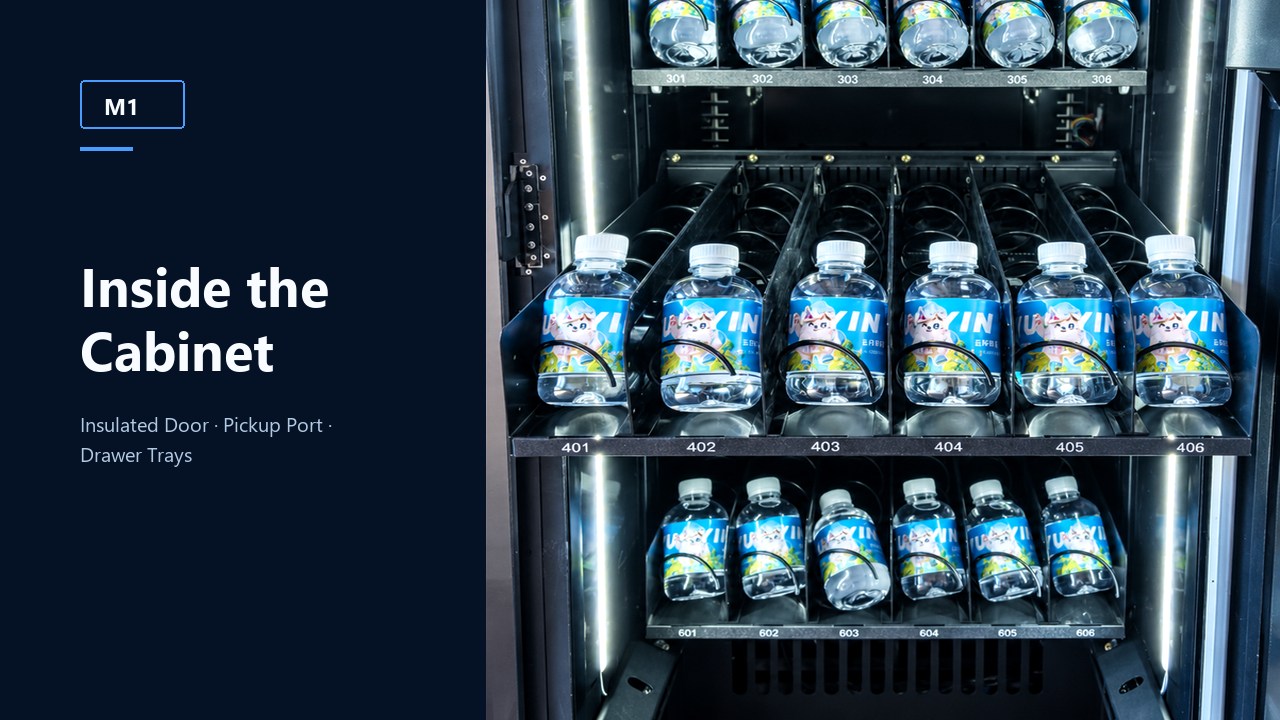
Inside the M1 10.1-Inch Compact Vending Machine
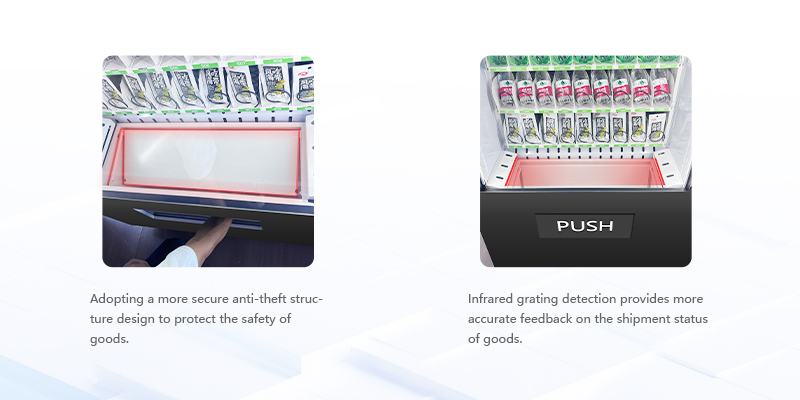
This short clip walks through a finished M1: the 10.1-inch touchscreen, the foamed door, and hanging drawer trays that pull out for restock. Channel size is adjustable, and an infrared sensor at the anti-theft pickup port checks each drop.
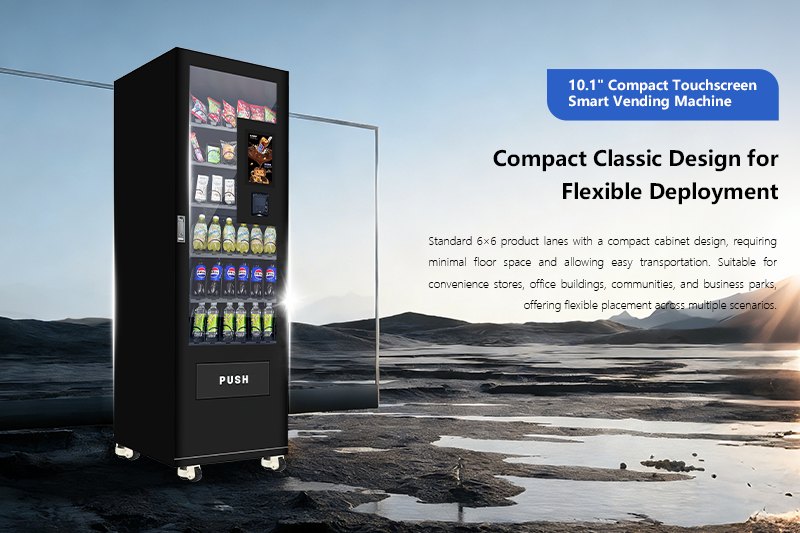
572 mm Wide: A Full Cabinet Where a Fridge Would Fit
The M1 measures 1950 × 572 × 790 mm and weighs about 160 kg — narrow enough to stand in a checkout corner, a corridor or beside a lift lobby without blocking the walkway. Castors let one person wheel it into place before the feet are locked.
It is still a full refrigerated cabinet with a 10.1-inch touch screen and 36 spring slots, so a tight site costs capacity, not function.
10.1-Inch Touch Screen Set Beside the Shelves
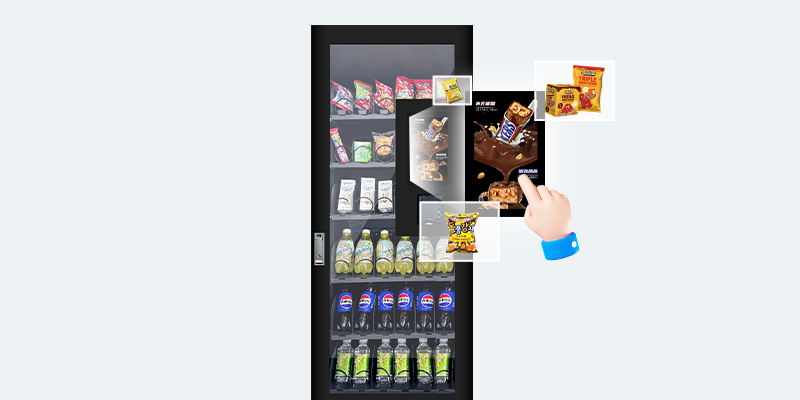
The 10.1-inch capacitive screen sits in the right-hand column, next to the shelves rather than above them. A shopper taps a product card, the card expands with price and stock, and payment follows on the same screen.
Cards can carry a photo and a short name, which is what makes an unfamiliar imported SKU sellable — the pack alone rarely explains what is inside.
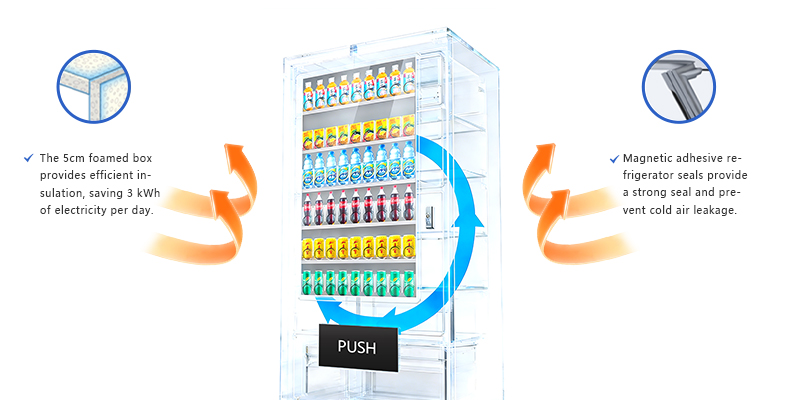
5 cm Foamed Body with Magnetic Refrigerator Seals
The cabinet is foamed as one body around a 5 cm insulation layer, and the door closes on magnetic adhesive seals of commercial-refrigerator grade. Cold air stays inside, and the frame does not sweat.
In running tests the foamed body saved about 3 kWh of electricity per day against a standard single-layer cabinet — on a machine drawing roughly 500 W while cooling, that is visible on the monthly power bill.
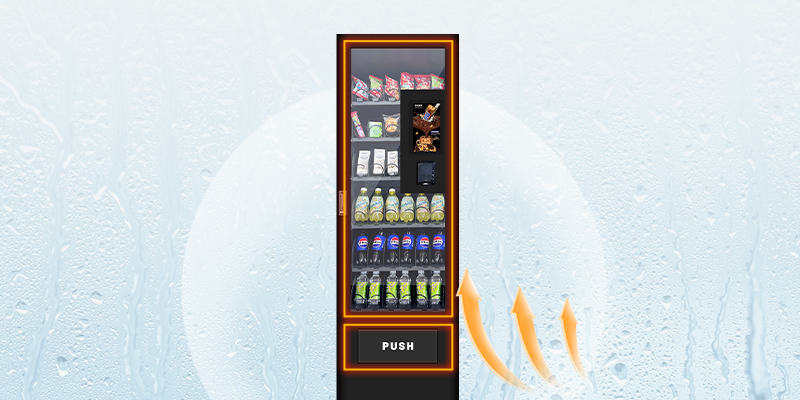
Heated Door Frame Keeps the Whole Window Clear
A heating wire runs around the door frame, so condensation never settles on the glass. The cabinet can run cold in a warm, humid shop and the shelves stay readable from the street.
On a narrow body the window is almost the entire front panel: a fogged door hides nearly the whole product range, so the heating circuit is not a luxury option.
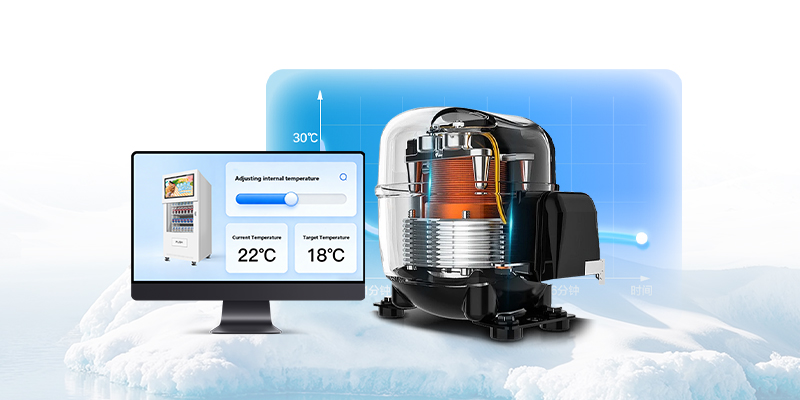
Brand Compressor with App-Based Temperature Control
A brand compressor drives the cooling circuit, and the controller is reached from an app rather than a panel on the door. The dashboard in the photo reads 22 °C current temperature against an 18 °C target, set with one slider.
Operators can pre-cool before a heatwave or raise the set point overnight without a site visit, and the timer keeps the compressor out of peak-rate hours.
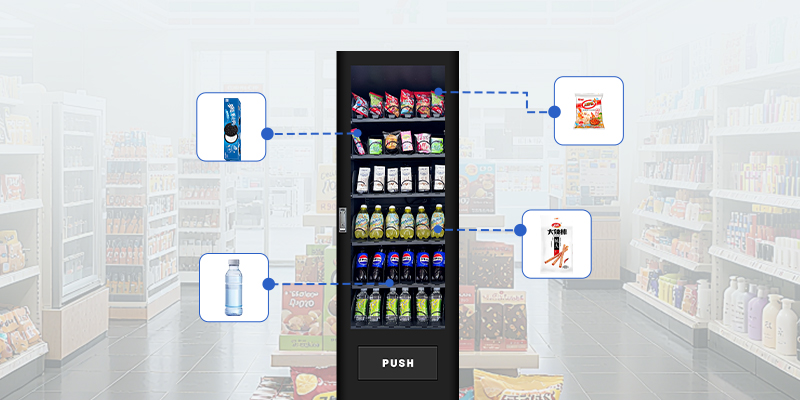
36 Slots for Water, Canned Drinks, Snacks and Boxed Goods
Standard 6 rows × 6 columns give 36 spring slots, and both lane width and shelf height adjust without tools. The photo maps four product types — bottled water, canned drinks, bagged snacks and boxed items — onto one cabinet.
Six columns is the honest capacity for a 572 mm body: run water and soft drinks as the base range, then put snacks and higher-margin items on the upper rows.
Anti-Theft Pickup Box with Infrared Grating Detection
The pickup port is a closed box behind the PUSH flap, so a hand cannot reach up into the shelf above. An infrared grating across the port confirms that a product actually dropped before the order closes.
If a lane jams, the sensor reports a failed delivery instead of a silent loss — fewer refund disputes, and the operator knows exactly which slot needs attention.