S5 Double-Cabinet Smart Micro-Market with 182 Lanes
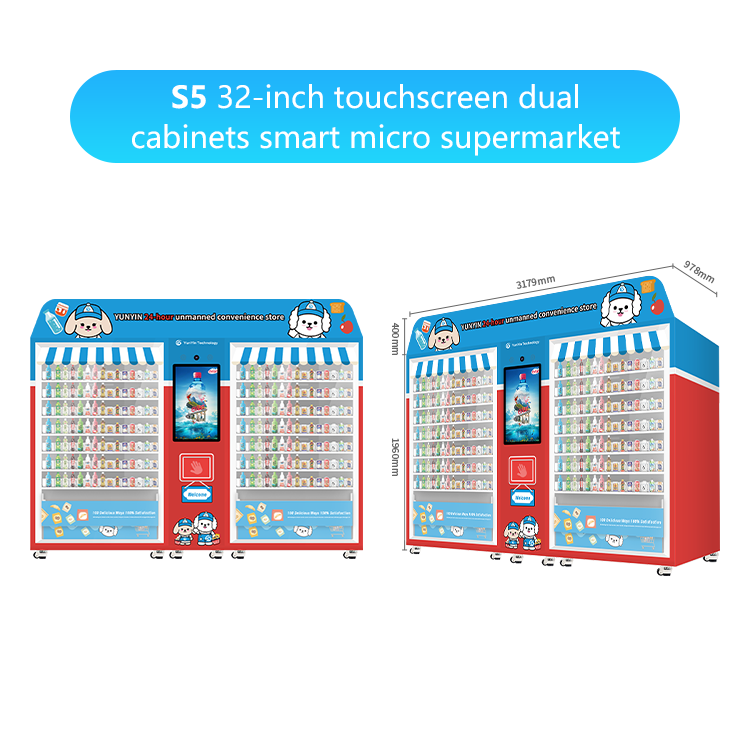
Size: 1960(H) × 3179(W) × 978(D) mm
Weight: About 1000 kg
Display: 32-inch, 1920 × 1080 pixels, brightness 350 cd/m²
Touch Screen: 32-inch capacitive multi-touch, response time < 15 ms
Main Board: Android main board, Rockchip RK3568, 16 GB ROM, 2 GB RAM
Single-Chip Microcomputer: Microcomputer control terminal, supports up to 80 cargo lanes, sound and light control, multi-channel sensor feedback, automatic addressing and positioning for the lifting system
Menu Operation: Purchase via capacitive touch screen (Android system)
Payment System: Cash / credit card / e-wallet payments supported
Network: WiFi / 4G IoT card / network cable connection
Cargo Channel Quantity: Push-plate lanes, 7 layers × 13 columns per cabinet; 182 lanes across the double cabinet (adjustable and customizable)
Product Capacity: 182 items (one per lane)
Refrigeration System: High-efficiency compressor, timed on/off, working temperature freely set within the specified range
Power: About 700 W during cooling, about 200 W when not cooling
Voltage: AC220V / 50Hz, electric shock protection
S5 at a Glance
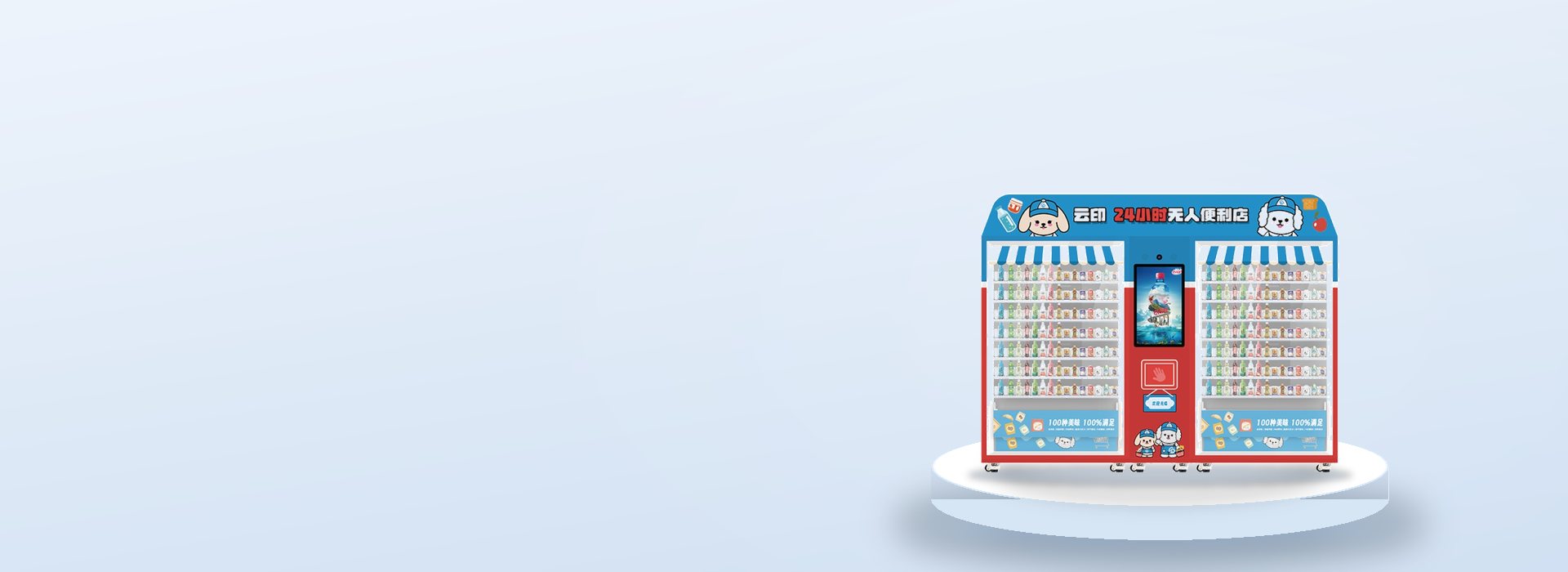
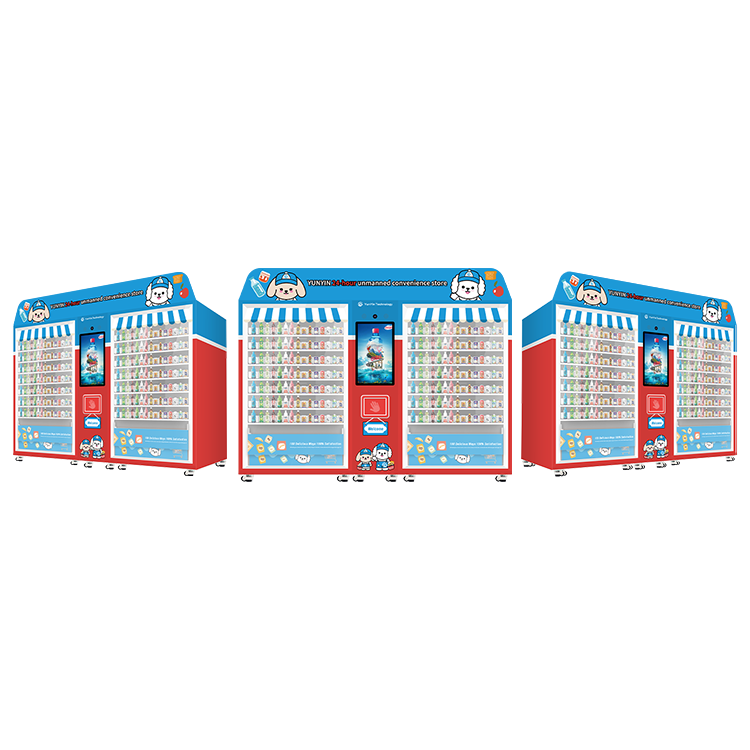
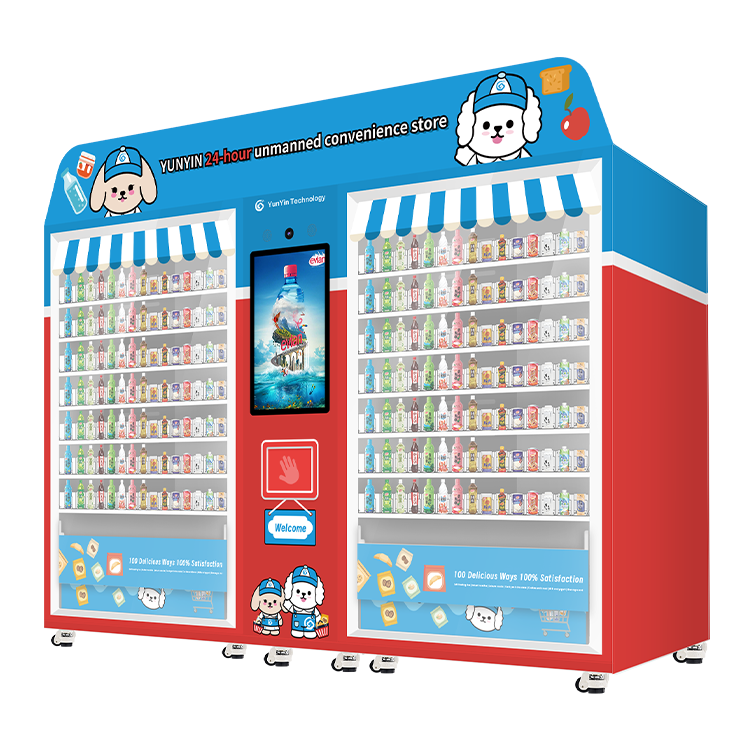
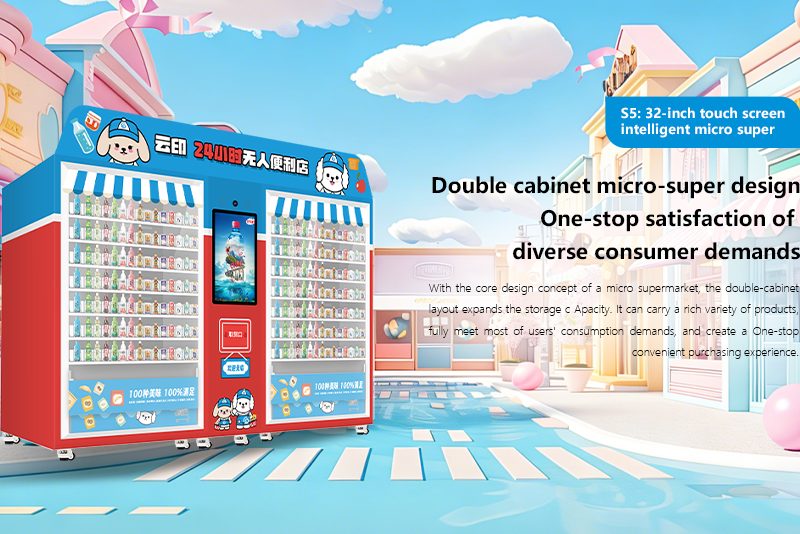
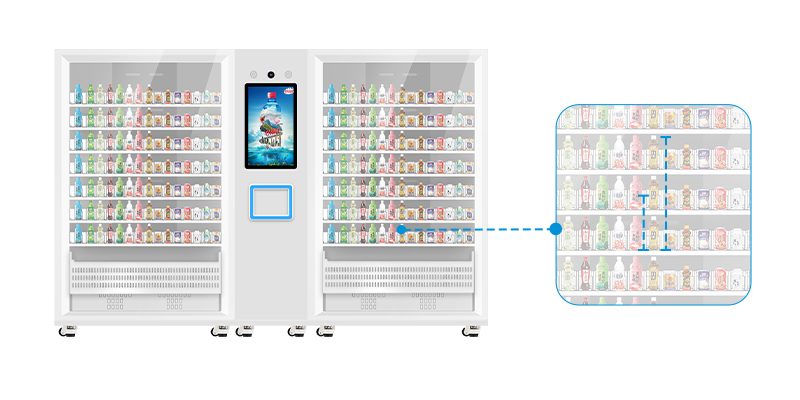
The S5 combines two full-height cabinets, a central 32-inch touchscreen and 182 push-plate lanes in one micro-market footprint. This front view shows the ABA layout and the shared pickup port; a product video will be added here shortly.
If you would like to see the machine running, contact us and we will send the latest demo video for your configuration.
Double-Cabinet Design as a Mini Supermarket
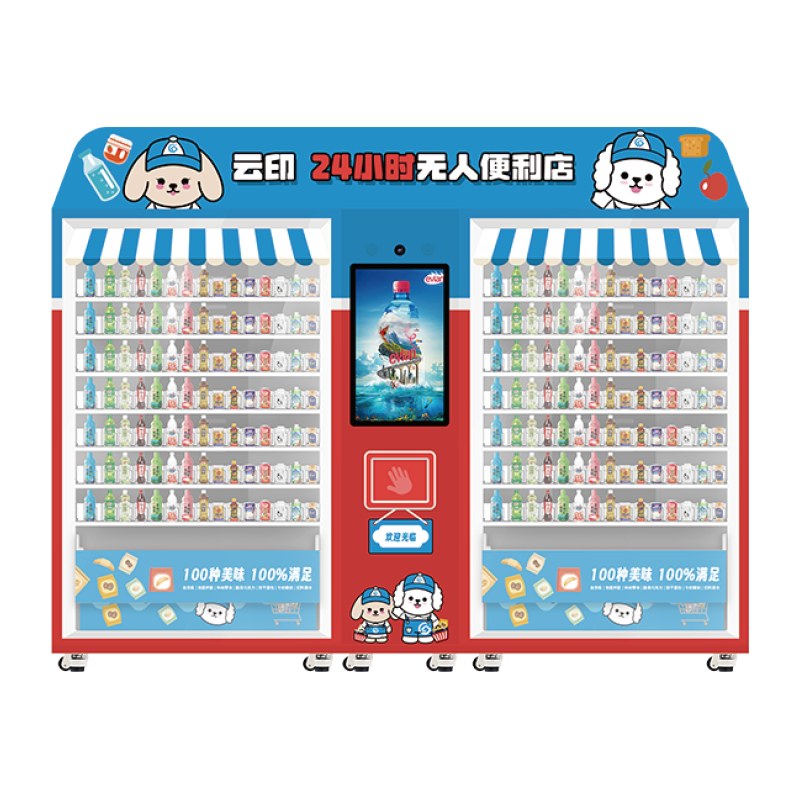
Two full-height cabinets share one control screen, so the machine carries roughly twice the stock of a single-cabinet model without a second payment terminal. The result is a compact micro-market rather than a snack dispenser.
That depth of range is what lets one site serve a whole building: drinks, snacks, instant food and daily necessities sit side by side, so a customer finishes a shopping list in one stop instead of walking to three machines.
ABA Layout with a Central 32-Inch Screen
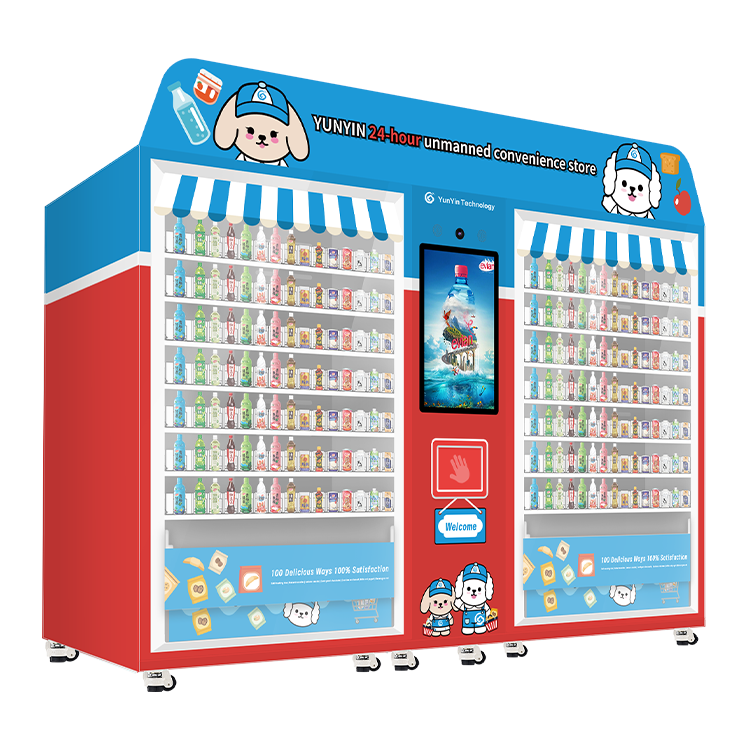
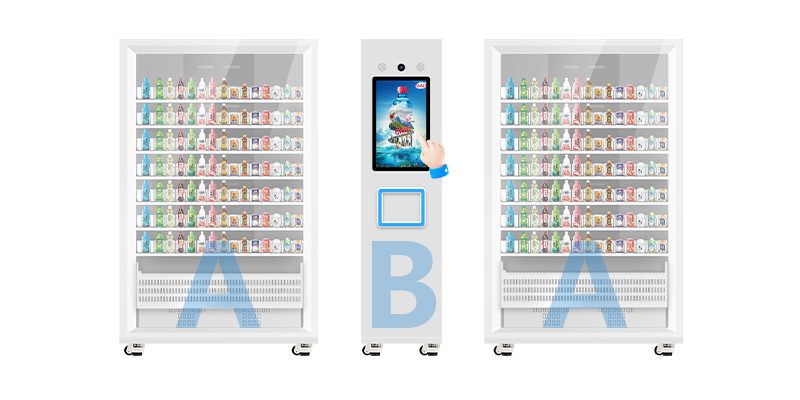
The layout runs cabinet A, a central column with the 32-inch screen and pickup port, then cabinet B — an ABA configuration that keeps the screen at eye level between two full-height glass displays.
The floor-standing glass front gives a clear view of the stock from the aisle, and the central screen keeps the buying step in one predictable place no matter which cabinet the product sits in.
182 Push-Plate Lanes Behind Floor-Standing Glass
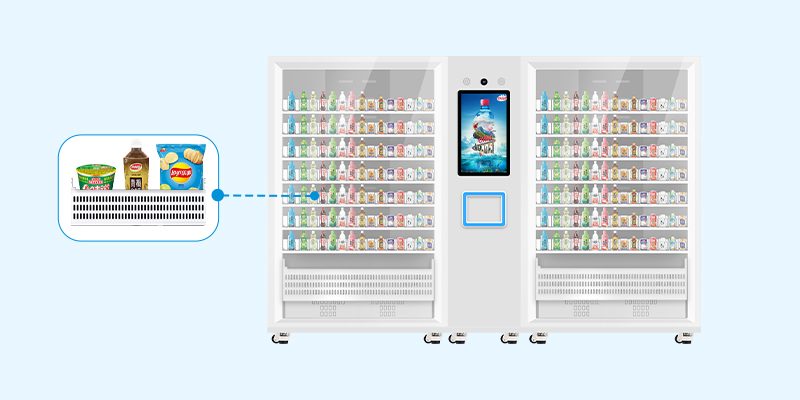
Each cabinet holds 7 layers by 13 columns of push-plate lanes — 91 lanes per side and 182 across the double cabinet. Drawers pull out for restocking, so a full refill does not require reaching into the back of a deep shelf.
Lane width adjusts and the whole set is customizable, which means a site can be configured around its actual best-sellers instead of a fixed factory planogram.
Shopping Cart for a Full Basket
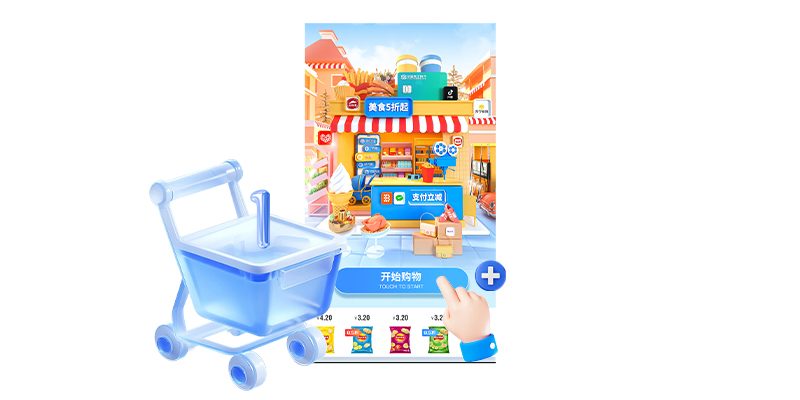
Customers add several products to a cart and pay once, the way they would in a convenience store. On a micro-market that is the difference between a single-item purchase and a basket.
A basket also raises order value without extra traffic: a buyer who came for a drink picks up a snack and a ready meal in the same transaction.
Four Lane Types for a Mixed Range
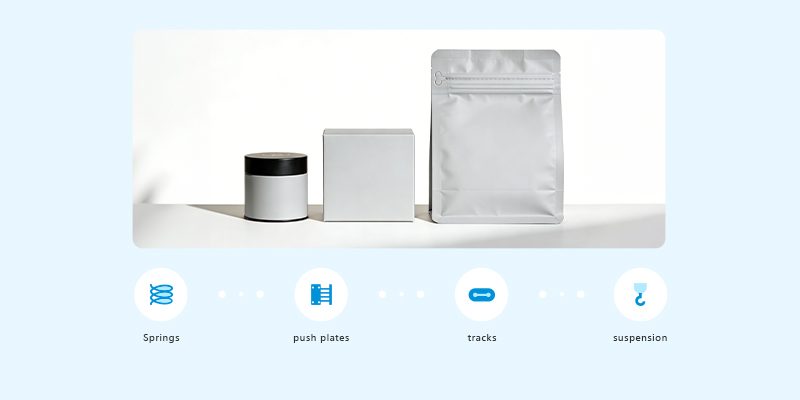
Springs, push plates, tracks and suspension hooks fit the same shelf system, covering cans, boxes, bags and hanging goods. Lane pitch and width move to the product.
For a micro-market this is what makes a mixed range practical — drinks beside boxed meals, bagged snacks beside small daily items — all inside one cabinet footprint.
Automatic Level Detection on Both Cabinets
When a shelf is moved the machine reads the new level and repositions the picking head automatically, with no manual calibration. Changing the planogram does not leave the machine picking from the wrong height.
On a two-cabinet unit that matters more than on a single one: restocking happens often, and every shelf move would otherwise mean a service call.
Mid-Level Anti-Pinch Pickup Port
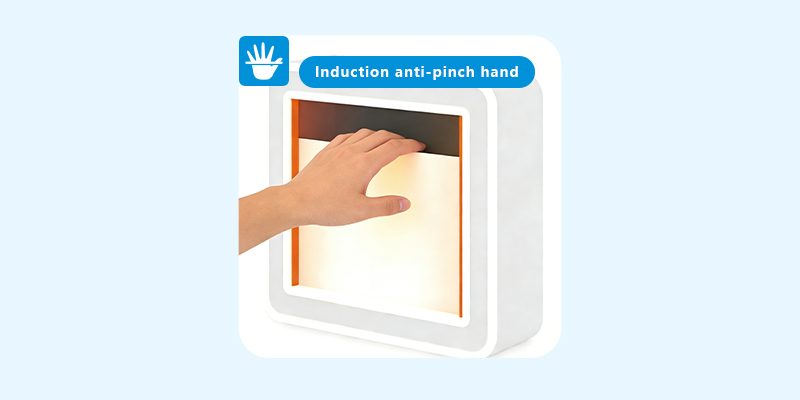
The pickup port is set at mid height so the customer collects without bending, and an induction sensor stops the shutter as soon as a hand enters the opening.
On an unattended micro-market, a safe port protects customers and keeps the machine usable by children and older shoppers without staff on site.
Double-Layer Heated Glass Stays Clear
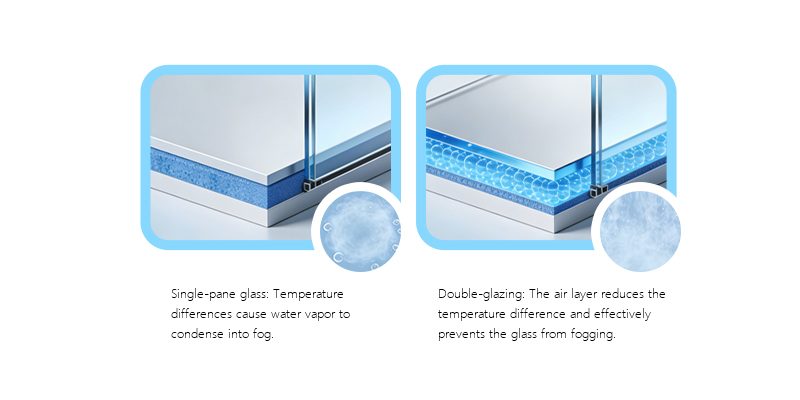
Double glazing with a heated layer breaks the temperature difference across the air gap, so the inner surface does not fog when the cabinet is colder than the room.
Clear glass is the whole point of a display cabinet: customers buy what they can see, and staff are not spending visits wiping condensation.
5 cm Foamed Body and Magnetic Seals
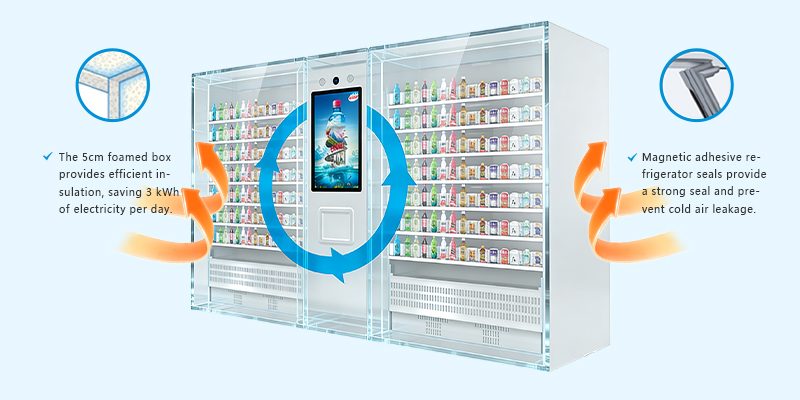
The cabinet is foamed in one piece with a 5 cm insulation layer and sealed with refrigerator-grade magnetic strips. Cold air stays in the box rather than leaking around the door frame.
Tests show roughly 3 kWh saved per day against a standard single-layer cabinet — a meaningful cut on a machine that runs 24 hours.
Brand Compressor with Precise Temperature Control
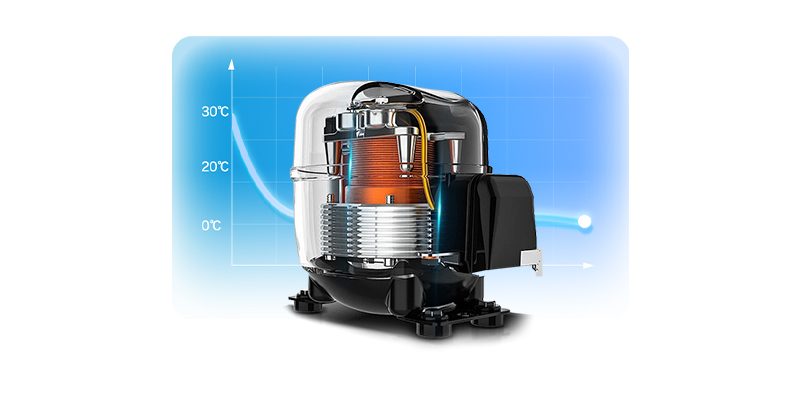
A top-brand compressor brings the cabinet down quickly and holds the set point with little swing. Temperature is set within the specified range and adjustable remotely.
Timed on/off keeps the compressor off peak hours, and the compressor is the part most likely to fail in a chilled machine, so a branded unit lowers lifetime service cost.