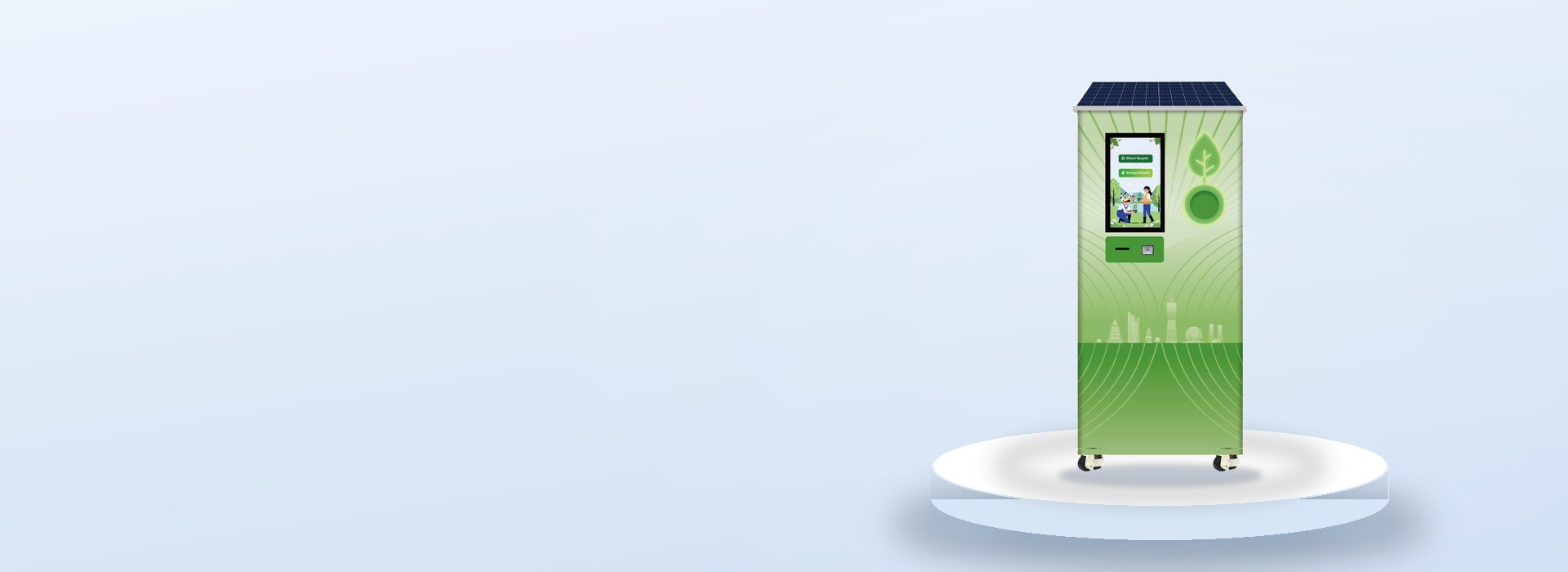
RVM 05 Off-Grid Solar Reverse Vending Machine, 2 Bins
Size: 1945(H) × 860(W) × 900(D) mm (solar panel extends above the cabinet)
Weight: About 250 kg
Display: 21.5-inch screen, 1920 × 1080 pixels, brightness 250 cd/m²
Touch Screen: 21.5-inch capacitive multi-touch, response time < 15 ms
Main Board: Android mainboard, Rockchip RK3568, 16 GB ROM, 2 GB RAM
Speaker: Built-in audio speaker to guide users and prompt correct recycling
Network: WiFi / 4G IoT card / network cable connection
Power: 100 W; solar photovoltaic panel for independent operation without external power supply
Recycling Efficiency: 5 seconds per item; supports continuous input
Accepted Item Size: Bottle diameter 5 – 10 cm; bottle length 5 – 32 cm
Storage Capacity: 2 bins
Weighing Module: 2 weighing modules
Identification Module: Standard camera-based image recognition plus barcode reverse scanning
Compression Module: None — no compaction on this model
RVM 05 at a Glance
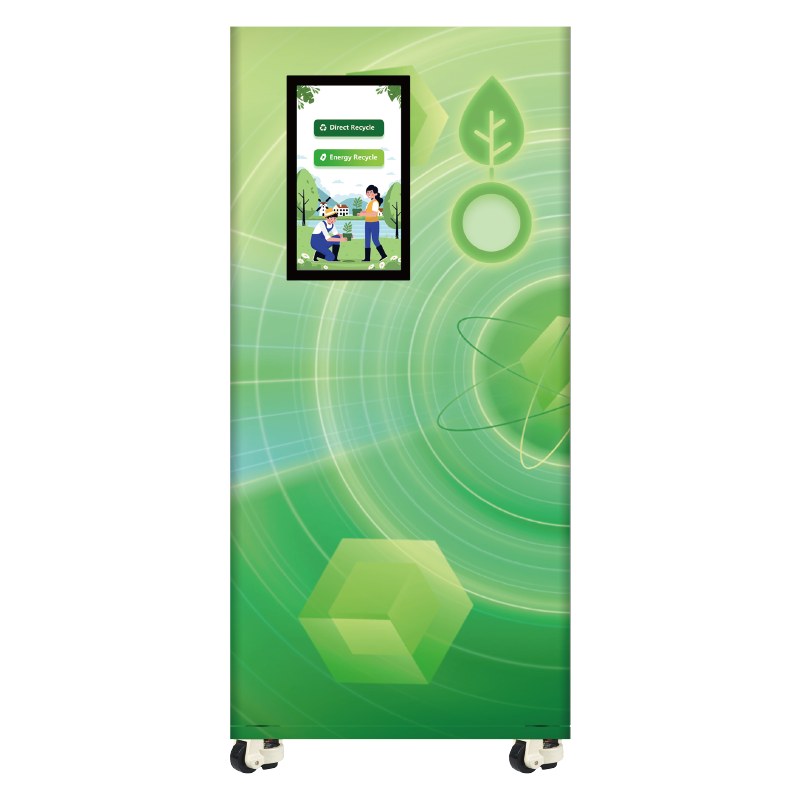
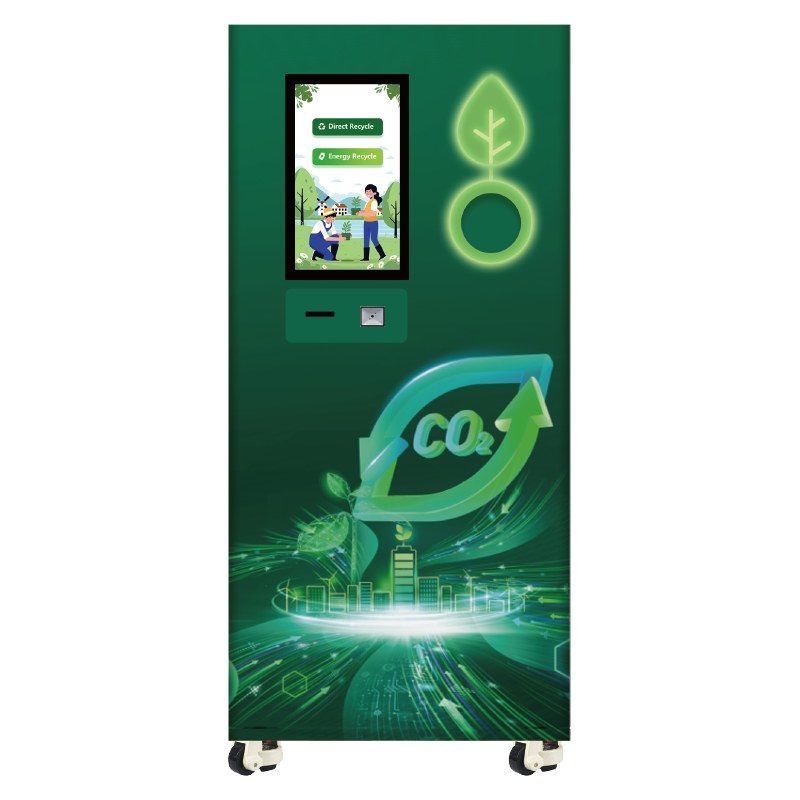
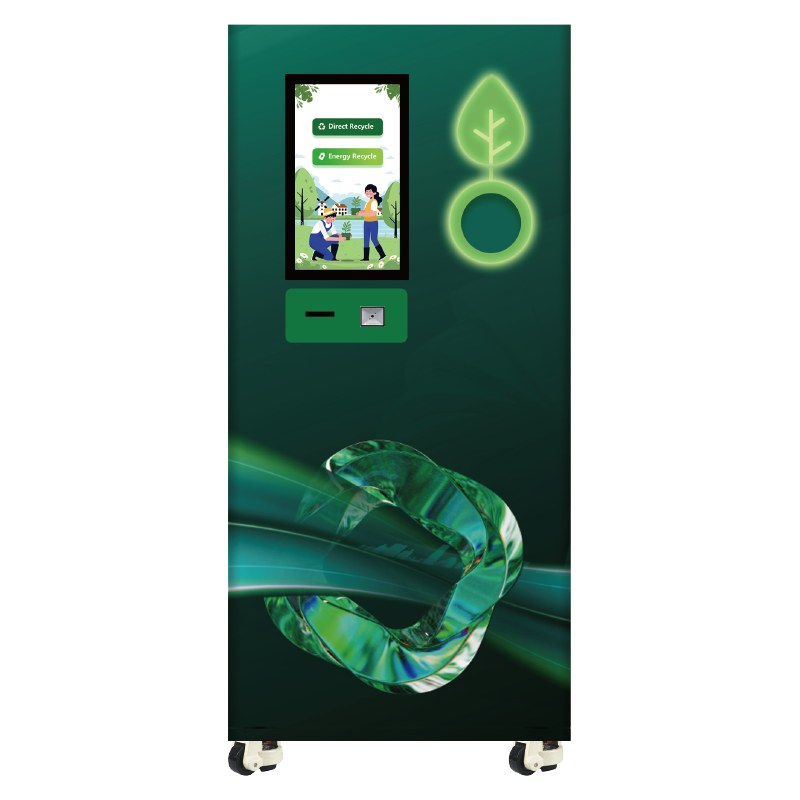
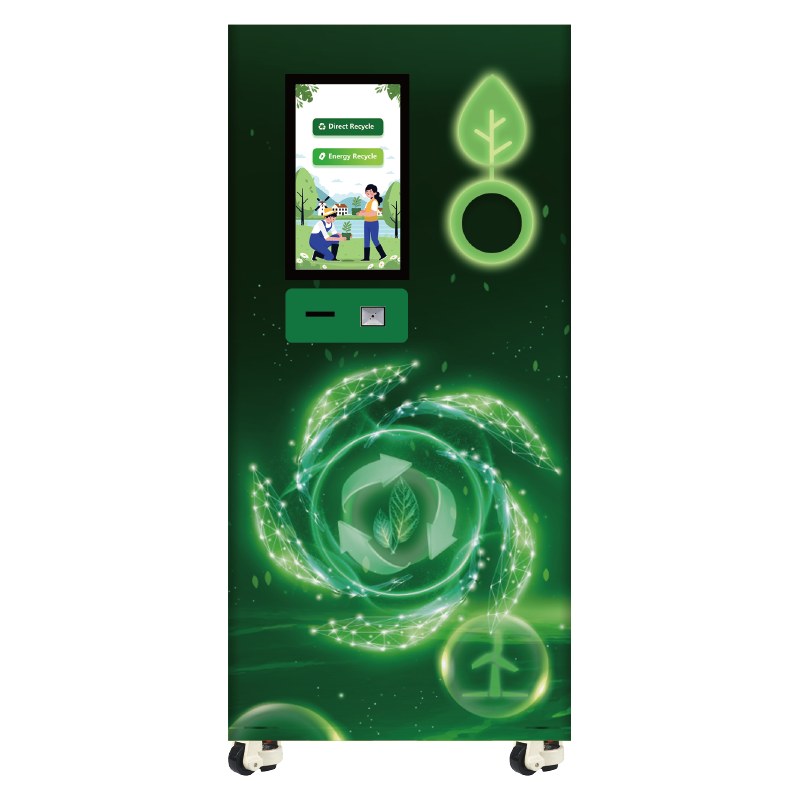
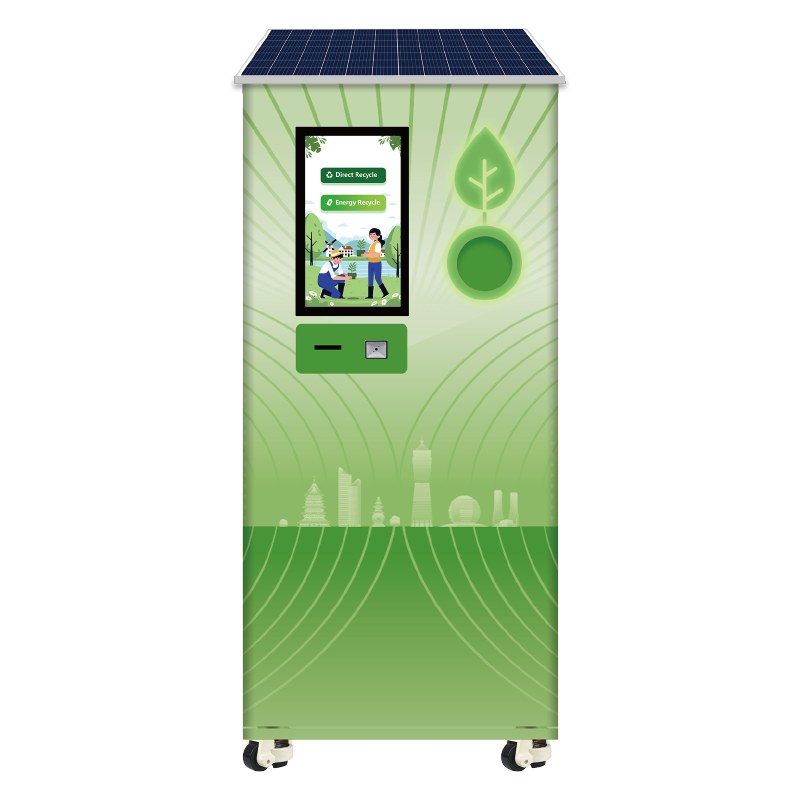
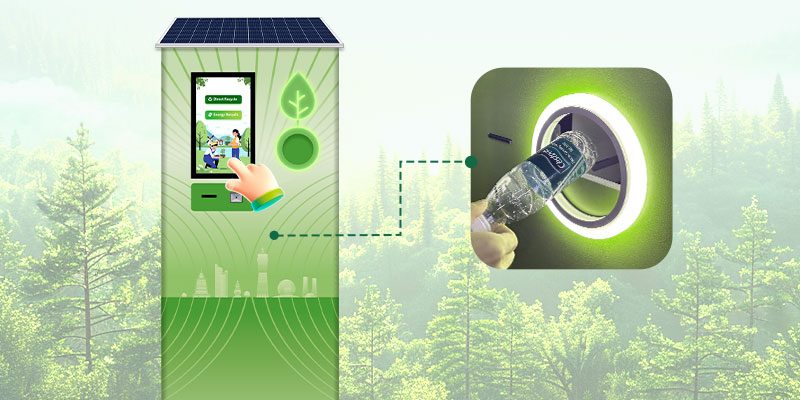
The RVM 05 is a two-bin sorting machine with a solar panel on the roof, so it can be installed where there is no power run to trench. This front view shows the cabinet and panel; a product video will be added here shortly.
If you would like to see the off-grid installation layout and the panel specification, contact us and we will send the site requirements and the latest demo video.
A Recycling Point Where There Is No Power
The limiting factor for outdoor recycling is rarely the machine — it is the electricity. Trenching a power line to a park path, a scenic viewpoint or a remote trailhead usually costs more than the cabinet itself, and often cannot be done at all on protected land.
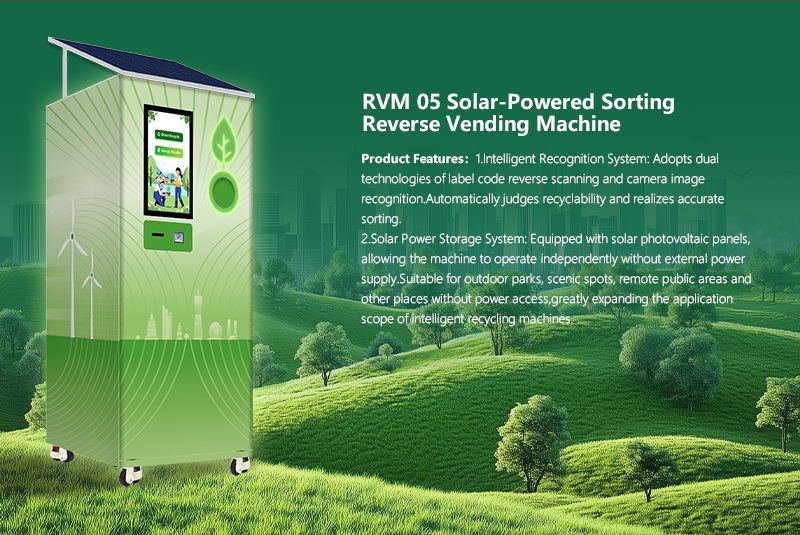
The RVM 05 carries its own photovoltaic panel on the roof and runs independently of the grid. That is what moves the installation decision from “is there a socket nearby” to “is this a place people walk past” — which is the only question that should matter.
Four Steps from Drop to Reward
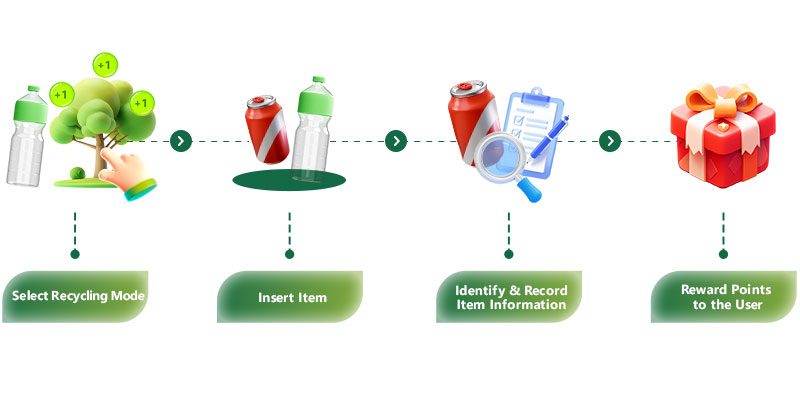
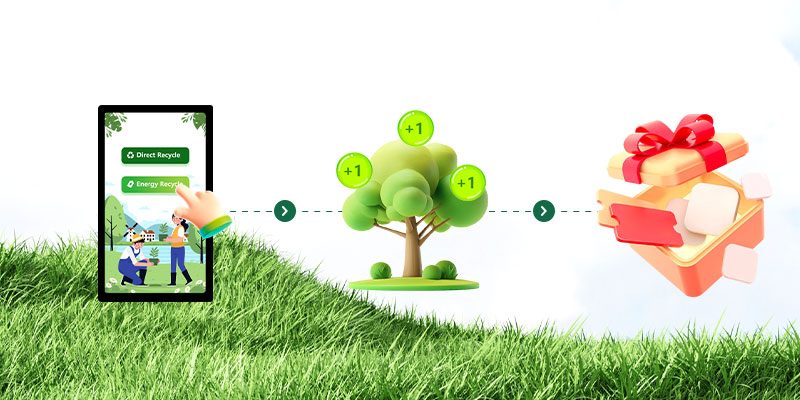
Select the recycling mode, insert the item, let the machine identify and record it, and receive the points. Each step is confirmed on the 21.5-inch screen and by the built-in speaker, so a visitor who has never used a recycling machine can complete it without instruction.
Intake runs at about 5 seconds per item with continuous input supported — fast enough that a family with a bag of bottles does not hold up the people behind them.
One-Touch Inlet, Lit for Evening Use
The inlet opens on a tap rather than staying open, so the chamber is only exposed while someone is using it. A lit ring around the opening shows exactly where the bottle goes — a detail that matters more outdoors, where the cabinet may be used at dusk or in low light on a wooded path.
The opening takes standard beverage containers: 5–10 cm in diameter and 5–32 cm in length.
Direct Recycle or Earn Green Points
In Direct Recycle mode the cabinet is a plain disposal point. In Energy Recycle mode, visitors register by QR code and collect green points per accepted item, redeemable against goods or applied as a discount on a vending machine nearby.
In a park or a scenic area, the second mode is what makes the machine part of the visit rather than a bin: a family collects points while walking, and the redemption gives them a reason to come back to the same trail.
Accepts What It Should, Rejects What It Shouldn't
Two independent checks run on every item: barcode reverse scanning against the packaging code, and camera image recognition against shape and label. Infrared sensors count items as they pass, so a single bottle cannot be counted twice.
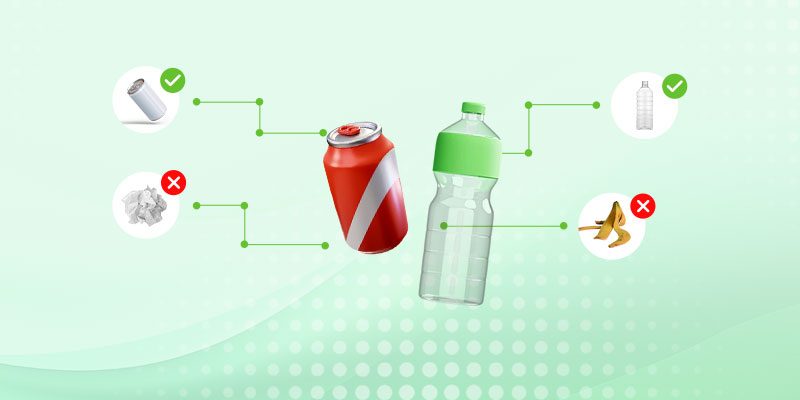
Cans and PET bottles are accepted while paper cups, napkins and food waste are returned. Outdoors this is what keeps the two bins usable — a picnic site generates exactly the kind of mixed waste that would otherwise contaminate a collection.
Quiet Enough for a Scenic Area
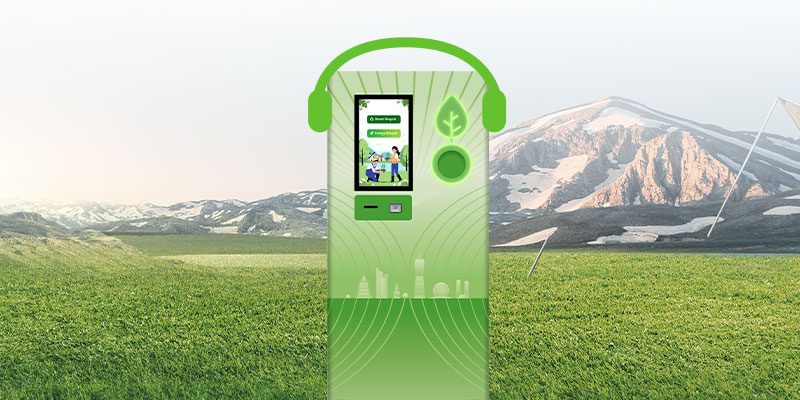
There is no compressor on this model, so the loudest part of the cycle is the inlet door and the item landing in the bin. That is deliberate: a machine standing on a walking trail or beside a viewpoint cannot sound like plant equipment, and the absence of compaction is the simplest way to guarantee it.
The audio prompts are kept at a conversational level, guiding the user through the steps without broadcasting across the site.
Two Bins Reporting Over 4G
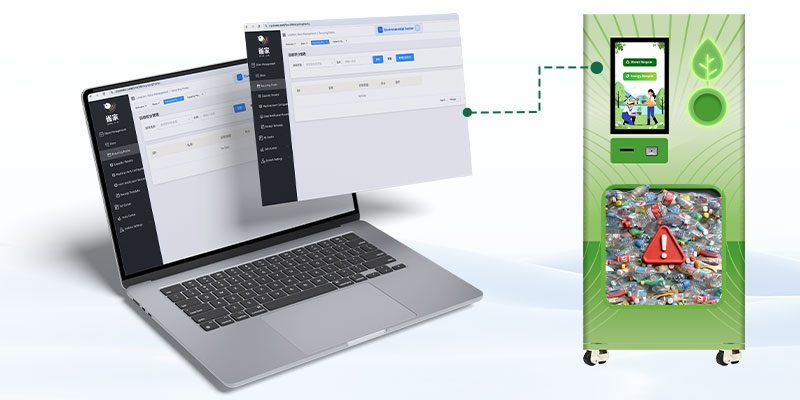
Each bin has its own weighing module, so fill level is reported per stream. Volume collected, bin status, offline units and faults all report to the cloud console over the 4G link — which matters most precisely where there is no mains power and therefore no network cable either.
A full-bin alert is raised before the cabinet overflows, so a remote site is emptied on the basis of data rather than a scheduled guess.
Solar Version or Grid Version, Same Cabinet
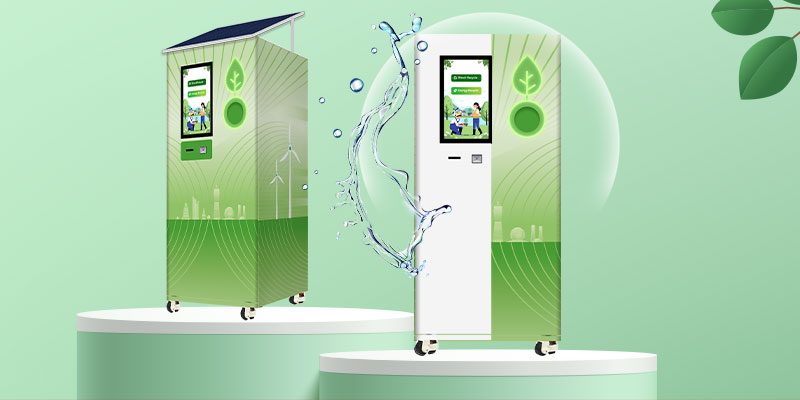
The same body is built in two configurations: with the rooftop photovoltaic panel for off-grid sites, or in a plain white finish for locations that already have power. The cabinet, screen and bin layout are identical, so a site can start on solar and add a mains connection later without replacing the machine.
Both versions use high-strength sheet metal with anti-rust and dust-resistant coating, and both sit on casters so one person can reposition them when a path or layout changes.