TK-05 Garment Care Machine
Size: 1934(H) × 762(W) × 650(D) mm
Weight: About 120 kg
Display: 18.5-inch, 1920 × 1080 pixels, brightness 250 cd/m²
Touch Screen: 18.5-inch capacitive multi-touch, response time < 15 ms
Main Board: Android, Rockchip RK3568, 16 GB ROM, 2 GB RAM
Chamber Capacity: 1 garment care chamber with hanging rod and multi-layer racks
Care Process: Ultrasonic atomization, deodorising ion disinfection, high-efficiency drying, negative ion purification
Consumable Cost: 5 L atomization liquid, enough for 400–500 care cycles
Loading: Coat on the hanger, small items on the stacked racks
Lighting: Integrated colour LED lighting for night use
Speaker: Built-in voice prompts during the care cycle
Payment System: Cash / credit card / e-wallet payments supported
Network: WiFi / 4G IoT card / network cable connection
Power: Standby 100 W, operating approx. 1200 W (drying stage 2 minutes)
Voltage: 220 V by default with anti-shock protection; transformer required in 110 V regions
Hang It, Close the Door, Walk Away
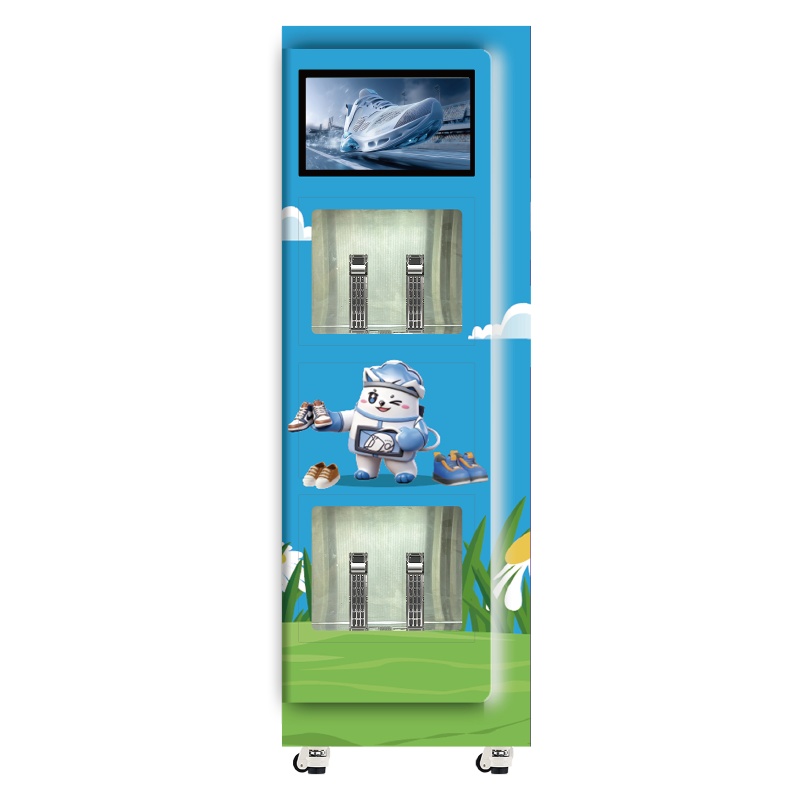
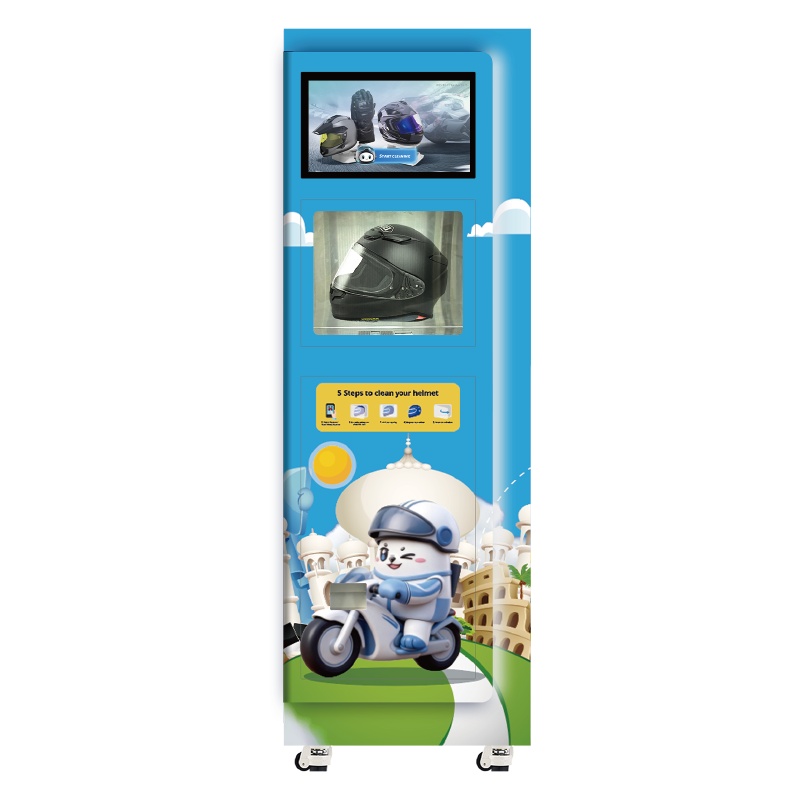
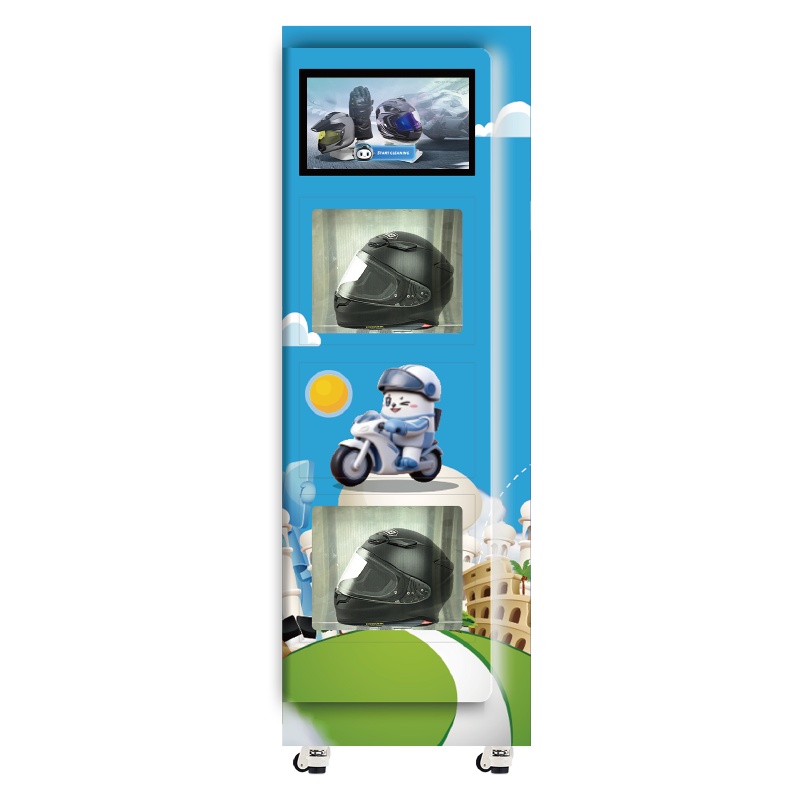
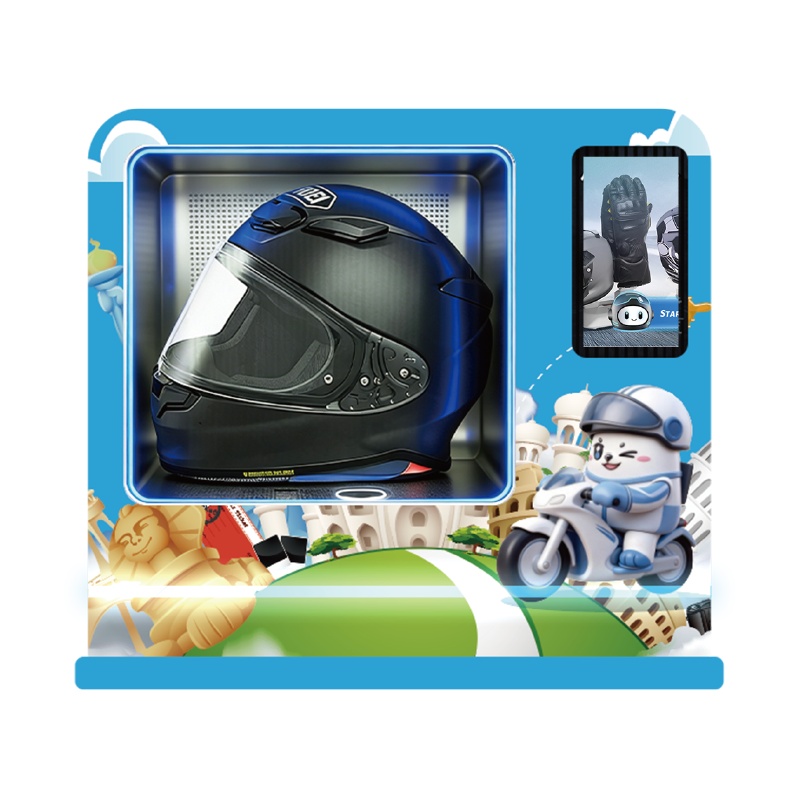
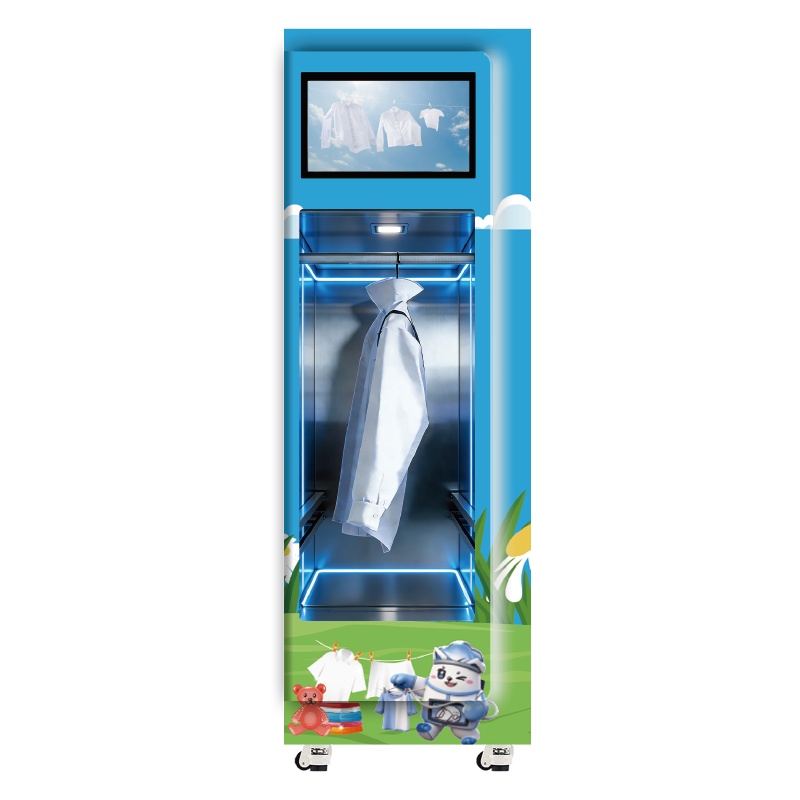
Front view: 18.5-inch screen, one full-height chamber, and a door that opens wide enough to push a coat in on its hanger. 762 mm wide and 650 mm deep, so it needs a corner rather than a whole wall.
No running video for this configuration yet. Tell us the venue and we will film a full cycle on a real coat — hanger in, four stages, coat out dry and odour-free.
A Wardrobe-Sized Cabinet for Coats and Small Items
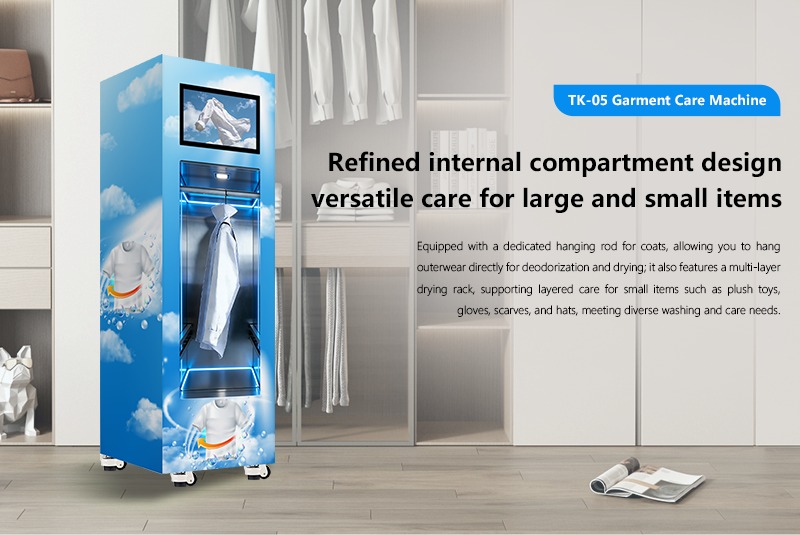
Most care cabinets deal with one thing. This one is laid out like a narrow wardrobe: a hanging rod in the upper chamber for coats, jackets and dresses, and stacked racks below for gloves, scarves, hats and plush toys.
For a hotel cloakroom or a theatre wardrobe, that combination is the whole sale. Winter coats and the small things that come with them go into one machine instead of two.
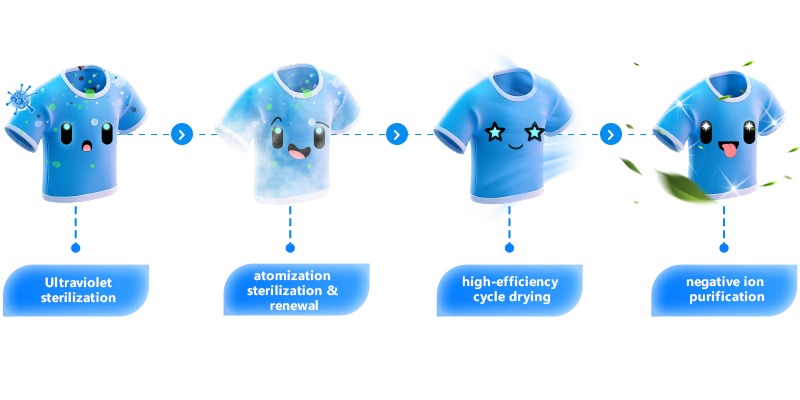
Four Stages, One Hanger
Ultrasonic atomization, deodorising ion disinfection, high-efficiency drying and negative ion purification — the same four stages as our helmet units, run inside a tall chamber so the coat stays on the hanger the whole time.
Nothing is folded, nothing is stacked on top of something else. The garment goes in the way it was hanging in the wardrobe and comes back the same shape.
A Patented Cabinet, Not a Converted Closet
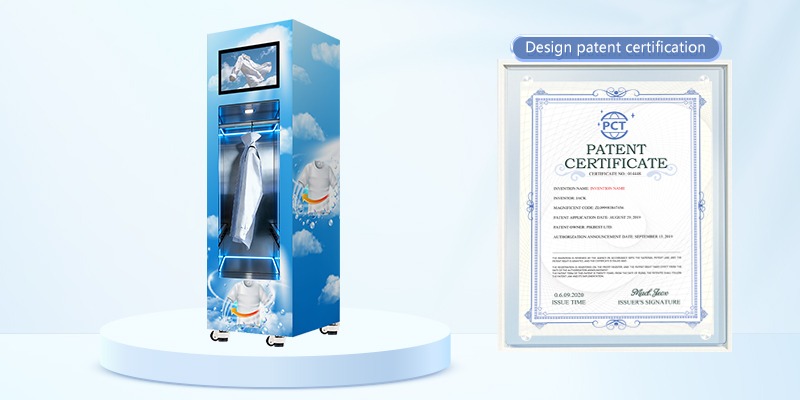
The design patent covers the exterior and the door layout. It is the reason the machine cannot be cloned outright — and the answer a distributor needs when a buyer says they can get the same thing cheaper from a trading company.
In garment care the cabinet is the product. The buyer is paying for something that can stand in a hotel lobby without looking like equipment.
Hang the Coat, Do Not Fold It
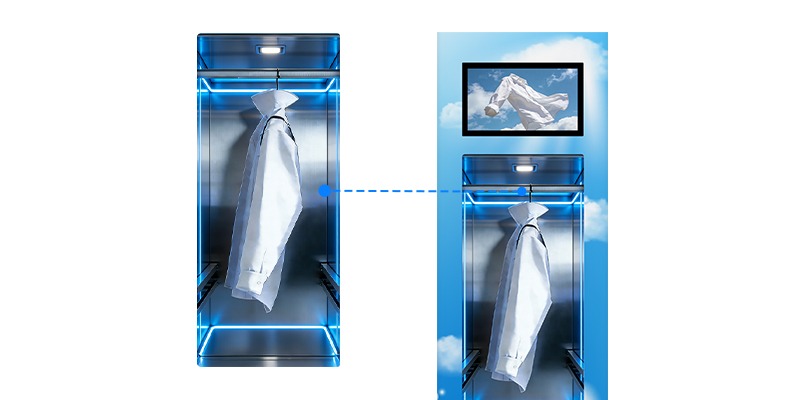
The chamber has a dedicated rod across the top. A coat goes in on its hanger, which means the shoulders keep their shape and the lining is exposed to the mist instead of being crushed against itself.
Folding a coat into a shelf is what most cheap cabinets force you to do, and it is why the collar comes out creased. Hanging solves it without anyone ironing afterwards.
Half Hanging, Half Shelves
The chamber is zoned, not just tall. The upper zone is the rod; the lower zone carries multi-layer racks for small items — gloves, scarves, hats, soft toys.
That zoning is what makes the machine usable in a shop: one customer’s coat and another customer’s scarf can be handled in the same cycle, which is how a single cabinet earns twice per hour instead of once.
UV Through the Fabric
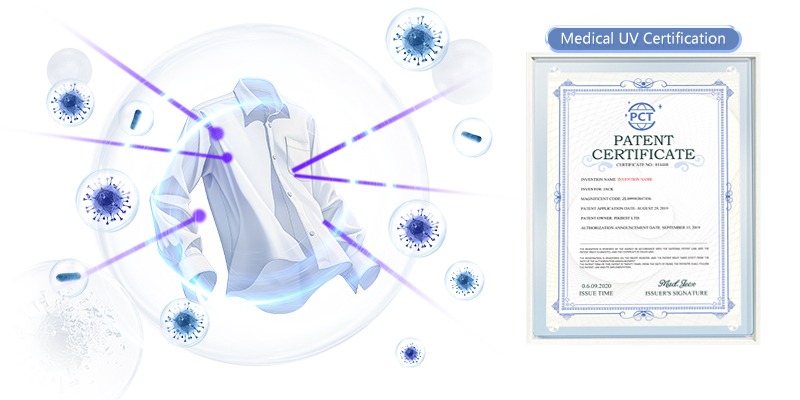
The UV stage runs inside the chamber while the garment hangs, so the light reaches the surface of the fabric rather than only the top of a folded stack. The medical-grade UV certification ships with the machine.
That certificate is what a hotel group, a clinic or a theatre asks for before they let a shared garment service operate on their premises.
Mist That Reaches the Lining
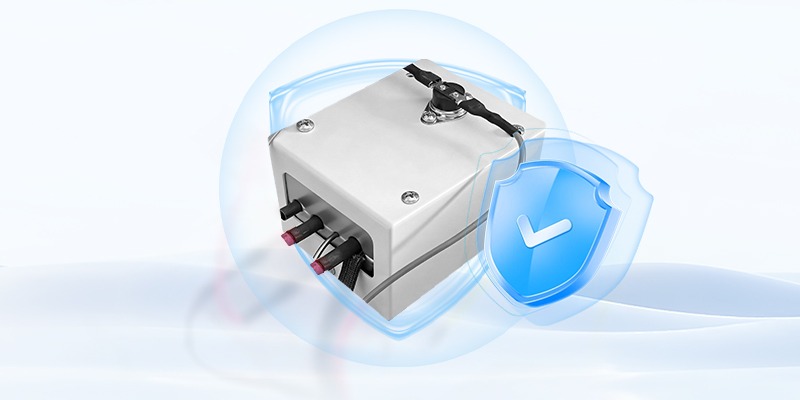
Pump, liquid feed and ultrasonic element in one block — the same module as our helmet and shoe units. A weak mister leaves the outer fabric damp and the lining untouched, which is the opposite of what garment care is supposed to do.
With a proper module the mist gets behind the fabric, and 5 litres covers 400 to 500 cycles. In a hotel cloakroom that is most of a winter season on one refill.
Split Flow, Not a Single Branch
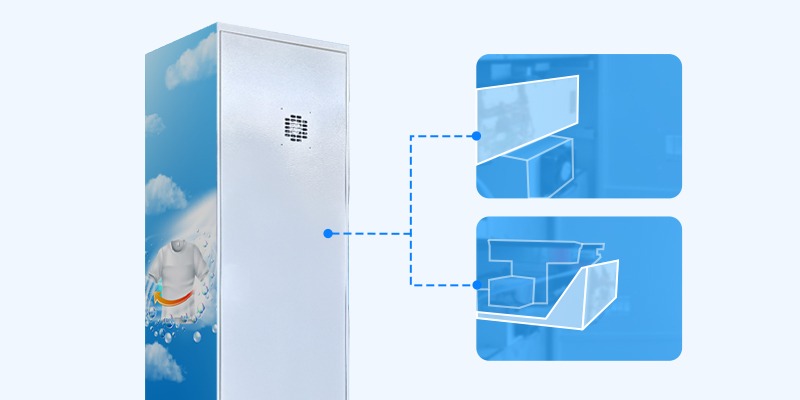
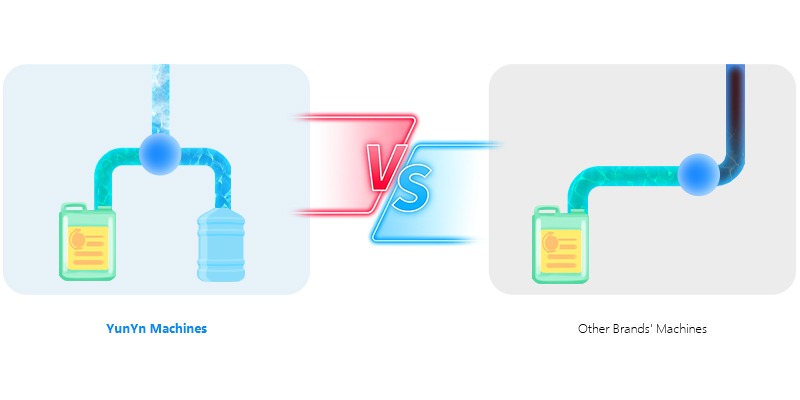
Left is ours, right is the usual budget layout. We split the flow into two independent lines; they run one pipe and branch it at the far end, so the second outlet always runs weaker than the first.
On a tall chamber that shows up as a coat that is dry at the shoulders and still damp at the hem. On ours the whole garment gets the same treatment.
Count the Joints Before You Buy
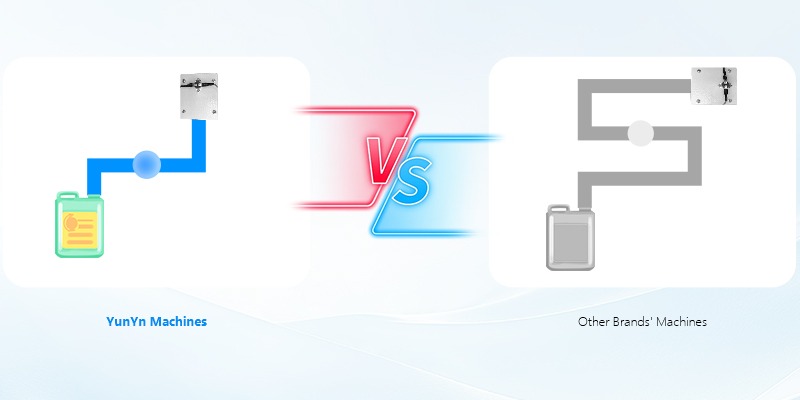
Same comparison from another angle. Ours goes from tank to chamber with two bends and one connector; the budget build snakes through four elbows and three push-fit joints to reach the same point.
Every joint is where scale collects and where a line starts to weep. Fewer joints means fewer service calls — and a garment unit that leaks onto a hotel carpet is a conversation nobody wants.

Liquid Level and Cycles on Your Phone
The control board reports liquid level, cycle count and fault codes to the cloud. Open the app and you know whether the unit needs a refill before the next guest arrives with a coat.
For a chain running units across several sites, this is what stops someone driving out to check a tank that was full all along.
70°C Without Felting the Wool
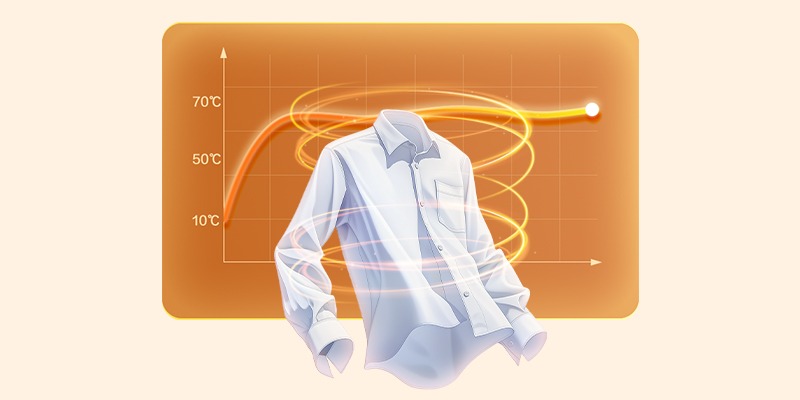
Drying tops out at 70°C, with 50°C and 30°C steps below it. Warm enough to pull moisture out of a padded coat, controlled enough that wool and glued interlinings are not damaged.
Temperature and cycle length are set from the screen or the backend, so a site that mostly handles wool and cashmere can run the gentle programme while a ski lodge runs the hot one.
Out Dry, Fresh, Still the Right Shape
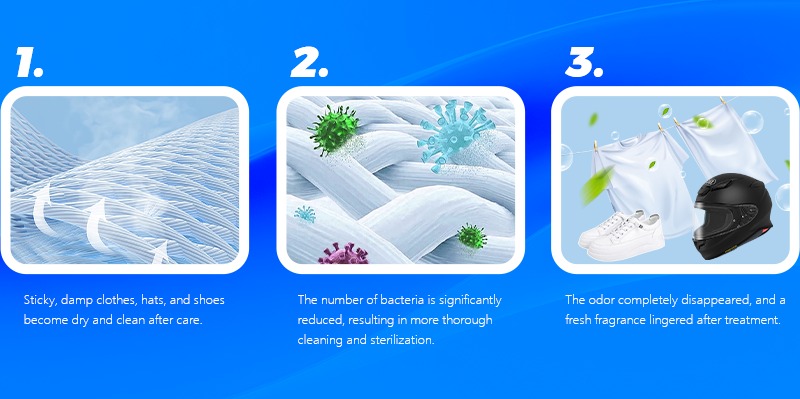
Three panels, one story. Daily wear builds bacteria and smell in the fabric. After the cycle the count drops sharply. What the customer notices is that the coat is dry, the smell is gone and the shape is unchanged.
That last part is why people use it again. A garment that comes back crushed or damp gets used once; one that comes back exactly as it went in becomes a habit — and a habit is what a machine needs to pay for itself.