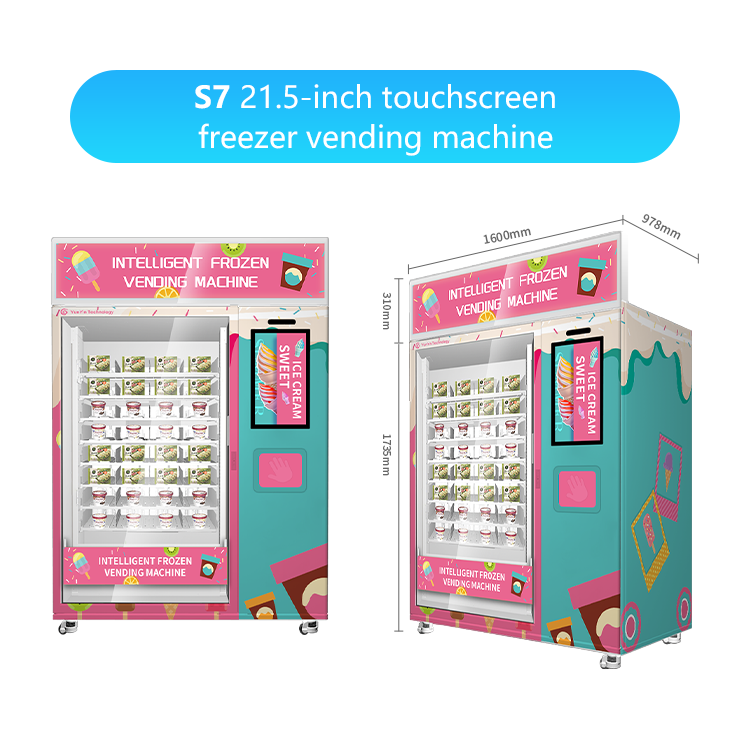
S701 Lifting Freezing Intelligent Vending Machine
Size: 2045(H) × 1600(W) × 978(D) mm
Weight: About 400 kg
Display: 21.5-inch, 1920 × 1080 pixels, brightness 250 cd/m²
Touch Screen: 21.5-inch capacitive multi-touch, response time < 15 ms
Main Board: Android main board, Rockchip RK3568, 16 GB ROM, 2 GB RAM
Single-Chip Microcomputer: Microcomputer control terminal, supports up to 80 lanes, sound and light control, multi-channel sensor feedback, automatic addressing for the lifting system
Menu Operation: Capacitive touch screen selection and purchase (Android system)
Payment System: Cash / credit card / e-wallet payments supported
Network: WiFi / 4G IoT card / network cable connection
Cargo Channel Quantity: 6 layers × 9 columns of spring lanes, 54 lanes in total (adjustable and customizable)
Temperature System: Frozen-type compressor down to −25°C, timed operation, working temperature freely set within the specified range
Insulation: 60 mm thick foam layer with enhanced cabinet sealing for long-term cold lock
Power: About 1000 W during cooling, about 250 W when not cooling
Voltage: AC220V / 50Hz, electric shock protection
The Shelf Comes Down to the Customer
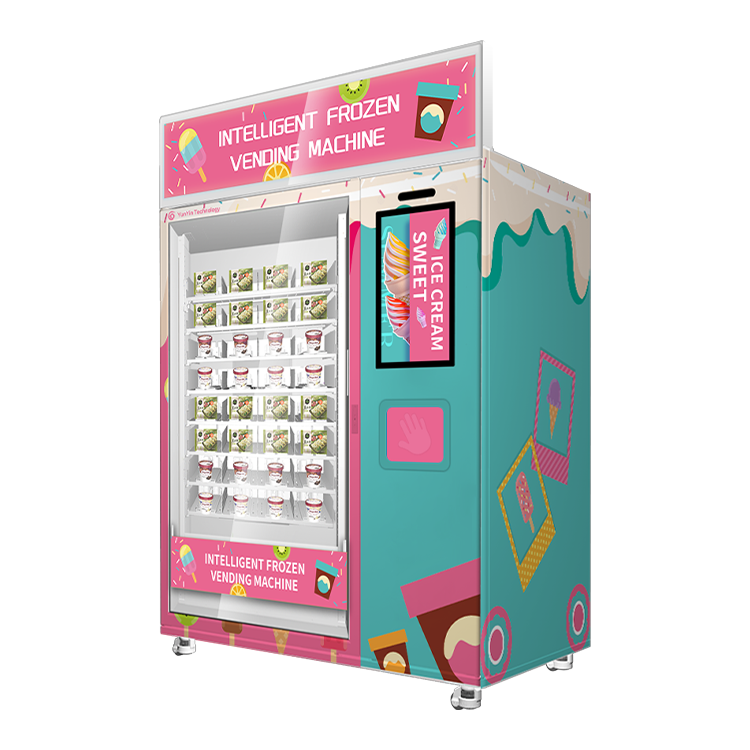
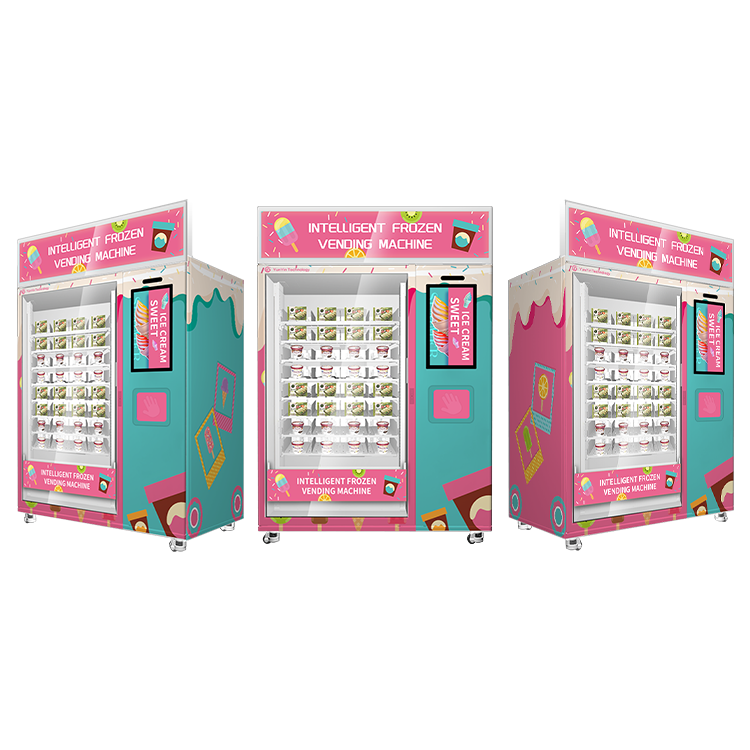
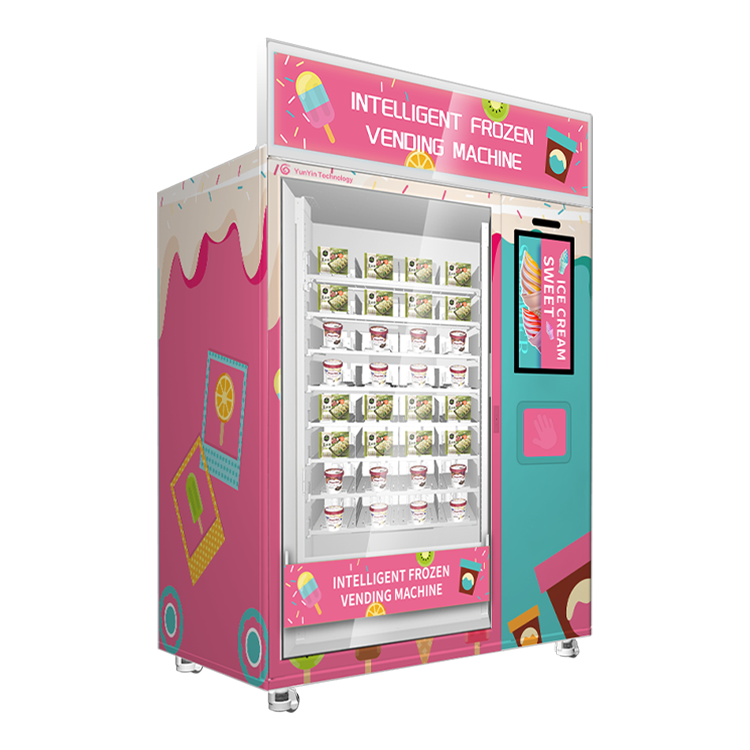
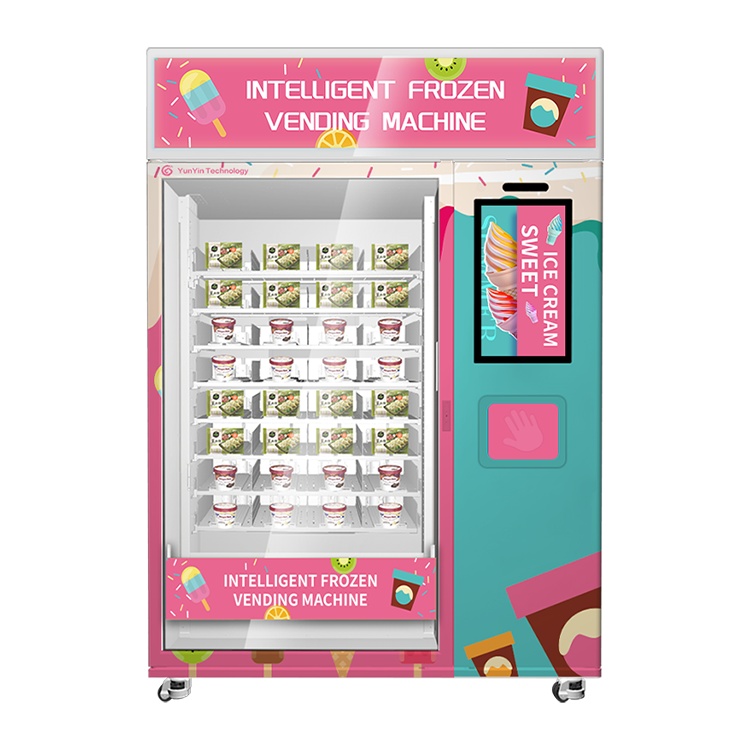
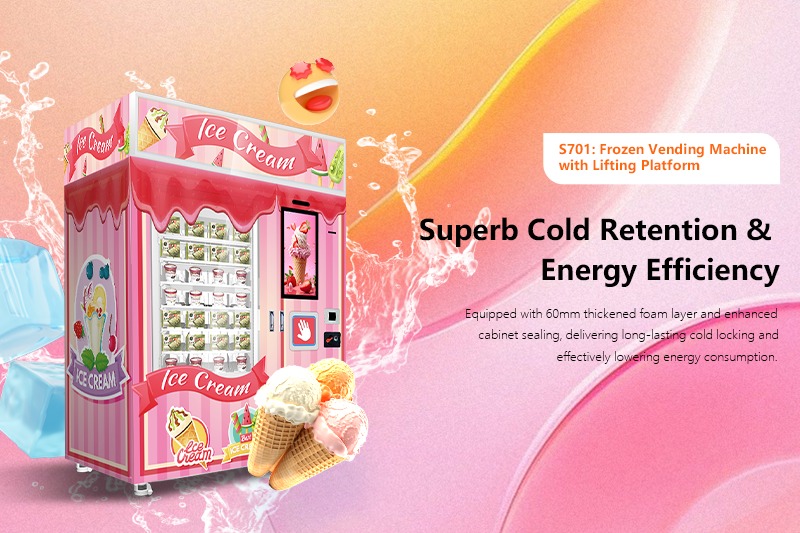
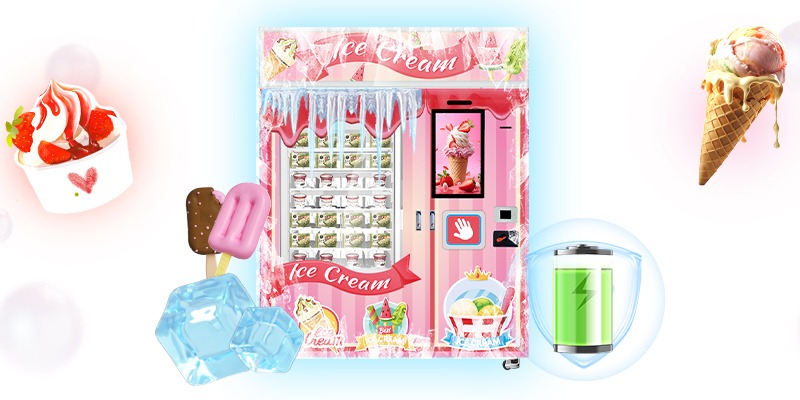
Front view: 21.5-inch screen on the right, three layers of product behind the heated glass on the left, and the pickup bay at waist height. 1600 mm wide and 978 mm deep — a cabinet, not a cold room.
No running video for this configuration yet. Tell us the venue and we will film a real order — lane turning, platform lifting, product delivered — plus a temperature log across a full cooling cycle.
60 mm of Foam Between the Ice Cream and the Room
Insulation is the least visible part of a freezer and the one that decides your electricity bill. This cabinet uses a 60 mm foam layer with a tighter door seal, so the cold stays in and the compressor cycles less overnight.
In a shop that is 30°C at midnight, that is the difference between a compressor running eight hours and one running three. Same ice cream, same price, different margin.
A Freezer That Can Stand in the Shop, Not Behind It
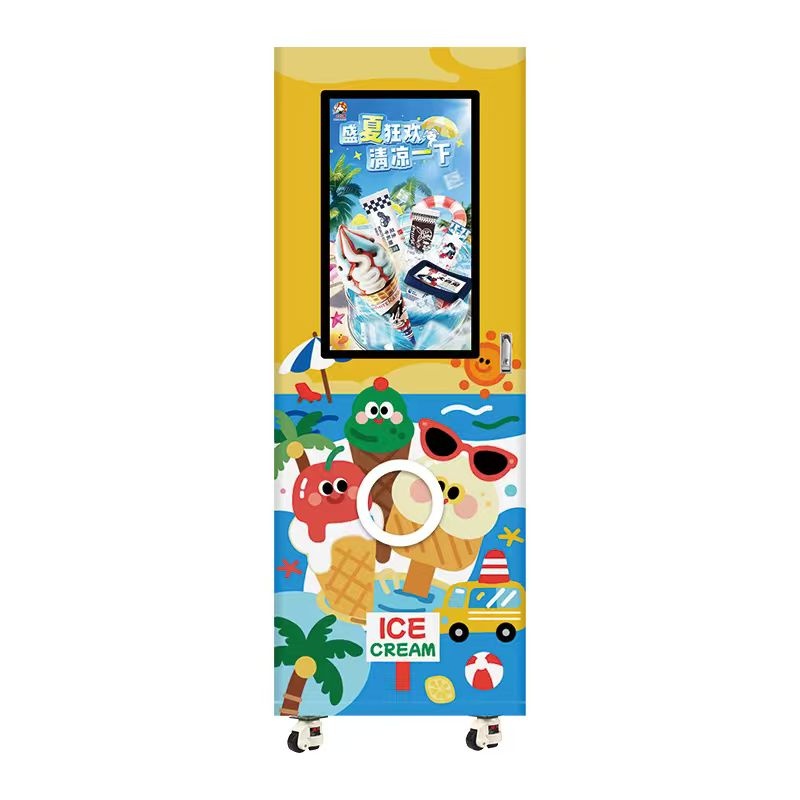
Most frozen vending machines look like equipment. This one is built to be looked at: full-height branding, a curved top, LED lighting inside the door, and a screen at eye level instead of a keypad by the floor.
For an ice cream brand, that is the whole argument. The machine is the shopfront. If it looks cheap, the product inside looks cheap too — no matter what you charge for it.
One Pane Fogs, Three Panes Do Not
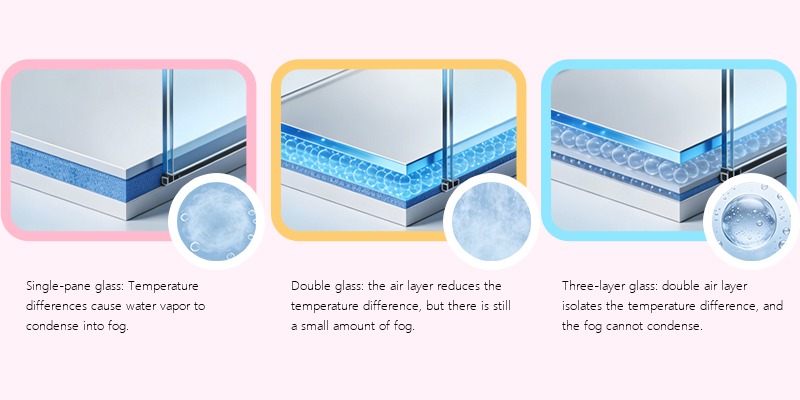
Left to right: a single pane that mists over within minutes, a double pane that still fogs at the edges, and the triple-layer hollow glass we use — two air layers with heated glass, so the door stays clear in a humid shop.
Fogging is not cosmetic. A customer who cannot see the ice cream does not buy it, and a cabinet that needs wiping every hour gets wiped for the first week and ignored after that.
The Compressor Is the Only Part You Cannot Cheap Out On
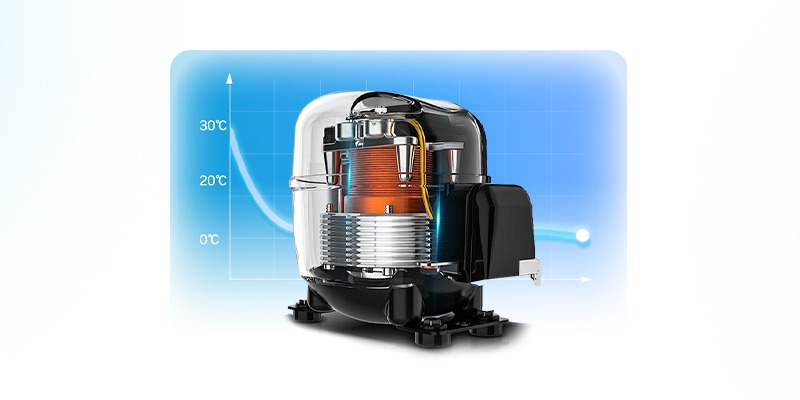
Industrial-grade, environmentally friendly compressor with fast pull-down and a quiet, stable run. The curve on the picture is the point: it reaches holding temperature quickly and then stays flat instead of hunting up and down.
A cheap compressor short-cycles, the cabinet swings two or three degrees all day, and the ice cream gets ice crystals. Customers do not complain about the compressor — they complain that the product tastes wrong.
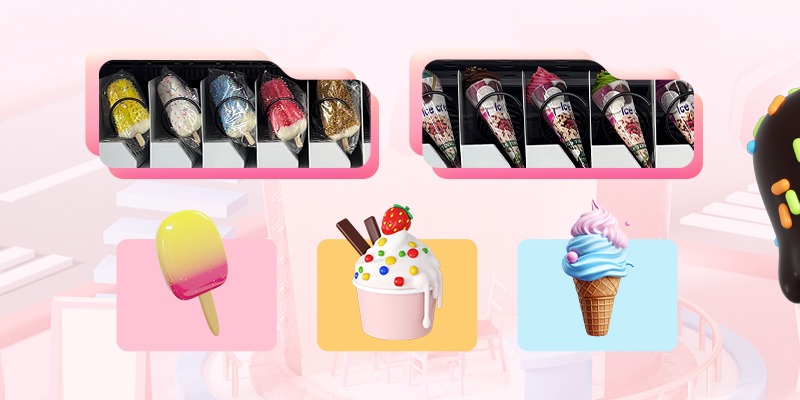
54 Slots for Tubs, Sticks and Cups
Six layers, nine columns, spring lanes — 54 positions, adjustable and customizable. Spring lanes push the next product forward as one sells, so the front row never looks empty and the cabinet does not need rearranging every morning.
Because the lanes are springs rather than dividers, one cabinet carries tubs, sticks, cones and ice cream sandwiches at the same time, which is how a real ice cream range is sold.
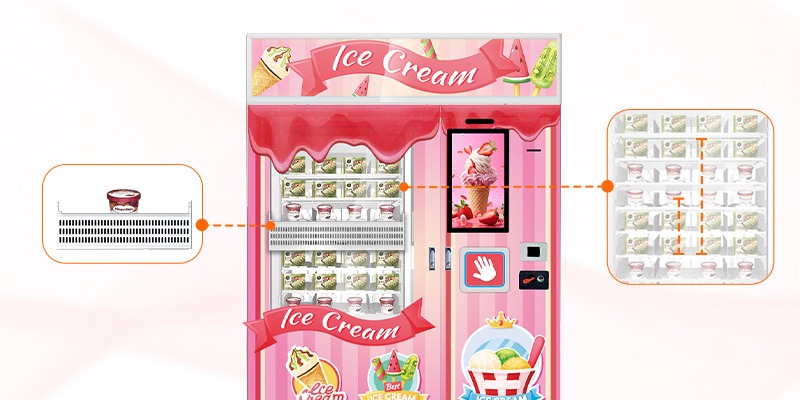
The Shelf Comes to the Customer
The lifting platform travels to the lane, the spring turns, and the product is carried down to the pickup bay. Nothing falls six layers, nothing lands on its side, and nobody has to open a door and reach into the cold.
That last part matters in a shop: every time a customer opens a freezer door by hand, the cabinet loses cold air. Here the door only opens for the pickup, and only for a few seconds.
The Freezer and the Loading Door Do Not Share Air
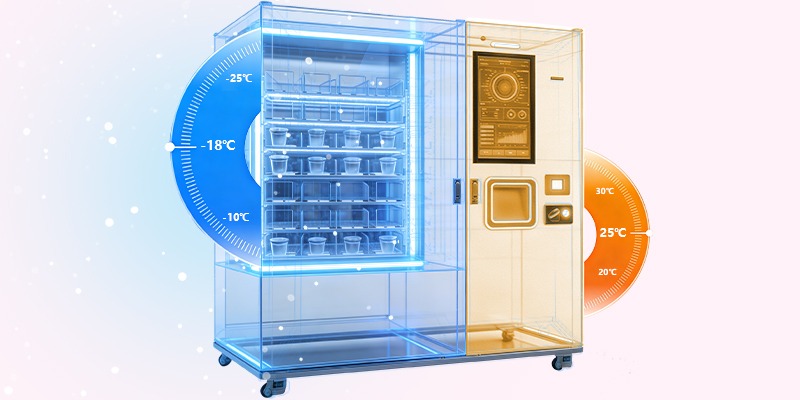
The freezing compartment and the loading compartment are separate zones with their own temperature control. Staff restock from the back or the middle without opening the display side, so the cold stays where the product is.
The diagram shows the two halves: −18 to −25°C on the display side, a warmer zone for loading. In practice, a restock at noon costs you a few minutes instead of a few degrees.
The Door Waits for the Hand
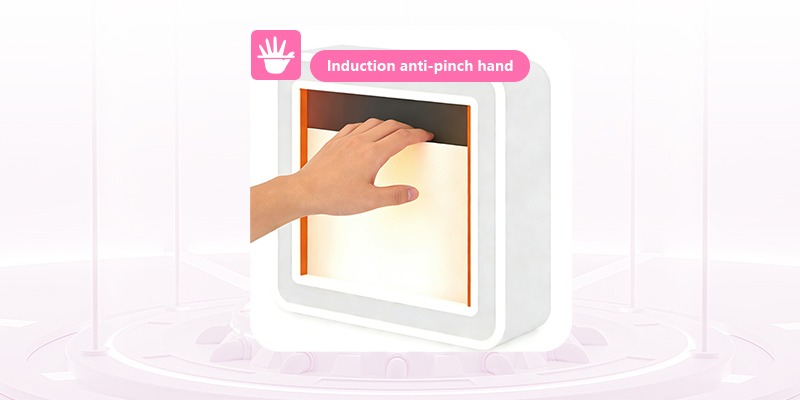
The pickup flap has an anti-pinch sensor. A hand goes in, the flap holds; the hand comes out and it closes behind. No cold blast on the customer’s face, no trapped fingers, no child reaching into a −20°C chamber.
It is also the detail that gets a machine approved by a shopping mall’s safety officer, which is where most frozen vending projects actually stall.
Ice on the Coils Is the Slow Way to Lose Money
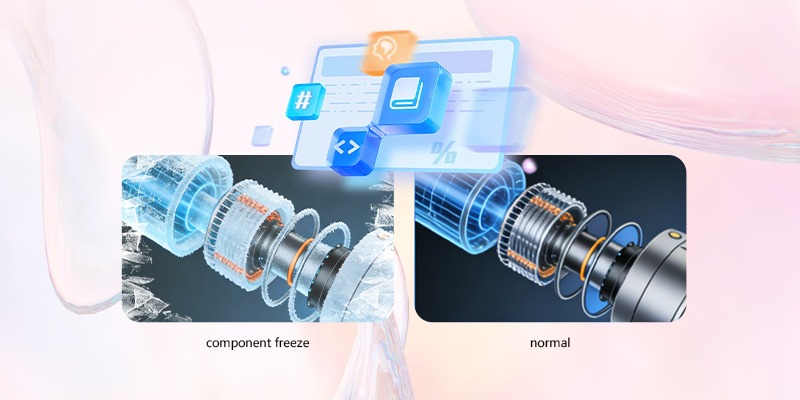
Compare the two coils. On the left, frost has built up between the fins until the airflow is blocked — the compressor runs longer and cools less. On the right, the same coil after a normal defrost cycle.
The S701 is built with a self-check program and remote defrosting, so the cabinet clears itself on schedule instead of waiting for someone to notice the ice cream getting soft.
Two Alarms Before the Ice Cream Turns
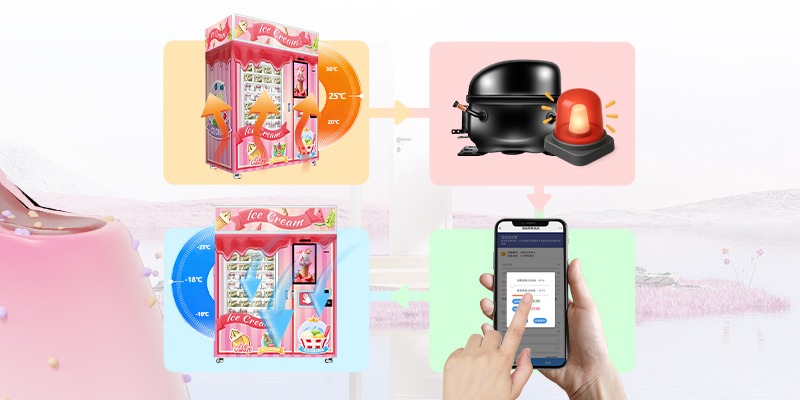
Every unit reports temperature and fault codes to the cloud, with two levels of alarm: a warning when the cabinet drifts, and a hard alert when it fails. Remote defrosting can be triggered from the phone, so a 2 a.m. wobble does not become a 9 a.m. write-off.
Run twenty machines across a city and this is what keeps you from driving to all twenty. You go to the four the app points at, and you find out about the rest before the customer does.