S11 Smart Convenience Store Smoothie Machine
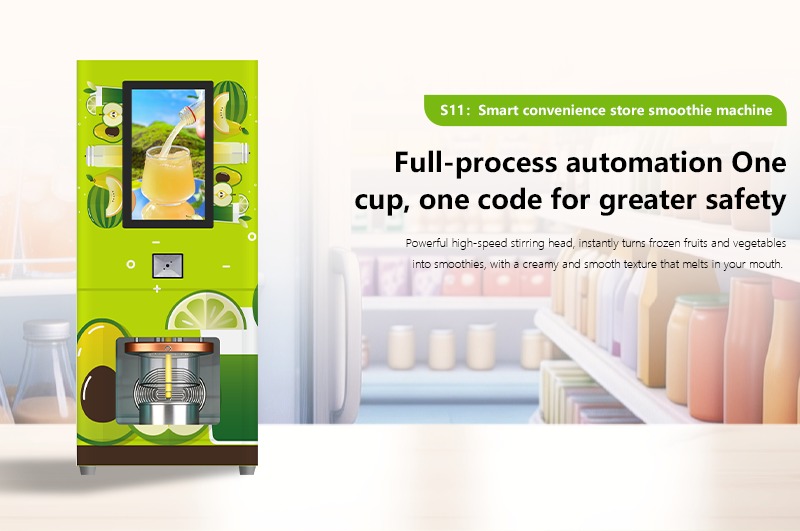
Size: 729(H) × 320(W) × 480(D) mm
Weight: About 50 kg
Display: 10.1-inch, 1920 × 1080 pixels, brightness 200 cd/m²
Touch Screen: 10.1-inch capacitive multi-touch, touch response time < 15 ms
Main Board: Android main board, Rockchip RK3568, 16 GB ROM, 2 GB RAM
Menu Operation: QR code recognition to open the door and activate the machine
Stirring Motor: 500 W, 15,000 RPM high-speed stirring head
Ingredient Dispensing: Automatic water and milk dispensing by recipe after scanning
Cup Coding: One code per cup, single use only, invalid once used
Cleaning: Automatic blade-head cleaning after each cup
Single-Chip Microcomputer: Sound and light regulation with multi-channel, multi-model sensor feedback
Payment System: Cash / credit card / e-wallet payments supported
Network: WiFi / 4G IoT card connection
Voltage: AC220V / 50Hz, electric shock protection
A Smoothie Bar the Width of a Counter
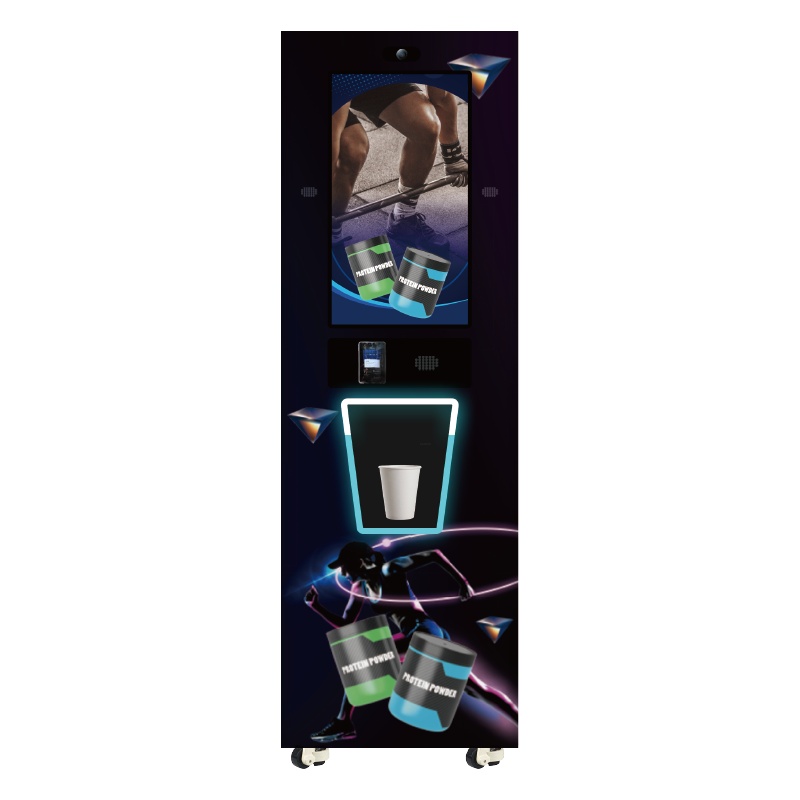
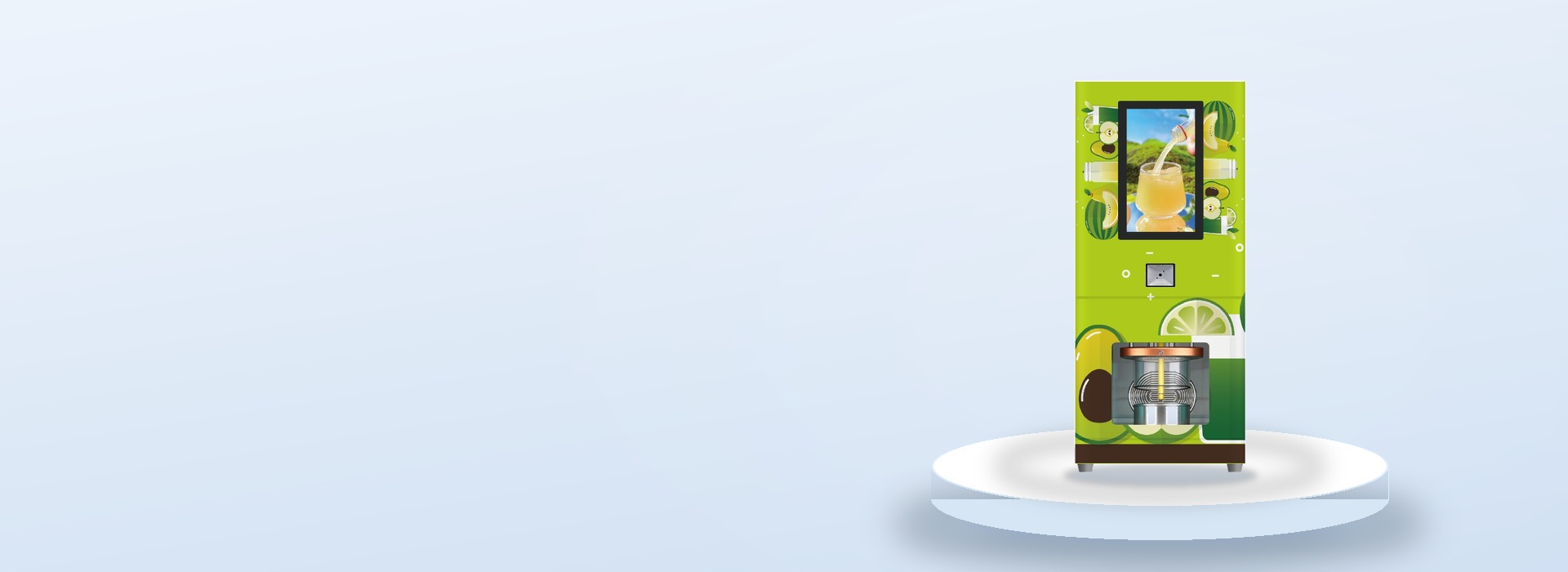
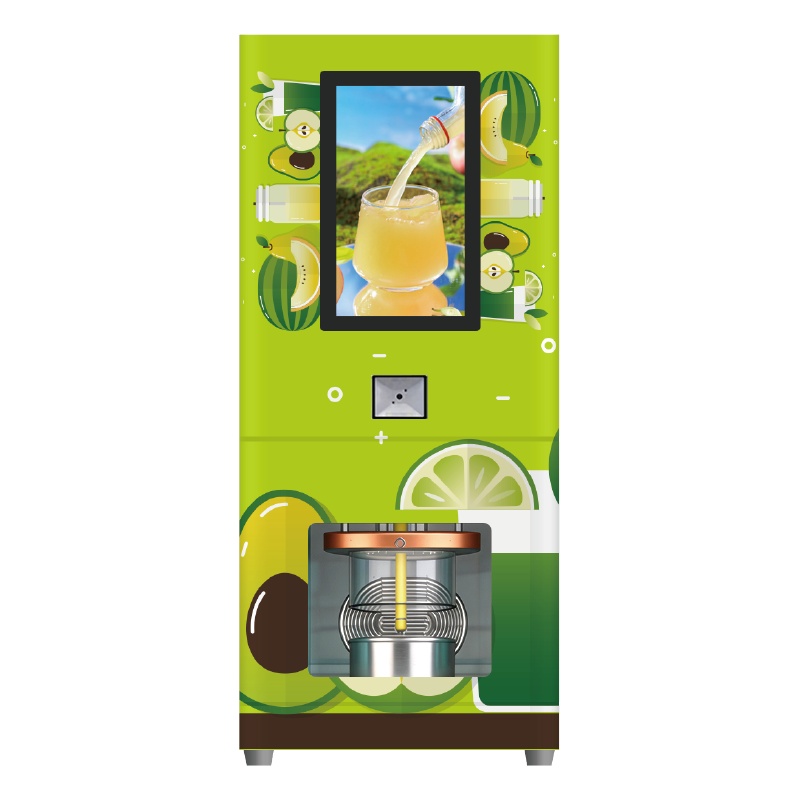
Front view: 10.1-inch screen on top, cup holder and blending head in the middle, 320 mm wide and 480 mm deep. It goes on an existing counter next to the coffee machine, not in a back room.
No running video for this configuration yet. Tell us the store and we will film a full order: scan, cup in, water and milk added, blend, clean, cup out — one take, no cuts.
One Cup, One Code, Nobody Touches the Fruit
Each cup carries its own code and that code works once. The customer scans, the door unlocks, the cup goes in, and the machine takes over. Nobody opens a freezer, nobody scoops, nobody measures water.
For a convenience store the value is labour: a smoothie that used to need a staff member now needs a scan. For the customer it is the difference between buying a drink and making one in public.
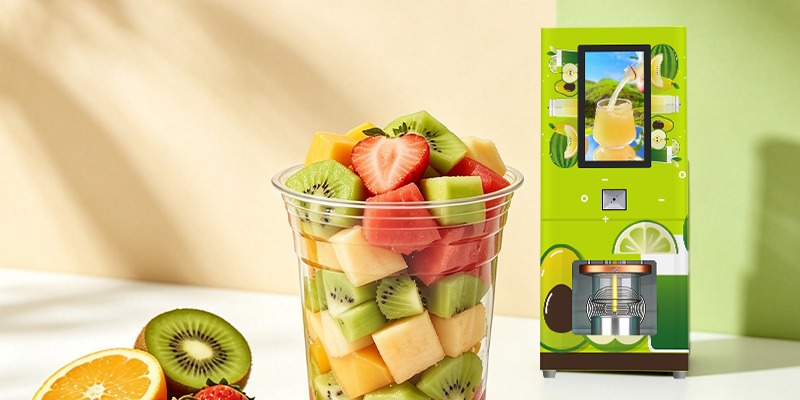
Frozen Fruit In, Thick Smoothie Out
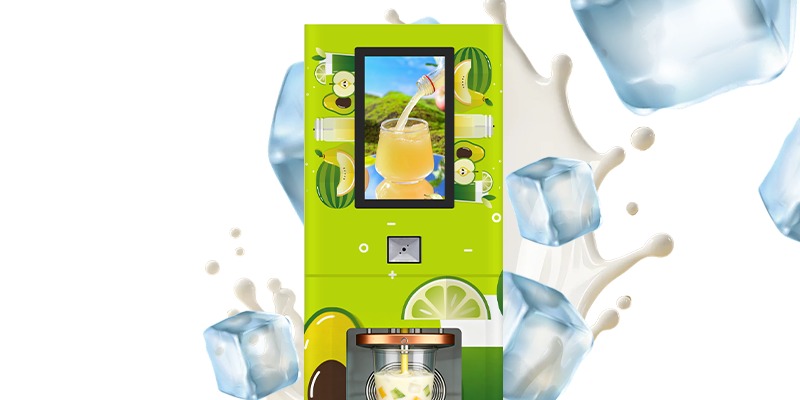
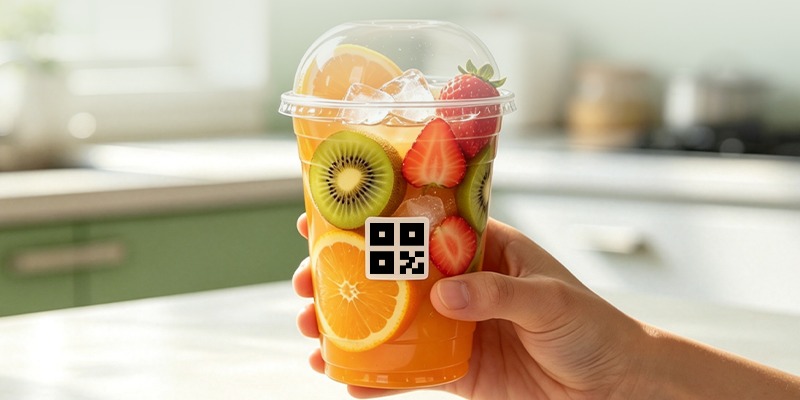
The cups are filled with frozen fruit and stored frozen, so there is no syrup, no concentrate and no waste at the end of the day. What goes into the blender is what the customer sees in the picture.
That is the whole product claim, and it is the one thing a bottled smoothie cannot match. A store that can say the fruit was frozen, not reconstituted, can charge accordingly.
Water and Milk Measured by Recipe, Not by Hand
Scanning the cup tells the machine which recipe to run, and it adds the exact amount of water and milk for that cup. No measuring jug, no eyeballing, no shift-to-shift variation.
Consistency is what makes a second purchase. A smoothie that tastes different every time is a drink people try once; the same drink every time is a habit, and a habit is what pays for the machine.
15,000 RPM Inside the Cup
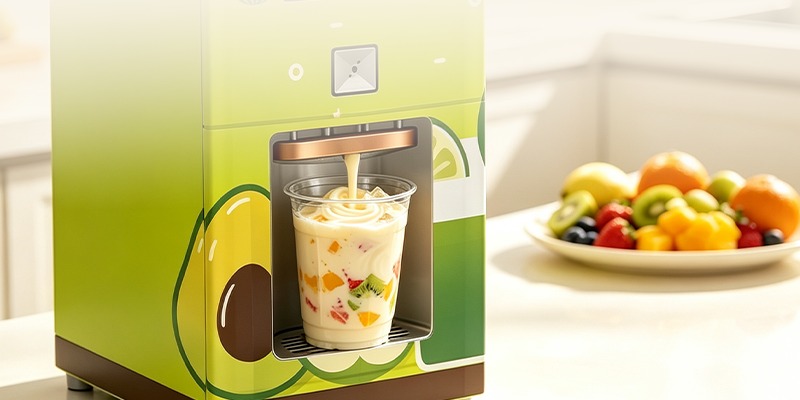
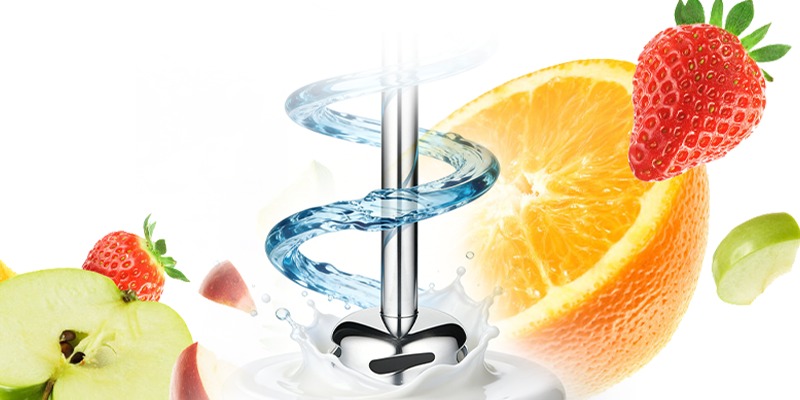
The high-speed head blends directly in the cup the customer takes away, so nothing is poured from a jug and nothing is lost in a second container. Frozen fruit goes to a creamy texture in under a minute.
Blending in the cup also removes a cleaning step between orders. There is no pitcher to rinse, which is the part that quietly kills smoothie programmes in busy stores.
The Blade Cleans Itself After Every Cup
After the cup comes out, the head runs a self-clean cycle before the next order can start. Cross-contamination between an apple cup and a berry cup is not left to a staff member remembering to rinse.
For a store that sells food, this is the detail an inspector asks about, and the detail that decides whether a machine can sit on the front counter at all.
The Code on the Cup Is the Receipt
Look at the label: one QR code per cup, printed when the order is placed. It opens the machine once, records the sale, and cannot be reused. Lost cups can be voided and reissued without a paper receipt.
For an operator running several stores, that code is also the data. You see which flavour sells at 7 a.m. and which one sits until closing, which is how the cup range gets trimmed instead of guessed.