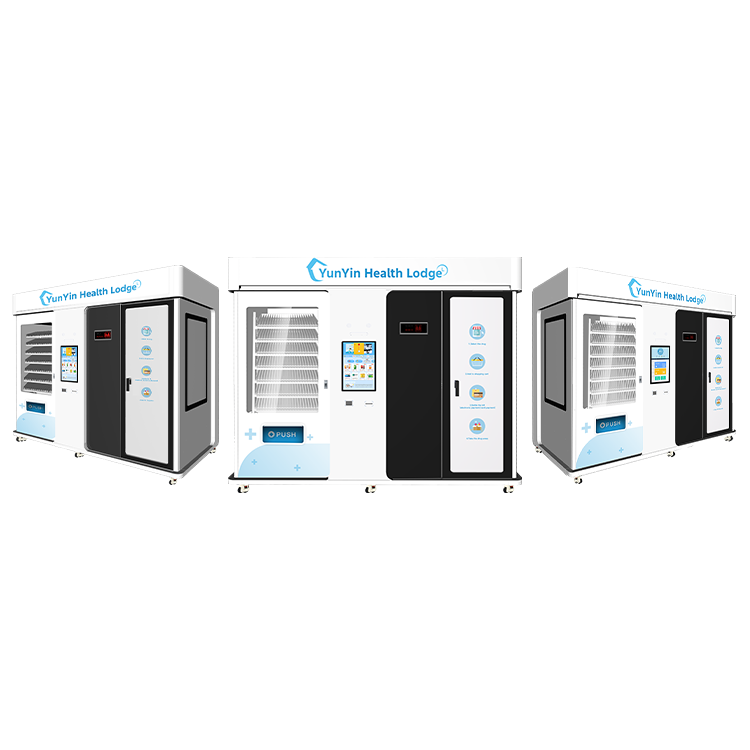
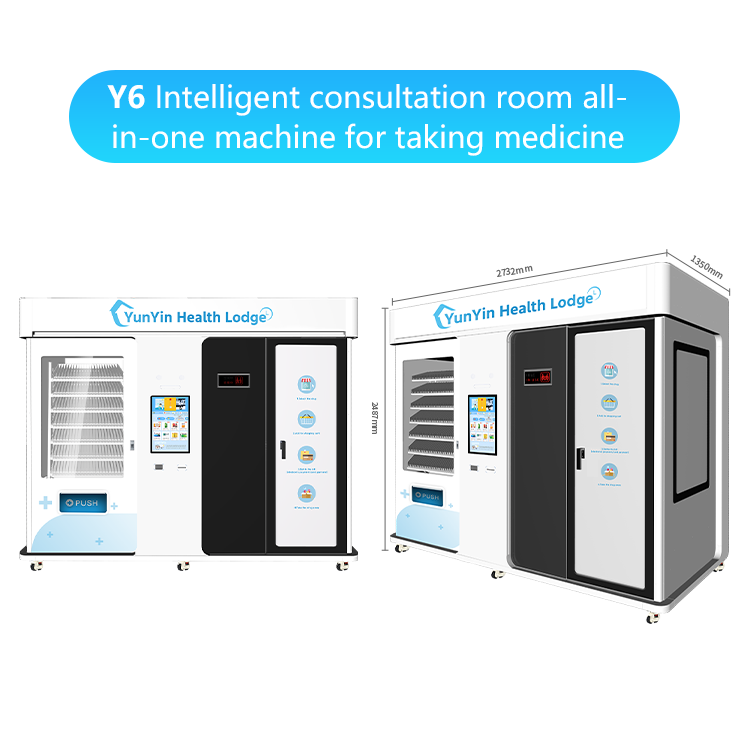
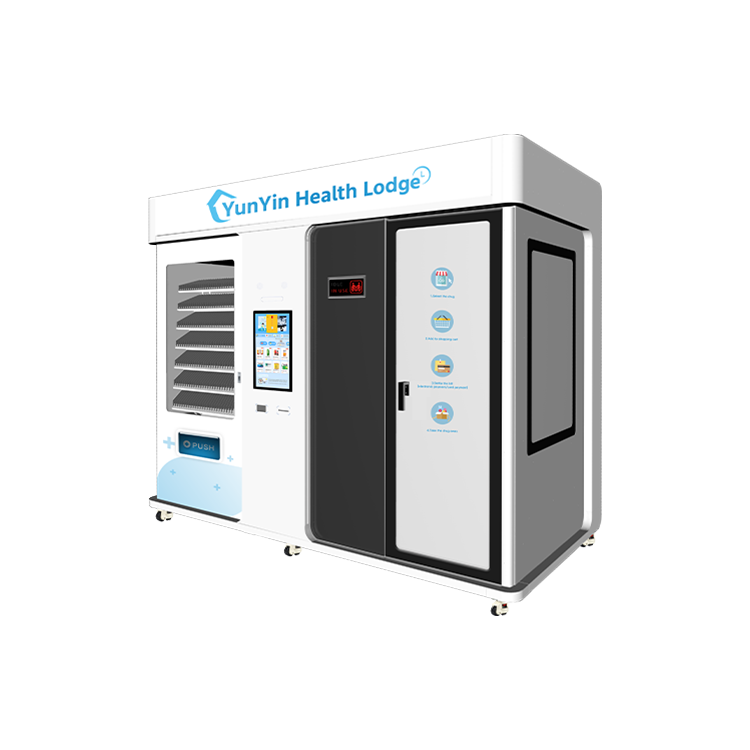
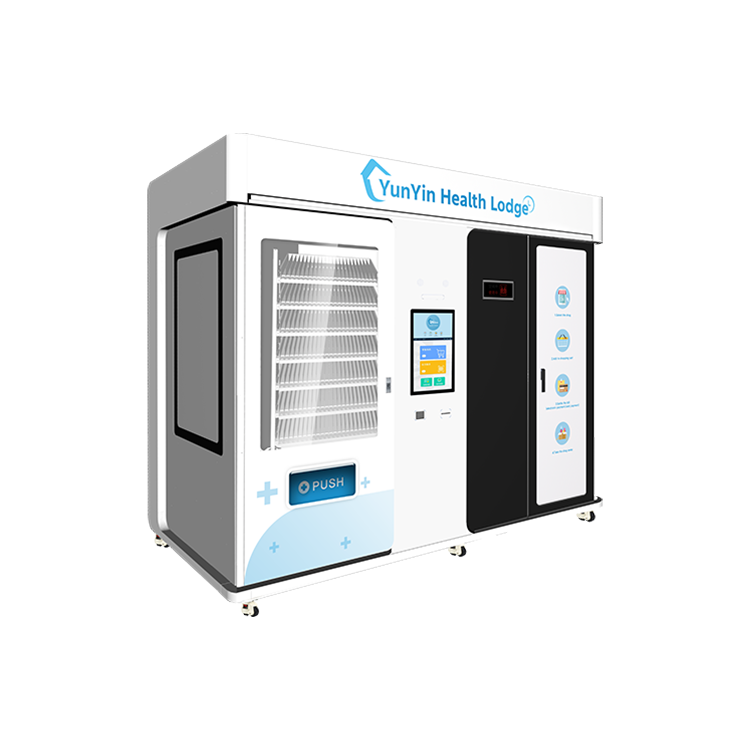
Y6 Intelligent Consultation Room
Size: 2487(H) × 2732(W) × 1350(D) mm
Weight: About 1000 kg
Display: 21.5-inch, 1920 × 1080 pixels, brightness 250 cd/m²
Touch Screen: 21.5-inch capacitive multi-touch, touch response time < 15 ms
Main Board: Android main board, Rockchip RK3568, 16 GB ROM, 2 GB RAM
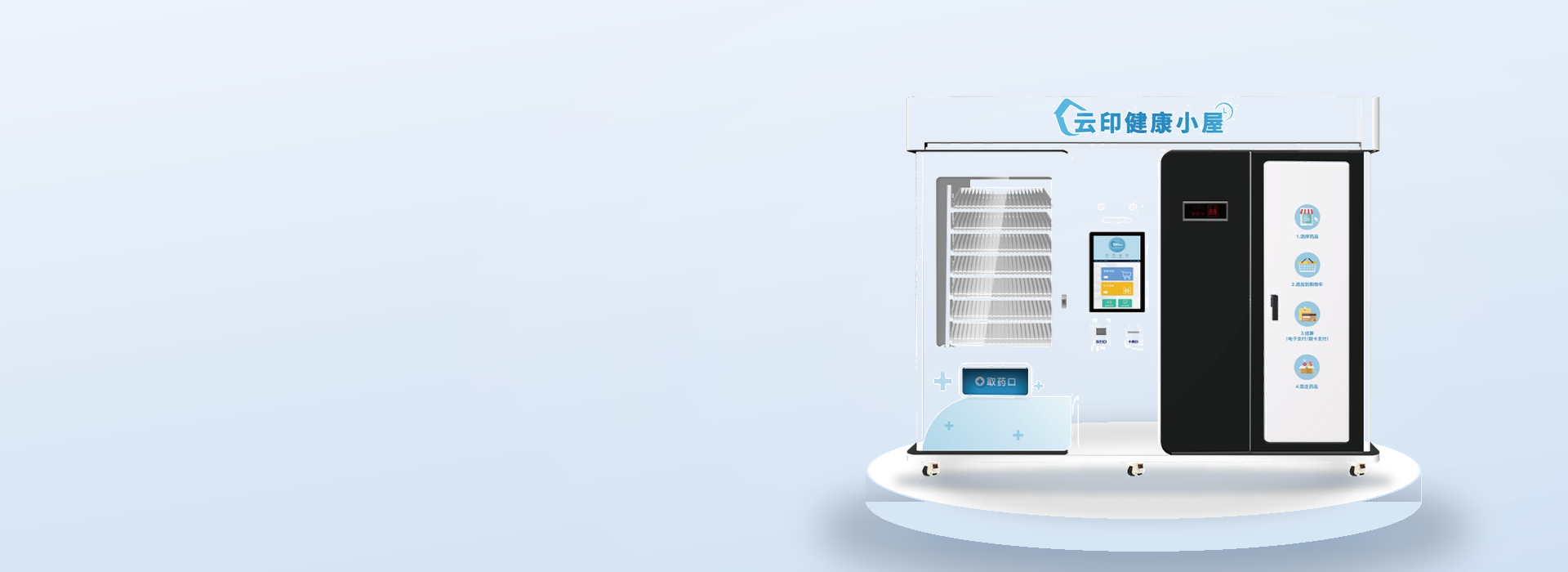
Consultation Cabin: Enclosed sound-insulated cabin with video consultation terminal and electronic medical record interface
Entry & Security: Smart lock with real-name registration, safety hammer, remote-controlled LED lighting
Disinfection: UV disinfection light, one disinfection cycle per user
Ventilation: Professional ventilation with temperature sensor for indoor comfort
Glazing: Fully tempered high-clarity glass
Menu Operation: Capacitive touch screen purchase, QR / barcode reverse scanning, hospital card and ID card
Payment System: Cash / credit card / e-wallet payments supported
Network: WiFi / 4G IoT card / Ethernet connection
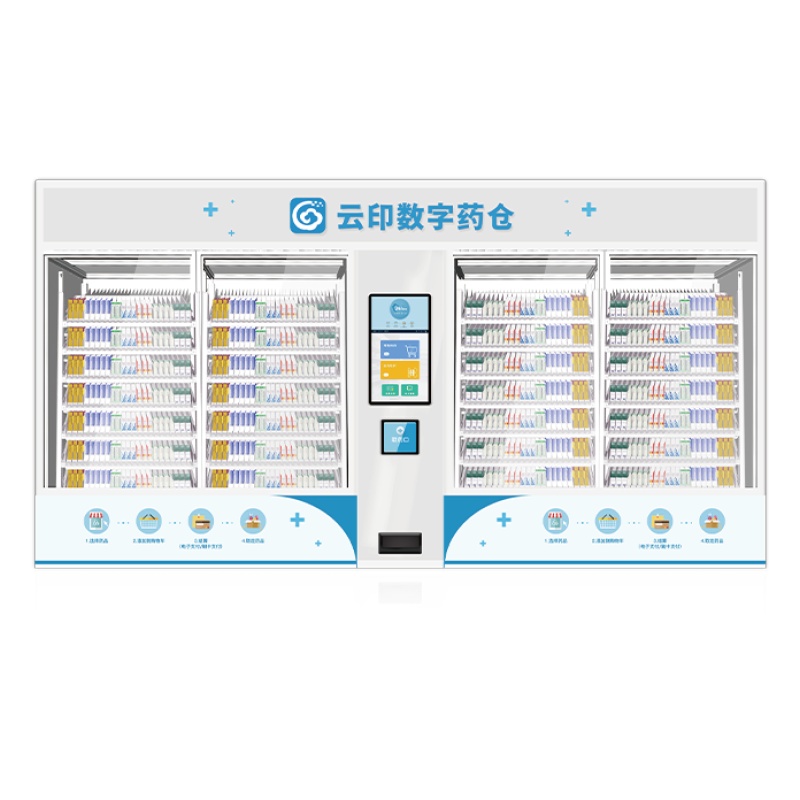
Cargo Channel Quantity: 7 layers × 23 columns, 161 SKUs in total (adjustable and customizable)
Temperature System: Constant-temperature compressor module at 12–20°C, humidity 35–75%
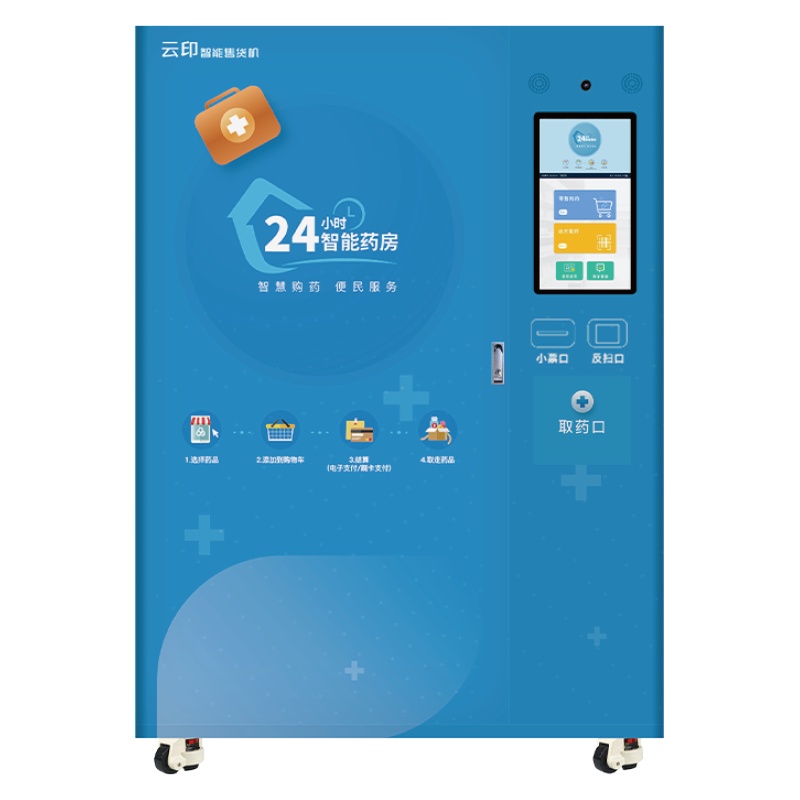
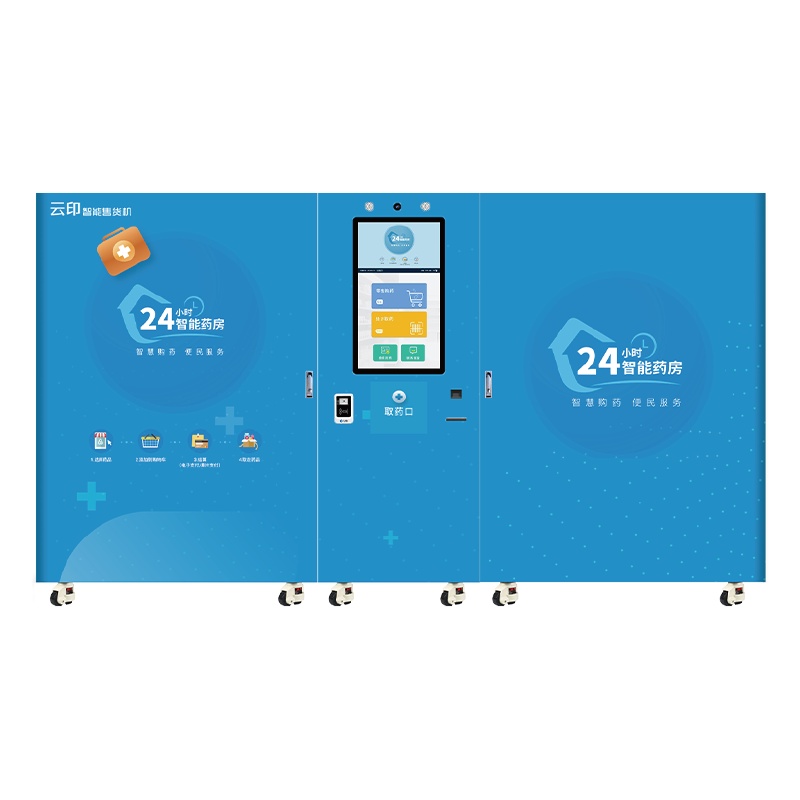
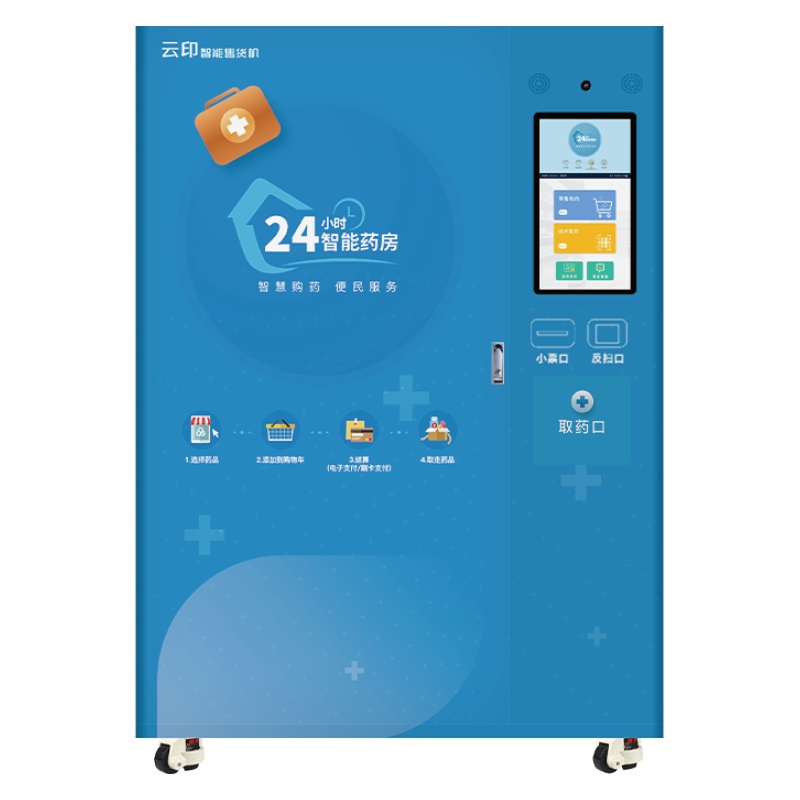
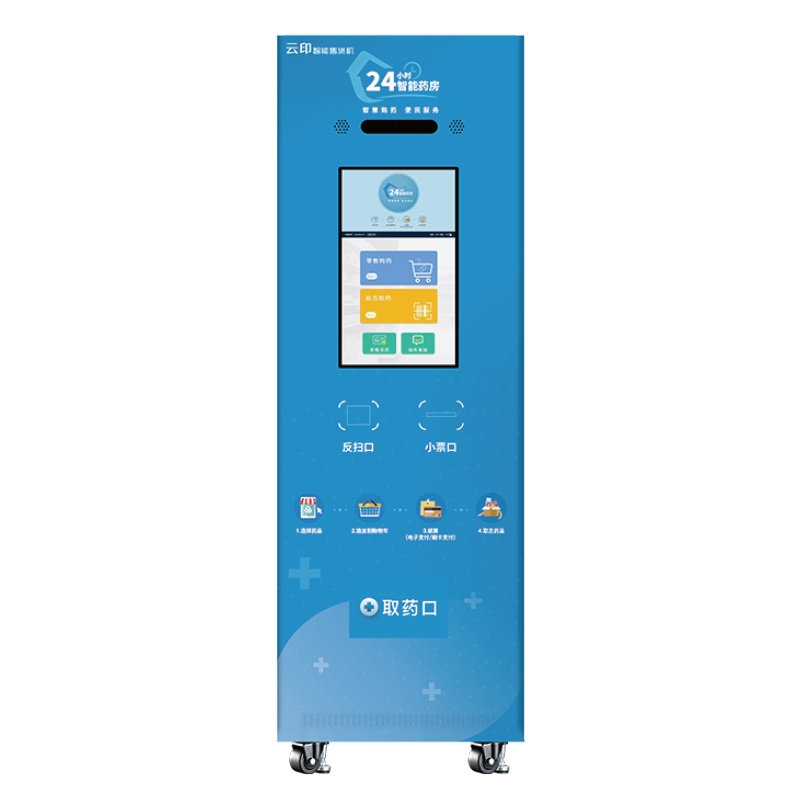
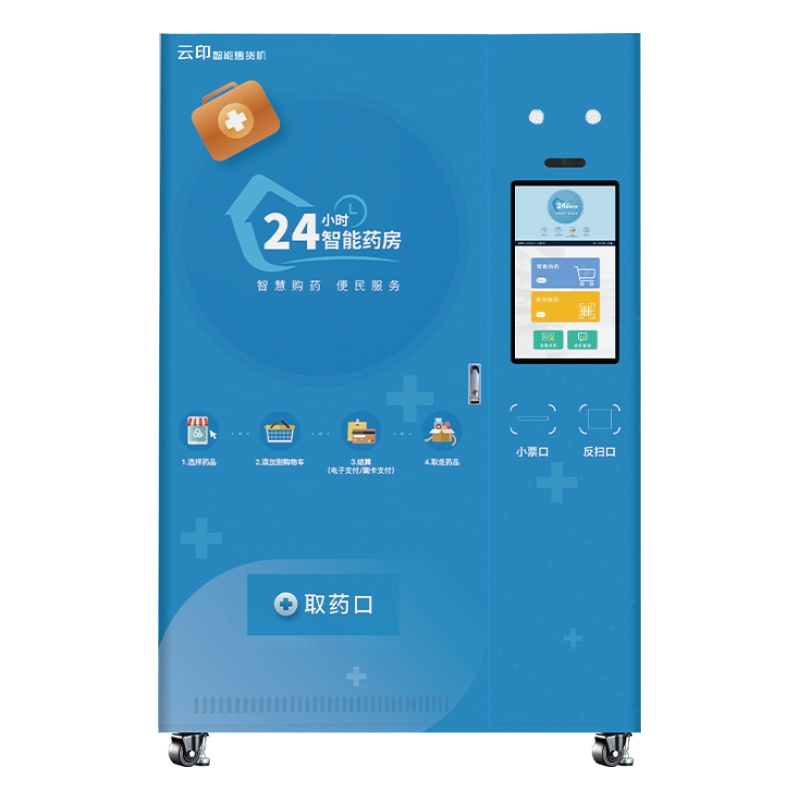
Machine Front, Actual Unit
Front view of the Y6 Intelligent Consultation Room: screen, cabinet body and pickup port at working height. Tell us the site and we will film the unit running in our plant — replenishment, dispensing, pickup — not a stock clip.
Photos are of the actual cabinet. If you want to see it running before placing an order, we can arrange a live walk-through from the plant.
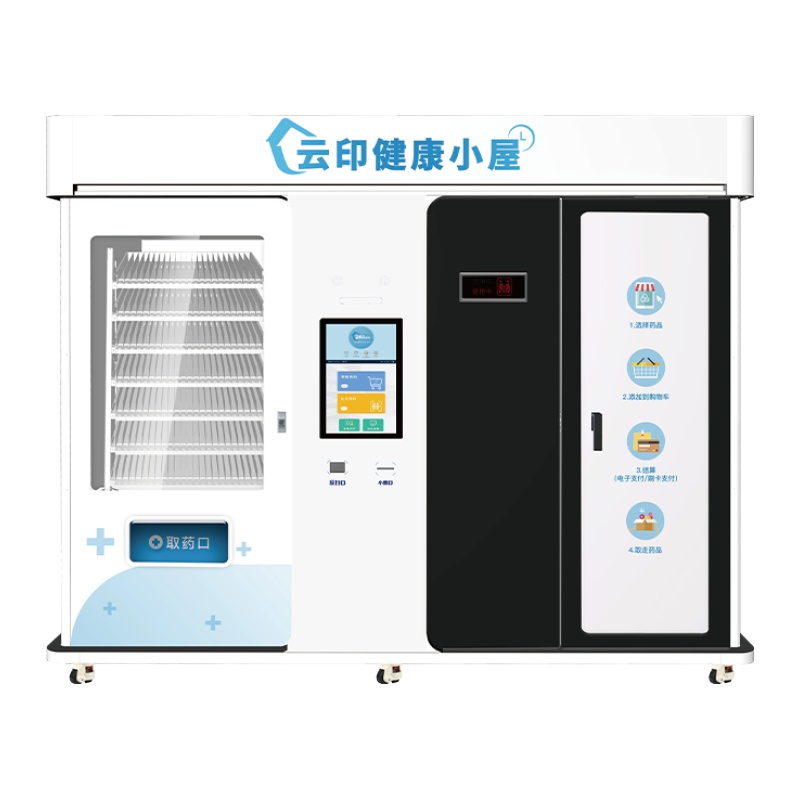
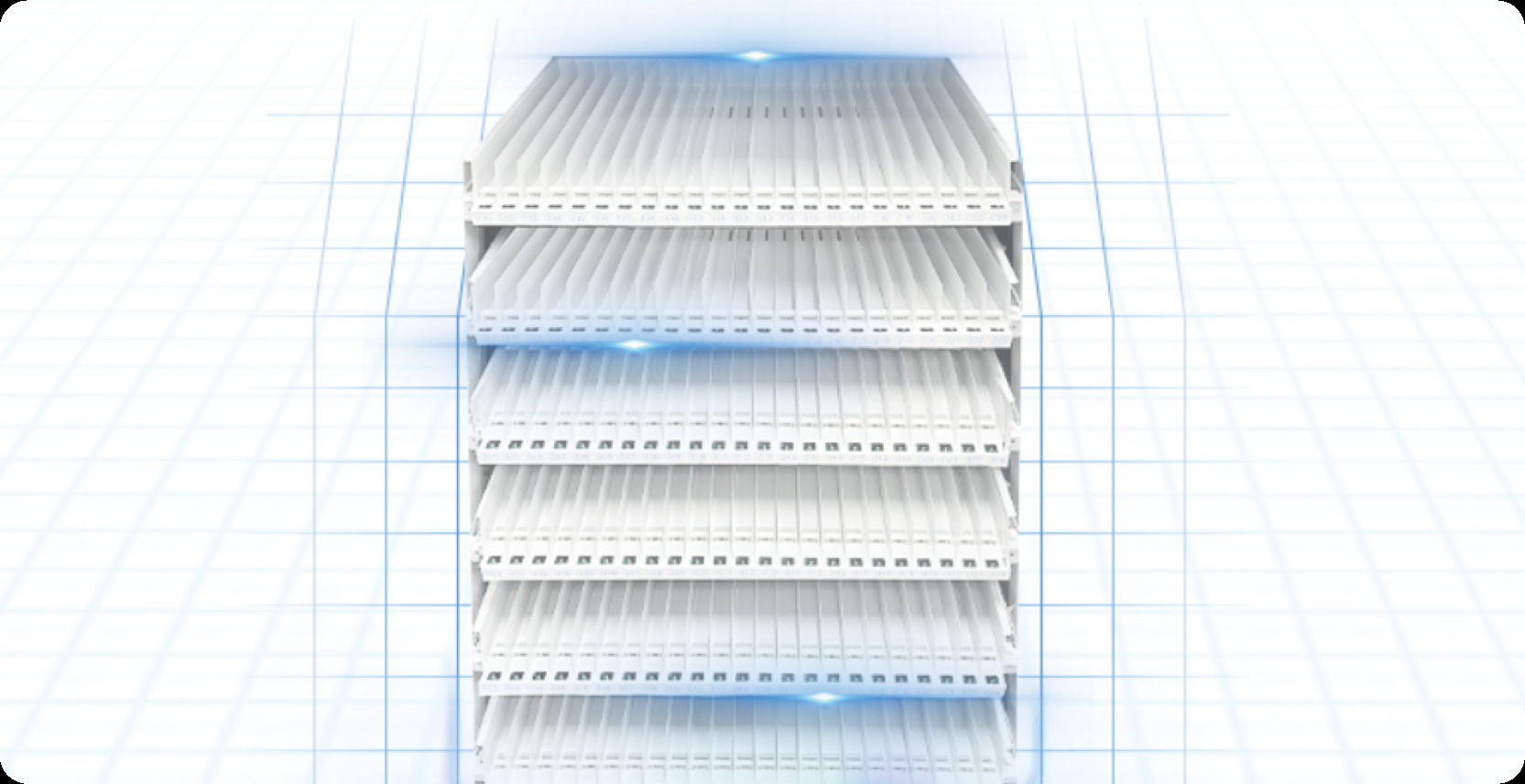
The Shelf Tells the Nurse Which Column to Fill
Scan the box and the column that needs it lights up. No printed pick list, no walking the shelf twice, no paracetamol ending up where the ibuprofen should be.
161 SKUs inside a 2.7 m enclosure: the front half is the consultation cabin, the back half is the medicine.
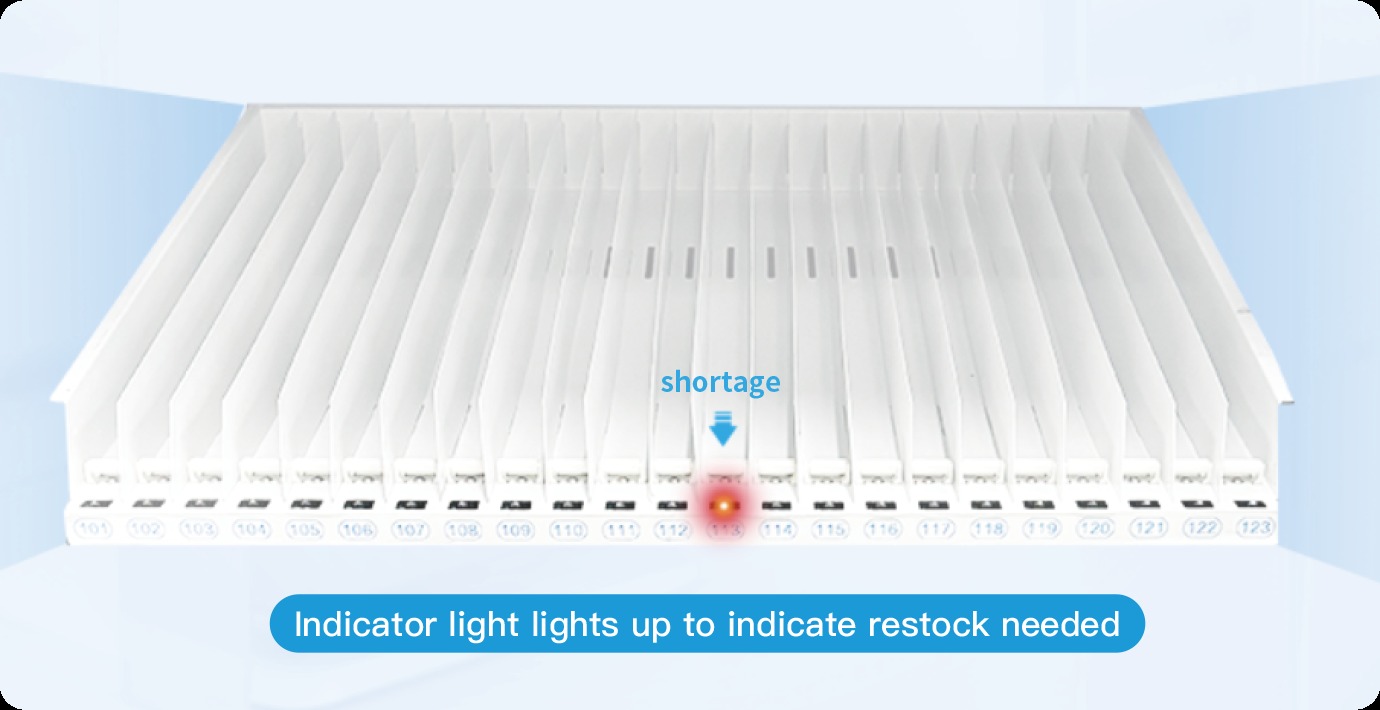
A Shortage Light Nobody Can Walk Past
When a channel runs out, the indicator on the door turns on before anyone opens the cabinet to look. Restocking starts from the light instead of from a stocktake.
A light sounds like a small feature until you run twenty cabinets. Then it is the difference between a four-hour refill route and a six-hour one.
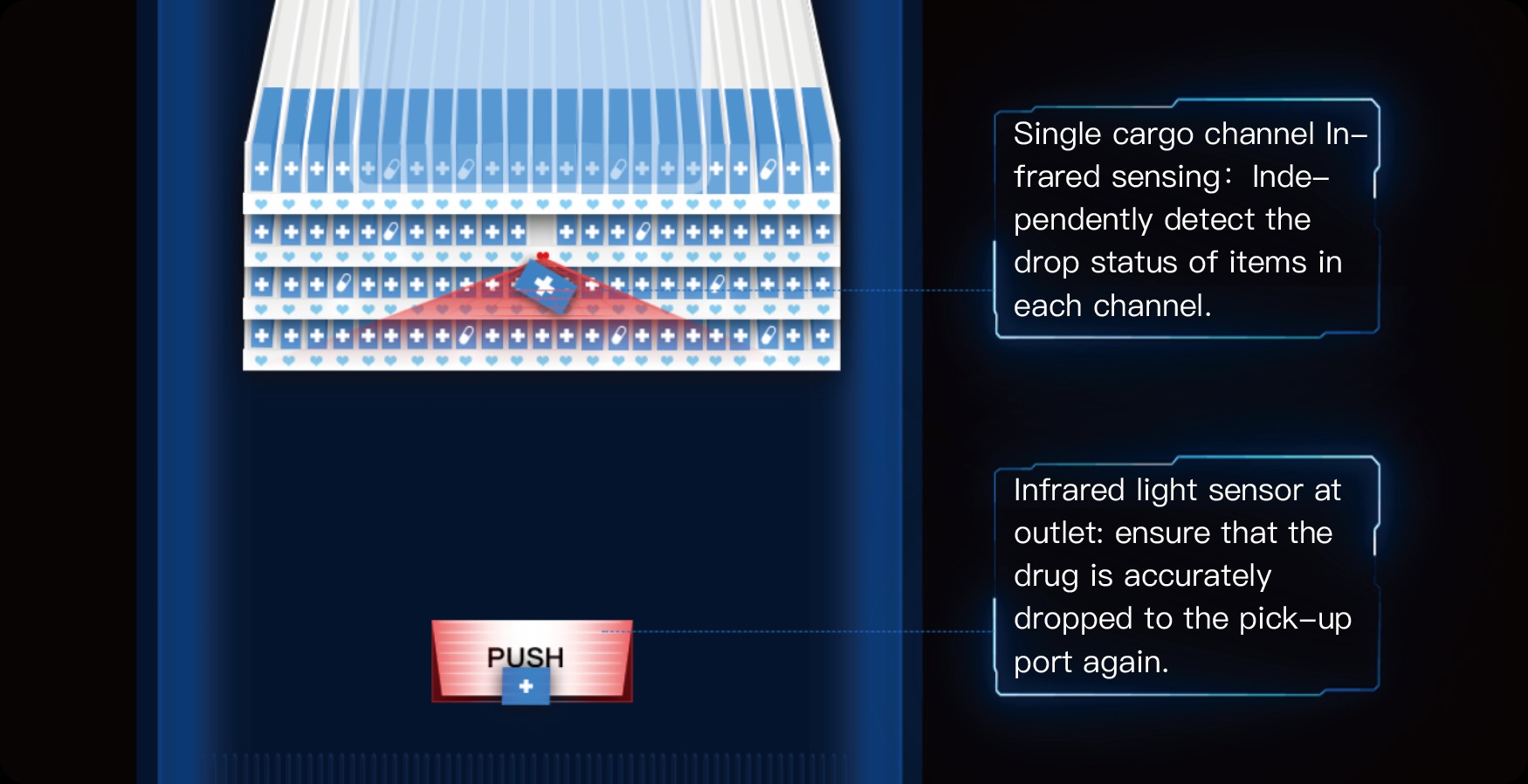
Every Channel Counts Its Own Stock
Each column carries its own infrared sensor and reports on its own, so the system knows that column 7 is empty while column 8 still holds twelve boxes. The picking arm then delivers the right box to the pickup port instead of guessing.
That is what prevents the two classic failures: sending the arm to an empty channel, and handing out a box the patient did not order.
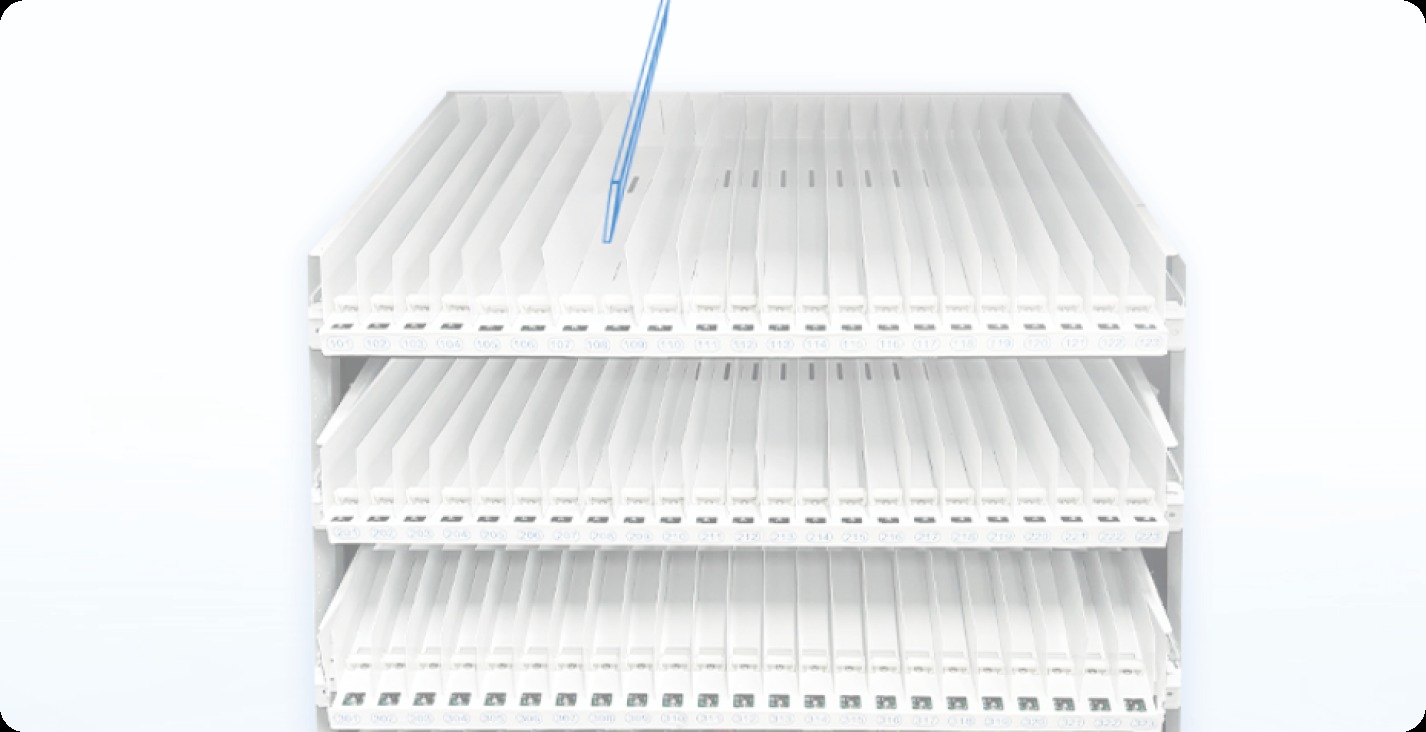
Merge the Columns When the Range Changes
The channel board supports column merging, so two narrow columns become one wide one when a product changes packaging. Nothing is welded in place and nothing needs a new cabinet.
Pharmacy ranges change every season. A cabinet that cannot follow the packaging ends up half full of gaps by the second year.
Five Track Types, One Cabinet
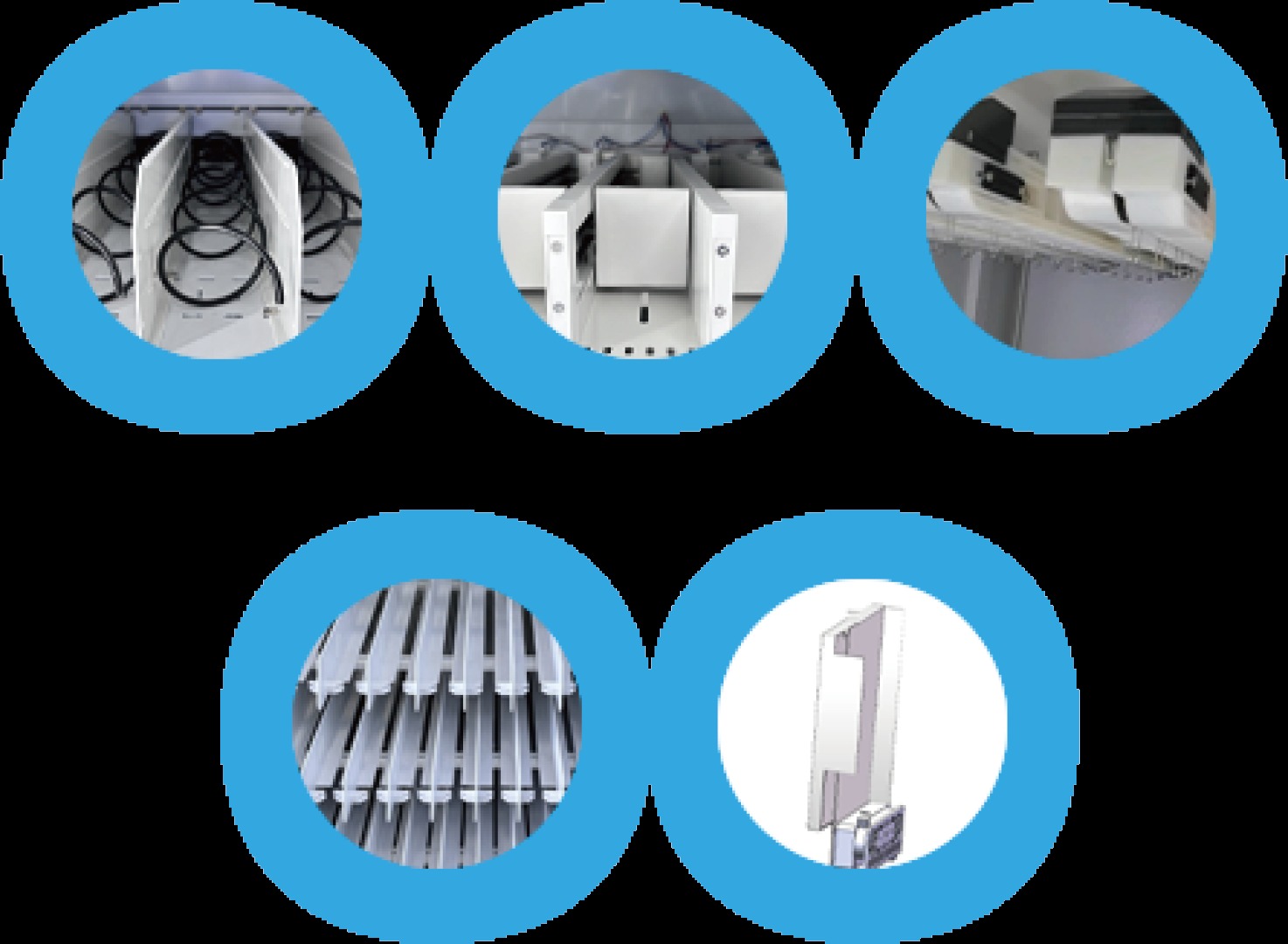
Spring, crawler belt, push plate, hanging hook and dedicated pharmaceutical track — five ways to hold a product, chosen per SKU rather than per machine.
161 SKUs behind the consultation wall, with tracks chosen for outpatient dispensing rather than retail browsing.
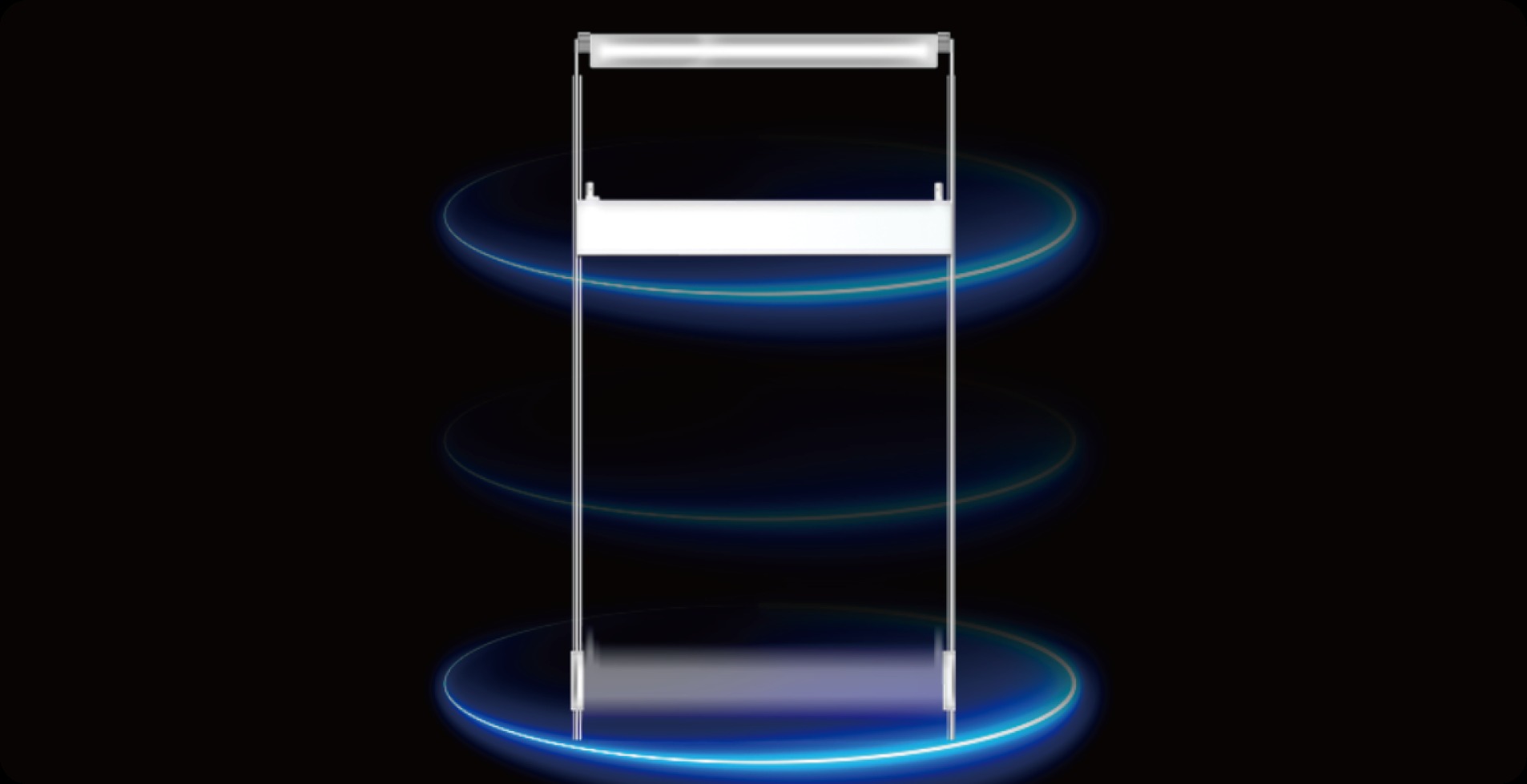
The Lift Carries the Box, Never Drops It
The platform rises to the channel, receives the box and carries it down. Nothing falls seven layers, which for glass vials, blister packs and boxed liquids is the difference between a sale and a refund.
It is also quieter. A machine that clatters on every dispense gets complained about in a hospital corridor at night.
50 mm of Foam and a Heated Door
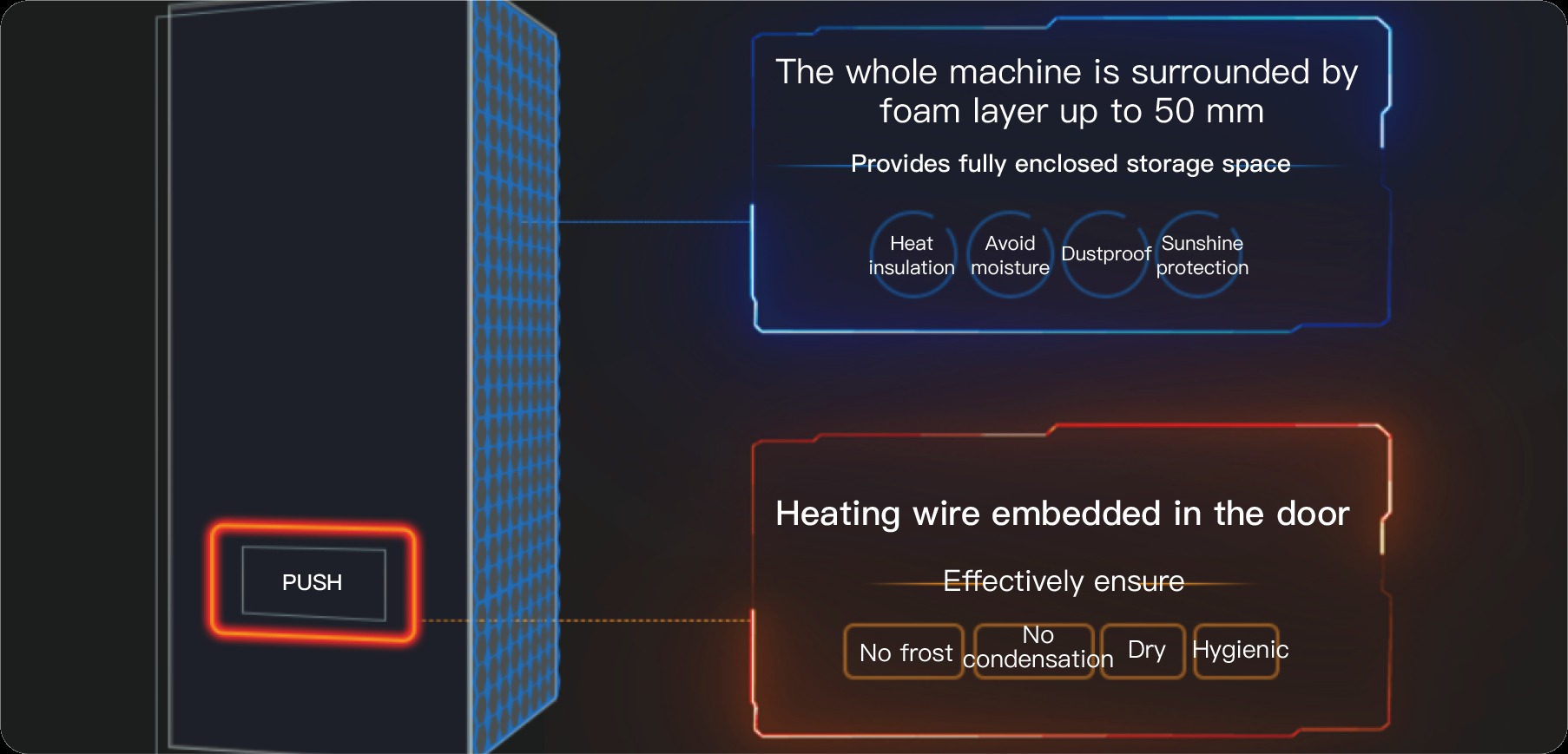
The whole cabinet is wrapped in a 50 mm foam layer and the door carries a heating wire, so the glass stays clear and the inside stays dry. Temperature stability is what keeps a medicine inside its labelled storage condition.
Condensation is not cosmetic here. A fogged door hides the stock, and a damp cabinet is what an inspection writes up.
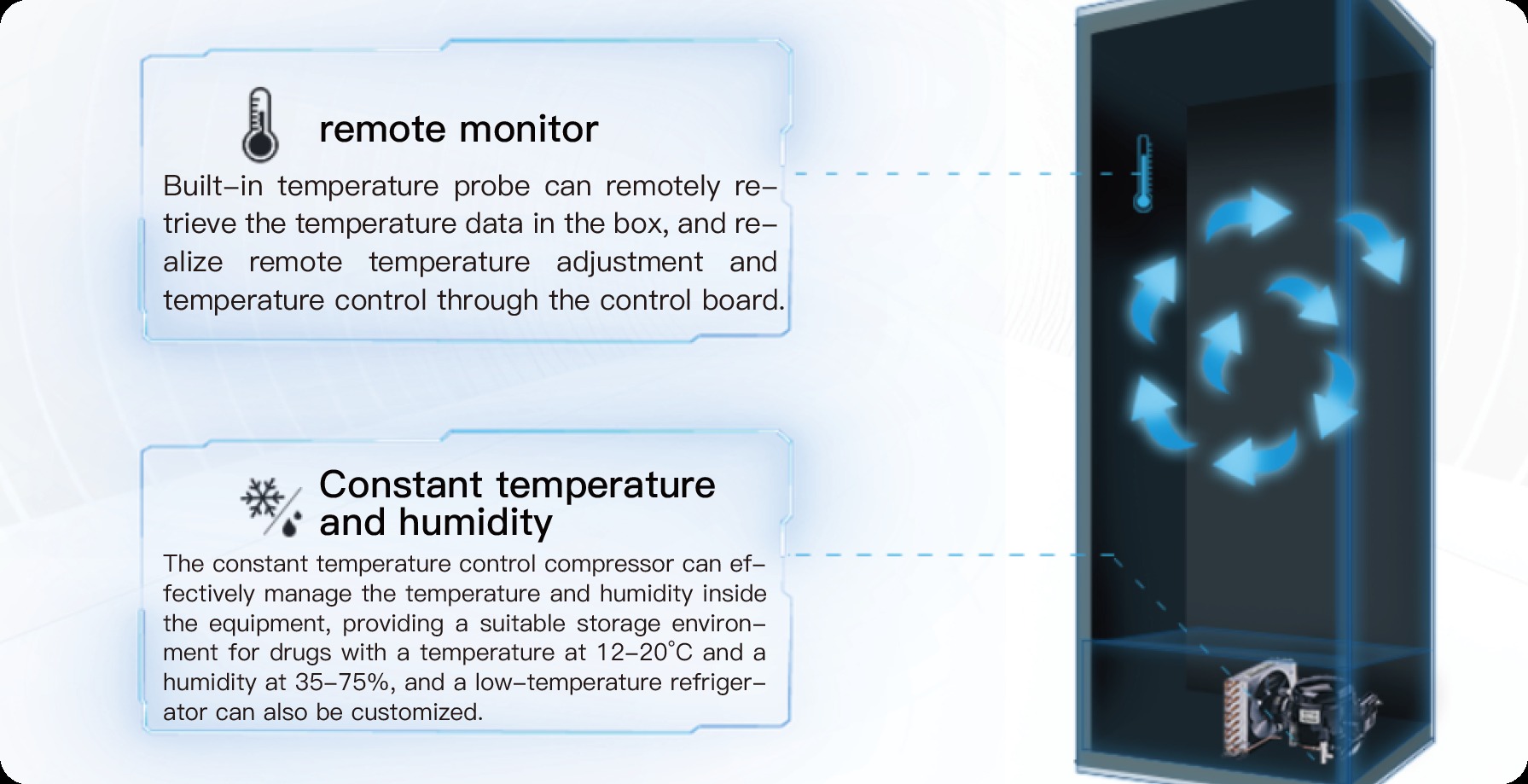
12–20°C, 35–75%, Watched From a Phone
An independent temperature and humidity module holds the cabinet at 12–20°C and 35–75% RH, with the compressor driven by a dedicated board. The probe reports remotely, so the reading arrives before anyone opens the door.
A closed cabin needs its own environment control and the medicine side needs its own — both report to the same backend.
Pay the Way the Patient Already Pays
Card, e-wallet, Alipay, WeChat Pay, medical insurance card and the local O2O platforms — the payment layer is configured for the market rather than fixed at the factory.
With the 4-in-1 card reader and the O2O interfaces, the cabinet can take an online order and hand the medicine out at the door. That is how a pharmacy competes with delivery apps instead of losing to them.