
If you’re considering equipping your business premises with vending machines, what really makes people hesitate is often not whether to buy, but which type of vending machine to choose. Choosing the wrong type may mean unused capacity, mismatched products, or even increased restocking and maintenance costs. This article will help you establish a clearer selection approach from aspects such as product types, consumer needs, and venue conditions.
Don’t Look at the Machine First—Determine What Problem You Need to Solve
When many people buy a vending machine for the first time, they habitually look at the machine first and then consider what they plan to sell. In reality, this order can easily make the selection process complicated.
Whether a machine can make money depends not only on the machine itself, but on whether it can match your products and business model. If you plan to sell bottled beverages and packaged snacks, versus if you plan to sell breakfast, hot food, fresh food, or even provide shoe cleaning services, the equipment needed is completely different.
Therefore, before choosing a vending machine, you need to think through three questions: What do you plan to sell? Where do you plan to sell? Why would consumers buy here?
For example, if you plan to place the equipment in an office building, mainly selling beverages, coffee, snacks, and other products, a conventional beverage and snack vending machine may already meet your needs. If the venue is located in a factory or industrial park, where consumers make concentrated purchases of food and beverages during specific time periods, then capacity, restocking efficiency, and product mix may be more important than the machine’s appearance.
If your business is selling bento boxes, breakfast, cooked food, and other products that require temperature management, ordinary beverage and snack machines are clearly not the right choice. In this case, you need to find solutions from fresh food or hot food vending machines.
So the first step in vending machine selection is not choosing the machine, but clarifying your business needs.
Choose Vending Machines Based on Product Type
Product is the most direct factor determining the type of vending machine.
When facing different types of vending machines, you should first ask yourself: What do my consumers need to buy, or what do they need to accomplish through the machine? After thinking through these questions clearly, the equipment type will actually become much clearer.
Beverages and Snacks
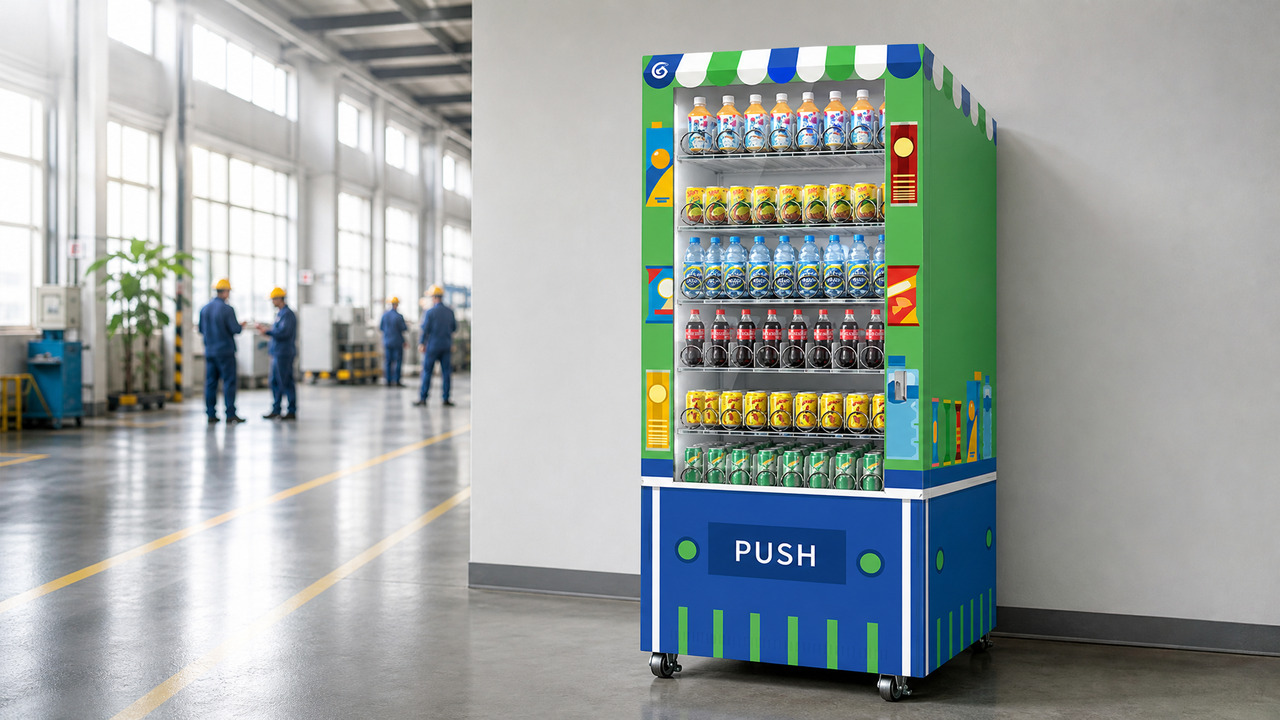
Beverages and packaged snacks are a relatively common product mix in vending machines. If your products are mainly standard packaged items such as bottled water, soda, juice, energy drinks, potato chips, chocolate, and biscuits, then beverage and snack vending machines are usually easier to match.
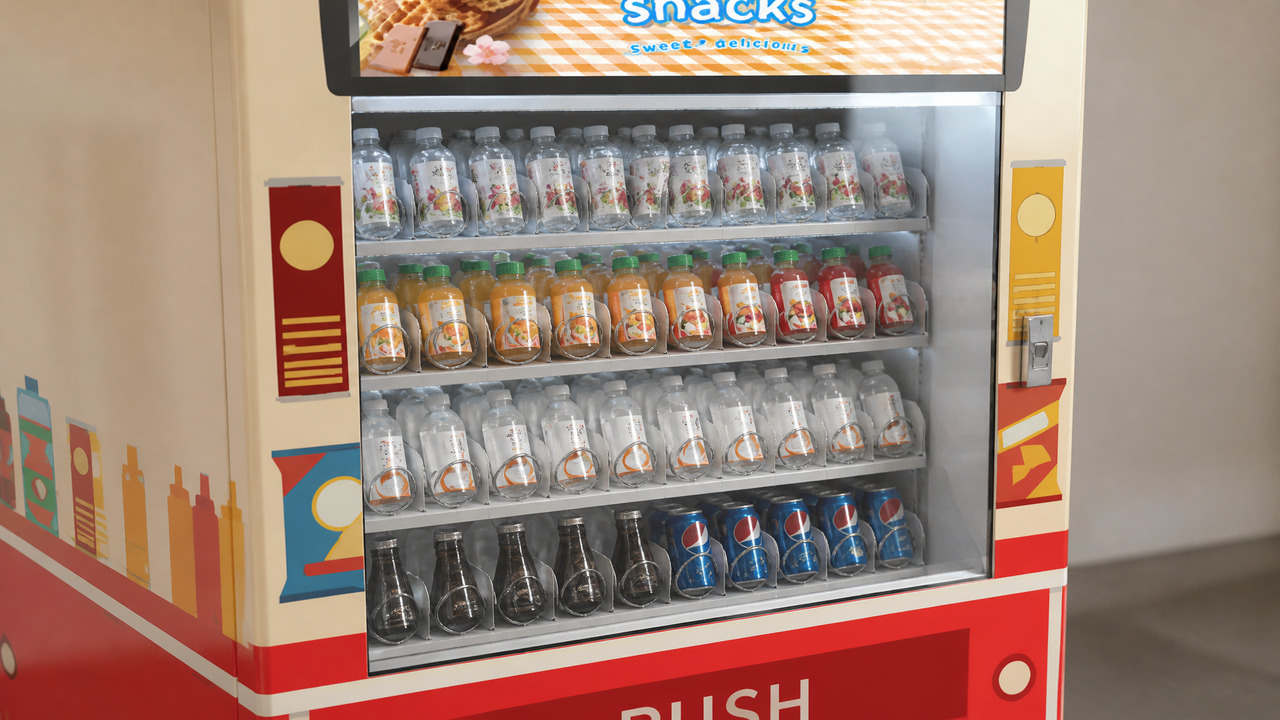
However, even if they are all beverages and snacks, you cannot simply assume all machines are the same. Beverages usually require considering the size and weight of bottled and canned products, and different product specifications require different coil designs. Snacks involve packaging size, shape, and how the product drops. If you have a wide variety of products, you need to pay attention to whether the internal coils are flexible enough; if you are selling a few high-volume products, you can focus more on the inventory capacity of each individual product.
This is also why when choosing a machine, you should not only ask how many products this machine can hold, but further understand which products it can hold, how many of each product it can hold, and whether restocking is convenient—these details will ultimately affect operational efficiency.
Fresh Food and Hot Food
If your products shift from beverages and snacks to rice balls, bento boxes, sandwiches, breakfast, hot food, and other food items, the selection criteria will change significantly. These products are more sensitive to storage conditions, temperature control, and sales time. The machine not only needs to complete product sales but also provide the appropriate temperature environment based on food characteristics.
For this type of business, you cannot simply use ordinary snack vending machines to replace fresh food or hot food equipment. The storage requirements of the products themselves should become an important basis for choosing the machine structure.
Recycling Business
If your business is not selling products but environmental recycling, then traditional product vending machines clearly cannot meet your needs. At this point, you need to consider reverse vending machines, that is, equipment specifically designed to receive items deposited by consumers.
The core of a recycling machine is not how many products it can hold, but whether it can accurately identify, receive, and process items deposited by users. After consumers deposit eligible bottles or cans into the equipment, the machine can determine information such as the type and material of the item through the identification system and decide whether to accept it based on preset rules. For projects that need to set up deposit returns, coupons, or other reward mechanisms, you also need to further consider whether the equipment can integrate with the corresponding reward process.
Therefore, if you plan to deploy equipment in supermarkets, shopping malls, communities, public places, or other recycling points, when choosing you should not only focus on the machine’s appearance and capacity, but also focus on understanding which recyclables it supports, how the identification method works, and whether the post-recycling data and reward processes are easy to manage.
Cleaning and Care Business
If your business is providing cleaning and care services to consumers, then when choosing equipment you need to switch to another approach.
Consumers are purchasing a cleaning or care service, so the core of the machine should be judged around the cleaning process, processing efficiency, and user experience.
Taking helmet, shoe, and clothing cleaning as examples, different items have different structures and cleaning needs. For example, shoe care equipment can combine treatment processes such as atomization sterilization, drying, and negative ion purification to provide users with a more complete care service. For items such as helmets that require focused treatment of the internal environment, you need to pay attention to whether the equipment’s internal cleaning, sterilization, and drying processes can match actual service needs.
This type of equipment is especially suitable for placement in motorcycle shops, car washes, shopping malls, sports venues, communities, and other places where consumers have clear cleaning and care needs. When choosing, you can first determine the main service targets, then judge which items the equipment can process and how long one service takes.
Determine Machine Scale Based on Your Business Model
After determining the products, the next step is to determine how large the machine needs to be.
Many people will directly pursue large capacity because it seems that a large machine can hold more products. But larger capacity does not mean it is more suitable for your business.
If your equipment is placed in a small venue where only a few dozen consumers pass by each day, a large-capacity machine may remain in a low inventory turnover state for a long time. The machine takes up more space and requires higher capital investment, but sales volume does not grow in sync.
Conversely, if the machine is placed in places with high foot traffic such as large factories, transportation hubs, schools, and office parks, insufficient capacity may lead to frequent restocking. When popular products are out of stock, it will directly affect sales opportunities. So, you can determine machine scale based on expected foot traffic and product sales volume.
If you don’t have historical sales data yet, you can first estimate based on factors such as venue population, opening hours, consumer dwell time, and whether there are competing retail points nearby. When starting, don’t fill all products at once either. Observing which products turn over quickly through actual sales data and then gradually adjusting the product mix is often more prudent than pursuing maximum capacity from the start.
Different Venues Suit Different Vending Machines
The same product placed in different venues may also result in changes to machine selection.
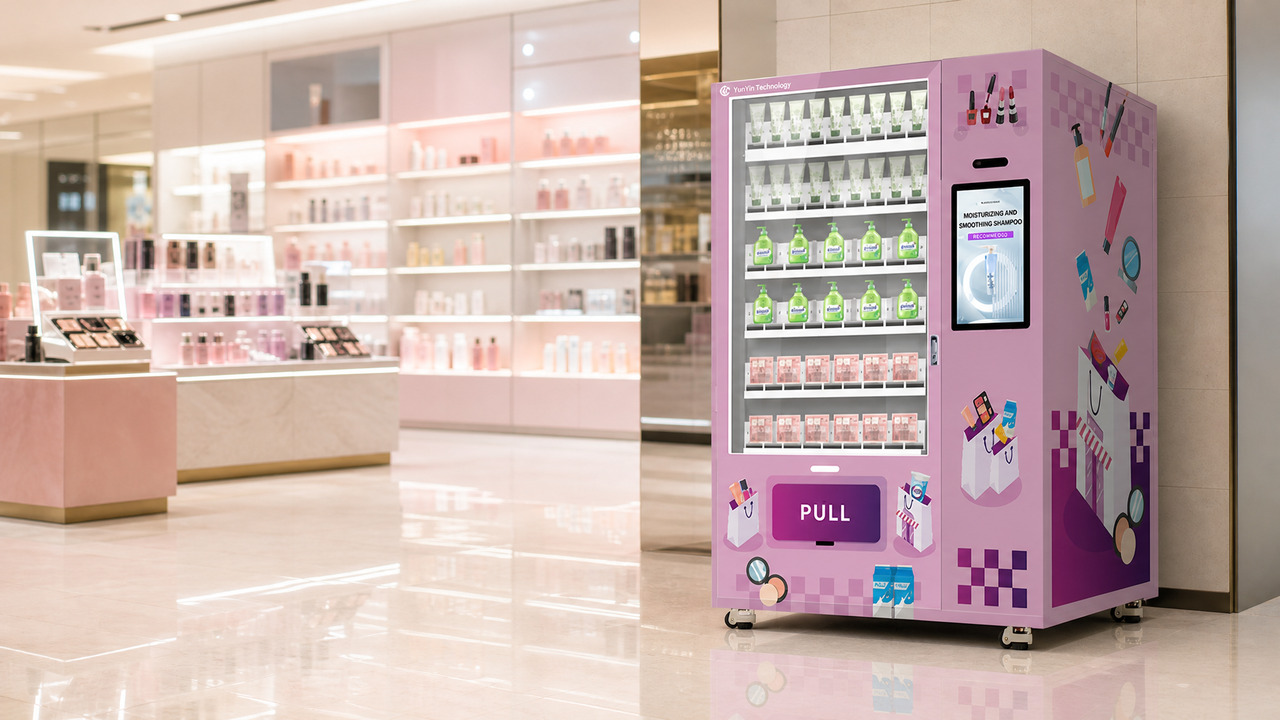
Office buildings are more suitable for products such as beverages, snacks, and breakfast; schools may need beverages, snacks, and some food items; factories focus more on high-frequency essential products and larger inventory capacity; hotels, apartments, and communities may need to cover a wider range of daily necessities.
If your venue space is limited, you also need to consider equipment size and installation method.
Ordinary floor-standing vending machines require a certain amount of floor space, while some small or wall-mounted devices can play a role in space-constrained environments. For locations such as corridors, reception desks, and rest areas, the equipment’s width, depth, door opening direction, and user pickup space should all be confirmed in advance.
Here is a question that is easily overlooked: just because the machine fits doesn’t mean it’s convenient for users to use.
When planning the location, you also need to consider whether consumers can dwell, pay, and pick up products, and whether congestion is likely to form in front of the machine. Especially in densely populated areas such as office buildings, schools, and stations, the actual usage space of the equipment is also part of the selection.
Payment Methods Should Also Be Considered in Advance
The payment system cannot be considered after the machine is determined, as consumers are already used to using different ways to make payments.
If your business is targeting different countries and regions, you need to pay even more attention to the fact that payment habits vary across countries and regions. Some consumers are used to bank cards and contactless payments, some markets still have cash payment needs, and some places use local common mobile payment methods.
So, firstly, you need to understand the target market when choosing a vending machine and then check which payment methods the equipment can be configured for.
Ideally, the payment system would have some configuration flexibility rather than there being one fixed solution to use. So when you change markets or expand into new sales areas, the flexibility of the equipment will be greater too.
Backend Management Capability
If you have only one vending machine, you probably aren’t thinking much about backend management. But when the number of machines is ten, dozens or more, the situation will be quite different. The more machines there are, the higher the manual management cost will be if each machine needs to check the inventory, sales and equipment status manually.
Therefore, when choosing commercial vending machines, you need to know whether the equipment supports back-end management, and what data and operations can be provided by the back-end.
For example: Can you see the sales for different machines? Can you read inventory changes? Are equipment anomalies detectable on time? Can price/product information be changed remotely? Can we handle multiple machines in a uniform way?
These features won’t have a direct impact on how many products your machine sells on a daily basis, but they will impact your operational efficiency.
Especially if you want to use vending machines as a long-term business, and not just buy one machine for personal use, backend management capability should be a key selection criterion, not an added feature.
Don’t Overlook the Machine’s Post-Deployment Operating Costs
Many people, when buying vending machines, pay the most attention to the price of equipment. But after really long-term operation, you will find that the price of the machine is only one part of the cost. The final business results are affected by the frequency of restocking, labour time, transportation costs, power consumption, maintenance fees, spare parts replacement, and product loss.
If you have two machines that cost about the same to buy, but one has a capacity that is better suited to your products and can reduce the need to restock, it may not be a bad option. Conversely, a less expensive machine that needs frequent replenishment and has poor product compatibility may have higher long-term operating costs. Rather than just comparing the cost of each machine, compare which machine is a better fit to your actual way of operating.
If you want to operate vending machines in the long term, you can determine equipment costs, forecasted sales volume, restocking frequency, labour input, and maintenance costs in combination. This way the result is generally more valuable as a reference than just comparing purchase prices.
Standard or Customized Models? It Depends on Your Business
Custom machines are not for every business. If your products are relatively standard and your sales channels are mature, it is generally easier to choose mature standard models. The machine structure has been used for a long time and will ease procurement, deployment and maintenance.
However, if you have products of special sizes, different coil needs, or your brand requires a unified design appearance, then customisation might be more appropriate.
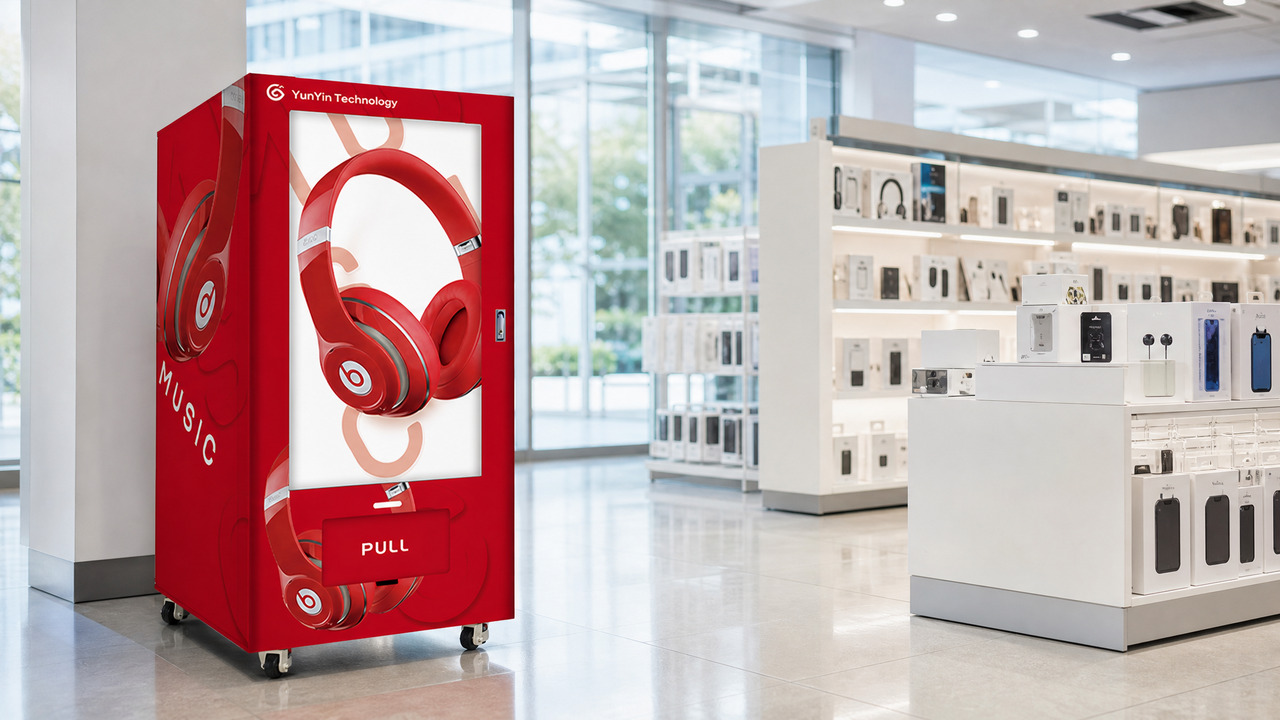
Some of the enterprises may want the machine to use their own brand logo and the colour of appearance. Some projects need to adjust the product coils. Some special retail businesses may require different sizes, payment systems or functional configurations.
The point is not that the more customisation the better, but that the customisation content can solve your actual problems.
If your needs are already met by standard machines, there’s no need to add complexity for the sake of customisation. If your business has special requirements then the ability to provide OEM/ODM services will be an important factor in choosing a supplier.
Final Thoughts
It’s not about the machine with the most features when picking a vending machine, but the type that is right for your products, venue and business model. Different needs require different solutions. From drinks and snacks to fresh and hot food, from recycling equipment to cleaning and care equipment. Yunyin focuses on the R&D and manufacturing of smart vending equipment, and can provide corresponding vending machines and OEM/ODM solutions for different businesses, helping you gradually expand from a single device to a more complete unmanned retail business.
FAQ
What information should be determined first when purchasing vending machines for the first time?
It is suggested that you first decide on the products that you are going to sell, the place where you are going to use it, the expected footfall and the business model and then decide the type of equipment. Also need to think about machine size, restocking method, payment needs and post-deployment maintenance ahead. The more transparent the information, the easier it is to weed out equipment that is really right for the project.
Is larger capacity always better for vending machines?
No. The capacity should be in line with the actual sales volume. Large capacity machines could result in waste of space and capital if the footfall in the location where the equipment is placed is limited; if the footfall is high, lack of capacity may increase the frequency of restocking. A more appropriate approach would be to base capacity on projected sales volume and rate of product turnover.
Can vending machines be configured according to different national markets?
Yes. The equipment generally needs to be configured according to the target market, because the payment methods, language, network connectivity and consumer usage habits vary from country/region to country/region.
If my products have special sizes, can I still use vending machines?
You might look into custom coils or machine structures. Normal vending machines are mostly designed for generic specification products. If your products are special in size, packaging form or weight, before buying, you need to check the suitability of the equipment. Yunyin can do OEM/ODM customisation according to the project needs and further match equipment solutions for specific products.
When purchasing vending machines in bulk, why can’t you only compare the price per unit?
Equipment procurement is only one part of the overall project investment. All of these aspects – production delivery, equipment stability, restocking efficiency, maintenance costs, parts supply and software management – affect long-term operations after mass deployment. For companies that have to grow continuously, stable production and supply capabilities are often more important than just low purchase prices.
Can a project purchase different types of vending machines at the same time?
Yes. If the project has different products or different service needs, there is no need to force the use of the same equipment. Easier equipment role leveraging by configuring separately based on the business.
What customization services can vending machine manufacturers provide?
The specific contents of customisation should be determined based on the type of equipment and needs of the project. Customisation usually includes machine appearance, trademark, product coils, equipment size, payment system and some functional configurations.
Why are R&D and production capabilities important when choosing a vending machine manufacturer?
If you are only buying one device, you will probably not notice the production capacity of the supplier. However, for bulk purchases, OEM/ODM and long-term projects, the R&D and production capabilities have an impact on equipment customisation, product consistency, delivery efficiency and subsequent services. Yunyin is engaged in the R&D, design, production and sales of smart vending machines, and can offer relevant unmanned retail equipment solutions based on the business needs of different enterprises.

