
What determines the sales volume of a Vending Machine?
When many people calculate the sales volume of a vending machine, the first reaction is to look at the number of people passing by the machine every day. However, what truly determines the sales volume is not just the simple number of visitors, but rather how many people see the machine, have the purchase desire, and eventually complete the payment.
You can write this idea out as a very simple formula: Sales Volume = Number of Orders x Average Order Value
So if you have 100 orders per day and the average purchase amount is $5, then the sales volume for that day is $500. If the number of orders remains the same, but the average order value is raised to $6, sales will also increase accordingly.
But in real operations, there are many factors that affect the number of orders and the average order value. For example, a snack vending machine placed in an office building may have customers purchasing coffee or breakfast food in the morning, beverages in the afternoon, and snacks in the evening. If the product structure and consumption time are matched, the machine has more opportunities to generate orders. Conversely, even if there is a large number of people passing by every day at the machine’s location, if the products do not match the users’ needs or the payment process is troublesome, the final sales volume may still be very low.
So, to understand how much money a Vending Machine can sell in a day you first need to ask yourself three questions: Who will buy, when will they buy, and why are they willing to buy at this machine?
Location determines your sales ceiling.
Before you start thinking about how to optimize your products and pricing, you need to figure out one thing: Is your machine placed in the right location?
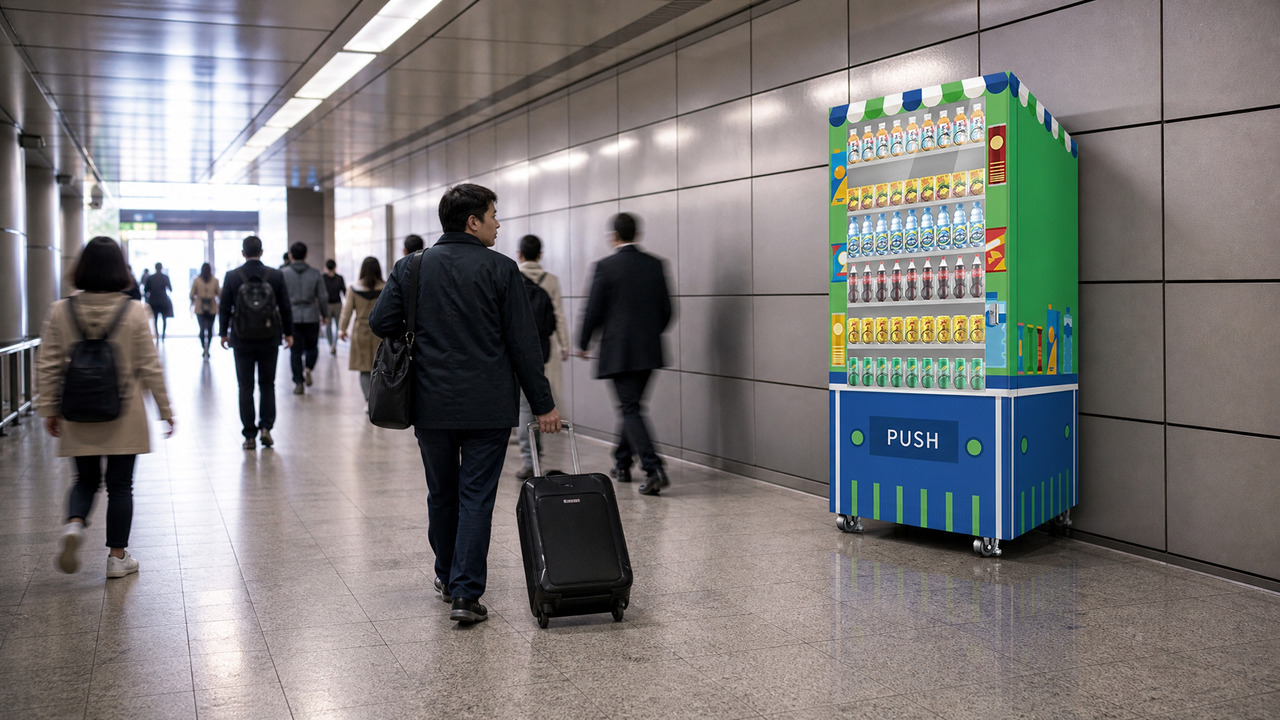
Many people only consider the rent when choosing a location, or simply pick a place that is convenient for them to restock, but they don’t carefully evaluate the actual foot traffic and the duration of stay there. Office lobbies, subway stations, hospital waiting areas, school dormitory entrances – these places may seem to have people, but the consumption habits, duration of stay, and spending power of the crowd vary greatly.
Many people consider a large crowd a good location, but the number of people is only the first layer of judgment. What is truly valuable is the effective purchasing flow. You need to observe not just whether there are people passing by, but whether these people have the reason and time to stop and consume. For example, the subway station has a large number of people, but most of them are on their way, and the proportion of those who will stop for a bottle of water or a snack is not high. On the contrary, the tea water area next to the office building has a seemingly average number of people, but employees pass by several times a day, and the purchase intention and repeat purchase rate are actually more stable. In addition, you also need to pay attention to whether there are other vending machines or convenience stores in the same area competing for traffic. If there are already two or three machines selling similar products nearby, your sales will naturally be diluted. Spending time to observe on-site is more effective than looking at any reports.
So when choosing a location, you can think about these questions: Will users stay here? Do they need to buy snacks and beverages? Is there already a convenience store or other vending machines nearby? Can the machine be clearly seen? Is it convenient for users to purchase goods after seeing the machine?
Good location selection is not simply finding the place with the most people, but finding a location where the flow of people, demand, duration of stay, and spending power match.
The product assortment should follow the scene and the target audience.
Selecting the right location is only the first step. The next problem you need to address is: exactly what do the people at this location want to buy.
Many novice operators tend to make the mistake of stocking products based on their own preferences or the convenience of the supply channels, rather than adjusting the product structure according to the actual needs of the target customers. The capacity of vending machines is limited, and it is impossible to stock a large number of SKUs like in convenience stores. Therefore, you need to make the limited aisles serve the main consumers as much as possible. For example, people in gyms tend to choose functional drinks and high-protein snacks, students in schools are more sensitive to prices and prefer novel flavors, and office workers in buildings may need coffee and energy drinks in the morning and snacks to refresh themselves in the afternoon. If you can understand these differentiated needs, the sales rate of the products will significantly increase.
When starting the business, you can first choose relatively easy-to-understand product combinations, such as beverages, bottled water, carbonated drinks, energy drinks, chips, chocolate, and cookies, and then adjust according to the actual sales data.
Here is another issue that is often overlooked: the best-selling products may not always remain so.
In summer, the demand for beverages may be higher, while in winter, hot drinks or high-calorie snacks may be more popular. The consumption habits during the school opening period and holidays may be different, and the demand in office areas during weekdays and weekends may also be completely different.
So, do not decide on the product structure just when the vending machine is launched and then not adjust it for several months.
You can observe from the sales data which products sell quickly, which ones occupy the aisles for a long time, and the changes in sales during different time periods. Products with consistently low sales can gradually reduce their inventory, and stable products can increase the frequency of restocking. This action may seem simple, but it is a key habit that determines whether the sales of the vending machine can continue to grow.
Find the balance point in pricing
Price is a very sensitive topic. When many people think about boosting sales, their first reaction is to offer discounts and promotions. However, this may not be the most effective approach. You can first conduct some small-scale price tests to observe the actual impact of different price levels on purchasing behavior.
Interestingly, moderately increasing prices does not significantly affect sales. Instead, it can increase the average order value per customer and overall profit. This indicates that customers’ price sensitivity for these consumer goods is often not as high as you might think. What really influences their decisions is more often convenience and whether they want it or not. You can try combined pricing, such as bundling drinks and snacks into a slightly discounted price to encourage customers to buy two instead of one at a time; or you can offer time-limited discounts during specific periods, such as before and after lunch breaks, to stimulate concentrated consumption.
The trick is to keep on observing the data feedback instead of making decisions on prices based on intuition only. After you change the prices, you want to know if sales have been affected and if the average order value has increased. All of these involve time spent analysing and reviewing.
Payment methods can affect purchase conversion
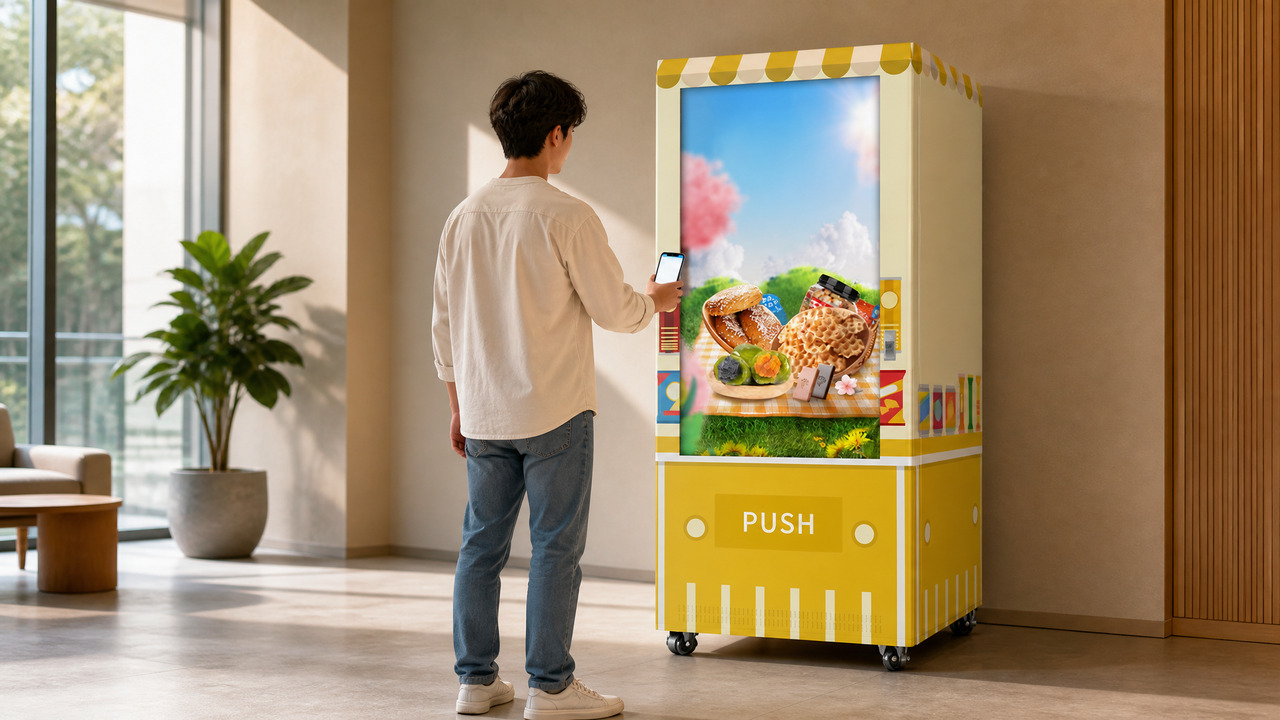
Nowadays, very few people carry cash with them at all times. If your machine only accepts coins or paper money, you are actually missing out on a portion of potential orders that could have been completed each day.
When a person stands in front of the machine, searches their pockets, and finds no change, they are likely to turn around and leave directly, rather than going to a place to exchange change and then coming back. The more diverse the payment methods are, the broader the customer base you can cover. Credit cards, debit cards, as well as contactless payment methods such as Apple Pay and Google Pay, have become familiar payment options for many consumers.
If vending machines can offer more convenient payment methods, they will be able to reduce resistance in the purchasing process. This is especially important because convenience is one of the main advantages of vending machines.
For a time, consumers may simply want to buy a bottle of water or a packet of snacks. If it is more inconvenient to make the payment than to buy the goods, the machine will be of no advantage.
So when buying the equipment, you need to consider not only the number of goods that the machine can hold, but also whether the payment system matches the consumption behaviour of the target market.
Insufficient inventory may directly lead to loss of sales
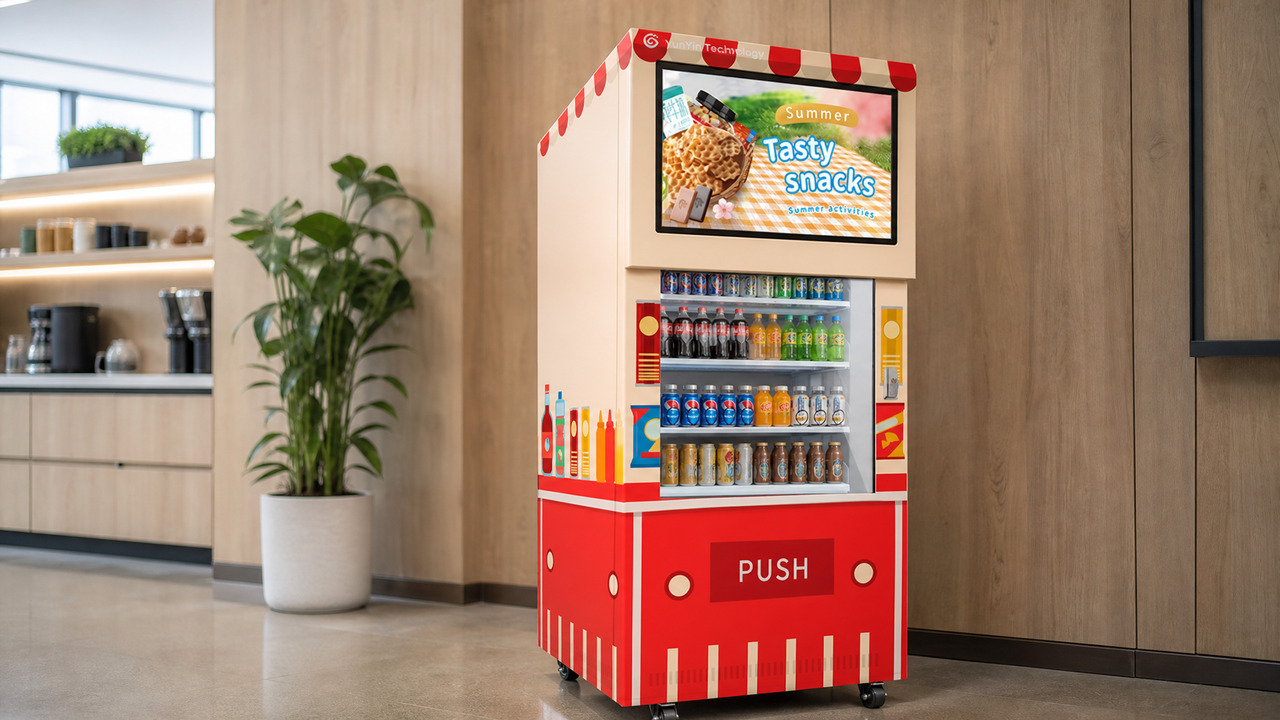
Suppose a machine has a stable daily demand for a product, but the most popular beverage is sold out by the afternoon. Then, for the rest of the day, the remaining time is actually lost in terms of sales opportunities.
The focus of inventory management is not simply to fill the machine, but to ensure that the correct products are kept available for sale at the right time.
If a certain product sells out quickly every day, you need to consider increasing the replenishment quantity or increasing the frequency of replenishment. If another product has not been sold for a long time, then keeping it in the machine and occupying the storage space does not make much sense.
Therefore, it is best to look at sales data and inventory data together.
You can observe the sales speed, the number of shortages, the replenishment time, and the inventory changes of a certain product, and then determine whether it should increase the inventory or be replaced. When the number of machines increases, this becomes even more important. You cannot manually check every storage area of dozens or even hundreds of devices every day, so remote management and inventory data will become important tools for improving operational efficiency.
The stability of the equipment also affects sales volume.
Consumers will not wait until tomorrow to buy the beverages they missed today just because the machine broke down today. If a machine frequently runs out of stock, frequently malfunctions, and frequently fails to deliver products properly, no matter how good your location is or how reasonable your pricing is, the trust of your customers will gradually be eroded. Every minute of downtime represents a real loss of sales volume. And if customers are “let down” once or twice, they are likely to never actively try this machine again.
Use data to determine what is worth continuing to sell
The traditional operation method of vending machines often relies on manual inspections. You have to go to the site in person to know whether the inventory is sufficient, whether there are particularly popular or unpopular products being sold. This method is not only inefficient but also prone to two extreme situations: either a popular product is frequently out of stock, causing customers to waste their trip, or a slow-selling product occupies the shelf position for a long time but is rarely noticed.
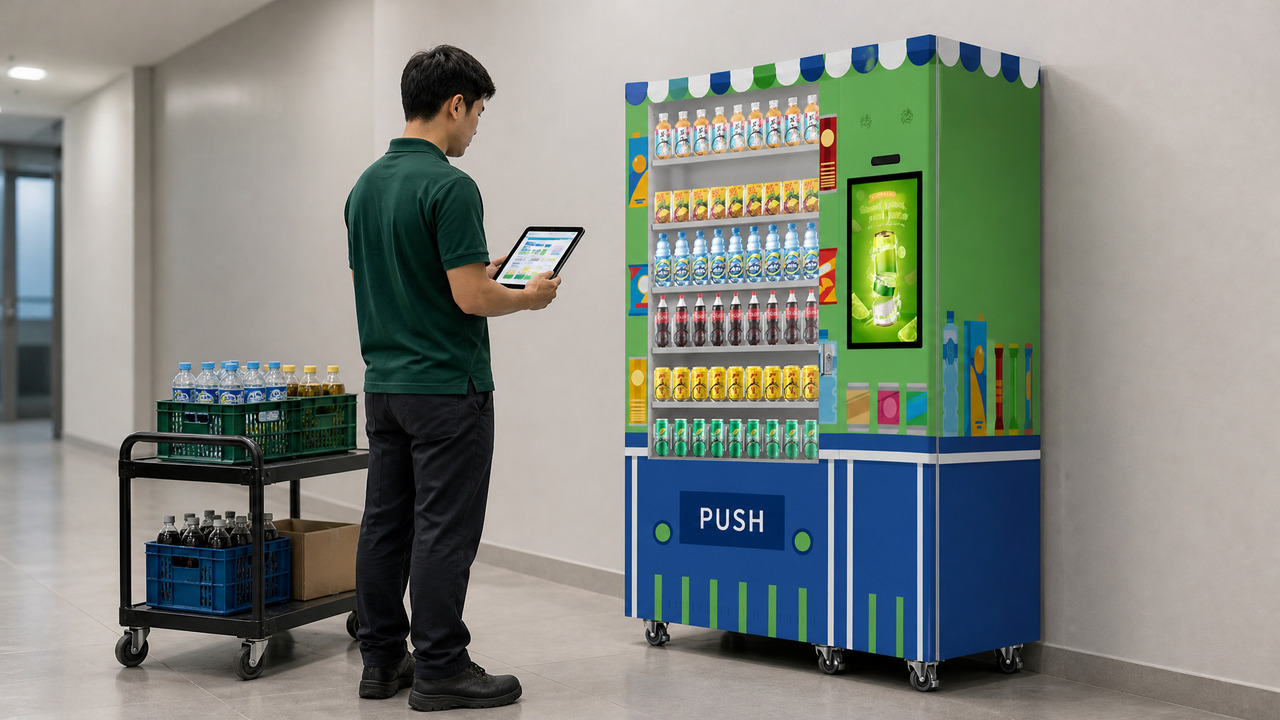
Nowadays, more and more operators are turning to remote monitoring and data analysis tools to solve this problem. By real-time viewing of the inventory, sales trends, and replenishment reminders of each machine, it is possible to more accurately arrange replenishment routes and adjust product structures, rather than relying on guesswork and experience.
You can also compare the sales performance at different locations and during different time periods through data to identify which areas are worth increasing investment in, which areas need re-evaluation, and even which machines should be removed. Data-driven operations may sound a bit technical, but once it is put into practice, you will find that many decisions made based on intuition can actually be replaced by more accurate numbers.
Final Thoughts
After trying these methods you will understand that the sales of vending machines cannot be increased with just one action. It’s not simply about the right choice of location, choice of product, payment methods, inventory management, maintenance of equipment, etc. It’s about constant readjustment based on actual sales data. If you are planning to enter the unmanned retail market, Yunyin can provide you with complete equipment support for your vending machine project, from equipment development and production to OEM/ODM customisation.
FAQ
What should be checked first when the sales of vending machines decline?
First, look at the time and extent of the change in sales data. If the order volume suddenly drops, check if the machine is operating normally and if there is a problem with the payment system; if only the sales of a certain type of product decline, further observe consumer demand and the competitive environment. Do not immediately replace the machine; first find out the specific reason for the decline in sales.
Should a vending machine that is not selling well be moved to a different location or changed to a different product?
It cannot be determined directly. You need to first look at the data. If the overall sales of the product are low after a period of time, it may be necessary to reevaluate the location; if only some of the products perform poorly, it is more suitable to adjust the product mix first. By gradually investigating in this way, you can avoid directly giving up a location because of a single unsatisfactory sale.
What types of products are suitable for vending machines?
Snacks, drinks, bottled water, energy drinks, chocolate, cookies etc are popular choices but the products that can actually be sold need to be determined according to the specific location. Yunyin can provide different vending machine solutions according to different product types and business needs, help you choose a more suitable equipment configuration for the target market.
Do vending machines need to support credit cards and mobile payments?
If the target market uses bank cards and mobile payments mainly, providing credit cards, debit cards, Apple Pay, Google Pay, etc. will make the consumers’ purchase process easier.
Why are multi-vending machine projects more in need of an intelligent backend?
If there is only one machine, it is relatively easier to check the inventory and sales data on site. But if there are many devices, checking each of them one by one will take a long time. The intelligent backend can help you centrally view sales, inventory and device status, so that you can quickly identify shortages or abnormalities and adjust according to the operating data of different machines. Yunyin’s smart vending machines support backend management, which can help you manage multiple devices more efficiently and reduce repetitive manual inspection work.
What should I focus on if I want to purchase vending machines in bulk?
In addition to the equipment price, you should also pay attention to the machine structure, payment methods, product compatibility, inventory management, remote backend, maintenance convenience and long-term stability. As for bulk purchase projects, important points to consider are whether the equipment can satisfy the operational needs of different markets and whether the manufacturer can provide ongoing OEM/ODM and after-sales support.
Can Yunyin customize vending machines for my project?
In addition, for projects needing brand image, special product size, appearance design or functional requirements, Yunyin provides OEM/ODM customisation service. Based on the target market and the project at hand, you can advise us on the equipment specifications, and we will have our manufacturing team configure and match the solutions accordingly.
What kinds of vending machines can Yunyin provide?
Yunyin is a manufacturer that integrates the design, research and development, production and sales of intelligent vending machines. Its products cover beverages, snacks and various types of Vending Machines. You can choose the appropriate equipment solution based on the goods, capacity, usage location and project requirements.