
When the vending machines you manage gradually grow from 1 or 2 to dozens or even more, what truly consumes time and costs is often not just restocking itself, but the constant back-and-forth between machines, repeated inspections, and ad-hoc handling. This article will help you analyze how to improve vending route efficiency from the aspects of restocking frequency, location layout, inventory data, remote monitoring, and equipment management, making every one of your actions more valuable.
What Is Vending Route Efficiency?
Simply put, vending route efficiency is how much time, labor, and transportation costs you use to complete the restocking, inspection, and maintenance of a certain number of vending machines.
Many people don’t pay special attention to this issue when they first start a vending machine business. It’s only when the number of machines increases that you discover managing 10 machines and managing 50 machines is not simply 5 times more difficult.
Suppose you need to visit multiple locations every day—you’ll find that some machines still have ample inventory, some have just run out of stock, some have malfunctioned, and some have low sales but you still go to inspect them at fixed times. As a result, you spend a lot of time on the road every day without necessarily generating corresponding revenue. Therefore, route efficiency is not simply about pursuing the shortest route.
A route that looks short in distance can still generate a lot of wasted costs if it makes you frequently travel back and forth to low-sales locations, or if you only discover at the machine site that restocking isn’t needed at all.
The key point that truly needs attention is whether you can complete the same operational work with fewer trips, more reasonable restocking arrangements, and more accurate information.
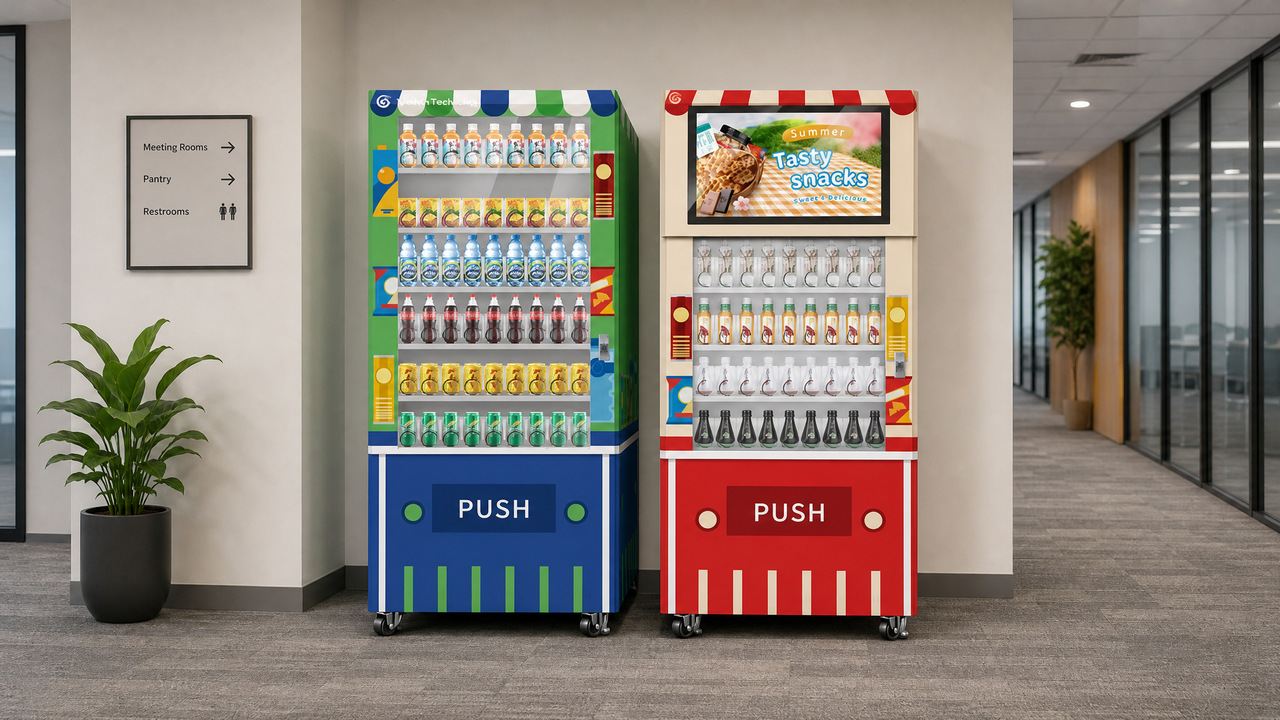
The More Vending Machines, the More Important Route Efficiency Becomes
When you only have a few machines, you can completely rely on memory to manage.
Today go to location A, inspect location B along the way; tomorrow go to restock location C, and find that location D is also about due for restocking. When there are few machines, this method doesn’t cause major problems. But as the number of devices keeps increasing, you’ll quickly encounter three problems.
Restocking Times Become Increasingly Hard to Schedule
Sales volumes at different locations are not the same. Some machines have high daily sales, while others may only sell a few products over several days. If you restock all machines once a week on a fixed schedule, high-sales machines may run out early, while low-sales machines may not need to be visited that frequently at all.
Labor and Transportation Costs Keep Increasing
Each additional location visited means more driving time, labor time, and vehicle costs. If a trip is made just to inspect a machine that actually doesn’t need handling, the value generated by that trip will be very limited.
Ad-Hoc Situations Keep Increasing
Machines may experience malfunctions, insufficient inventory, or sudden changes in the sales speed of a particular product. If you completely rely on fixed inspection times, problems may not be discovered until your next visit.
Therefore, as the vending machine network expands, route management should gradually shift from “which machines should I go to today” to “which machines truly need me to go now.”
Key Factors Affecting Vending Route Efficiency
Vending route efficiency is not determined by any single factor, but is the result of multiple operational aspects working together.
The Most Direct Factor Is the Distance Between Machines
If your machines are concentrated in the same commercial district, office area, campus, or community vicinity, one trip can complete multiple locations, so the transportation cost allocated to each machine is naturally lower. Conversely, if you place a machine in a very remote area just to secure a location, even if that machine has some sales, it may reduce overall operational efficiency due to long-term additional transportation costs.
Machine Capacity and Product Mix
If a machine has fast sales but limited storage space, you may need to restock more frequently. Another machine with slower sales, even if farther away, may not need frequent visits.
Therefore, you can’t just look at how far the machine is from you; you also need to consider how often that machine needs to be handled.
Products also have a similar impact. High-frequency consumption products usually require closer attention to inventory changes, while slower-selling products can have longer restocking cycles. If all machines use exactly the same restocking cycle, it’s often difficult to achieve true efficiency.
Don’t Let Fixed Restocking Cycles Limit Your Route Efficiency
The most popular method used by vending machine operators is fixed restocking.
For instance you could check the first batch of machines on Monday, the second batch of machines on Tuesday and the third batch of machines on Wednesday.
This method is straightforward and comparatively easy to implement when initially handling a limited number of machines. But with the growing number of machines, its problems will slowly become apparent.
The frequency you choose, once a week, does not mean every machine actually needs to be serviced weekly. A high-volume machine might need to be restocked after three or four days, while a low-volume machine might not need to be replenished for two weeks. If you have both machines on the same cycle, one will run out of stock and the other will get inspected over and over again.
A more reasonable way is to gradually associate the restocking cycles with real sales conditions. You can use historical sales data to determine how fast different machines are selling and combine this with inventory status to see which machines need to be dealt with on a priority basis.
For example, if a machine has stable sales in the last period, and some products tend to drop fast, then this machine should be given more attention time.
If another machine has steady long-term sales and slow movement of inventory, there is no need to visit often just to check off the inspection plan.
But that doesn’t mean you don’t need a fixed plan at all, rather the fixed plan should be the basic framework, while the actual restocking is adjusted based on the status of the machine and data.
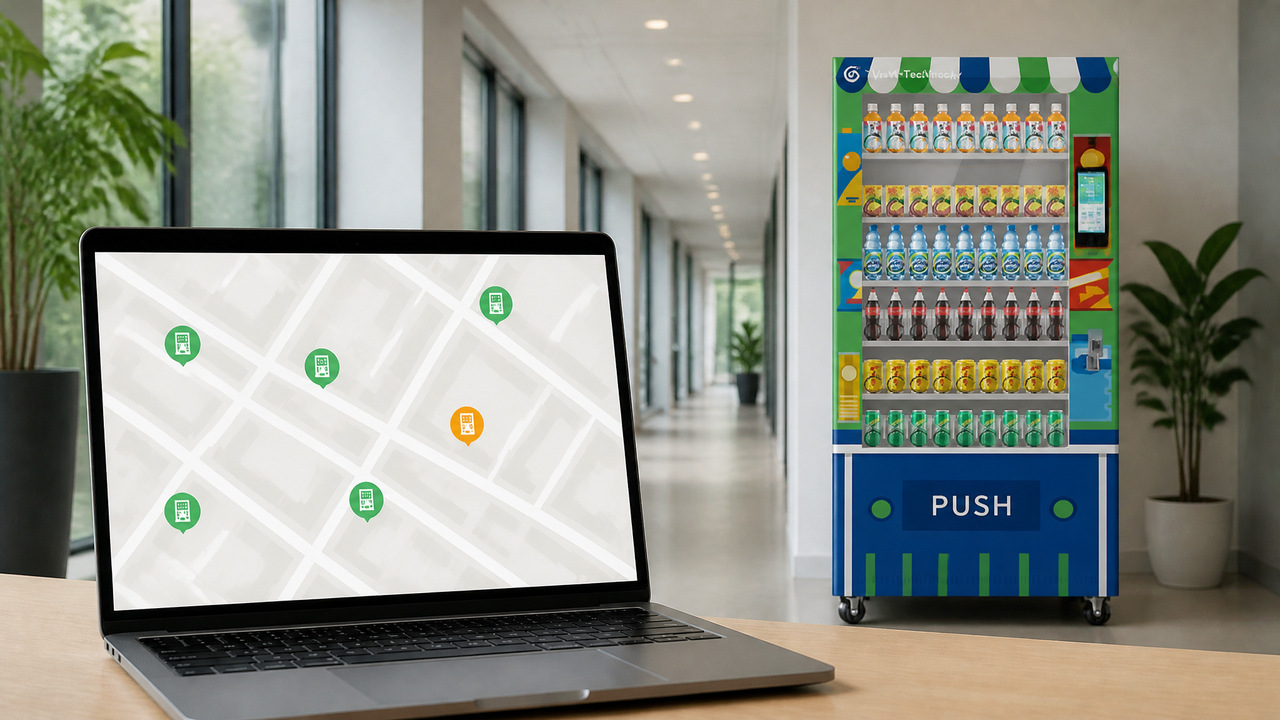
Using Sales Data to Determine Which Machines to Prioritize
If you have more than one vending machine, sales data is one of the most valuable pieces of information.
You don’t have to go by intuition to figure out if a machine is running out of stock but you can check the sales performance of different machines via the backend and then decide on the way forward.
If you’ve seen a big jump in sales at a particular location recently, that machine needs some extra love. Conversely,if a machine has been experiencing low sales for a long time, you should rethink its product mix, location performance, and restocking cycle, instead of mechanically sticking to the original schedule and visiting it frequently.
The essence of this approach is not to allow the system to make decisions for you, but to give you more information before making them.
The question for you isn’t whether you can cover all locations today, but whether you really have to go to all locations today. Then you can evaluate the data and filter out the machines that need attention. Then you can plan your route based on region and priority, so you can get more meaningful work done in the same amount of time.
Location Layout Determines the Upper Limit of Route Efficiency
The concept of route efficiency is often associated with how to plan inspection routes, but in reality it starts to develop from the moment the machine is set up.
When you have 20 machines, and 15 are all located in a few areas that are relatively close to each other, then you can combine them into different daily operational routes.
But if you have 20 machines spread across 20 different locations far away from each other, it’s impossible to completely eliminate the time and costs of long-distance travel, even with very reasonable navigation routes.
Therefore, when choosing a new location, in addition to considering rent, foot traffic, and sales potential, you should also consider it within your existing operational network.
- How far is a new location from existing routes?
- Can it be handled on the same day as other machines?
- Will it force you to add a dedicated inspection trip?
These questions all affect the true operational value that this location brings. This is also why, as the vending machine scale expands, location management can’t only look at the sales performance of individual machines, but also at the relationships within the entire machine network.
Remote Monitoring Can Reduce Many “Wasted Trips”
If you can’t know the machine’s status in advance, then many times you can only get answers through on-site inspections.
After arriving on site, you may find that everything is normal and only a simple check is needed; you may find that a certain product is out of stock; or you may encounter equipment malfunction requiring further handling.
But if this information can be seen before you depart, then your operational approach will change.
Through the backend, you can uniformly view device status, sales conditions, and related alerts. This way, when you’re ready to arrange the day’s route, you can first understand which machines need focused attention.
This becomes even more important when your machines malfunction.
If the device has already shown abnormalities and you only discover it on site, then the first visit may only confirm the problem, after which you’ll need to schedule repairs again. If you know the malfunction in advance, you can simultaneously prepare the corresponding handling work when scheduling on-site service, reducing unnecessary repeated trips.
This is also the practical value of remote management for route efficiency: it doesn’t plan routes for you, but helps you reduce those on-site inspections that could originally have been avoided.
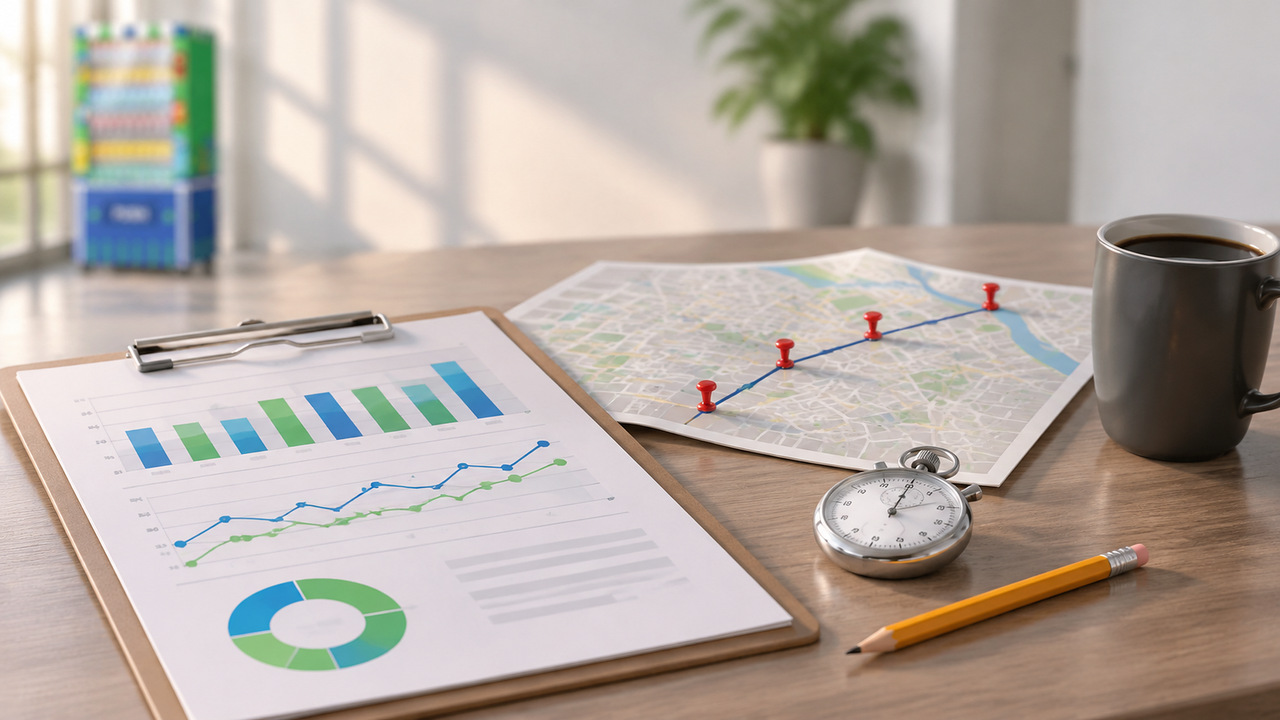
Combine Restocking, Inspection, and Maintenance into the Same Trip Whenever Possible
The more problems one trip can solve, the higher the value of that trip usually is.
For example, if you were already going to a certain location to restock today, and the backend simultaneously shows that this machine has issues needing inspection, then you can combine restocking and equipment inspection into the same on-site service.
If there are other machines nearby that need handling, they can also be arranged in the same route as much as possible.
The core of doing this is not to cram as many tasks as possible into every trip, but to avoid repeatedly visiting the same area in a short period of time.
Of course, you also can’t delay necessary maintenance just to reduce the number of trips. If a machine has an obvious malfunction, or a high-sales product is already close to being out of stock, continuing to wait for the sake of route efficiency may instead cause more losses. Truly reasonable route efficiency should find a balance between reducing wasted trips and promptly solving operational problems.
How Should You Manage When the Number of Machines Increases?
When you only have a few machines, you can manage through manual records, fixed plans, and simple spreadsheets.
When the number of machines increases, the most important change is not to make yourself remember more information, but to establish a management approach that can be continuously viewed and adjusted.
- You need to know where each machine is
- You need to know the current sales and operating status of each machine
- You need to use this information to judge which machines deserve priority handling
If all information is scattered across different spreadsheets, chat records, or personal memory, then the more machines there are, the higher the management difficulty.
The value of a unified backend lies in putting different devices into the same management system. You can view the status of multiple devices from one backend, then arrange follow-up work based on each machine’s situation. But this doesn’t mean everything should be handed over to the system to complete automatically—a good management system should make it easier for you to discover problems, and then you make operational decisions based on actual conditions.
How to Judge Whether Your Vending Route Efficiency Is High
If you want to truly improve vending route efficiency, you can’t rely solely on feeling; you also need some simple data to judge whether adjustments are effective.
How Many Effective Locations Are Completed Each Time
If you really want to improve the efficiency of your vending machine route, you can’t just go by gut feeling. You also need a little basic data to see if your changes are effective.
Number of valid stops per trip completed
Suppose you used to do 8 stops in a day and after you make the adjustments you still do 8 stops but your total driving time has gone down a lot. In that case, you have improved your route efficiency.
Average time processing/machine
If many machines that only require a simple check take up large parts of the route, the problem might not be in the speed of the on-site operation but in scheduling too many unnecessary visits.
Number of repeat trips
A machine that is restocked and visited again soon after restocking after a stockout means that the initial restocking decision may not have been accurate enough. If a machine requires two or three consecutive visits due to a breakdown, it means there is room for improvement in remote status monitoring, maintenance readiness, or on-site troubleshooting processes.
You can also monitor inventory turnover, stockouts, sales trends, and machine failure rates.
It is more meaningful to look at these metrics in aggregate than to only consider the distance traveled per day.
Ultimately, route efficiency is not about less driving, but rather more effective service at a reasonable cost of operation.
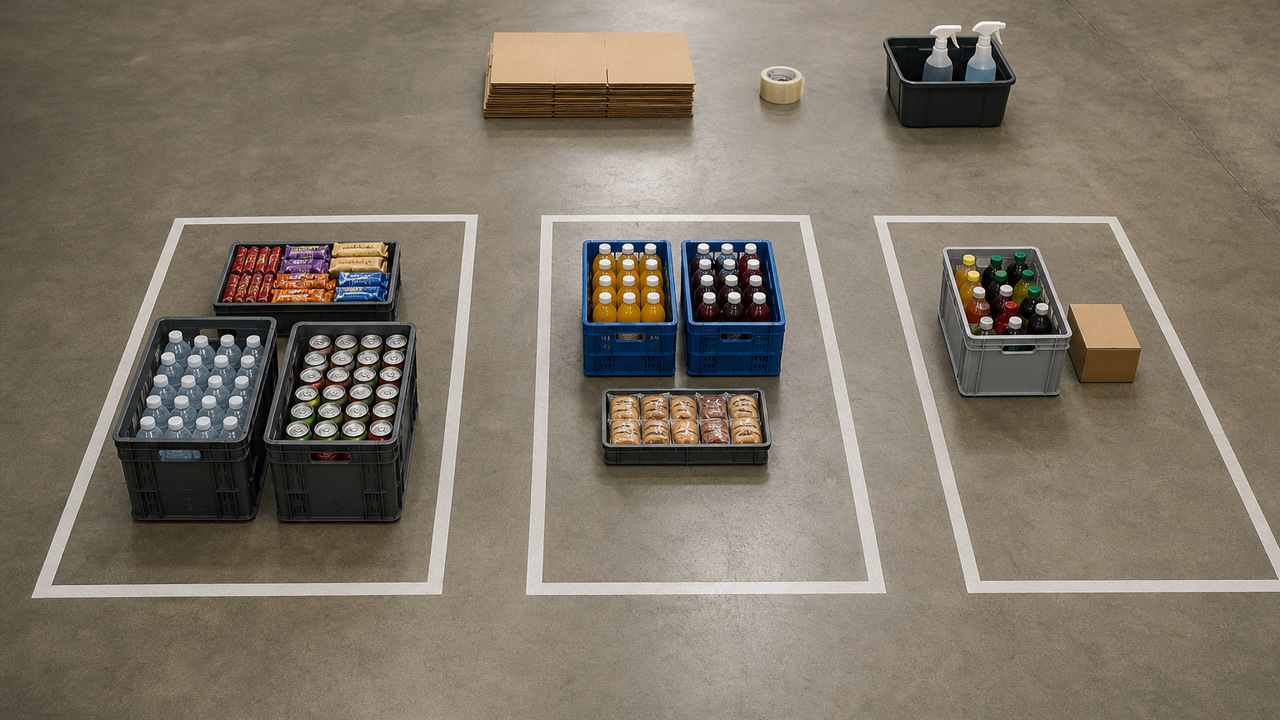
Final Thoughts
As a vending machine business grows to a certain size, efficiency often dictates how many machines you can handle and plays a role in long-term operating costs. Yunyin provides vending machine design, R&D, production and sales, with intelligent backend management functions, helping you to uniformly view device and operational data. If you are planning a new vending machine project you can choose the right equipment and solutions based on locations, products and operational needs.
FAQ
How Often Should Vending Machines Be Restocked?
There is no one answer for all machines. High sales locations may have to be restocked more frequently and low sales locations can stretch their service cycles accordingly. Instead of running all machines on the same cycle, you can determine restocking needs by reviewing back-end sales data and inventory status.
How Does Vending Machine Backend Management Help Route Efficiency?
The backend provides a consolidated view of the sales and device status across multiple machines, reducing manual, per-machine inspections. You can decide which machines require special handling first, and then plan routes and on-site work based on the actual situation.
Do Yunyin Vending Machines Support Unified Management of Multiple Devices?
Yes. Yunyin’s smart management system can unify the relevant operational and running information of multiple devices for viewing. For projects with a continuously increasing number of machines, a unified backend can reduce the workload caused by decentralized management, and it is more convenient to manage device status and operational data.
Can Products and Prices Be Remotely Modified on Vending Machines?
Yes. For devices supporting relevant functions, you can remotely manage operational information such as products and prices through the backend. This way, when product strategies change, you don’t need to arrange personnel to go to the machine site for operations every time, helping reduce unnecessary on-site visits.
If a Vending Machine Malfunctions, Do I Need to Make a Dedicated Trip?
Whether on-site handling is needed should be judged based on the specific malfunction situation. By remotely viewing device status and malfunction alerts, you can understand in advance whether the machine has abnormalities. If on-site handling is indeed needed, you can try to arrange repairs together with restocking, inspection, and other work in the same trip, thereby reducing repeated trips.
Can Yunyin Customize Vending Machines Based on My Project?
Yes. Yunyin simultaneously provides OEM/ODM and one-stop unmanned retail solutions, and can configure equipment solutions based on your product types, usage scenarios, functional requirements, and project scale. If you’re building a multi-location vending machine project, you can also consider equipment management and subsequent operational needs simultaneously during the early planning stage.