
Most people think vending machine advertising is simply offering discounts, posting on social media or putting eye-catching ads on the machines. But once you start operating, you will find that the problem is not so simple: Where should the budget be spent? How to promote new products? When is it appropriate to hold an event? How to determine if a marketing campaign has been effective? This article will help you establish a more comprehensive vending machine marketing strategy from several aspects: strategy formulation, marketing mix, execution rhythm, and effect evaluation.
Determine the direction of your vending machine strategy
When formulating a marketing strategy, an issue that is often overlooked is: Are you selling goods, or are you selling convenience?
For vending machines, the answer may be different.
A beverage vending machine sells beverages, but the reason why consumers purchase it might be: I just want to have a bottle of cold drink right now. A personal care product vending machine sells specific items, but what the consumers really need might be: When temporarily lacking something, it can be bought immediately.
This means that before formulating the marketing plan, you need to first determine your positioning.
If your equipment mainly addresses immediate consumption needs, then the marketing content should enable consumers to quickly understand the benefits of purchasing now. If the project emphasizes product selection more, then the strategy should revolve around product differences and combination value. If the machine serves enterprises, factories, etc., the marketing focus should shift from ordinary consumers’ purchases to enterprise procurement and usage efficiency.
Therefore, do not start by asking “How do I promote this vending machine?” Instead, think about why consumers need to purchase through this machine. This will directly affect your subsequent products, prices, activities, and communication methods.
Further Division of Target Customers
The truly valuable customers are those who have clear demands and are likely to make repeat purchases.
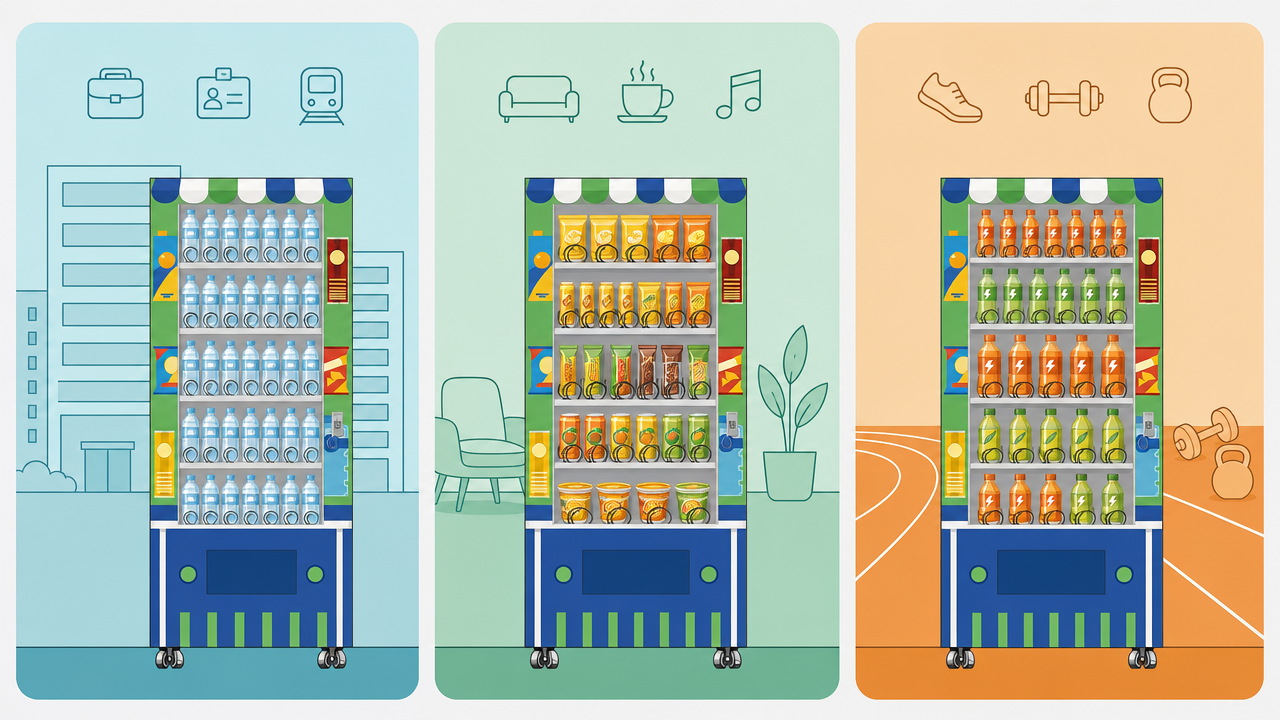
For the same vending machine selling food, consumers in the office area may place more emphasis on convenience during breaks; consumers near schools may be more concerned about prices and flavors, while the crowd in fitness-related places may pay more attention to nutritional content and product types.
If you treat everyone as the same type of customer, the marketing information will easily become ambiguous. Therefore, you can divide the customers into several main groups and design different purchase reasons for each group of users.
It is not necessarily necessary to establish a very complex user profile. You only need to know a few key questions: Who are they? Why do they purchase? How often do they purchase? What kind of information are they most receptive to? With these basics, the direction of your subsequent marketing budget usage will be clearer.
Design a clear product lineup
The capacity of vending machines is limited, which means the product lineup itself needs to undergo marketing consideration.
Rather than filling the machine with various different products, it is better to try to establish a certain logic among the products.
For example, products can be grouped around a certain consumer demand, or different options can be set based on price ranges. For new products, they can be placed together with products that already have stable sales to make them more accessible to consumers.
If you sell multiple brands, you can form different levels through flagship products, regular products, and trial products, which is also a form of product marketing.
Consumers may not actively research the differences between dozens of products, so you need to reduce the selection cost through product arrangement, recommendation information, and combination methods.
This point also has another value for you: The limited aisles should be prioritized for products that can truly generate sales value, rather than sacrificing the display and inventory space of truly best-selling products in pursuit of a wide range of categories.
The pricing strategy cannot have only one price.
The pricing strategy of vending machines should not be simply understood as being cheaper than convenience stores.
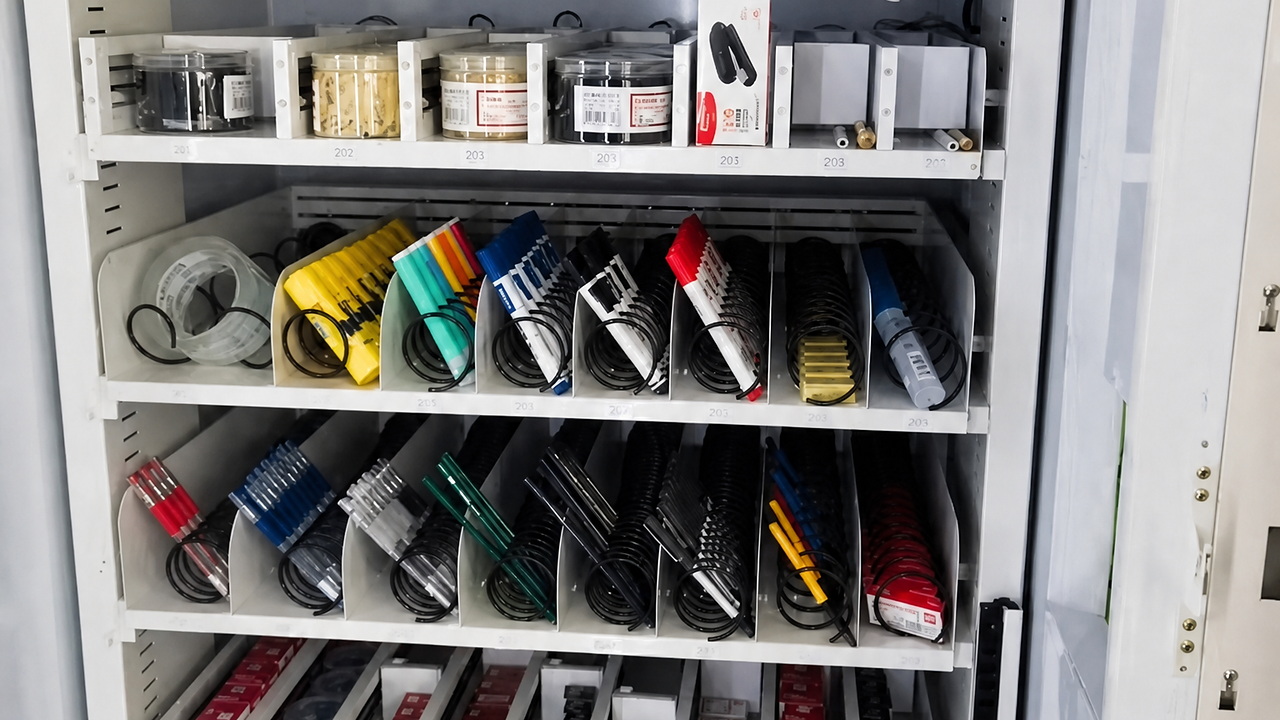
You can set different price levels based on the product positioning and consumer demands. One machine can have basic products at a low price, main products at a medium price, and special products with a higher profit margin. The advantage of this is that consumers can make decisions based on their budgets.
Also, prices can be adjusted in conjunction with marketing activities.
When a new product is first launched, a price that is more acceptable to consumers can be adopted. After the sales of certain products stabilize, the normal price can be restored. For products that are about to be replaced, appropriate discount price activities can be carried out to reduce inventory pressure.
What you also need to pay attention to is that the vending machine project should not only focus on the sales volume of individual products. What really needs to be focused on is the relationship between the gross profit of the product, the sales speed, and the overall order value. If one product has a high sales volume but a very low profit, while another product has a moderate sales volume but has a better profit margin, then the roles of these two products in the marketing strategy should not be exactly the same.
Designing the “First Purchase” Reasons for Consumers
Many consumers have no strong brand loyalty when they make their first purchase from the vending machines.
Therefore, the marketing strategy needs to address a very practical issue: How to get consumers to make their first attempt?
The reason for the first purchase can come from many aspects: trying new products, combining discounts, time-limited activities, special products, brand collaborations, or special packaging, etc. All of these can be reasons. However, you don’t need to solve this problem every time by offering a significant discount. Sometimes, a clear product description is sufficient.
For example, if consumers have never seen a certain product before, if the machine can inform them briefly about what the product is and for what needs it is suitable, then the original unfamiliarity will be reduced.
When formulating marketing activities, you need to first distinguish between two goals: getting consumers to make their first purchase, and getting those who have already purchased to make another purchase. The marketing methods used for these two goals are not the same.
Don’t pour all the budget into one go
If you are just starting a vending machine project, one of the biggest marketing risks is to invest too much at the beginning. You produce a large amount of promotional materials, purchase advertisements, launch significant discounts, and then find that the actual effect doesn’t meet expectations. All the expenses and efforts have been wasted.
A more reasonable approach is to adopt a test mindset.
First, choose a clear marketing goal, and then conduct a small-scale test.
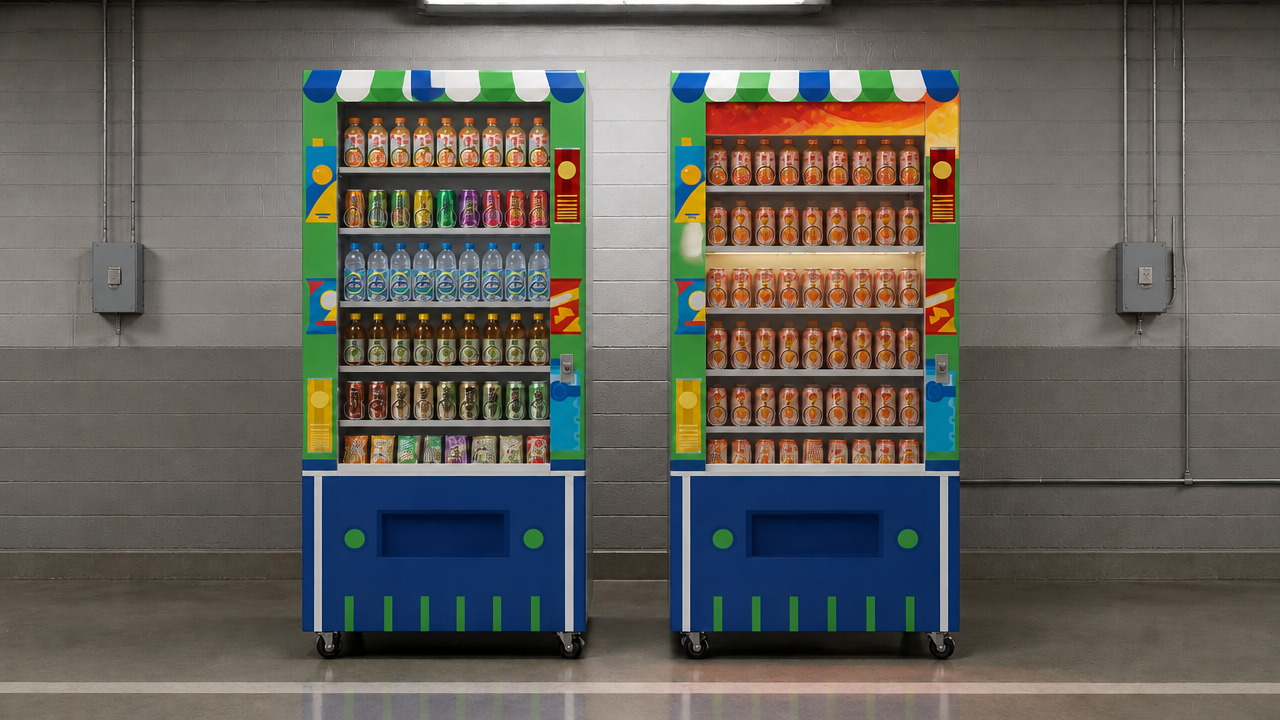
For example, if you want to know whether consumers will accept a certain new product, you can first try to conduct a test within a limited time frame instead of spreading it out across all devices. If the experimental results are good, then consider expanding the scope.
This approach is particularly suitable for vending machine projects because the consumers, products, and operating environments of different devices may vary. There is no need to pursue a perfect marketing plan at the beginning of the project.
First, find an effective method, and then increase the investment. Usually, this is more stable than investing a large amount of budget at the very beginning.
Set a clear goal for each marketing campaign
Many problems with marketing campaigns arise not because the campaigns themselves are bad, but because there is no clear goal at all.
What result do you hope to achieve from a new product promotion?
Is it to increase the sales of the new product? To get more consumers to try it? To increase the average order value? Or to clear the inventory?
If the goals are different, the methods of the campaigns will naturally be different.
If your goal is to get consumers to try the new product, you can lower the threshold for the first purchase; if you want to increase the average order value, you can design a product combination; if you want to increase repeat purchases, you need to pay attention to whether the people who have purchased before are willing to come back again.
Establish Your Own Marketing Calendar
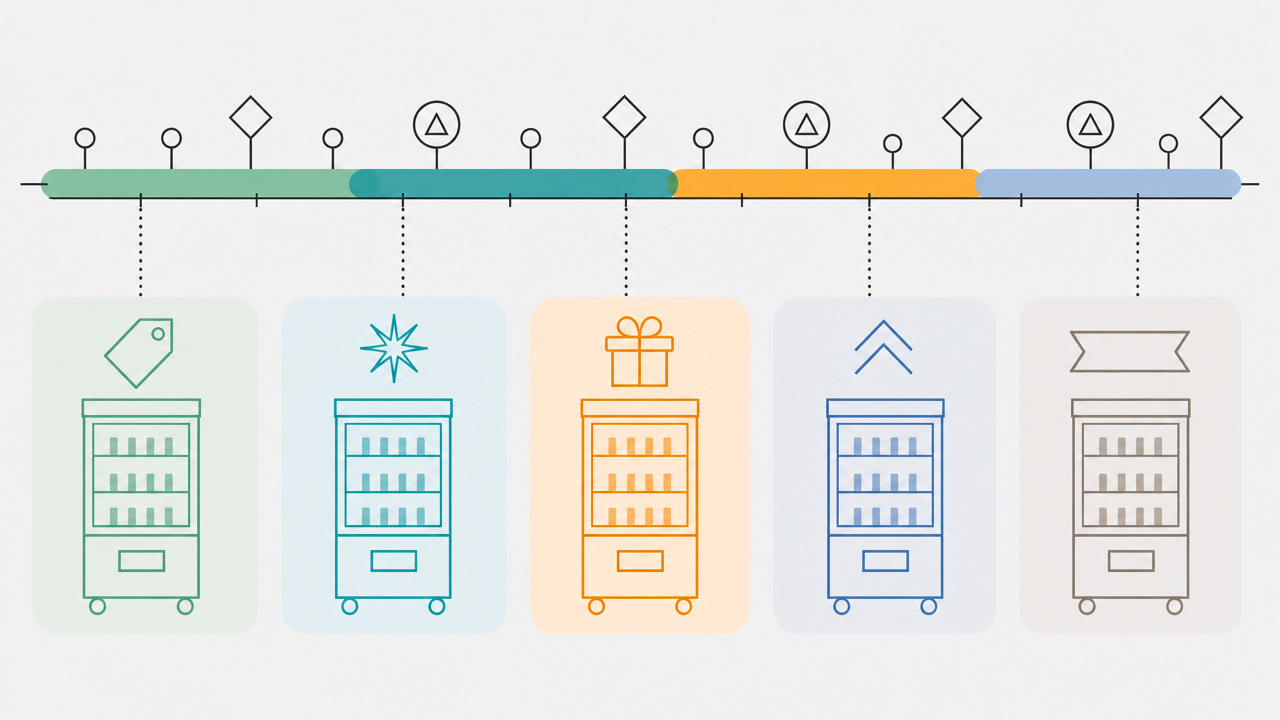
Vending machine marketing should not wait until sales decline before taking any measures. You can establish a simple marketing calendar in advance.
Important festivals throughout the year, seasonal changes, new product launches, brand events, and special consumption nodes can all be scheduled in advance.
This does not mean that you need to conduct large-scale promotions every month. Instead, it makes marketing activities more planned. For example, new products can be tested at the beginning of the quarter, related product combinations can be prepared before the festivals, product structures can be adjusted during seasonal changes, and time can be left after the event to observe the results.
If you operate multiple machines, you can also arrange different activities based on the performance of each machine, rather than using the same marketing plan for all machines.
This planning can transform marketing from thinking of something and doing it immediately to becoming a rhythmic operational task.
Online marketing should not be disconnected from offline purchasing behavior
One characteristic of the vending machine project is that consumers ultimately still need to go to the offline equipment to complete the purchase.
Therefore, online marketing cannot only focus on the number of views.
If a video receives a large number of views, but consumers do not know where the machine is or what it sells, then this traffic may not necessarily translate into actual sales.
Therefore, when formulating online marketing strategies, you need to consider the connection between online content and offline purchasing.
You can showcase new products, introduce special items, or display the usage methods of the machine and real consumption experiences. After consumers watch the content, they can quickly know where to purchase next. Only then can online dissemination truly have the potential to generate commercial value.
Use several key indicators to determine if marketing investment is worthwhile
After the marketing campaign is over, don’t just look at whether sales have increased, because sales growth may be due to seasonal changes, new product launches, or other factors.
There are several more specific indicators that can help you make the judgment.
Change in sales: Were sales during the campaign higher or lower than usual?
Product performance: Which products did the campaign promote? Did some products grow a lot, while others did not?
Average order value: Did the campaign result in more combined purchases, thus increasing the amount of a single purchase?
Cost of campaign: Did the sales increase cover the discounts, advertising, promotion and other marketing costs?
These indicators don’t need to be overly complex from the very beginning. If you are just starting a business, being able to continuously record and compare is already more valuable than making decisions based solely on intuition.
When the number of devices increases, the data management capabilities of the intelligent vending machine backend will become even more important. You can compare the sales of different devices and then decide where to allocate resources in the next stage.
The marketing strategy should change along with the project scale.
Your main task in the early stage of the project is to verify.
Find out what products are in demand, which marketing methods work and what products consumers are willing to pay for.
Right now, don’t feel like you have to jump into a complicated marketing system. When the project grows, you need to start thinking about standardisation. Standardise the brand image, activity rules, product management methods and data recording methods, for example, so that different devices can be compared.
The marketing strategy will be even more different with a bigger device network. This time you can consider brand cooperation, advertising resources, membership systems and more detailed user operations. The machine itself’s offline coverage ability can also become part of brand cooperation.
So the marketing strategy is not a rigid plan. The bigger the project, the more you have to move from selling products to managing the entire marketing system.
Final Thoughts
The core of the vending machine marketing strategy is not to keep increasing the promotion activities all the time, but to find the growth method that is most suitable for your products, users and stage of business. Yunyin has 13 years of experience in the research and manufacture of intelligent vending machines, with a 20,000-square-meter production base. It can provide OEM/ODM and one-stop unmanned retail solutions. If you are planning to start an overseas vending machine project, please contact the Yunyin team for solution consultation.
FAQ
What is the biggest difference between the marketing strategy of a vending machine and ordinary promotional activities?
Promotional activities are one-off tactics, such as limited-time discounts and combo packages. A complete marketing strategy for a vending machine is a long-term plan, including value positioning, user segmentation, budget allocation, goal setting, testing and review, and a complete logic that updates with business scale. An event may be part of the strategy but can never be a translation of the whole strategy.
Without a large marketing budget, is it still necessary to build a complete marketing strategy for the vending machine?
Yes. Marketing strategy is not the same as spending money on advertising. Even for a few devices, low budget projects, the strategy is more about clarifying the target users, product combinations, pricing logic and activity goals than about blindly doing activities and wasting limited funds. If you have a limited budget, you can test on a smaller scale and then expand the successful plan, rather than abandoning planning altogether.
Do multiple vending machines at different locations require a unified marketing strategy?
No, there doesn’t have to be a fully unified strategy. The top-level goal can be consistent, but different locations have different groups of people and consumption scenarios. Therefore, product combinations, activity rhythm, and marketing focus should be adjusted accordingly. Do not use the same scheme for all machines. You can group different devices and plan the marketing calendar. You can implement a differentiated strategy by viewing data by location point through the Yunyin intelligent vending machine backend system.
How can I determine if my marketing strategy is effective?
An increase in sales alone does not prove that the strategy is working. Outside factors like seasons, new products, locations and foot traffic can impact sales. You need to check the core indicators such as average transaction price, product gross profit, marketing investment cost and user repeat purchase at the same time, and make a comprehensive judgement on the input-output ratio, rather than simply looking at the surface sales data. The Yunyin intelligent management backend can export multi-dimensional operation data, helping you complete the effect review of the marketing strategy.
How often should the marketing strategy for vending machines be updated?
There is no regular rhythm. In general, it can be adjusted periodically according to seasonal and festival nodes through the marketing calendar; when your equipment scale expands, locations change, or you find that the long-term marketing investment-output ratio is unbalanced, you need to re-review, iterate the entire strategy, and cannot keep a fixed set of schemes unchanged for a long time. Yunyin has participated in unmanned retail projects in 80+ countries globally, and we have witnessed many real cases where operators have revised their marketing strategies based on business iterations.

