
In the vending machine industry, you’ve likely been attracted by various online claims about easy passive income and effortless money-making. But when you actually start, you may find yourself not knowing where to begin: How do you choose a location? How do you select equipment? How much investment is reasonable? This article will guide you through creating a truly actionable vending machine business plan, helping you move from having an idea to knowing exactly how to execute it.
What Is a Vending Machine Business Plan?
A vending machine business plan is a form of operational plan that helps to find out whether a project is worth doing, how to do it and how to expand in the future. It doesn’t have to be as difficult as applying for a bank loan. A practical business plan for a newcomer to this industry should answer at least several questions:
What do you want to sell? To whom?’ Where will the machines be set up? How much money should be invested? What sales revenue can you generate on a monthly basis? So after you pay for the products, the venue, the payment, the maintenance, the restocking, how much do you have left? If the first machine goes well, what’s your next move on the expansion?
Vending machines and regular retail stores are two different animals. The machine is just infrastructure and the real drivers of operational results are the right mix of location, products, equipment and operations. So a business plan must not be just “buy 10 machines and then sell products” but must connect the whole operational process.
Prioritize Defining Your Vending Machine Business Model
Before starting to create a plan, you need to clarify what kind of vending machine business you actually want to do.
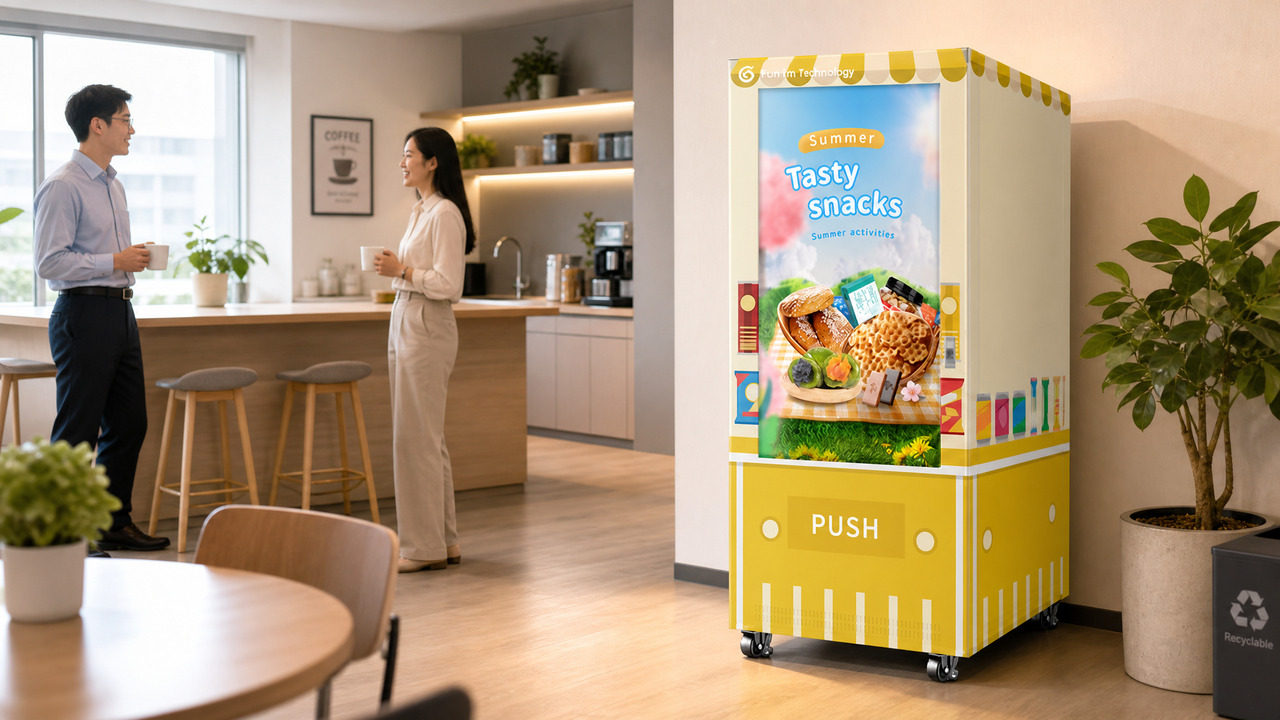
Traditional beverage and snack vending machines are suitable for office buildings, factories, schools, communities, and other scenarios; if you’re targeting hospitals, gyms, hotels, or beauty venues, professional products such as healthcare and beauty/personal care items may better fit on-site needs; if you’re operating in offices, dormitories, or small commercial spaces, micro markets and combination vending equipment may be more suitable.
This means you shouldn’t always be thinking “I want to choose the most profitable vending machine,” but should first clearly consider “what demand exists in my market.”
For example, if you find an office park with a large number of employees but convenience stores far away, then products like beverages, snacks, and coffee may have more opportunity. If users at a fitness venue have stable demand for protein drinks, healthy food, and sports supplies, then the product structure should be designed around these needs.
If you already have offline channels, you can also think in reverse. What resources do you have? Which scenarios can you enter? What do consumers in these scenarios need? Equipment should be selected around these conditions, rather than changing your business model to pursue a certain popular machine.
Define Your Target Customers and Consumer Needs
The word “customers” actually has two layers in a vending machine business plan.
The first layer is the end buyer of products, such as employees, students, residents, tourists, patient family members or fitness users.
The second layer is the venue owner who allows you to place the machines. This can be office building property management, factory management, hotels, shopping malls, schools or other commercial institutions.
These two types of customers have different requirements. Consumers care more about whether they need this product, whether buying is convenient, whether the price is reasonable, and whether payment is simple; venue owners care more about whether the machine takes up too much space, whether it is affected by the environment, whether it can run stably, and whether you can restock and deal with failures in time.
So in your business plan, don’t just write “target customers are consumers ages 18-45.” It is more rewarding to describe concrete scenarios explicitly.
For example: Deploy unmanned retail equipment in office locations with many employees, providing employees with beverages, snacks and daily necessities that are easy to purchase during work hours, reducing time spent leaving the office to buy products. Such a description is more like actual operations than just writing an age range.
Conduct Market and Location Analysis
In the case of vending machines, location is more important than the number of machines. You’ll get very different results from a unit placed in an area with consistent foot traffic, a specific target consumer and high purchasing demand than you will from a unit placed in an area with high foot traffic but consumers who aren’t a match for your products.
So it’s best not just to write about choosing high-traffic locations in your business plan, but to establish your own set of location evaluation criteria.
You need to know how many potential buyers walk by the machine each day, how long they stay, and what time periods they are most likely to buy. Then see if there are any convenience stores, coffee shops, restaurants or other vending machines nearby. If there are lots of competing devices already, then you need to do a further assessment as to whether the market is saturated.
Where you put the machine within your chosen venue is also important. If you put the machine in a corner of a high-traffic lobby that consumers don’t really notice, the actual value of the machine may be less than a location with slightly lower traffic but near a rest area.
It is also necessary to confirm in advance power supply, network, machine access and restocking channels, and whether the venue owner allows long-term equipment placement. For a business plan, these little things will eventually translate into real operating costs.
Different Scenarios Require Different Equipment and Products
Office buildings don’t necessarily need the same product mix as shopping malls, and hospitals may not be suitable for ordinary snack and beverage machines. You can adjust equipment capacity, temperature control functions, product types, payment methods, and appearance design based on the scenario.
Determine What You Plan to Sell
Product mix directly affects the sales performance of vending machines and also impacts inventory, restocking frequency, and loss.
If you operate ordinary beverage and snack machines, you can mix products according to basic products, best-selling products, and test products. Basic products meet stable demand, best-selling products occupy more space, and test products are used to validate new consumer demand.
But if you operate vending machines in a specialized scenario, your approach needs to change.
Beauty scenarios may suit small high-value products like lipstick and skincare; mother-and-baby scenarios can be organized around infant daily necessities; healthcare scenarios should select products based on local regulations and specific consumer demand; office scenarios can combine beverages, snacks, and daily necessities.
Product turnover speed is also an important part. Slow-selling products occupy channels and capital, and may result in expiration or loss. Fast-selling products require higher inventory, otherwise the machine easily runs out of stock.
So the product section of your business plan shouldn’t just say selling snacks and beverages, but should explain how you will test products, adjust product mix, and handle slow-moving inventory.
Plan Vending Machine Equipment Investment
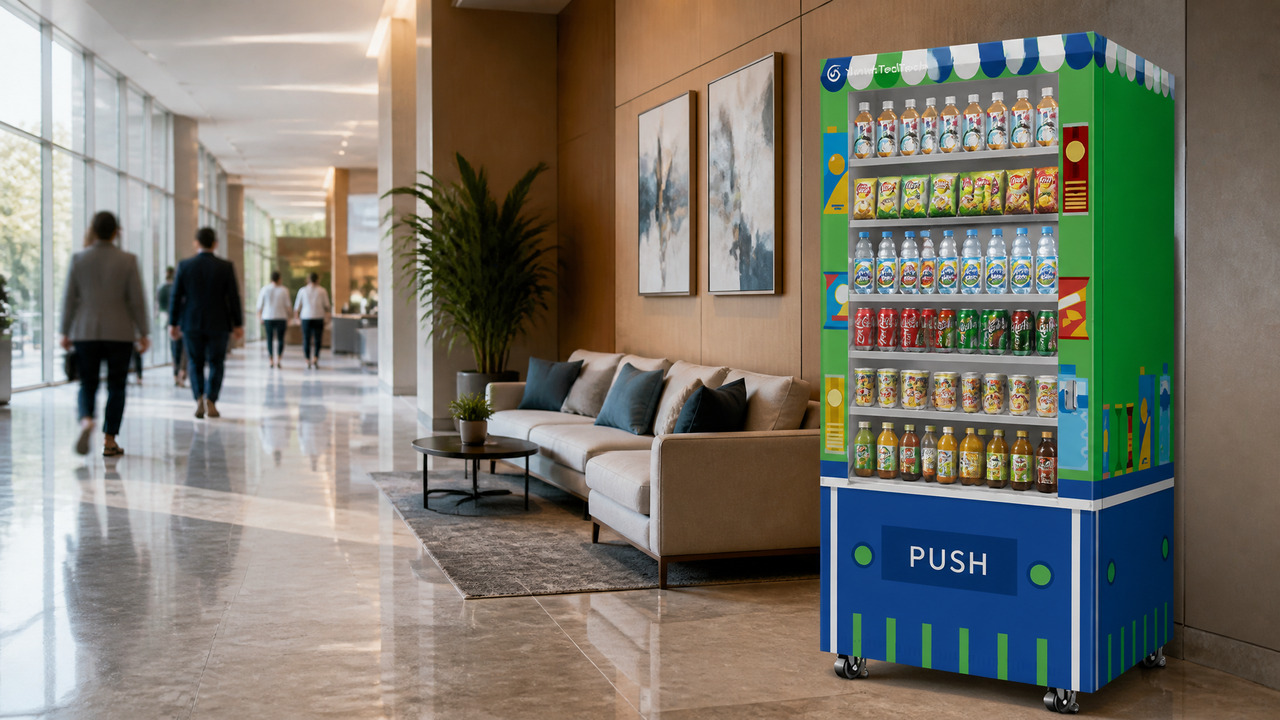
Once you have the business model and products, only then can you start to think about the equipment budget. The first investment in vending machines will likely be more than just the cost of the vending machine itself. Then you need to consider the payment equipment, transportation, installation, initial inventory, venue fees, insurance, licenses and operating capital up front.
If you are planning to buy 3 machines you can split the budget into three.
The first part is the fixed investment like machines, payment hardware and necessary installation costs. The second part is startup inventory i.e. the products required before the machine officially opens. The third element is working capital. This is used to meet restocking, repair, transportation and other expenses that might arise at the beginning of operations.
Here it’s especially important to note: don’t invest all your capital in equipment at once.
Suppose you plan to invest $20,000. If $18,000 is all used to buy machines, the remaining money may not be enough to support product procurement, transportation, repairs, and several months of operations. The business plan looks complete, but after actually starting operations, you’re likely to encounter cash flow problems. Your plan should leave yourself a certain operating buffer.
New or Used Machines?
The market has both new machines and used or refurbished equipment. Used machines may have a lower initial price, but equipment condition, functionality, payment system compatibility, and post-maintenance all need separate evaluation.
If you hope to operate long-term and gradually expand, whether the equipment is easy to manage, maintain, and upgrade should also be included in purchasing decisions, rather than only comparing purchase prices.
Calculate Revenue, Costs, and Profit Clearly
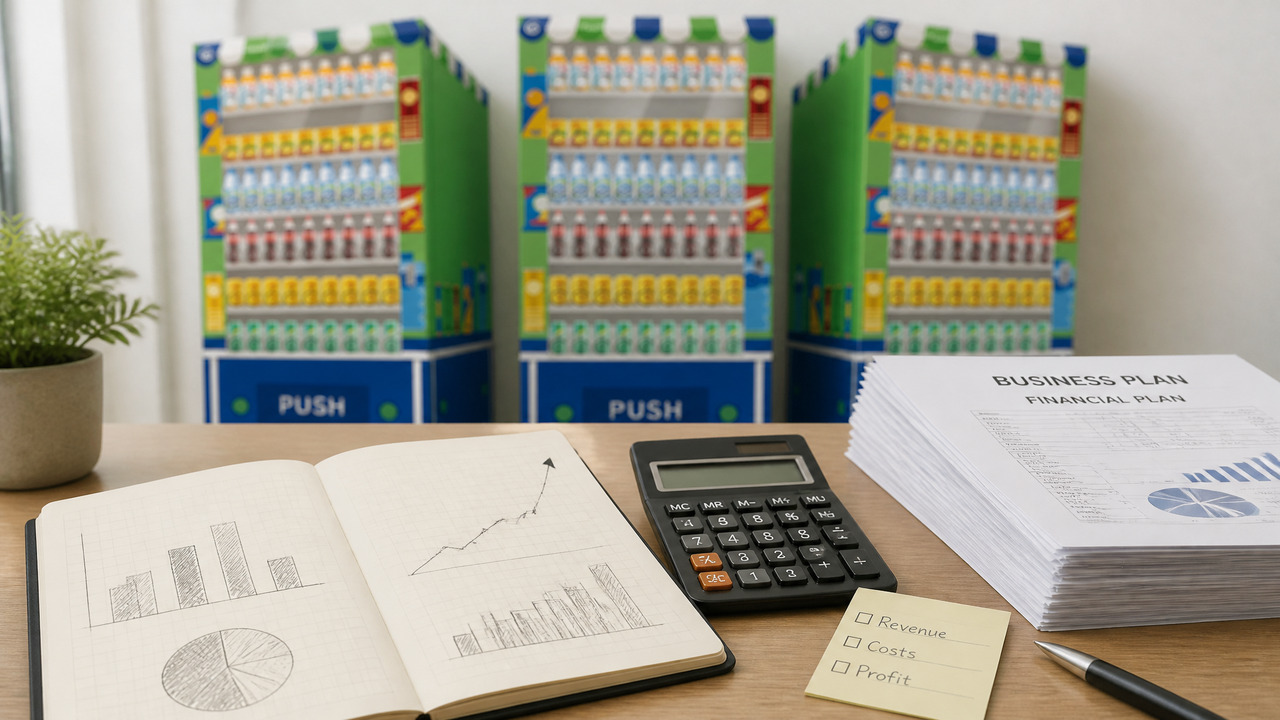
This is one of the most important parts of a vending machine business plan. Don’t just write “estimated monthly revenue $5,000, profit $2,000,” but should explain how these numbers are derived.
Suppose you plan to operate 5 machines, each machine completes an average of 25 transactions per day, with an average spend of $2.50 per transaction.
Let’s calculate:
Monthly sales per machine = 25 × $2.50 × 30 = $1,875
Theoretical monthly sales for 5 machines: $1,875 × 5 = $9,375
Next, deduct product costs, venue commissions, payment fees, transportation and restocking, maintenance, electricity, insurance, and other operating expenses.
Suppose in this example product costs account for about 45% of sales, i.e.: $9,375 × 45% = $4,218.75
If venue commissions, payment fees, restocking transportation, maintenance, and other operating expenses total $2,000, then the monthly operating profit in this example is approximately: $9,375 − $4,218.75 − $2,000 = $3,156.25
Of course, this is just a hypothetical case to help you understand the calculation logic, and does not represent actual returns in any specific market.
When actually creating a business plan, you’d better establish three scenarios simultaneously: conservative, expected, and high performance, rather than calculating only one result. For example, the first scenario calculates based on 15 transactions per day, the second based on 25, and the third based on 35. This way you can see how much cash flow and payback period are affected when sales volume changes.
How to Calculate the Payback Period?
The simplest calculation method is: Payback period = Initial investment ÷ Monthly net profit
Suppose your equipment, transportation, initial inventory, and other startup costs total $15,000. Based on the example model, monthly net profit is $2,500, so the theoretical payback period is: $15,000 ÷ $2,500 = 6 months
But be sure to note here that the theoretical payback period does not equal actually being guaranteed to recoup investment in 6 months.
Because actual operations may experience sales fluctuations, peak and off-seasons, equipment failures, product loss, venue adjustments, and additional transportation costs. So a more reasonable business plan should simultaneously calculate payback time under different sales performances.
Include Payment and Smart Management in the Business Plan
If you plan to operate vending machines long-term, you need to consider the machine’s payment methods and backend management capabilities in advance.
Modern vending machines can support cash payments and can also be configured with bank cards, QR codes, and cashless payment methods such as Nayax based on the target market. For different countries and consumer groups, you need to judge in advance which payment method local consumers are more accustomed to. If your machines only plan for cash payment, it may limit consumers’ purchasing methods. Conversely, if machines can be configured with appropriate cashless payment methods based on the local market, operational flexibility will be higher.
Backend management is equally important. When you only have one machine, manually checking inventory may be acceptable. But when the number of machines increases to 10, 20, or more, you can’t run to each machine every day to check status. If equipment can connect to a backend, you can view sales and inventory, and arrange restocking and maintenance based on machine operating status. For scaled operations, this relates not only to management efficiency but also affects your transportation costs.
A slower-selling machine doesn’t need to be restocked at exactly the same frequency as a high-selling machine. Through data, you can gradually find a more reasonable restocking cycle.
Create a Daily Operations Plan
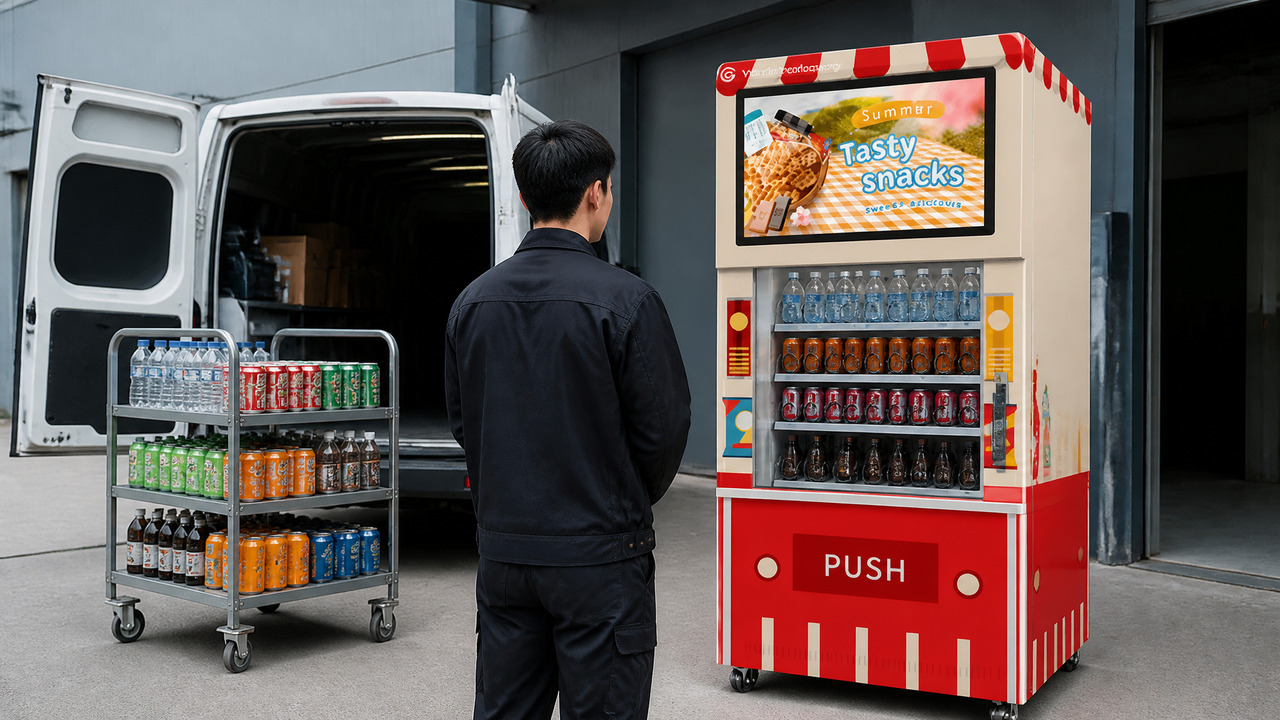
Vending machines don’t automatically make money just by sitting there. You need to arrange in advance in your business plan for restocking, cleaning, equipment inspection, inventory management, fault handling, and sales data analysis.
When first starting operations, you can complete most of the work yourself. As the number of machines increases, the importance of route management becomes increasingly apparent.
Suppose you have 10 machines, 6 concentrated in the same commercial area and the other 4 scattered in different parts of the city. Even if the latter 4 machines seem to have good monthly sales, they may require a lot of time for restocking and maintenance, causing overall profits to be offset by transportation costs and labor time.
So when expanding, you can’t just think about how many machines to add, but also whether these machines can form an efficient operational route. You can set a simple principle in your plan: only add new equipment and locations when the restocking, maintenance, inventory, and revenue data of existing machines are already relatively stable.
Create Your Expansion Plan
If the first machine performs well, you’ll naturally consider expanding. But expansion doesn’t mean buying dozens of machines at once.
A more prudent approach is to treat the first phase as a test. You can first operate 3 machines, each entering different types of scenarios. After a period of time, compare sales, product turnover, restocking frequency, failure rate, and venue costs.
If one scenario performs significantly more stably, then the next batch of equipment can be replicated around that scenario.
For example, if you find that beverage and snack equipment in office buildings performs stably, the next phase can continue developing office buildings, rather than suddenly entering a completely different market.
After the number of machines increases, gradually establish standardized processes, including procurement, product configuration, restocking, equipment maintenance, data statistics, and customer service. A vending machine business that can truly scale is not just one that has more machines, but one that can manage more machines with the same operational methods.
Consider Risks in Advance
A business plan is not meant to prove that the project will definitely succeed, but to discover potential failure points in advance.
Location Performance Below Expectations
If sales remain consistently low after the machine has been running for a while, you can first adjust products, prices, and display methods; if these methods still don’t improve results, you need to consider changing locations.
Equipment Failure
A machine stopping work not only affects that day’s sales but may also affect the venue owner’s trust in you. Therefore, when purchasing equipment, after-sales support, repair capability, and parts supply also need to be considered.
Inventory
Slow-moving products tie up capital and products that move too quickly may often go out of stock. You have to be constantly adjusting inventory based on sales data, not just experience.
Cash Flow
The vending machine business is such that you pay for equipment and product costs up front, and you make sales revenue one transaction at a time. During the expansion phase, if you buy too many machines it is easy to end up with more book assets but not enough cash on hand.
In addition, different countries and regions may have different requirements for vending machine operation, food sales, taxation, insurance, payment, equipment certification, etc. If you intend to operate across regions or even internationally, check the specific regulations of the target market before starting the business and do not directly apply experience from other regions.
Final Thoughts
A good vending machine business plan ultimately comes down to equipment, scenarios, and operational execution. Yunyin has long focused on the design, R&D, production, and sales of smart vending machines, and can provide various equipment and OEM/ODM customization solutions based on different products and application scenarios, helping you further translate your business plan into actual equipment configuration.
FAQ
How many pages should a vending machine business plan be?
If you are just starting out with a vending machine project, you do not have to make the plan very long, but you need to explain the market, the location, the equipment, the products, the costs, the revenue, and the operational logic clearly.
For an internal project evaluation, a few pages of concise core data may be enough. If you are presenting to investors, partners or financial institutions, you can add more data such as market analysis, financial projections, operational processes and expansion plans.
How much money do you need to start a vending machine business?
The initial investment depends on the type of machine, the quantity, the target market and products, so there is no fixed number. Your budget should include at least equipment, payment systems, transportation and installation, initial product inventory, and upfront operating capital. If you do not know the type of equipment yet, you can first determine the machine needs according to the target scenarios and product categories, and then make a procurement budget.
How much can one vending machine earn per month?
Sales revenue is affected by factors such as location, foot traffic, product type, price, operating hours, competitive environment, and consumer demand. The same machine placed in different locations may have very different sales performance.
Therefore, rather than directly believing some online number about “how much each machine earns per month,” it’s better to list daily transaction count, average transaction value, product costs, and operating expenses separately, then build your own financial model.
Should I buy ordinary beverage and snack machines, or customize other types of vending machines?
If your target customers are mainly office employees, beverages, snacks, and daily necessities may be suitable; if entering beauty, healthcare, mother-and-baby, or other specialized scenarios, you can consider corresponding specialized product vending equipment.
Yunyin currently covers multiple application directions including beverages and snacks, fresh/hot food, beauty and personal care, healthcare, mother-and-baby products, and micro markets, and also provides OEM/ODM and customization solutions. Therefore, you can first determine the business scenario, then select equipment based on products and space.
Will management become very complex after the vending machine business scales up?
If you can figure out stable rhythms of restocking and habits of data tracking from the very beginning, the management pressure after scaling will be much smaller, especially when the equipment you use is capable of remote monitoring and centralized management functions. Yunyin’s equipment management system can help you keep a clear operational picture as you expand, without losing control due to the increased volume of equipment.
Can a vending machine business start with just one machine?
Yes. If you’ve just entered this industry, beginning with a handful of machines to test the market can help you validate location, products and operational models at a lower cost. If you have a stable combination of scenario, products and equipment, you gradually increase the number of machines, so you can better control financial and operational risks.

