
When entering the vending machine industry, you may encounter various unfamiliar equipment specs, operating indicators, and procurement terms. Not understanding these terms not only increases the difficulty of equipment selection but may also affect cost accounting and business decisions. This article will help you quickly master common terms from three aspects: machine technology, business operations, and procurement cooperation.
Payment System and Smart Vending Machine Technical Terms
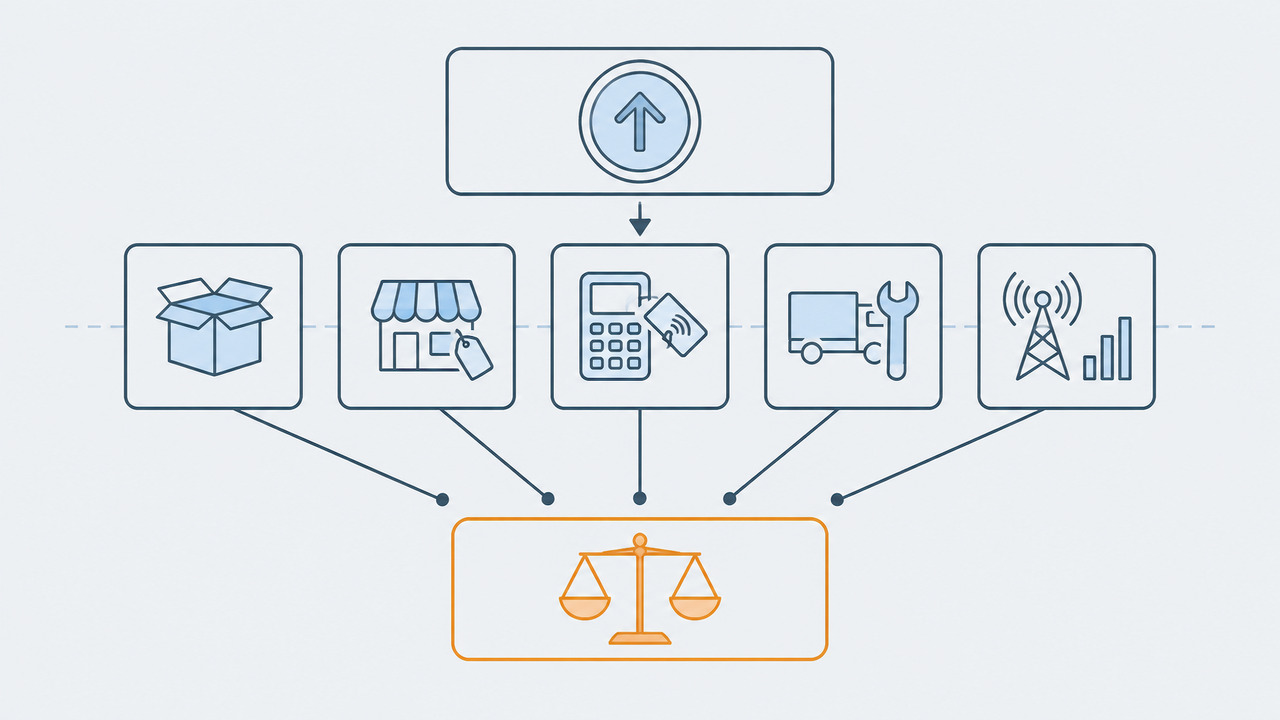
Modern vending machines do more than just collect money and dispense products. The payment methods, the control systems and the remote management capabilities also influence user satisfaction and the operational efficiency of the equipment. Knowing the following terms will help you read product specs and technical solutions better.
Vending Machine Controller
It can be understood as one of the core control units responsible for coordinating machine operation. Depending on equipment design, it may participate in processing purchase instructions, controlling the dispensing mechanism, reading sensor signals, and coordinating other equipment modules.
The VMC is not the same concept as remote management software. The former is mainly responsible for device-side control and coordination, while the latter is used to view data or manage equipment. When purchasing, if you need to connect specific payment devices or peripheral hardware, you should confirm the compatibility between the whole-machine control system and related components.
Payment System
This is responsible for processing consumers’ payment operations. Common methods include cash, bank cards, contactless payments, and mobile payments; which methods are supported depends on equipment configuration, payment terminals, and the requirements of the target market.
What needs to be distinguished is that the machine reserving a payment terminal installation position does not mean it already has complete payment capability. You also need to consider payment terminals, payment service providers, transaction fees, network connections, and local requirements related to payment services.
Multi-Drop Bus
It is a device communication standard common in the vending machine industry, used to support communication between the machine control system and some peripheral devices, such as payment terminals and cash handling devices conforming to the corresponding standard.
It mainly solves the problem of how information is exchanged between devices, but it is not equivalent to a specific payment method, nor can it alone prove that the whole machine supports all bank card or mobile payment services.
If you plan to purchase equipment and connect third-party payment terminals, you can confirm with the supplier whether the control system, interfaces, terminal models, and software configurations are mutually compatible.
Telemetry and Remote Data Transmission
This is the technology by which equipment transmits operating data to a remote system. In vending machine scenarios, the relevant data may include equipment status, sales records, or fault information, depending on the capabilities of the machine, communication module, and software system. It differs from ordinary on-site inspection: remote data transmission allows managers to understand part of operations without personally reaching each machine. But telemetry is not a fully unified standard, and the data different devices can collect and upload may vary.
Vending Management System
Primarily for a centralized view of equipment information and daily operation management. Functions may include: viewing equipment status, analyzing sales data, managing products, remotely adjusting parameters.
Telemetry concerns itself with data collection and transmission. The VMS concerns itself with data presentation, analysis and management. The two can be used together but they are not the same concept.
If you want to run a number of machines, you need to consider whether the system can control different machines uniformly, what data can be viewed, what operations can be performed, and whether these functions need other software services or communication fees.
Cashless Payment Terminal
This is a terminal device used to receive and process cashless payments. It may be installed on the outside of the machine or integrated with the touchscreen or other interactive modules.
When making your selection, in addition to confirming payment methods, you should also understand whether the terminal needs a separate communication module, how accounts are settled, whether monthly fees or transaction fees are charged, and the connection requirements between the terminal and the machine control system. Only then can you more accurately estimate equipment investment and subsequent operating costs.
Vending Machine Operations and Financial Terms
The machine dispensing products normally is only the starting point of the business. What really determines whether a business can operate continuously is the relationship between sales revenue, product costs, site fees, and other operating expenses.
Gross Profit
Gross profit is operating revenue minus the cost of goods sold. For example, if your monthly sales revenue is 10,000 yuan and the cost of goods sold is 6,000 yuan, then the gross profit is 4,000 yuan.
Gross profit can help you understand the profit margin obtained from the product sales themselves but it cannot fully reflect other costs incurred during the operation of the machine. This means that a higher gross profit does not automatically equal a higher final net profit.
Net Profit
Net profit is the profit you finally get after deducting related costs, expenses and taxes as per the accounting standards applicable. Costs in a vending machine operation may include the cost of products, rent of the site or commissions, payment processing fees, transportation costs, repair costs, communication costs, and depreciation of equipment. In accounting, they need to be classified according to the business and accounting rules to avoid duplicate deductions or missing expenses.
If you plan to invest in more than one machine, it is a good idea to review operating results on three levels: individual machines, specific locations and the overall business. Only then can you see which machines are actually profitable and which locations need to be changed.
Operating Expenses
For a vending machine business, operating expenses may include daily management, equipment maintenance, communication services, transport, and other operating expenditures.
Its difference from product cost lies in the different operating links each corresponds to. Product cost is mainly related to the products sold, while operating expenses more reflect the expenditures needed to keep the business running.
When making a budget, you can record one-time equipment purchase investment, ongoing operating expenses, and product working capital separately, avoiding underestimating the funds you actually need to prepare.
Break-Even Point
This is the level of operation at which revenues are equal to the related total costs, but there is no profit or loss as yet.
For example, if a machine has 1,000 yuan of related fixed costs each month, and each product sold can bring in 5 yuan to offset fixed costs, then under a simplified model with other conditions unchanged, 200 products need to be sold each month to reach break-even.
But the example doesn’t account for other potential variable costs. So for your real calculations you want to also factor in things like product cost, transaction fees, site commissions, etc. The purpose of break-even analysis is to help you determine the sales needed from the equipment to cover operating costs.
Return on Investment
Return on investment is a way to measure the relationship between the returns that are generated by an investment and the investment itself.
For example, in vending machine projects it can be used to analyze the returns on equipment procurement, site preparation and other initial investments. However, in the calculation you need to clarify whether you use net profit, cumulative returns or other indicators, and what time range you use.
ROI isn’t the same as payback period either. Return on investment is the ratio of returns to investment. Payback period is the time when the cumulative returns are able to cover the initial investment. This, together with the two, helps you to better assess the capital efficiency of various projects.
Inventory, Site Selection, and Daily Operations Terms
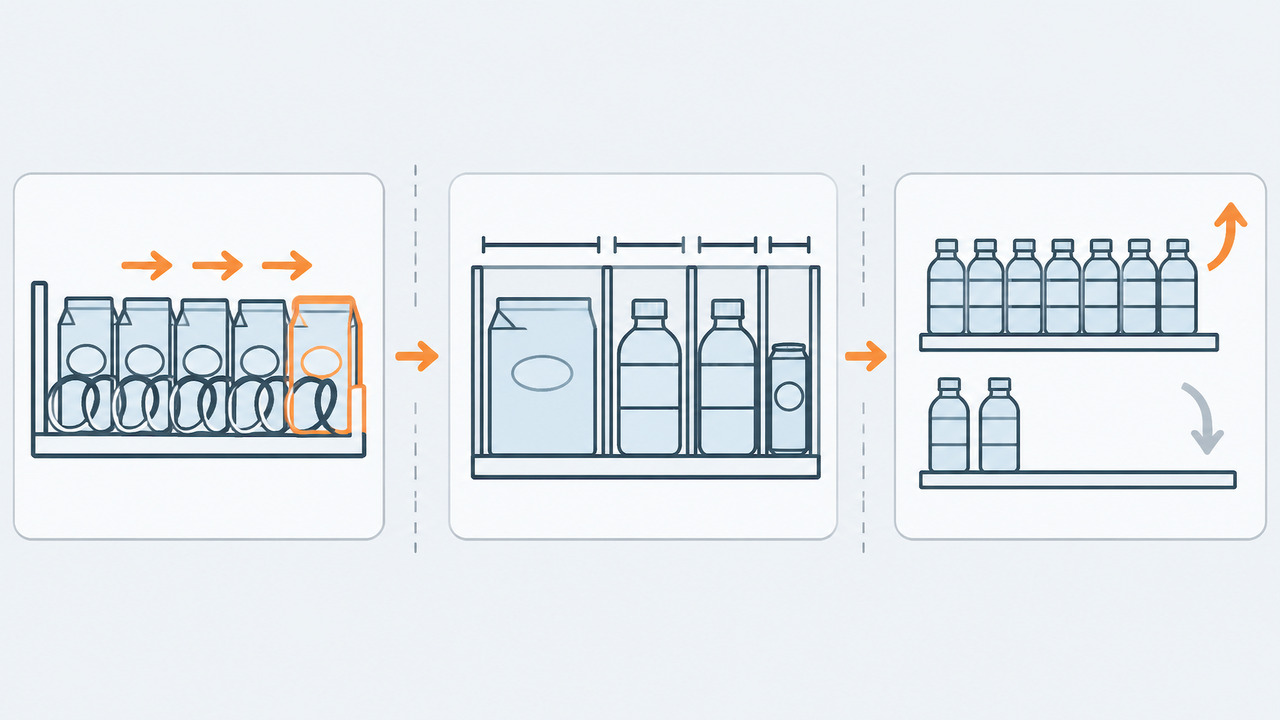
After equipment is put into use, you also need to manage product inventory, restocking frequency, and sales locations. These terms can help you understand the key indicators in daily operations and judge whether the business has room for improvement.
Inventory Management
Registering product quantities, monitoring inventory modifications, scheduling replenishment, and handling products close to expiration.
Too little inventory can cause stockouts of best-selling products; too much inventory can tie up capital and storage space and even cause expiration losses. For a vending machine business, inventory management isn’t just about the products in the warehouse, but also about the actual inventory inside each machine.
First In, First Out
namely, concentrating on the sale or usage of products that were in the warehouse earlier.
FIFO helps you minimize your losses on expiration and near expiration for food, beverage and other products that have a shelf-life requirement. In actual operation, shelf order should be arranged according to production dates, shelf life and storage requirements.
If the products have batch management requirements, the corresponding batch information should also be recorded. You cannot judge whether the products are still suitable for sale based only on the warehouse entry order.
Planogram
To find the position and quantity layout of various products in the equipment.
Vending machine space is a scarce commodity, and the channel in which a product is placed and the amount of space that each product occupies influence restocking and sales performance. The layout has to be rational, balancing product size, dispensing structure, consumer browsing habits and sales data.
“The products with higher sales, for instance, may need to be allocated more space, and the products with special sizes need to be given priority consideration for channel compatibility. The layout should not only be neat, but also allow products to be stored and dispensed normally.
Sales Velocity
It is the rate at which the products are sold in a given time period, usually measured by the sales volume on a daily, weekly or monthly basis.
If one product sells 50 units a week and the other product sells only 5 units a week, there is a clear difference in sales velocity between the two products. However, sales velocity alone is not enough to determine if a product is worth keeping. It also must be rated against procurement cost, selling price, gross profit and restocking difficulty.
Regular sales velocity analysis helps you tweak inventory, optimize your product mix and cut down the long-term occupation of limited channels by low-demand products.
Site Commission Rate
It means the commission percentage the operator pays to the site party under the agreement. Some partnerships may be settled by a percentage of sales, or fixed rent or some other agreed method.
When signing the site cooperation agreement, you need to clarify the basis for calculating the commission, the settlement cycle, the payment method, as well as the handling of refunds, taxes and other deduction items. As different contracts have different calculation standards, you cannot simply compare the commission rates. What matters to you is to figure out if the location still has operating value after you’ve factored in site fees into the overall profit model and subtracted related costs.
Vending Machine Procurement and Supply Chain Business Terms
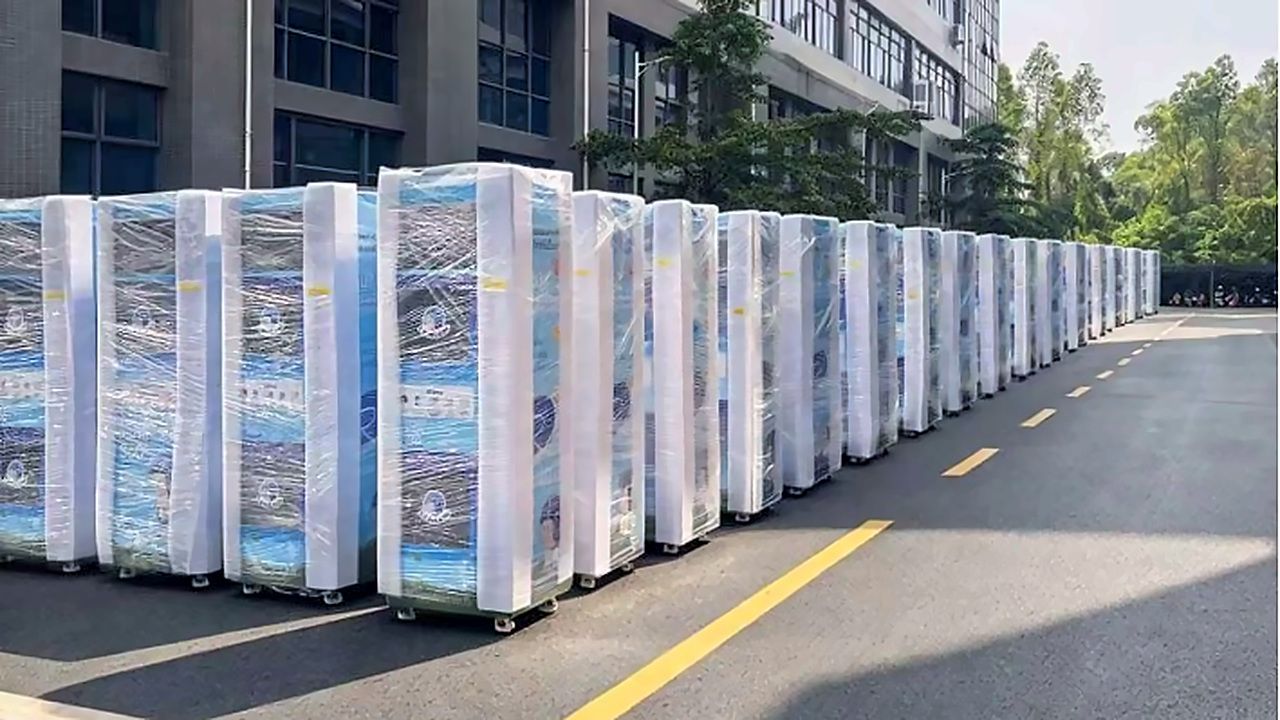
If you plan to purchase equipment, develop your own brand, or find a manufacturer for long-term cooperation, the following terms will frequently appear in product quotes, procurement contracts, and supplier communications.
Original Equipment Manufacturing
Usually used to describe the cooperation model where the brand owner entrusts a manufacturer to produce equipment or products according to the agreement. In the vending machine industry, the specific cooperation content may involve producing equipment according to the buyer’s requirements, adopting the agreed brand identity, and complying with the technical specifications confirmed by both parties.
But that doesn’t mean that all customization content is automatically included in the quote. You have to define things like name recognition, look requirements, equipment configuration, quality standards, acceptance methods, and IP ownership.
Original Design Manufacturing
Usually refers to the cooperation model where the manufacturer provides design and manufacturing capabilities and the buyer selects or adjusts the solution based on their own business needs.
Compared with OEM, ODM cooperation may involve more early-stage design work, but the specific division of labor depends on the agreement between the two parties. Some projects adjust based on existing equipment platforms, while others need to redevelop part of the structure or functions.
If you want to launch your own-brand vending machines, you should first clarify which parts can use existing solutions, which parts need customization, and who holds the design results and related intellectual property.
Minimum Order Quantity
That is, the minimum quantity a supplier requires to accept an order under specific procurement conditions.
Different products, customization levels, and production arrangements may correspond to different MOQs. Standard-configuration equipment and equipment requiring specially developed appearance, structure, or functions may have different ordering conditions.
If you’re just starting out, you don’t need to assume that all manufacturers require large-volume purchases. You can inquire about whether it’s possible to procure just a single unit, whether prototypes require additional fees, and how small-batch orders differ in price and delivery times.
Lead Time
Refers to the time it takes to perform a specific task. This is commonly used in equipment procurement to describe the cycle from an agreed order node to production completion or delivery, but different suppliers may define the start and end times differently.
You should verify that the lead time includes design confirmation, material preparation, production, testing and transport. Also verify whether the delivery time will be adjusted accordingly for customized equipment once the buyer makes changes to the design, delays confirmation or changes the configuration.
Don’t just look at the single number of days on a quotation. Knowing when the lead time starts and what links are not included allows you to plan your project more accurately.
Customization
Changing the appearance, structure, configuration or function of equipment to suit project requirements. The general requirements may define the trademark, the color, the product storage structure, the screen interface, and the equipment configuration for specific usage scenarios.
Customization doesn’t have to mean designing from scratch. Some of the requirements may be satisfied with tuning of existing solutions, others may require redesigning, developing or testing.
When making an inquiry, it is recommended to separate requirements into must-have and optional items and describe target products, installation environment, sales process and expected functions. This allows suppliers to assess technical feasibility, cost and delivery arrangements.
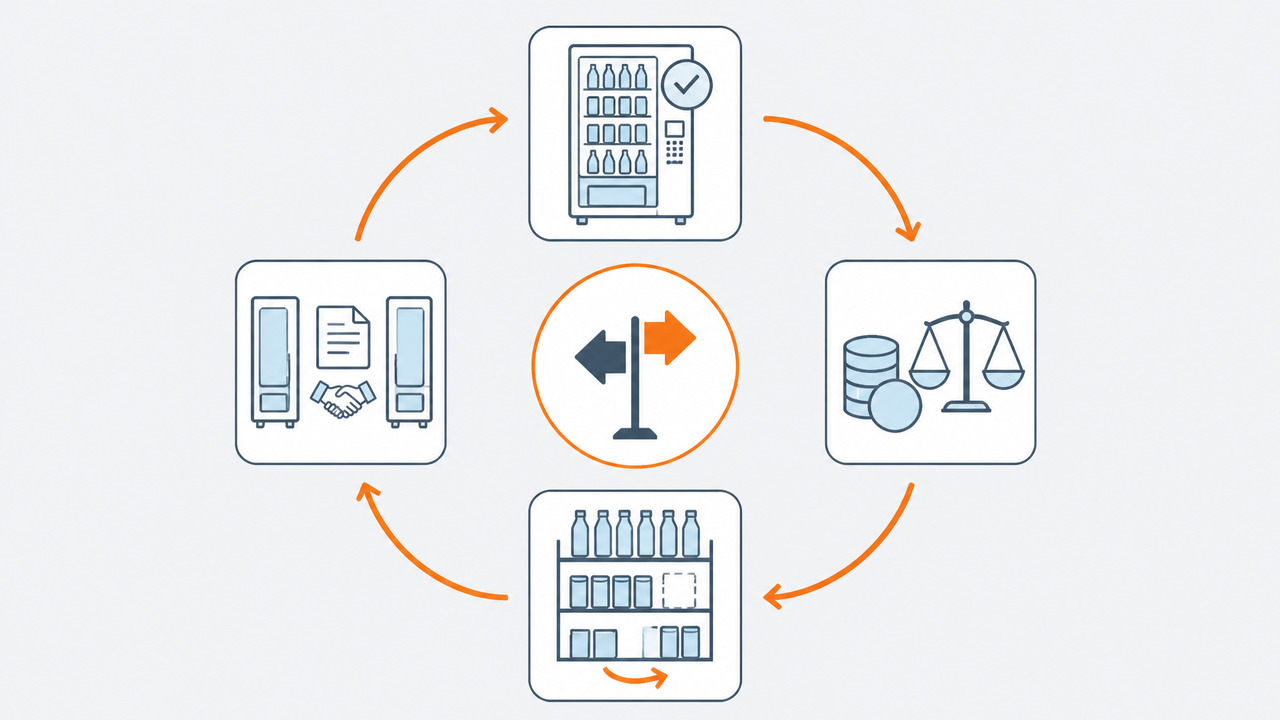
How to Apply Terms to Actual Business Decisions
The purpose of knowing terms is not to remember as many English abbreviations as possible, but to use them in actual operations.
Clear questions should be asked about important terms before procurement or cooperation. For example, don’t ask suppliers whether the equipment is smart, but ask what equipment data can be viewed and whether remote operations are supported. Don’t ask whether customization is possible, but confirm the specific customization items, development costs and delivery times.
When you are able to translate professional vocabulary into specific technical requirements, contract terms, and operating indicators, these terms can actually help you reduce communication costs and make more informed business decisions.
Final Thoughts
Learning vending machine terminology is a key step in planning your retail business, evaluating equipment and selecting partners. Yunyin designs, develops, produces and sells smart vending machines and provides a variety of equipment and unmanned retail solutions. If you are looking for a vending machine manufacturer or have OEM/ODM customization needs, you can further communicate with our team according to your target products, usage scenarios and budget.
For reference, you can compare a spiral vending machine for snacks and drinks, a wall-mounted vending machine for tight spaces, and a retail vending machine for mixed retail scenarios.
FAQ
How should the intelligence level of a vending machine be judged?
Don’t just look at whether the equipment is equipped with a touchscreen or whether it uses a smart controller. You can confirm whether the equipment supports the required payment methods, sales data viewing, equipment status monitoring, and remote management functions, and understand whether these functions require additional software, communication modules, or service fees.
When buying a vending machine, how do you judge whether the equipment suits your products?
First clarify the dimensions, weight, packaging form, storage conditions and expected dispensing method of the product. Then check the equipment capacity, internal structure and dispensing mechanism. In addition to checking refrigeration and storage requirements, if you sell beverages or food, you need to focus on an assessment of product placement and dispensing compatibility if you sell apparel, personal care products or other special products. You can give the manufacturer the real specifications of the product and ask them to judge how feasible it is to adapt it.
Which cooperation method, OEM or ODM, is more suitable for entrepreneurs?
It’s all about your brand planning, product design capabilities and budget. In case you already have clear design and technical requirements, you can think of OEM cooperation. If you want to benefit from the existing design and development capabilities of the manufacturer, you can consider the ODM solution. If you are an entrepreneur new to the vending machine industry, it is advised to first determine what needs to be customized, then compare development costs, MOQs and lead times.
In a vending machine procurement quote, besides the equipment price, what other costs should you pay attention to?
Apart from the cost of the equipment itself, you should also consider transport and insurance, taxes, installation conditions, payment terminals and related service fees, software or communication fees, and later maintenance and spare parts costs. The costs are affected by the equipment configuration, destination and terms of the contract. Request the supplier to explain what is included and excluded in the quote, and compare the total investment to the projected operating expenses rather than just the cost of the individual pieces of equipment.
Is a lower vending machine MOQ always better?
Not necessarily. Lower MOQ can reduce first purchase quantity and inventory pressure but unit price, customization fees and production arrangements may be different as well. You can first see if the standard equipment will fulfill your needs and then compare the overall costs of small-batch and bulk procurement. For projects with your own brands or special functions, you should confirm the MOQ, prototype fees and the conditions for subsequent additional orders in advance.
What capabilities should a vending machine manufacturer have?
When selecting a manufacturer, you can thoroughly examine product R&D and manufacturing capabilities, equipment types, quality control, customization capabilities, delivery arrangements and after-sales support. Also, for international procurement projects, you should verify whether there are relevant certifications for the target market and if payment, communication, and equipment configurations are adaptable for local needs. Yunyin is mainly engaged in the design, research and development, production and sales of smart vending machines; if you need to evaluate various types of equipment or plan customized projects, you can further communicate specific product and technical requirements.
If I want to purchase multiple types of vending machines, how should I present the requirements to the supplier?
It is recommended that you first make a list of procurement requirements, including target market, products sold, usage scenarios, quantity of equipment, payment methods, appearance requirements, budget, and expected delivery time. If you have multiple types of machines you can describe the purpose of each type separately, rather than using the same set of configurations for all machines. Yunyin offers a variety of smart vending machines and unmanned retail solutions, available for consultation on equipment selection, product customization, and cooperation arrangements based on project requirements, to help you implement your procurement plan more efficiently.