
When promoting products, you may encounter some problems. How to efficiently distribute product samples, control campaign costs, and turn consumers’ trial interest into actual purchases…… Product sampling vending machines provide a new option for automated sampling. This article introduces suitable products and effect evaluation methods, helping you plan a sampling plan that better fits your business goals.
What Is a Product Sampling Vending Machine?
A product sampling vending machine is equipment used to automatically dispense product trial samples, experience packs, or promotional gifts. You can place it in malls, airports, hotels, exhibitions, office buildings, or other places where target consumers frequently appear, letting people receive samples through screen operation, QR code scanning, or verification methods meeting campaign requirements, and you can also sell small-size trial products based on the campaign design.
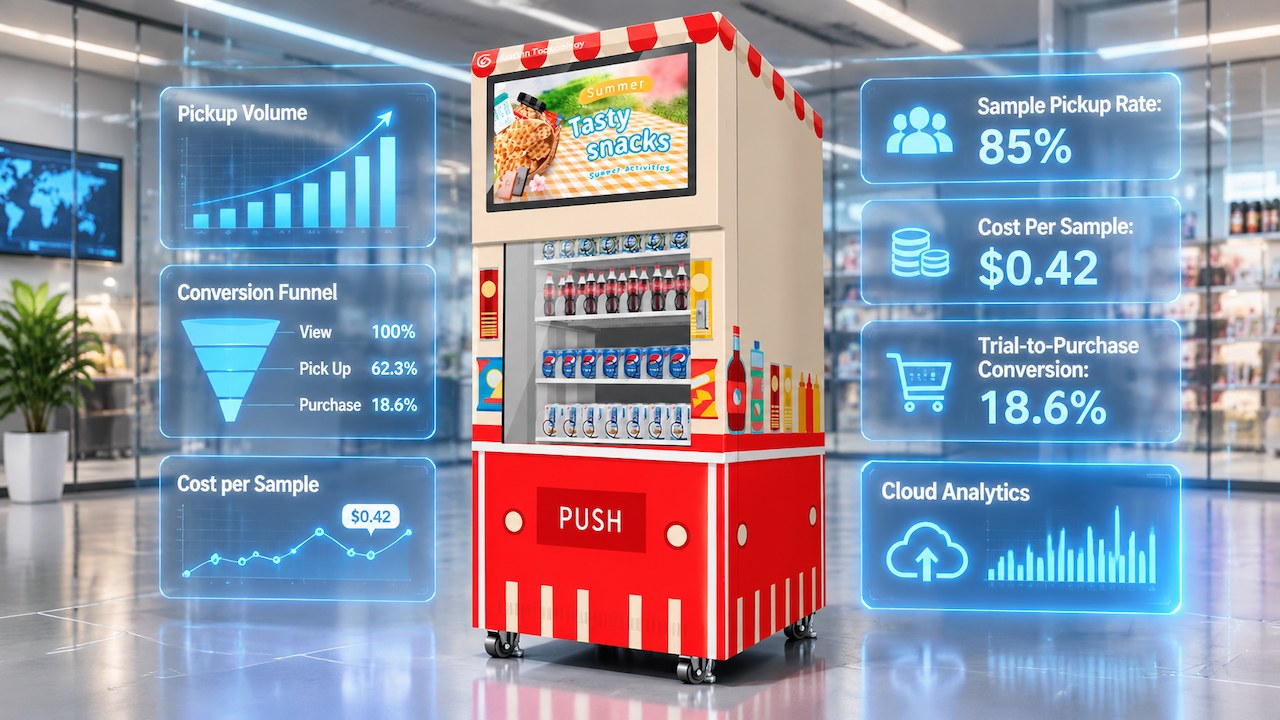
Compared with manual sampling, automated sampling can reduce the need for on-site staff to continuously dispense products, and provide clearer records for campaign management. You don’t have to rely only on staff’s verbal feedback; you can also combine equipment records, sample consumption, campaign costs, and subsequent sales data to judge whether the campaign achieved expected goals.
Why Use a Product Sampling Vending Machine?
When buying unfamiliar products, consumers often need to first understand the actual experience of the product. Especially for skincare, perfume, food, and personal care products, consumers may want to try first before deciding whether to buy. If the brand can only introduce products through advertising, consumers can hardly judge whether a product fits their needs before actually experiencing it.
Previous purely manual sampling campaigns could solve part of the problem, but also had some limitations. Manual dispensing involves staffing, material preparation and site order management. The longer the campaigns, the higher the labour costs and the more difficult the execution. It may be difficult to accurately understand the number of samples distributed, the status of the pick-up in different time periods and whether the pick-ups were actually interested in the product after the campaign.
Another choice is product sampling vending machines. Under the fixed working conditions, the equipment can complete product dispensing and the pickup process is more unified. Combined with functions such as screens, QR code scanning, identity verification or background management, you can also customise the pickup steps according to the needs of the campaign, and record the corresponding operation information.
But automated sampling does not guarantee that sales will increase. The real value of the machine relies on whether the products are suitable for the target audience, whether the placement location is appropriate, whether the pickup process is simple and whether there is reasonable purchase guidance after the campaign is over. It’s best thought of as a product experience and marketing operations tool – not a standalone guarantee of sales growth.
What Products Are Suitable for Dispensing Through Product Sampling Vending Machines?
Suitability of a product has to be assessed in conjunction with packaging size, weight, storage conditions, channel structure and hygiene requirements.
Brand Giveaways, Promotional Materials, and Other Samples
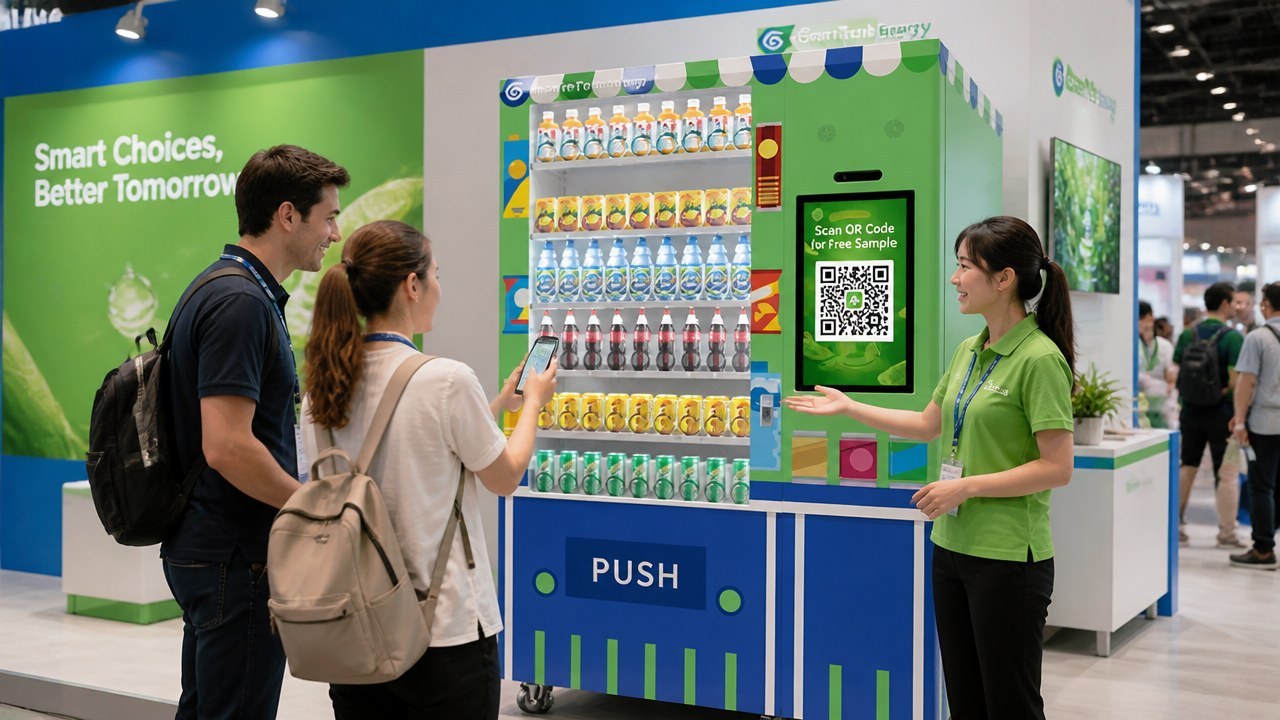
Product sampling vending machines can be used to dispense brand merchandise, event gifts, promotional materials, and other products meeting equipment conditions. For exhibitions, product launch events, campus activities, or brand pop-up events, you can make the machine part of the on-site interaction.
For example, participants receive gifts after completing specified operations, or receive promotional materials after learning campaign rules through the screen. Compared with fully relying on manual dispensing, this approach makes pickup steps more unified and lets the equipment become a fixed interaction entry point at the event site.
Beauty, Skincare, and Perfume Samples
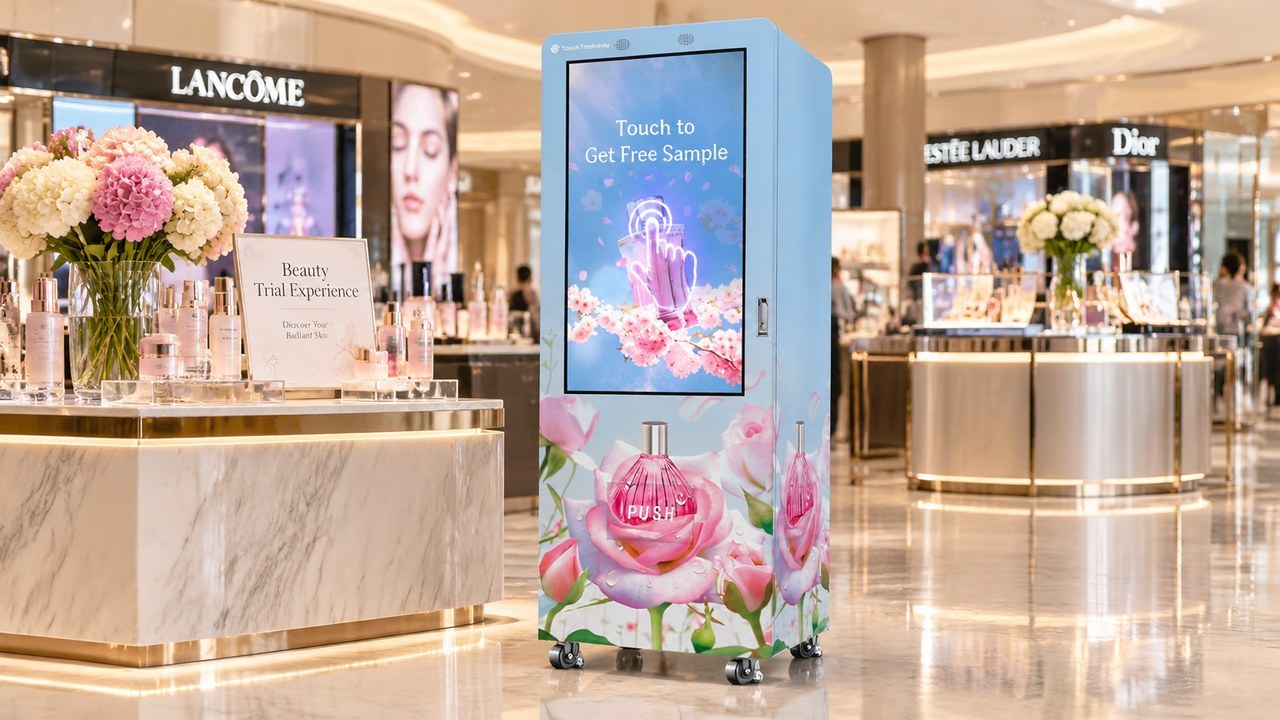
The beauty industry is very suitable for exploring automated sampling. Consumers may want to first experience the texture of skincare, the scent of perfume, or understand whether a new product fits their usage habits. You can place small-packaged skincare, individually packaged trial products, or other products meeting equipment requirements into the machine, letting consumers pick them up in shopping malls, beauty retail spaces, hotels, or brand event sites. Brands already running a cosmetics vending machine can add sampling to the same footprint instead of renting separate space. After receiving new products, consumers can continue learning about the product through information on the packaging, QR codes, or other compliant campaign entry points.
Food and Beverage Samples
Food, snacks, beverages, and individually packaged trial products can also be dispensed through product sampling vending machines. You can arrange new product experiences in supermarkets, office spaces, campus commercial areas, or brand events, letting consumers form initial impressions after actually contacting the product.
However, for food, storage conditions are especially important. Room-temperature packaged food and food requiring refrigeration may have completely different equipment requirements. Food sampling also needs to consider labels, allergen information, shelf life, restocking management, and local food safety regulations. If the campaign involves free tasting, you can’t ignore food safety just because no fee is charged.
Daily Necessities and Personal Care Products
Small packages of washing and care products, personal care products, cleaning products, and other daily necessities suitable for trial can all become candidate products for sampling campaigns. You can choose placement locations based on consumers’ life scenarios, making samples easier to pick up when there is actual demand.
For example, in hotel environments, personal care products can be combined with the stay experience; in fitness venues, suitable cleaning or care products can serve post-workout usage needs; in retail stores, daily necessity samples can help consumers learn about new brands or new products.
How to Measure the Operating Results of a Product Sampling Vending Machine?
The results of a product sampling vending machine can’t be judged only by how many samples were dispensed. You need to clarify goals before the campaign starts and choose metrics corresponding to the goals.
Record Sample Pickup Volume and Pickup Rate
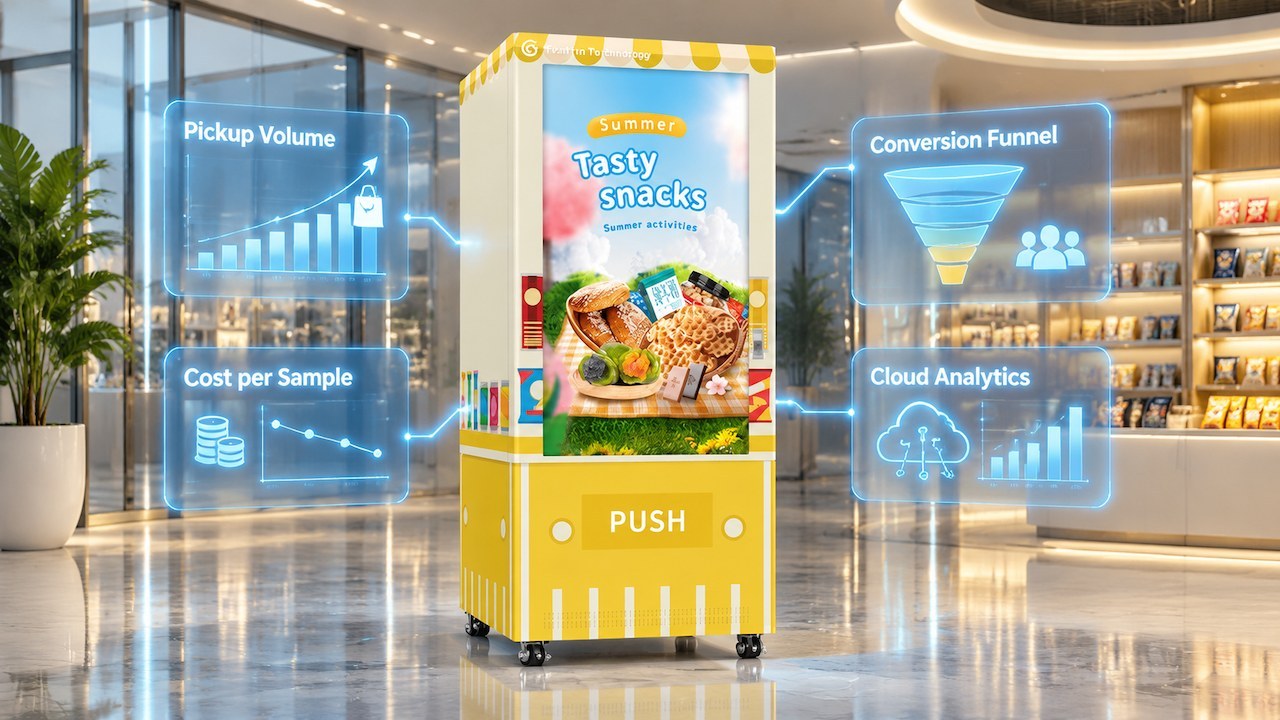
Sample pickup volume can reflect how many products the equipment actually dispensed. You can also combine equipment available time, sample inventory, and foot traffic at the location to judge whether the equipment was fully utilized.
If pickup volume is low, you can further check the equipment location, whether campaign information is clear, whether products suit the target population’s needs, and whether pickup steps are too complex. Note that pickup volume is only meaningful for comparison when the statistics period, inventory, and equipment operating status are clear. If a machine frequently runs out of stock, or can’t operate normally part of the time, its recorded results can’t simply be directly compared with equipment operating normally all day.
Calculate the Cost per Sample Dispensed
Cost per sample dispensed can help you judge whether the campaign is running within budget. A common calculation method is: cost per sample dispensed = total campaign cost ÷ number of samples actually dispensed
Total campaign cost should include samples, packaging, equipment deployment, venue, staff, restocking, and other related expenses per the project’s actual situation. Avoid only calculating the sample’s own price while ignoring other necessary expenses.
If your goal is to get more trial users, you can compare cost per sample dispensed across different locations or campaign formats. If your goal is to promote sales, you also need to further observe purchase performance after sample pickup.
Observe Purchase Conversion After Trial
Purchase conversion is one of the important metrics for measuring the commercial value of sampling campaigns, but you first need to clarify what counts as an effective conversion. If you can identify subsequent purchases through coupon redemption, order records, or compliant data association methods, you can calculate the number of people or orders who bought the full-size product after picking up samples, and compare it with the number of pickups.
You can use the following formula: trial-to-purchase conversion rate = number of buyers attributable to the sampling campaign ÷ number of sample pickups meeting statistics conditions × 100%
Evaluate Performance Across Locations and Products
When running campaigns in multiple locations you can compare pick up volume, cost per sample dispensed and subsequent purchase performance across locations finding environments more suitable for the target products. Product sampling vending machines can generate pertinent operation logs, and reading them next to your vending machine sales data lets you analyse pickups against product categories, time spans and inventory changes. If there is no relevant data for the project, you can supplement it with regular inventory counts, campaign records or other appropriate means.
It is recommended to change only a few key factors at a time, for instance the location of the placement, the sample type, or the pickup process. This way, you can better determine which performance changes are caused by which tweaks, instead of changing all settings at once and ultimately never being able to find out what really works.
Evaluate Long-Term Brand Value
All sampling campaigns don’t aim to drive immediate sales. For new product launches or brand awareness campaigns you can also check effective participation count, consumer feedback, reach of the brand message and whether there are any further product enquiries or purchase behaviour after the campaign ends.
But these metrics need to be defined according to the campaign goals and the directly recorded data should be separated from the estimated results. The equipment may have recorded a number of pickups, but that doesn’t mean the same number of people remembered the brand. The campaign may have received a number of interactions, but that doesn’t mean all these interactions will eventually turn into orders. A more reasonable approach is to combine equipment operating data with appropriate follow-up surveys or sales records, and gradually judge whether the campaign really helped you achieve expected goals.
Final Thoughts
The use of product sampling vending machines allows for a more flexible approach to brand promotion and product trials. If you are looking for a product sampling vending machine manufacturer that meets the needs of your business, Yunyin can evaluate customisation solutions based on your products and business goals, and help you plan automated sampling projects that better match actual needs. Contact the team to discuss further equipment configuration and cooperation needs.
FAQ
Are product sampling vending machines suitable for short-term marketing campaigns or long-term operations?
Either of the two cases can be considered. Short-term campaigns should cover transport, installation, deployment and post-campaign handling of equipment at the site. Long-term operations should consider durability of equipment, frequency of restocking, maintenance arrangements, and ongoing operating costs. Depending on the campaign cycle and plans for equipment reuse, you can choose an appropriate plan.
How much inventory should be prepared in advance for a product sampling vending machine?
Inventory should be based on expected volume of pickups, length of campaign, restocking cycle and equipment capacity. In the first campaign, you can know the actual pickup speed by small-scale testing and then adjust the stocking quantity. Inventory should be reasonably arranged to avoid waste for over-stocking, especially for products with short shelf life or special storage conditions.
Can a product sampling vending machine store multiple products at the same time?
Yes. You can plan combinations of products by sample size, packaging and dispensing method. For the simultaneous dispensing of several products, it is recommended to determine in advance the storage space, inventory assignment and dispensing requirements for each sample.
How can product sampling vending machines help brands promote new products?
Brands can combine new product trials with product introduction, QR code interaction, promotion and other elements. Consumers can further learn product information or enter the purchase channel after picking up samples. Brands can record pickup situations and match them to later sales to better evaluate how effective various promotional campaigns are.
How should restocking be arranged for product sampling vending machines?
Restocking plans can be made based on the capacity of the equipment, speed of sample pickup, the cycle of the campaign and inventory status. In places with a lot of foot traffic, you can appropriately increase the frequency of inventory checks; for equipment that is operated for a long time, you can adjust the restocking quantity and time based on historical pickup data to reduce the impact of stockouts on campaigns.
Can product sampling vending machines display brand ads and product introductions?
Yes. The screen can be used to display brand information, product features, campaign rules, pickup guidance, allowing consumers to learn about products while operating the equipment. You can also adjust display content based on different promotional campaigns.
What design considerations are needed when customizing product sampling vending machines?
A custom vending machine plan may include body appearance, trademark, equipment size, product storage and dispensing structure, operation interface, and functions required. If there are clear brand images or special sampling processes in your project, it is recommended to sort out the design requirements and product specifications in advance, which can make it easier for manufacturers to assess the configuration of equipment and formulate plans.
What support can Yunyin provide for product sampling vending machine projects?
Yunyin is engaged in the design, R&D, production and sales of smart vending machines, and can provide customised solutions for product sampling vending machines based on existing models according to project requirements. Cooperation communication can focus on product adaptation, equipment structure, brand appearance, screens, QR code scanning, payment, backend management and other required functions, helping you plan equipment suitable for specific application scenarios.

