
Many people discover after purchasing the equipment that the machine itself is not the only factor determining the revenue. Whether the products meet the consumers’ needs and are suitable for the deployment scenarios are important reasons affecting the long-term operation. This article will analyze the types of the most popular products in vending machines and how to select more suitable product combinations based on different markets and scenarios.
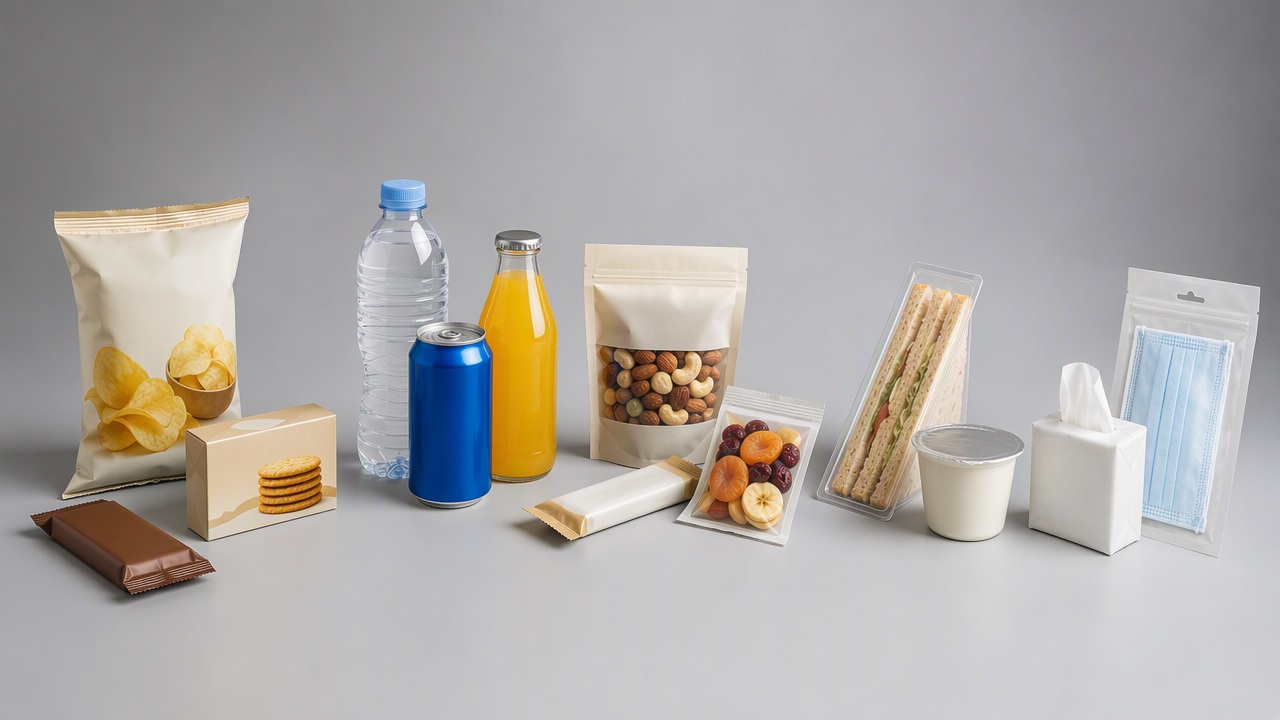
The most popular product category in vending machines
Snacks: The most stable selling category in vending machines
Snacks have always been one of the most mature product categories in the vending machine industry. Products such as chips, chocolate, cookies, nuts, and candies have obvious advantages: they are familiar to consumers, do not require additional introduction, the purchasing process is simple, and they are suitable for various scenarios such as offices, schools, shopping malls, and stations.
For you, the greatest advantage of snacks is the flexibility of product specifications. Products from different brands and with different packaging sizes can be adjusted according to the capacity of the shelf, allowing you to optimize the product mix based on the preferences of local consumers. In the European and American markets, chocolate bars, nuts, and cereal bars are usually popular among office and school consumers; while in some regions with a stronger trend towards healthy consumption, the demand for sugar-free snacks, low-calorie foods, and high-protein snacks is also increasing.
However, snack sales also require attention to inventory management. Choosing too many low-demand products can easily lead to long-term occupation of the shelf. Therefore, instead of simply increasing the number of products, it is more important to continuously adjust the proportion of popular and slow-moving products based on sales data.
Beverages: One of the most popular items sold in vending machines
Beverages are typically a frequently purchased category in vending machines, including bottled water, carbonated drinks, juices, sports drinks, functional drinks, etc.
The reason why beverages can become best-selling products is that they meet consumers’ immediate needs. Many people do not plan to buy beverages during breaks at work, after exercising, or while waiting. Instead, they make purchasing decisions after seeing the vending machine.
The demand for beverages varies significantly in different scenarios. In office environments, bottled water, sugar-free drinks, and juices are more popular; in gyms, sports drinks and functional beverages have higher demand; in tourist attractions, the sales of cold drinks usually perform better in hot weather.
Beverages are also a relatively easy-to-manage product type. Most bottled and canned beverages have standardized packaging, which is convenient for storage and replenishment, and is compatible with various vending machine structures.
Healthy Food: The Growing Direction of Automatic Vending Machine Products
In the past, the products sold in automatic vending machines were mainly high-sugar and high-calorie foods. However, with the improvement of consumers’ health awareness, healthy food has become a new growth direction. Nuts, protein bars, low-sugar foods, gluten-free foods and natural dried fruits are gradually entering more unmanned retail scenarios. Food ingredients and nutritional value are of growing concern to consumers.
The advantages of healthy food lie not only in meeting new consumption trends, but also in some products having a higher average transaction price. Compared with a pack of ordinary snacks, a functional nutritional product may have a larger price space.
However, healthy food also needs to pay attention to market matching. Not all scenarios are suitable for selling high-priced healthy products. If consumers mainly have temporary purchasing needs, a high price may reduce the purchase rate. Therefore, what you need to pay attention to is that in actual operation, healthy food is usually more suitable to be used as a supplement in the product mix rather than completely replacing traditional snacks.
Ready-to-eat food: Meeting consumers’ demands for quick meals
With the acceleration of life pace, ready-to-eat food has become an important product category for vending machines.
Products such as sandwiches, convenience foods, chilled foods, and breakfast products can meet consumers’ quick consumption needs when they don’t have time to enter a restaurant or convenience store.
However, more equipment is required for ready-to-eat food than for snacks and drinks. The temperature control, the time of preservation, and the frequency of replenishment must be considered. Therefore, when choosing such products, you need to plan in combination with the functions and operational capabilities of the vending machine.
Personal care and medical supplies: High-demand products in the segmented market
Apart from food and beverages, personal care products and medical supplies have also been areas with rapid growth in the application of vending machines in recent years. For example: hygiene products, masks, basic medical supplies, travel emergency supplies, daily care products, etc. The characteristic of these products is that the purchase demand is usually sudden. When consumers really need them, it’s often with the hope of getting hold of them quickly, rather than spending time looking for nearby stores.
Therefore, such as hospitals, airports, schools, hotels, commercial centers, medical supply vending machines and daily necessities vending machines have strong adaptability. The competition for these products is relatively less as compared to snacks and they can also help you to explore more segmented markets.
Which vending machine items have higher profits?
High sales volume does not necessarily mean the highest profit. In actual operation, you need to pay attention to the sales speed of the products, procurement costs, selling price space, and inventory turnover efficiency. Some products have a large daily sales volume, but the single-item profit is limited; while some products do not have such a high sales volume, but due to higher average transaction price and profit margin, they can still bring good returns.
Generally speaking, the products with better profit performance in vending machines have the following characteristics: the products have certain differentiation, consumers are less sensitive to prices, and the purchase demand is relatively clear.
For example, ordinary bottled water and popular beverages usually belong to high-frequency consumption goods, which can help the equipment maintain stable sales; while healthy food, special snacks, and personal care products, although their sales volume may be lower than basic beverages, because they have a larger selling price space, they can increase the overall profit.
If you are just starting to operate vending machines, it is not recommended to only choose so-called high-profit products. If the product price is too high, but consumers do not have a purchasing habit, it is likely to cause inventory accumulation. A more reasonable approach is to establish a product combination, through the combination of different products, the vending machine can have stable sales and reasonable profits at the same time.
How to choose the right vending machine products for you?
Many beginners will directly refer to the online best-selling rankings when selecting products. However, during actual operation, the sales performance of the products is often influenced by location, the target audience, and consumption habits.
The same product may yield completely different sales results in different locations. Therefore, before determining the product combination, you need to analyze the following aspects.
Select products based on the placement scenario
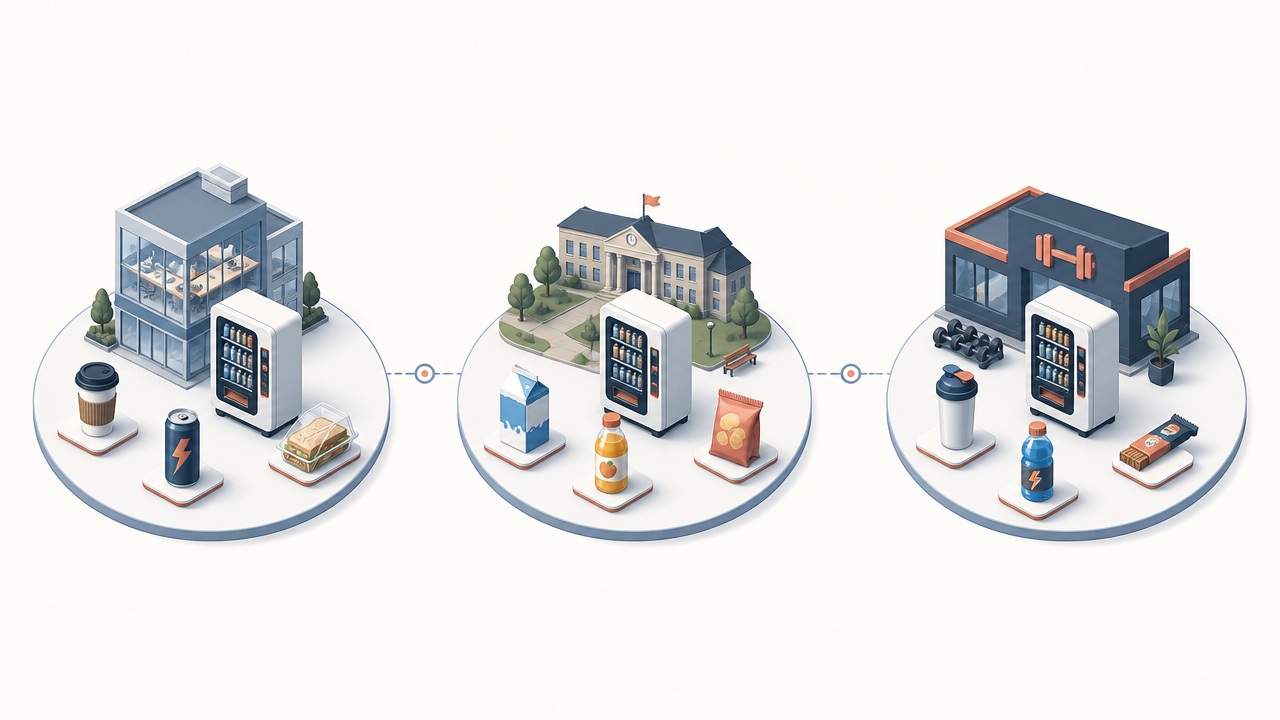
The scenario is an important factor affecting product sales.Consumers are usually office workers if the vending machine is in an office building. They tend to buy more coffee substitutes, bottled water, snacks, energy bars and basic foods. These consumers have a stable purchase frequency, and their consumption time is mainly concentrated in the morning, lunch break and afternoon time.
When the device is put in a school, the student group generally pays more attention to the price, taste and freshness. Candy, beverages, chips, and small packaged foods tend to generate sales more easily.
If the device is located in a gym, the consumers’ needs will be more specific. Protein bars, sports drinks, healthy snacks, etc. may be more in line with their consumption habits than ordinary foods.
In hospitals, airports, hotels, etc., consumers may pay more attention to convenience. Hygiene products, medical supplies, travel items, etc. can solve temporary needs.
Therefore, when choosing products, you need to first consider who will purchase, rather than simply considering which products are the most popular.
Change the product structure to fit the consumer needs
Consumers usually do not spend much time on comparison when buying goods from a vending machine as when shopping in a supermarket. But they make decisions in a short space of time. Therefore, the products need to have obvious advantages:
Consumers are familiar with them
Well-known brands or common products are more likely to reduce purchasing concerns.
The demand is clear
When consumers are thirsty, hungry or wanting something they are more likely to purchase.
The price is reasonable
Although vending machines offer convenience, if the price is too high, it may reduce the willingness to purchase.
A mature product lineup for vending machines usually does not include all new or unique products. Instead, it is based on familiar products for consumers, and then adds some new products with growth potential.
Optimize products based on sales data
The operation of vending machines is not a one-time process of selecting products, but a continuous optimization process.
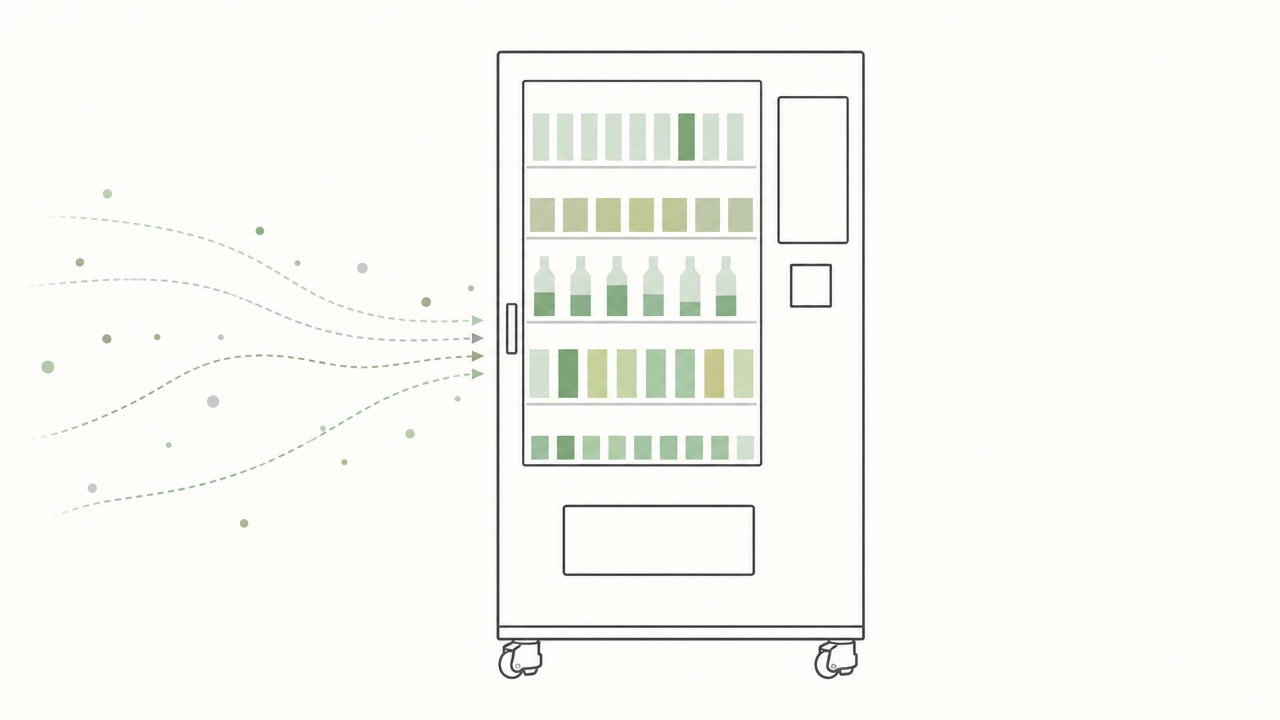
When the machine is first put into operation, you can make initial configurations based on the target consumers and scenarios. However, after the equipment is put into use, it is necessary to observe which products have a fast sales rate and which products have remained unchanged for a long time.
If a certain beverage has a significantly higher sales frequency than other products, the inventory proportion can be increased. For certain snacks that have not been sold for a long time, other flavors can be replaced. During seasonal changes, the product structure can be adjusted, for example, increasing the proportion of cold drinks in summer and increasing the proportion of popular foods in winter. The back-end management system of the intelligent vending machine can help operators view sales data, inventory status and product performance, making product adjustments more accurate rather than relying on experience-based judgments.
The future development trend of vending machine products
As consumer habits change, vending machine products are also constantly upgrading. In the past, vending machines mainly sold standardized food and beverages, but now more and more operators are beginning to explore more specialized product directions.
The trend of healthy consumption will continue to drive the development of low-sugar, high-protein, and natural foods; personalized consumption will also drive trendy toys, electronic accessory products, and specialty foods to enter the unmanned retail market; at the same time, products with clear demands such as medical supplies and care products will also become choices in more application scenarios.
What you need to understand is that the key to future competition is not just what products to sell, but whether one can quickly adjust the product strategy according to consumer needs, making vending machines truly become a convenient retail entry point that consumers can find when they need it.
Final Thoughts
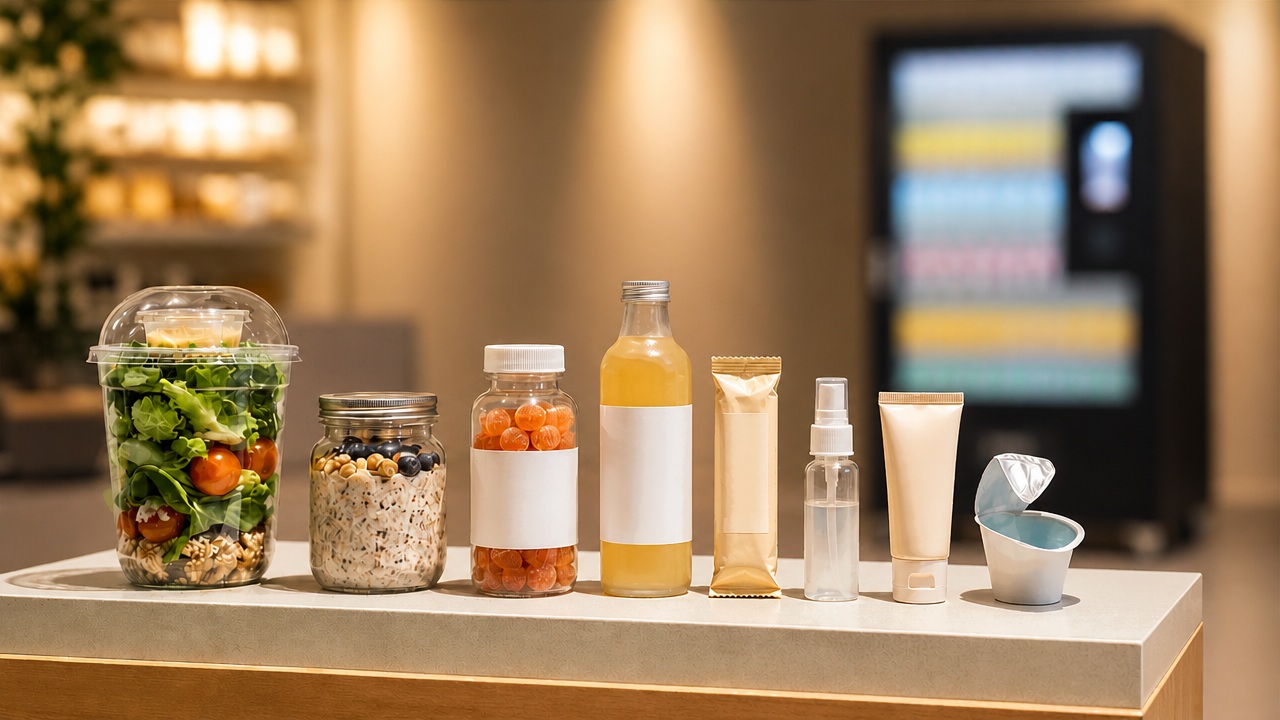
The right product selection is a critical basis for vending machine operation success. Yunyin continuously monitors the global demand for unmanned retail and provides intelligent vending machine design, research and development, and manufacturing services to customers in different countries and industries. Whether you plan to launch a retail startup project or are looking for unmanned retail equipment suitable for commercial scenarios, Yunyin can offer you professional solutions to help your project be implemented more smoothly.
FAQ
What products should beginners choose to run vending machines?
Newbies can concentrate on selecting products that consumers know and purchase frequently, such as drinks, snacks, staple foods, etc. Next slowly add special products by location of equipment. Do not pile up too many unpopular items at the beginning, otherwise it may bring inventory pressure.
How often do you have to change the stuff in the vending machine?
There is no fixed cycle for item adjustments. It should be determined according to the sales data. Popular products can stay on sale for a long time, but products that don’t sell well should be replaced quickly. You can monitor the sales performance of the items on a regular basis and make adjustments according to the season, consumer feedback and market changes. The intelligent management system can help you more efficiently grasp the situation of inventory and sales, reducing the cost of manual inspection. The intelligent vending machine solution provided by Yunyin supports backend data management functions, helping you more conveniently grasp the operation of the equipment and optimize the product strategy according to market changes.
What are the best-selling products in the vending machines?
Based on , the general top product categories in vending machines are snacks and beverages with wide consumer groups and high purchase frequencies .
What goods do automatic vending machines sell to generate the highest profits?
The goods with the highest profit are not fixed. Generally speaking, bottled water has the highest profit margin, reaching 70% to 80%. Best sellers can be a steady source of income, while specialty or higher-priced products can yield higher margins. In practical operation, a mixed sales approach is more recommended, combining frequently sold goods and high-profit goods, and continuously optimizing the product structure based on sales data.
Methods to increase sales of goods in vending machines?
The growth of sales is not only about the increase in the number of goods, but also requires the optimization of the selection of goods, price adjustment, improvement of the location of equipment, and analysis of sales data. It’s better to get the right mix of goods and constantly adjust based on consumer behaviour rather than just piling up inventory.