
If you’re operating multiple vending machines, when equipment malfunctions, what’s often more headache-inducing than the repair cost itself is that problems keep recurring: dispensing jams, refrigeration abnormalities, payment failures, sudden equipment shutdowns, and finally having to arrange personnel to handle them on site. As repair needs increase, losses from labor, transportation, and downtime all keep growing. This article will tell you how to reduce vending machine repair needs from the aspects of equipment selection, installation environment, product placement, daily maintenance, and remote management, keeping equipment in a more stable operating state.
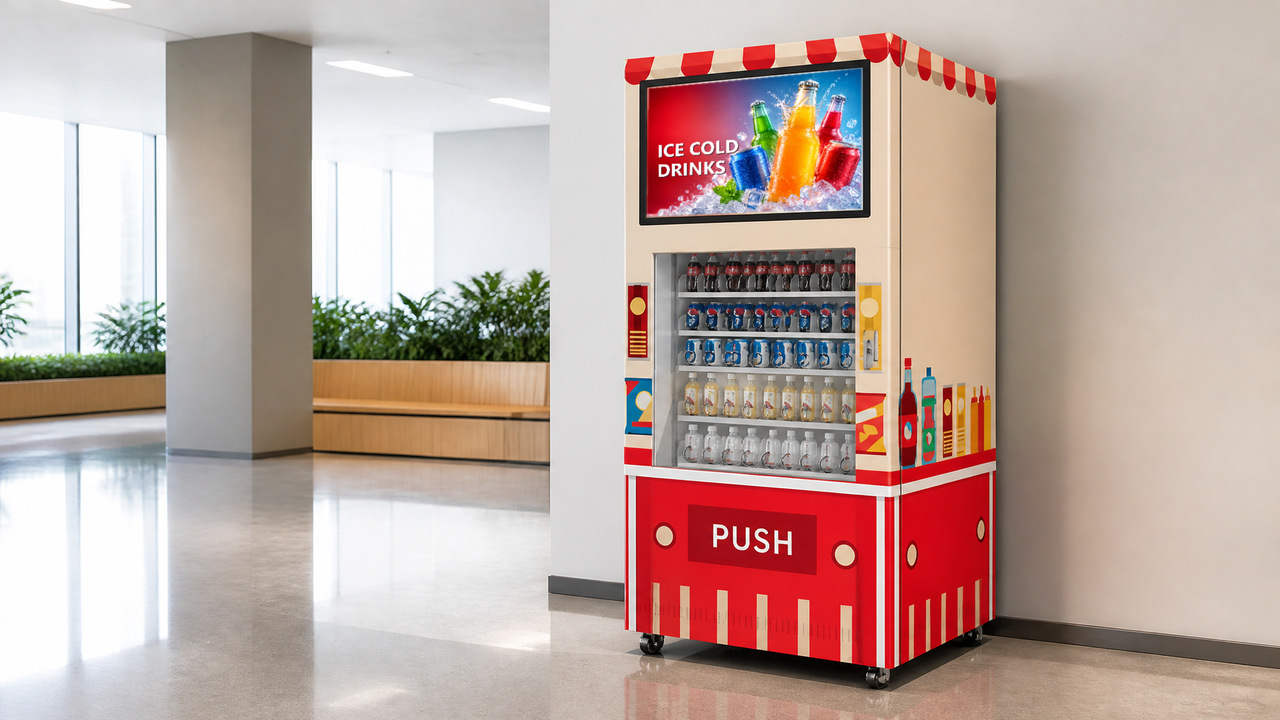
Why Do Vending Machines Frequently Require Repairs?
A vending machine may look like a relatively independent device, but it actually contains multiple systems including refrigeration, electrical, control, payment, channels, and dispensing. Different devices have different structures, but repair needs usually don’t appear suddenly.
If you leave unsuitable items in the storage aisles for extended periods, it may increase the likelihood of items getting stuck; poor ventilation around the machine can put greater operational strain on the refrigeration system; and the accumulation of dust and dirt inside the equipment may also interfere with the normal operation of certain components.
There’s another situation that’s more easily overlooked: some small problems aren’t handled promptly after they appear. For example, a channel occasionally dispenses poorly, machine temperature fluctuates, or payment equipment occasionally reacts abnormally. Once you feel these problems are insignificant and keep ignoring them as long as the machine can still operate normally, they may later develop into more obvious and serious malfunctions.
Reducing vending machine repair needs isn’t just about learning how to fix machines when they break—it’s also about minimizing the chances of your machines entering a repair state in the first place.
Reduce Later Repair Pressure Starting from Equipment Selection
Some equipment has a lower price, but if the structure, core components, control system, and production quality lack stability guarantees, frequent later repairs may turn the initially saved procurement cost back into operational cost.
When selecting equipment, you can focus on understanding several aspects: whether the equipment manufacturer has its own R&D and production capabilities, whether the products have undergone factory testing, whether the core systems are mature, and whether technical support can be obtained after problems arise.
Equipment structure is equally important. Vending machines need to withstand long-term product restocking, user purchases, equipment operation, and environmental changes. If the internal structure is unreasonable and certain components are very difficult to maintain, then even a small problem may require more time to handle.
For projects requiring long-term operation, both equipment stability and later maintenance convenience should be considered at the procurement stage, rather than waiting until problems arise to solve them.
Choose the Right Dispensing Structure Based on Products
Another common reason for increased vending machine repair needs is that the machine and products aren’t well matched.
Different products have different packaging, weight, size, and shape. Beverages, bagged snacks, boxed foods, flowers, trendy toys, and other irregular products—if all use exactly the same dispensing method, problems such as poor dispensing, product jams, or damage may occur during operation.
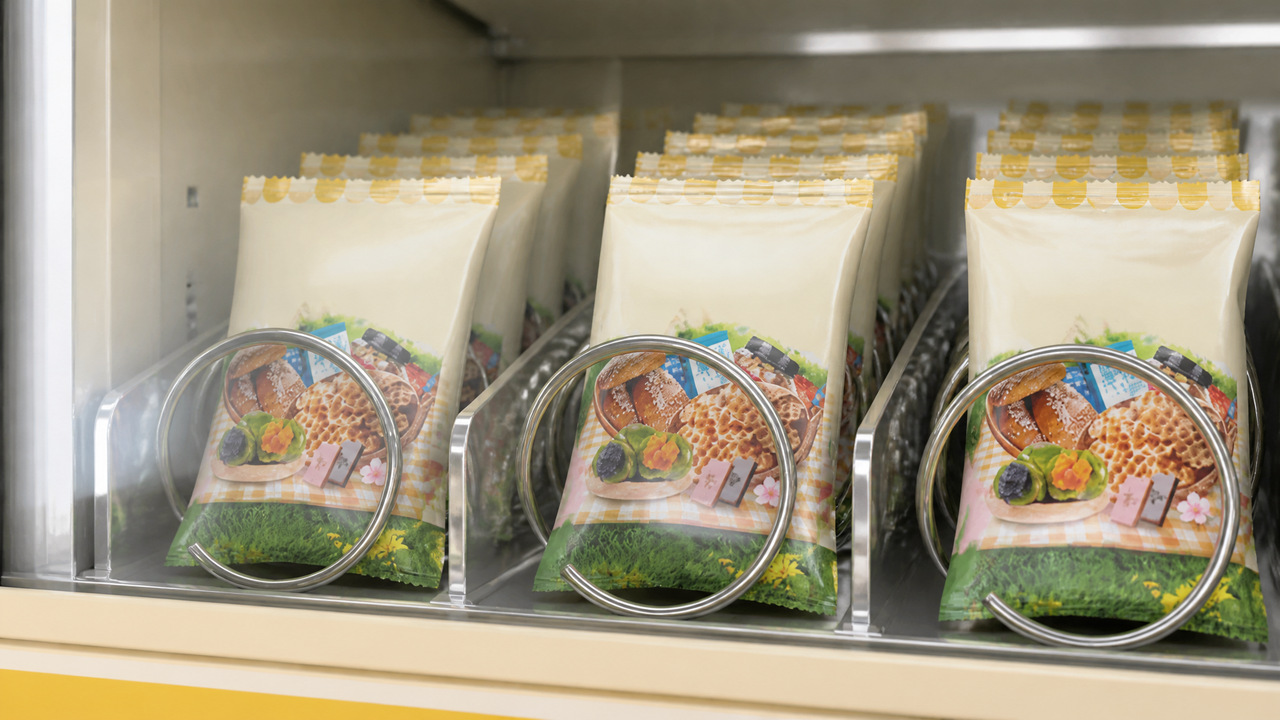
Therefore, when choosing a machine, in addition to looking at how many products it can hold, you also need to check whether the channels and dispensing structure suit your products. For ordinary products, the spring channels can be adjusted according to the size of the product. Irregularly packaged soft or hard products may be better suited for a locker type design. If you have high-value products, you might want to consider lift or conveyor structures to reduce direct product drops. Some intelligent vending equipment also utilizes lift platforms, conveyor belts or XY-axis retrieval structures, and adapts to products of various sizes and packaging through different dispensing methods.
This is not to say that one way of dispensing will suit all situations, but that having the correct equipment structure is part and parcel in reducing problems later on.
Don’t Overlook the Installation Environment of Vending Machines
The same machine, in different environments, may operate in entirely different states. If the machine is in direct sunlight, poor air circulation or in a high surrounding temperature, the refrigeration equipment may have to operate longer. It may also influence heat dissipation if the machine is too close to the wall.
So it’s best to survey the surrounding area first when deciding where to place the machine, rather than just put it wherever there’s space when it arrives.
For refrigerated or frozen equipment, special attention should also be paid to surrounding air circulation and temperature conditions. The equipment itself has a good insulation structure that can reduce pressure during refrigeration, but it cannot completely replace a reasonable installation environment. Some vending machines use foam insulation cabinets, anti-condensation structures, heated glass, or door heating designs, which can to some extent help the equipment cope with temperature and condensation issues in different environments.
However, these structures cannot replace correct installation. Reasonable heat dissipation space still needs to be reserved around the equipment, and it should be used according to equipment requirements.
Place Products Correctly
If you find that a certain channel often has to deal with dispensing jam issues, it does not necessarily mean that the entire machine is malfunctioning and that the product placement method is not suitable. Products that are too large, too heavy or have easily deformable packaging can affect the normal dispensing channel. Especially for spring channels, if products are not reasonably placed according to the size of the channel, it may happen that products are stuck in the middle, multiple products fall at the same time or the motor runs all the time without normal dispensing.
So when restocking don’t just try to cram as much as possible. Adjust the channel spacing to the product size and verify that the products can move smoothly. Channels with high sales and frequent restocking need to pay more attention to their operation status during daily inspections.
Pay Special Attention to Cleaning and Heat Dissipation for Refrigeration Equipment
In the daily maintenance of beverage, fresh food, frozen food, etc. vending machines, the refrigeration system is often the part that needs focused attention. After long time running, dust may accumulate on the heat dissipation area. If air circulation is disturbed, the refrigeration capacity can be reduced and the compressor can also have increased operating pressure.
Therefore, according to the equipment and environmental conditions, you should regularly check the heat dissipation area, fan, door seal and other refrigeration-related components. But if you do your daily inspections, then you can also look for obvious abnormalities, such as whether the internal temperature of the unit is normal, whether there is abnormal frost buildup, whether the door closes properly, and whether the compressor is making a noise that is noticeably different from usual.
Maintenance doesn’t necessarily mean frequently disassembling the machine, but rather keeping problems in the “bud” stage as much as possible through simple, regular checks.
Keep the Machine Clean
Cleaning may seem unrelated to repairs, but it’s actually a very basic step in preventive maintenance.
After long-term operation, product crumbs, beverage residue, dust, and other stains may enter the channels, pickup area, or near payment equipment. Over time, this may affect the normal use of sensors, buttons, channels, and payment equipment.
You can incorporate cleaning directly into your daily restocking routine. Each time you restock the machine, take a moment to check whether the touchscreen, dispensing opening, product slots, and machine surfaces are clean; for refrigerated units, also check the door seals and ventilation areas for visible dust or stains.
If equipment is located in an office—where the environment is relatively clean—the maintenance frequency may differ from that of equipment placed in warehouses, factories, or high-traffic public areas. Rather than mechanically requiring all machines to be cleaned at fixed intervals, it is better to adjust maintenance schedules based on the machine’s environment, frequency of use, and actual condition.
Regular Inspections
Don’t wait until users discover a problem before realizing the machine is malfunctioning. If you only receive feedback after a user notices a product is stuck in a bin; if you only dispatch staff to inspect the machine after a user finds it isn’t cooling properly; or if you only start troubleshooting the payment terminal after payment failures increase—by then, the machine has already disrupted normal sales.
You need to establish a regular inspection routine. Every time you restock, take a moment to test one or more product lanes to ensure items are dispensing smoothly; check that the screen, payment terminal, and network are functioning properly; and for refrigerated units, monitor the temperature and cooling status. If you notice a component making unusual noises, operating sluggishly, or experiencing occasional malfunctions, don’t simply assume it’s still usable and ignore it.
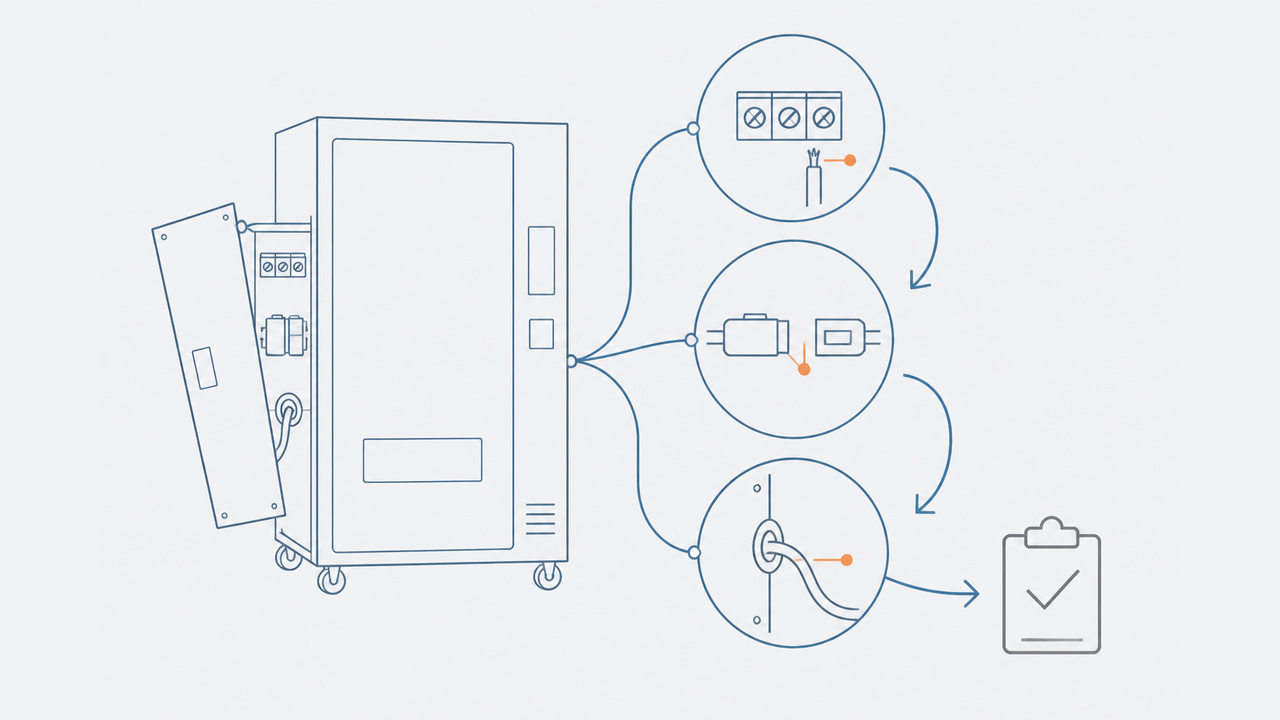
This is because many maintenance problems do not start with total failure, but rather with recurring minor abnormalities. Early detection of problems doesn’t mean you have to know exactly when a machine will break down. It means identifying anomalies through daily testing, equipment status checks and alerts before they cause major downtime.
Use Backend Management to Reduce Unnecessary On-Site Inspections
If you are personally going to visit each one of these devices, the cost of maintenance will skyrocket as you increase your machine count from one or two to dozens and beyond. “From here on, the digital management of equipment is gaining in importance.
If the backend can uniformly view machine status, you can first determine which devices need attention, then arrange personnel to handle them, rather than relying on manual on-site confirmation every time.
This doesn’t mean the backend can replace all repairs, but rather makes your maintenance work more targeted.
You can also combine sales data and equipment status to arrange maintenance. For example, low-sales, normal-status machines don’t need the same on-site inspection frequency as high-traffic machines; while devices with abnormal status should be prioritized for handling.
Don’t Overlook Small Abnormalities in the Machine
Many people’s understanding of maintenance is that a machine only needs repair when it’s completely broken. In reality, what deserves more attention is some repeatedly occurring small abnormalities. For example:
- The machine occasionally has dispensing jams;
- A certain channel motor has an abnormal operating sound;
- The screen occasionally doesn’t respond;
- Payment equipment occasionally fails to connect;
- There are significant temperature fluctuations in the refrigeration equipment;
- The machine door doesn’t close tightly;
- The pickup structure moves slowly.
These issues may not necessarily cause the machine to shut down immediately, but if they occur repeatedly, they are worth documenting and investigating. You can create a simple maintenance log for each machine, recording the date, the problem encountered, how it was resolved, and any parts that were replaced. The benefit of doing this is that when the same conveyor lane or the same part experiences a problem again, you won’t have to start troubleshooting from scratch.
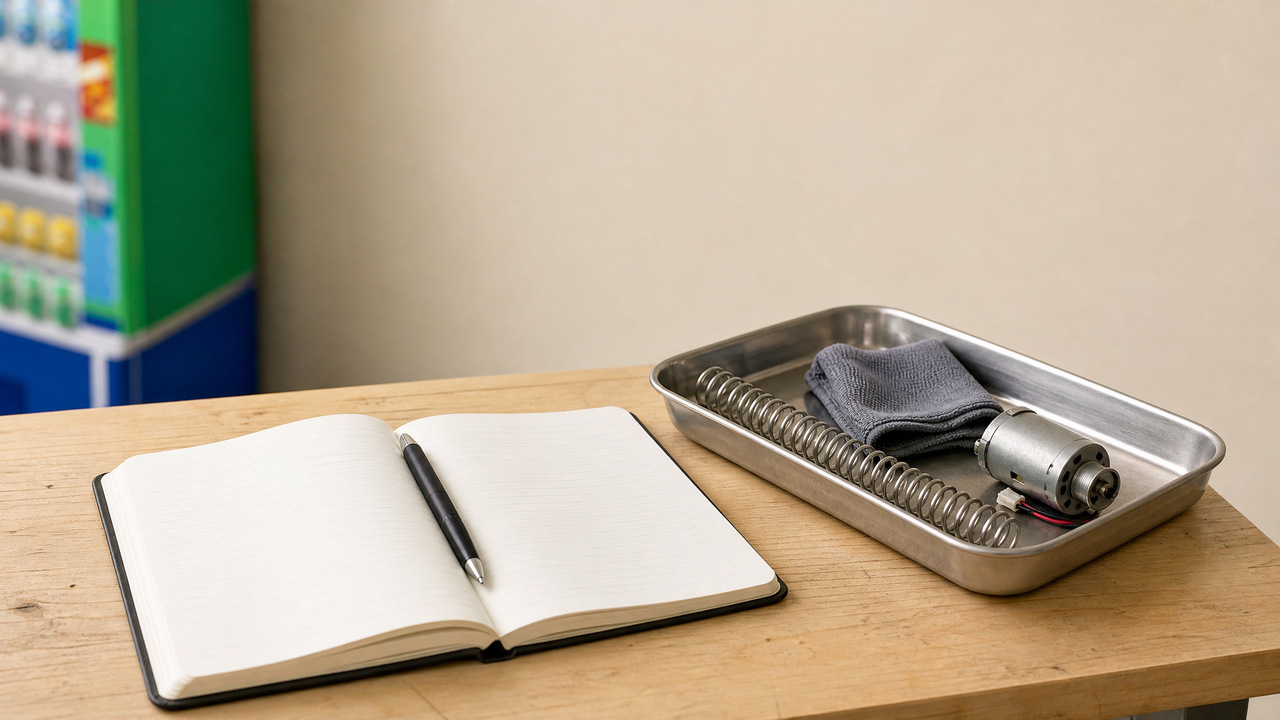
Maintenance records can also help you discover whether certain problems are repetitive. If a machine repeatedly has abnormalities in the same location, same channel, or same system, you should further determine whether it’s the usage method, product matching, or the equipment itself that needs adjustment.
Choose Equipment Manufacturers That Can Provide Technical Support
Even if you do daily maintenance well, you can’t guarantee that vending machines will never malfunction.
The machine itself is complex equipment composed of multiple systems, and after long-term use, components may still need replacement or repair. Therefore, reducing repair needs doesn’t mean no repairs at all, but rather making repairs fewer and more planned, while being able to handle them faster when problems truly arise.
At this point, the manufacturer’s technical support becomes very important.
When purchasing equipment, you can learn in advance whether the manufacturer provides installation guidance, usage training, remote technical support, troubleshooting, spare parts support, and repair guidance. If you’re doing an overseas project, you also need to further understand whether the manufacturer can provide overseas after-sales service and whether there’s local warehousing or technical service support.
Establish a Preventive Maintenance Process That Suits You
With just one or two machines, keeping them running may be relatively simple. But with an increasing number of equipment it’s easy to forget simply reminding yourself to “remember to check”.
You are able to establish a basic maintenance rhythm, depending on the size of operations. Every restock, inspect the machine’s appearance, screen, payment, channels and pickup port. For refrigerated equipment, include temperature and ventilation checks.
Monthly internal inspection: An expanded inspection can be performed monthly, including dust, channels, motors, door seals, wiring, and refrigeration-related components.
For high traffic an increase in inspection frequency is possible. As the equipment is used, the wear and dispensing abnormalities of some components may be more noticeable.
Machines that have already experienced problems should be documented separately, rather than being maintained strictly according to the standard maintenance schedule for regular machines.
The core of establishing a maintenance process isn’t to make you spend more time repairing, but to shift maintenance from handling problems after they occur to arranging handling based on equipment status.
Shift from “Reducing Repairs” to “Reducing Downtime”
A single machine repair isn’t necessarily a cause for concern. If the problem can be quickly pinpointed, parts can be obtained promptly, and technicians can step in immediately, the impact on operations may be limited. Conversely, if a minor problem with a machine requires a long time to identify the cause, wait for parts, and then arrange for personnel to address it, even if the number of repairs is low, it can still result in significant downtime losses.
So you can further shift the goal from simply fewer repairs to reducing unnecessary repairs, while shortening the handling time after a true malfunction occurs. This is also why the equipment manufacturer’s R&D capability, production capability, software system, and after-sales capability need to be viewed together.
Whether a vending machine can ultimately operate stably for the long term isn’t determined by any single component alone, but is the result of the combined作用 of equipment design, production quality, usage methods, daily maintenance, and after-sales support.
Final Thoughts
Reducing vending machine repair relies not on a single repair technique, but on jointly reducing failure risk from equipment selection, product design, correct usage, daily maintenance and after-sales support. Yunyin, relying on independent R&D, original production, software systems, and a professional after-sales team, can provide equipment and one-stop solutions for different unmanned retail scenarios.
FAQ
How Often Do Vending Machines Need Maintenance?
There is no set cycle for every machine. Maintenance frequency depends on equipment type, products, foot traffic, and the installation environment. You can have basic checks with each restocking, then you can establish monthly, quarterly and annual inspections based on the actual operating condition of the equipment.
What Should I Check First When a Vending Machine Frequently Jams?
It is recommended to check the product size and placement method first, and then check whether the channel spacing, springs or other dispensing structures are normal. If only one specific channel has these problems often, try checking that channel instead of assuming the whole machine needs repair.
How to Reduce Malfunctions in the Vending Machine Refrigeration System?
First, make sure that the machine is well ventilated, don’t leave it in direct sunlight for long periods of time and keep the heat-dissipating areas clean. Also, keep an eye on the temperature of the machine, the working status of the compressor and the condition of the door seals. If the equipment has remote temperature control and monitoring functions, you can also manage it according to the data in the backend.
Can Vending Machine Equipment Status Be Checked Remotely?
Some smart vending machines support networking and backend management, allowing remote viewing of equipment operating conditions. What can be viewed and controlled depends on the equipment model and software configuration. Yunyin equipment supports Wi-Fi, 4G, or Ethernet connections, and has functions such as remote temperature control.
Can Yunyin Provide Vending Machine Repair Technical Support?
Yes. Yunyin provides after-sales services, such as installation guidance, usage training, remote technical support, troubleshooting, spare parts support, and repair guidance. It can also provide corresponding service support according to the market of the project for overseas projects. Overseas warehouses are set up in some regions.
If I Have Different Types of Products, Can Vending Machines Be Customized?
Yes. Yunyin’s products are aimed at multiple niche scenarios including traditional retail, smart micro-markets, fresh made-to-order, pharmaceutical, personal care and environmental protection, with support for hardware and software customization. The channels, locker sizes and equipment configuration can also be adjusted according to the actual project needs by some devices.

